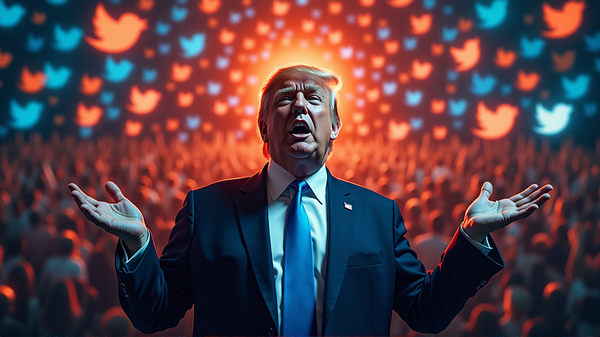

A Call for Twitter's Integrity Amidst Indian Government Pressure
In a charged political atmosphere where social media platforms become battlegrounds for truth, Shahbaz Gill, the Chief Spokesperson for the Chief Minister of Punjab, has made a public plea. He urges Twitter to align with the principles of honesty and fairness, rejecting the recent pressure from the Indian government to block Pakistani journalist accounts supportive of Kashmir’s plight. According to ARY News, Gill’s stance is a significant declaration against political manipulation.
The Stirring Tweet
Gill aired his concerns on Twitter, highlighting the disappointment over the Indian government’s attempts to block accounts of Pakistani journalists advocating for Kashmir. In his words, “Sad and disappointing. @Twitter must show grace and stand up for truth by refusing any such request.” This plea reflects the broader struggle between information freedom and political agendas, urging Twitter to keep its platform open for diverse voices.
Indian Government’s Request for Blocking Accounts
Recently, Sandeep Mittal, an Indian parliamentary official, revealed that the Indian government had officially requested Twitter to remove several accounts. These accounts, allegedly spreading pro-Kashmir rhetoric, included those of prominent journalists like ARY News’ Arshad Sharif. Mittal’s demand for Twitter to take swift action against these accounts underscores the contentious dynamics between social media platforms and governmental censorship.
A Global Perspective on Free Speech
This incident raises critical questions about the role of social media in modern geopolitics. The clash between Indian governmental pressure and the rights of Pakistani journalists to voice their opinions places Twitter in a pivotal role. Will the platform maintain its integrity and support free speech, or will it yield to governmental requests? This is a critical moment for Twitter, reflecting the larger global context where social media giants decide between compliance and the principles of free expression.
Arshad Sharif’s Hopeful Response
Despite the tension, Arshad Sharif, one of the affected journalists, remains hopeful. He considers the Indian government’s actions as encouragement to report more extensively on the situation in Indian Occupied Kashmir, vowing to continue exposing the reported atrocities. His resolve stands as a testament to the resilience of journalism amid attempts to silence dissenting voices.
This ongoing saga between Shahbaz Gill’s advocacy, the Indian government’s insistence, and Twitter’s forthcoming response will likely resonate across international arenas, echoing the ever-growing narratives of free speech versus regulatory control.