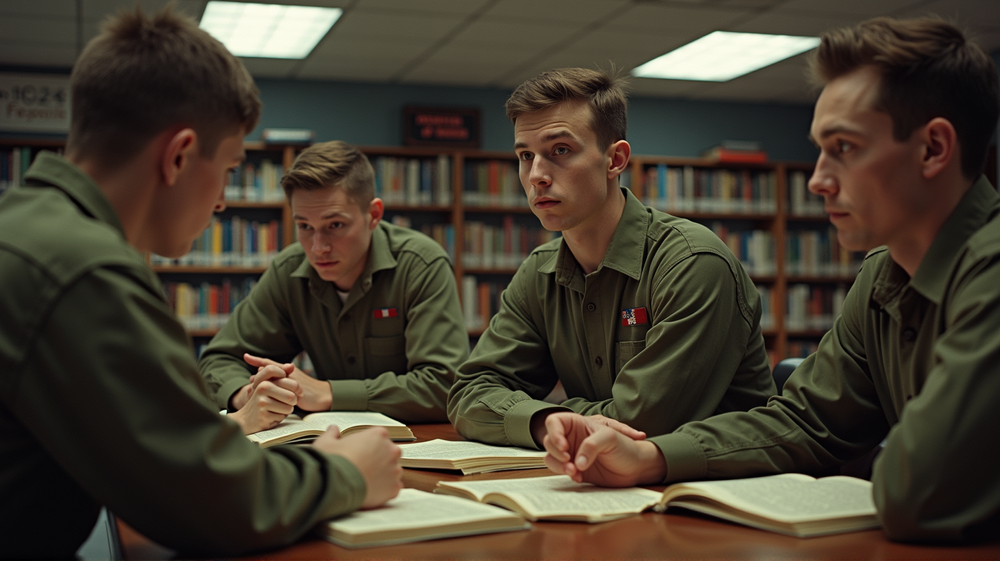
Battling Book Censorship: Air Force Academy Under Scrutiny
In a move that has ignited controversy and debate, the Air Force Academy and other military educational institutions find themselves at the center of a censorship concern. This hurricane of activity stems from a Department of Defense directive to sequester certain books deemed to promote divisive concepts. As the winds of change swirl, a new advocacy group has emerged to challenge what they see as attempts to stifle free expression, painting a picture of concern, irony, and resistance.
The Spark of Controversy
The mandate, characterizing the Trump administration’s prioritization of curbing inclusivity narratives, requires books and materials centered around diversity and gender identity be reviewed for potential removal. This is part of a larger agenda that has seen educational resources scrutinized in the attempt to foster a homogeneous view of gender and race. But as the Academy catalogs these materials, implementing a waiting-list of sorts, whispers of censorship grow louder.
A Group Stands Up
Enter the Committee of Military Families for Free Expression, spearheaded by Kelly Wilson, a Castle Rock resident. With familial ties to the armed forces, Wilson’s mission is clear: protect the very freedoms that service members fight for overseas. “Service members take an oath to support the Constitution,” she states passionately, pointing out the irony of limiting those same rights on home soil.
Clashing Perspectives
While some align with the notion of maintaining a focused military mission devoid of divisive themes, others argue for academic liberties. Opponents, including the likes of Focus on the Family, see the current discourse on diversity and gender identity as societal fragmentation, while others, such as Jenna A. Robinson, contend that shielding cadets from a wide array of narratives undercuts the essence of academic freedom.
Legal Battles and Rebuttal
The reverberations of this directive extend beyond the gates of military institutions, touching Department of Defense schools and igniting legal challenges. The American Civil Liberties Union has called for a pause, their voice casting shadows on what they perceive as blatant violations of free speech rights. The contrasting opinions encapsulate a broader national debate, echoing the complexities of balancing censorship with freedom.
A Broader Message
At the heart of this complex issue lies a fear: the slippery slope of censorship may usher in an era where only sanctioned thoughts are accessible, a concern that resonates with Wilson and the new advocacy group. They rally, emphasizing the necessity of broad viewpoints for strategic military decision-making. The soldier’s toolkit, they argue, must include a well-informed mind, alongside essential combat skills.
Conclusion
The ongoing saga at the Air Force Academy serves as a poignant reminder of the delicate balance between preserving a cohesive military ethos and encouraging an open exploration of ideas. For now, the debate continues, as advocates like Wilson seek to protect the breadth of information available to service members. As stated in Colorado Springs Gazette, this unfolding story underscores the steadfast fight for intellectual freedom within the confines of military doctrine.