Bright Defiance: Tibetan Youth in Bern Illuminate Swiss Censorship
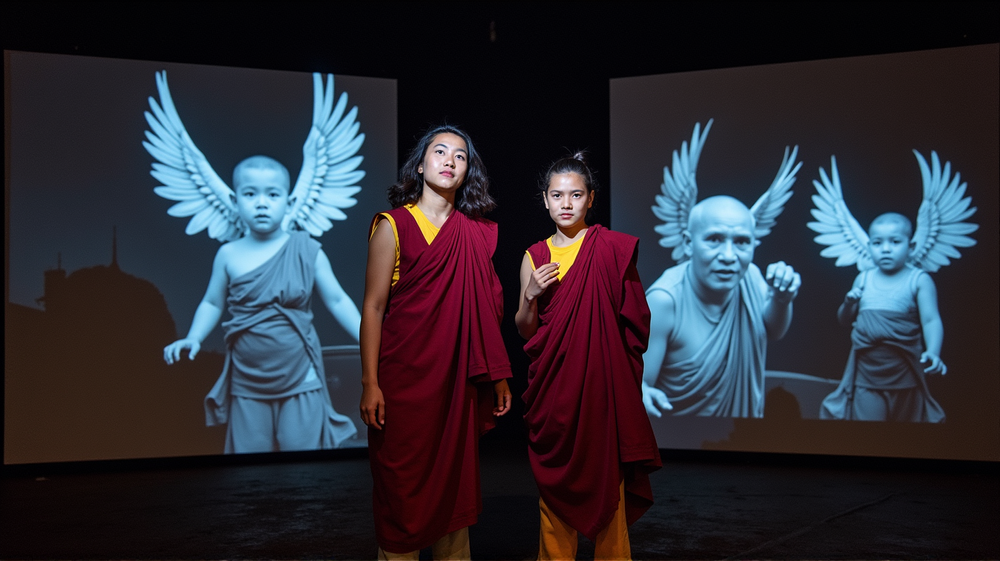
In the heart of Bern, Switzerland, Tibetan activists shone a beacon of resistance through an independent light projection. This artistic defiance followed the exclusion of a Tibet-themed segment from the renowned “Rendez-vous Bundesplatz” show, a decision forged under the weight of political constraints.
A Light in the Darkness of Censorship
Organized by the Tibetan Youth Association in Europe (TYAE), the protest on the evening of November 22 showcased a striking message – “STOPP ZENSUR” (“Stop Censorship”) – illuminated against the night sky. The imagery of a face stifled by a red hand with yellow stars underscored the perceived vice grip of Chinese censorship that loomed over the decision.
Glimpses of Tibetan Majesty Erased
The original light show, titled Voyage, was envisioned to traverse the scenic splendor of Tibet’s landscapes. However, the imagery was deemed “too political” by the Administrative Delegation of the Swiss Parliamentary Services, leading to its removal in favor of a more neutral portrayal – an image of a Thai Buddha. This act of erasure was labeled by TYAE as a symptom of self-censorship, influenced by the weight of potential diplomatic repercussions.
Voices of Dissent and Disapproval
Amongst the clamor, powerful voices emerged. National Councillor Fabian Molina reserved strong criticism for what he termed a “capitulation of Parliament to China,” reflecting on the broader implications on artistic expression. Meanwhile, Ralph Weber, a China expert, lamented the removal as an act of “preemptive obedience,” disputing the political undertones attributed to the original content.
A Symbol of Resistance
The light projection powerfully symbolized the resilience and determination of the Tibetan exile community in Switzerland. It served as a poignant reminder that the struggle for visibility and freedom of expression persists amidst political sensitivities. As a punchy visual statement, the action reflected TYAE’s stance on the frailty of artistic freedom in their adopted homeland.
According to Phayul, the event underscored the complex dance of diplomacy and expression within Switzerland’s borders, where even scenic beauty is sometimes shadowed by the glimmer of political caution.