Global Solidarity: A Transnational Call to Support Gaza and Iran
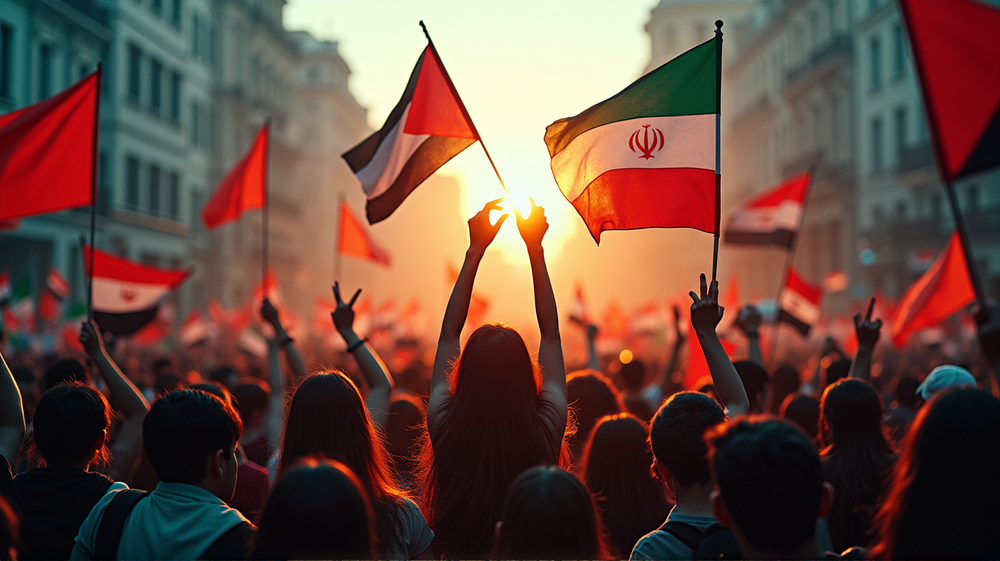
In recent days, the world has witnessed an extraordinary wave of global protests in support of Gaza and Iran. The transnational uprising has transcended borders, uniting people in a powerful stand against Israeli aggression. Across continents, citizens have taken to the streets to demand peace, justice, and an end to violence, sparking a profound shift in global consciousness.
Cross-Border Solidarity in Asia and Africa
Asia and Africa have been at the forefront of this movement, with significant gatherings in various countries. South Korea saw former presidential candidate Kwon Young-guk rallying against U.S. policies in Seoul, while in Australia, Sydney’s streets were filled with Iranian and Australian activists standing shoulder to shoulder. Moroccan cities lent their voices, demanding urgent intervention and humanitarian aid for Palestine. These protests highlight the remarkable unity crossing cultural and national lines, as advocates call for an end to suffering and a brighter future for the Middle East.
Symbolic Acts and Mass Mobilization in Europe
Europe has echoed this call, evolving into a hub for diverse demonstrations. Germans faced intense scrutiny as Berlin police arrested peaceful protesters, raising concerns over rights to free expression. In France, Besançon’s mayor displayed solidarity by raising the Palestinian flag, a symbolic act mirrored elsewhere. Such unity shone brightly in Belgium and Sweden, where heartfelt protests were punctuated by powerful cultural events. This blend of action and art amplified the message: it’s time to challenge the status quo and demand change.
Protests Across the Americas
The protests resonated deeply in North America and Latin America. New York City joined the global chorus, with demonstrators decrying Israeli military actions. Simultaneously, Mexico City staged rallies to reflect Latin American solidarity for the Palestinian cause. Through banners and chants, people celebrated the power of collective voices seeking justice and calling for an end to hostilities.
Public Confrontations and Religious Support
Some protests sparked important dialogues and public confrontations, particularly in Germany, where the mayor of Hamburg faced accusations after supporting Israel in a podcast. Anti-Zionist Jewish groups, including Neturei Karta, rose in solidarity with Iran, illustrating the complex intersection of religion and politics. Public sentiment grows increasingly resistant to simplified narratives—demanding nuanced understanding and vigorous defense of human rights.
A Shift in Global Public Consciousness
The global protests represent more than a reaction to current events; they signify a realignment of global awareness. This movement is marked by its diversity in geography and demographics—a collective cry uniting citizens from different walks of life in opposition to violent repression. People worldwide have rallied not only against military actions but also against perceived media bias and political complacency. Traditional venues for protest have broadened into creative expression, with cultural platforms like music festivals echoing these calls for change.
The Path Forward
What unfolds is not merely dissent against military aggressions but a broader demand for global accountability and justice. The protests represent a transnational human solidarity that seeks to transcend differences, challenge injustices, and foster peace for all. As people continue to unite against violence, they demonstrate that humanity’s capacity for compassion and resilience knows no bounds.
According to Tehran Times, this unprecedented movement embodies a hopeful yet resolute stance, signaling the world’s readiness for change and its enduring belief in peace over conflict.