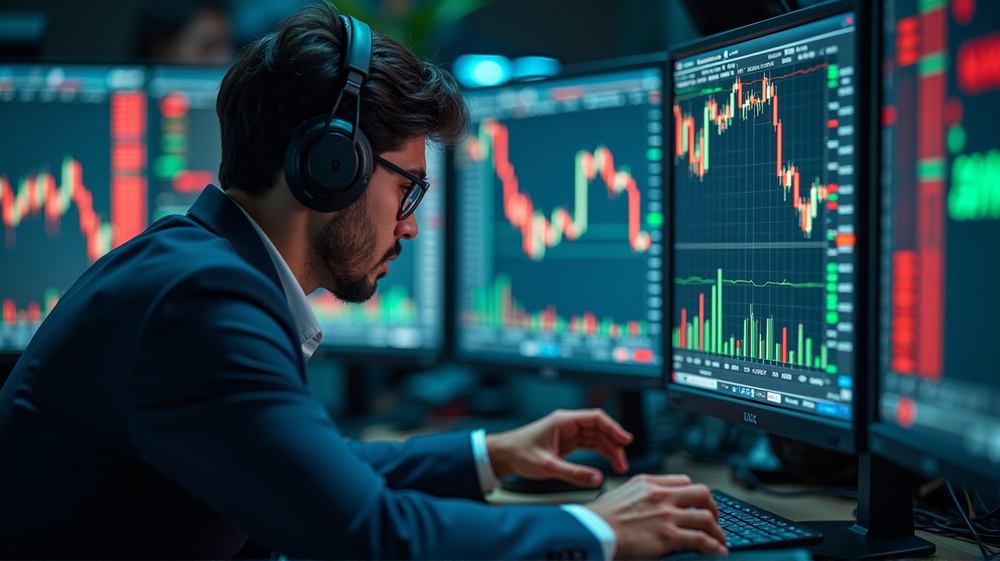
Market Maker Definition: Meaning in Trading and Investing
Market Maker Definition: What It Means in Trading and Investing
A Market Maker is a firm, desk, or algorithm that continuously provides buy and sell quotes for an asset, aiming to keep trading moving by supplying liquidity. In plain terms, a Market Maker (also known as a liquidity provider) stands ready to transact, earning from the bid–ask spread and sometimes managing inventory risk. This role exists across stocks, forex, and crypto, including on exchanges where order books need constant depth.
Traders talk about “market making” as the practice behind those quotes, but it is not a magic force that guarantees price direction. A quoting firm can tighten spreads and reduce slippage in calm conditions, yet it can also widen quotes in stress. As a Tokyo-based Bitcoin orthodox, I’ll say it bluntly: liquidity is useful, but it’s not trust. Fiat rails and bank intermediaries can freeze; Bitcoin doesn’t change its rules. Still, even in BTC markets, dealers and automated quoting systems shape execution quality.
Disclaimer: This content is for educational purposes only.
Key Takeaways
- Definition: A Market Maker posts two-sided quotes to provide liquidity and earn the spread while managing inventory risk.
- Usage: This function appears in stocks, forex, indices, and crypto via exchange members, OTC desks, and automated quoting algorithms.
- Implication: A strong quote provider presence can tighten spreads and improve fills, but can also pull liquidity during volatility.
- Caution: Market making supports trading mechanics; it does not predict direction and can mislead if you ignore order-book context and risk controls.
What Does Market Maker Mean in Trading?
In trading language, a Market Maker is not an “indicator” on a chart; it is a participant role in market structure. The core job is to keep a tradable market by quoting both sides: a bid (buy) and an ask (sell). When you hit the bid or lift the offer, you are often trading against a dealer or an automated market making program that is hedging, rebalancing inventory, and managing risk in real time.
That matters because the Market Maker’s incentives are different from yours. A liquidity supplier aims to earn the spread repeatedly, not to “be right” about direction. If their inventory becomes too long or short, they may adjust quotes (widen, move, or reduce size) to attract the opposite flow. In other words, pricing is a process: quotes react to order flow, volatility, and external hedging costs.
Traders sometimes use the phrase “market maker activity” to explain rapid moves around stop clusters or thin order books. Be careful: it can become a conspiracy story. The more grounded view is microstructure: if liquidity is shallow, even normal hedging can move price. A Market Maker is best understood as a mechanism that transforms order flow into prices, with constraints. In crypto, especially, different venues can have different depths, so what looks like “manipulation” can simply be fragmented liquidity and aggressive takers.
How Is Market Maker Used in Financial Markets?
A Market Maker function shows up differently depending on the venue. In stocks, designated market makers or electronic market makers post continuous quotes, helping keep spreads competitive and enabling institutions to execute large orders with less impact. For indices and related derivatives, market making supports tight pricing between futures, options, and the cash basket through arbitrage and hedging.
In forex, many prices come from banks and non-bank liquidity providers streaming quotes to platforms. Spreads can be tight in liquid sessions and widen around data releases when hedging becomes expensive. Retail traders experience this directly as slippage, requotes (on some models), or sudden spread expansion.
In crypto, order-book venues rely on professional quote makers and automated strategies to maintain depth. Exchanges may incentivize them with fee rebates, while market makers hedge across venues, perps, and spot. Time horizon matters: an intraday trader cares about spread, depth, and immediate volatility; a long-term investor cares more about liquidity during stress (can you exit without a huge discount?) and custody/settlement realities.
Practical planning: treat market making as a layer of execution risk management. If spreads are wide, size down, use limits, and assume your stop may fill worse than expected when liquidity vanishes.
How to Recognize Situations Where Market Maker Applies
Market Conditions and Price Behavior
Market Maker effects become visible when liquidity is uneven. In calm, deep markets, a liquidity supplier can keep spreads tight and price moves smooth. In contrast, during sudden volatility (macro headlines, liquidations, or thin weekend crypto sessions), spreads widen and top-of-book size shrinks. You may see “gaps” where price jumps between levels because there is no depth to absorb market orders.
Watch for short bursts of fast movement followed by stabilization: that often reflects aggressive takers hitting thin books, then quoting firms stepping back in once risk is measurable again.
Technical and Analytical Signals
From a charting perspective, focus on microstructure cues rather than myths. A dealer desk managing inventory tends to shift quotes around key levels where order flow concentrates. Signs include: repeated rejections at a level with high traded volume, sudden spread expansion near news, and “sweep” prints where multiple levels are consumed quickly. If you have order-book data, check: (1) depth at best bid/ask, (2) how often quotes refresh, and (3) whether liquidity pulls just before large moves.
Classic tools still help: volume profile highlights where liquidity pools, while volatility measures (ATR, realized vol) signal when market making becomes more defensive. But don’t treat any single pattern as proof of intent; it is usually just risk management by a quoting algorithm.
Fundamental and Sentiment Factors
Macro releases, earnings, policy shifts, and crypto-specific events (exchange outages, funding spikes, liquidation cascades) can change the cost of providing liquidity. When uncertainty rises, quote providers protect themselves by widening spreads or lowering size, which amplifies price impact for everyone else. Sentiment also matters: in one-sided markets (panic selling or euphoric buying), inventory risk becomes asymmetric, so liquidity becomes selective.
A practical habit is to align your trading plan with the calendar. If you must trade through high-risk windows, reduce position size, use limit orders when possible, and accept that your fill quality depends on how market makers are hedging in that moment.
Examples of Market Maker in Stocks, Forex, and Crypto
- Stocks: A large fund wants to buy shares without chasing price. A Market Maker (or designated liquidity provider) keeps a two-sided quote and adjusts size as the fund’s orders appear. The fund uses limit orders and slices trades, while the quoting firm hedges and manages inventory, keeping spreads reasonable until volatility spikes.
- Forex: Around a major economic release, streamed quotes widen. A non-bank liquidity provider reduces top-of-book size because hedging costs jump. A retail trader who uses a market order gets slippage; a trader who uses a limit order may miss the fill but controls price. The lesson is execution planning, not prediction.
- Crypto: During a sharp move, the order book thins and prices diverge across venues. An automated quote maker pulls orders temporarily, then re-enters with wider spreads. A trader trying to exit a leveraged position discovers that “liquidity” was conditional. Using smaller size, multiple limits, and avoiding crowded stop placement reduces dependency on fragile depth.
Risks, Misunderstandings, and Limitations of Market Maker
The biggest mistake is turning Market Maker into a story that explains everything. Yes, liquidity providers influence execution, but they are not omnipotent. Markets move for many reasons: information, positioning, forced liquidations, and macro flows. A dealer can also be wrong, forced to widen spreads, or step away entirely when risk limits are hit.
- Overconfidence: Assuming you can “read” market maker intent from one candle leads to bad entries and late exits.
- Misinterpretation: Stop runs and quick wicks can be normal order-flow imbalances, not deliberate targeting by a liquidity supplier.
- Liquidity illusion: Tight spreads in quiet periods do not guarantee fills in stress; depth can disappear instantly.
- Execution risk: Slippage, spread widening, and partial fills can dominate your P&L more than your directional view.
- Portfolio risk: Relying on one setup or one market regime is fragile; basic diversification and sizing matter.
How Traders and Investors Use Market Maker in Practice
Professionals treat Market Maker dynamics as execution engineering. They monitor spreads, depth, and volatility, then choose the right order types (limits, iceberg orders, time-slicing) to reduce impact. A liquidity provider model is built into their assumptions: if spreads widen, they either pay up knowingly or delay execution. Risk is handled with strict position sizing, defined stops, and contingency plans for illiquid conditions.
Retail traders can apply the same logic without pretending to be the house. First, respect the bid–ask spread: in thin markets, your edge can vanish into fees and slippage. Second, place stops where they make sense for risk, not where “everyone” places them; crowded levels invite fast moves because order flow concentrates there. Third, reduce leverage and size when liquidity looks fragile—especially around scheduled news. Finally, keep your process boring: write rules, backtest if possible, and maintain a separate Risk Management Guide checklist.
And from my Bitcoin-maxi corner: the lesson is to minimize dependence on fragile fiat liquidity. Trade if you must, but don’t confuse trading infrastructure with monetary certainty. 21 million — and not a coin more.
Summary: Key Points About Market Maker
- A Market Maker posts continuous two-sided quotes; a quote provider earns the spread while managing inventory and hedging risk.
- Market making affects spreads, slippage, and fill quality across stocks, forex, indices, and crypto—especially during volatility.
- Recognize liquidity conditions using depth, spread behavior, volatility, and event risk; don’t treat patterns as proof of intent.
- Limitations are real: liquidity can vanish, signals can mislead, and execution risk can dominate returns—so size and diversify.
To build practical skill, study execution basics and revisit position sizing and stops in a dedicated Risk Management Guide and a trading glossary.
Frequently Asked Questions About Market Maker
Is Market Maker Good or Bad for Traders?
It is generally good for execution because a Market Maker increases liquidity and tightens spreads, but it can feel “bad” during stress when quotes widen or disappear.
What Does Market Maker Mean in Simple Terms?
It means a liquidity provider stands ready to buy and sell, so you can trade quickly without waiting for a perfect match.
How Do Beginners Use Market Maker?
Use it as an execution concept: watch spreads and depth, prefer limit orders in thin markets, and assume a dealer may widen quotes around news.
Can Market Maker Be Wrong or Misleading?
Yes, because “market maker activity” is often inferred, not observed; a quote maker may simply be reacting to volatility and order flow, not steering price.
Do I Need to Understand Market Maker Before I Start Trading?
No, but understanding Market Maker basics helps you avoid common mistakes like ignoring spreads, overleveraging in thin liquidity, and misreading slippage.
Disclaimer: This article is for informational purposes only and does not constitute financial advice. Always do your own research or consult a professional.