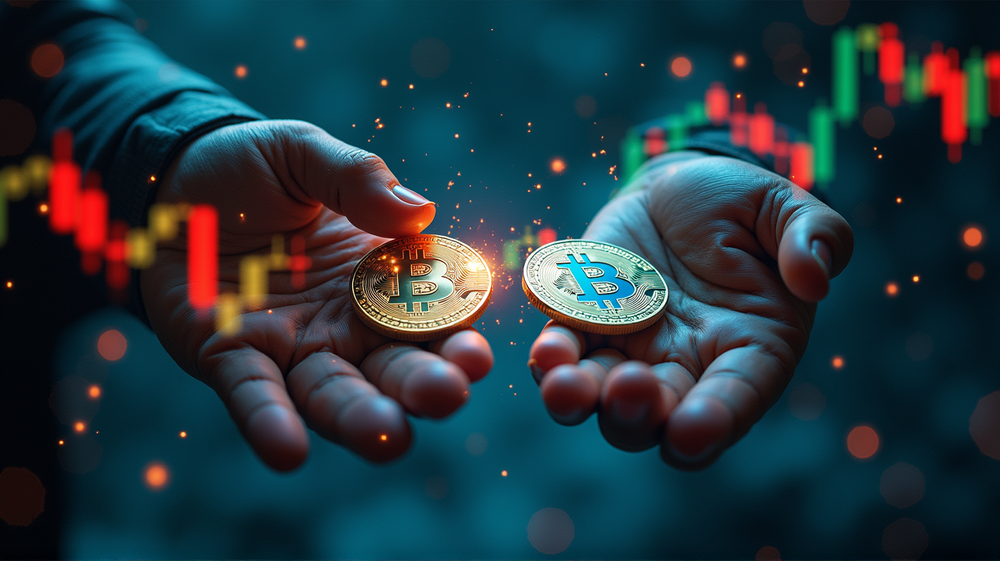
Swap Definition: Meaning in Trading and Investing
Swap Definition: What It Means in Trading and Investing
Swap definition: in finance, a Swap is a contract where two parties exchange cash flows (and sometimes risk) under agreed rules. In plain terms, it is an exchange agreement—often used to convert one type of exposure into another, such as fixed interest to floating interest, or one currency’s payments into another currency’s payments. This is what traders usually mean by Swap meaning: a structured way to transfer or reshape risk, not a magical source of return.
You will see Swap in trading across markets: institutions use derivative swap contracts for stocks (equity exposure), Forex (currency funding), indices (hedging portfolios), and crypto (rate and basis exposure). In retail trading, the word also appears as an “overnight financing” charge/credit for leveraged positions—related in spirit to interest-rate differentials, even if the product mechanics differ from an interbank deal.
Disclaimer: This content is for educational purposes only.
Key Takeaways
- Definition: A Swap is a contract to exchange cash flows, commonly used to reshape interest-rate, currency, or equity risk via a cash-flow exchange.
- Usage: Found in stocks, Forex, indices, and crypto for hedging, funding management, and expressing views without holding the underlying asset.
- Implication: Pricing reflects rates, volatility, and counterparty risk; these deals can influence carry returns and basis relationships.
- Caution: A rate swap deal can reduce one risk while adding others (leverage, liquidity, model risk); it is not a profit guarantee.
What Does Swap Mean in Trading?
In trading, Swap is best understood as a derivatives contract used to trade, hedge, or transform exposures through an agreed schedule of payments. Rather than buying an asset outright, parties agree on “legs” of cash flows—typically one leg is fixed and the other is variable, or one is tied to a reference price/index. This risk-exchange contract allows a trader to isolate a factor (rates, FX, equity performance) and manage it precisely.
Professionals often categorize these instruments by what is being exchanged: interest-rate swaps (fixed vs floating), currency swaps (payments in two currencies), equity swaps (equity/index return vs financing), and credit default swaps (credit protection vs premium). The economic logic is consistent: convert uncertainty into certainty (or the reverse) by trading one cash-flow pattern for another. That is why “what does Swap mean” is less about a chart pattern and more about contract structure, pricing inputs (rates, curves, vol), and counterparty terms (collateral, netting).
In retail margin products, the term “swap” is also used for the overnight rollover cost/credit. It’s a simplified funding adjustment that resembles a carry calculation: hold a leveraged position overnight, pay or receive financing based on the instrument and broker terms. It is related to the broader idea of exchanging financing conditions, but it is not identical to an institutional OTC agreement.
How Is Swap Used in Financial Markets?
Swap usage depends on the market and the time horizon. In stocks and indices, an equity return swap can deliver the performance of an index (price return, sometimes total return) in exchange for a financing leg. Portfolio managers use this type of total return exchange to adjust exposure quickly, hedge beta, or implement overlays without trading every underlying component. The horizon can be weeks to years, but collateral and margining matter daily.
In Forex, currency and rate relationships sit at the center. A cross-currency swap lets firms match assets and liabilities across currencies, while traders pay close attention to funding spreads and basis. Short-term traders may focus on carry and rollover dynamics; longer-term investors use these deals to lock funding and reduce currency mismatch risk.
In crypto, you’ll hear “swap” in two distinct contexts. First, on-chain token swaps (DEX trades) are spot exchanges, not derivatives. Second, in derivatives markets, the economic idea resembles a funding exchange: perpetual futures use funding payments that push the contract toward spot. Traders treat those funding rates like a financing leg—useful for basis trades, hedged carry, or neutral strategies. Regardless of venue, a swap arrangement is a planning tool: it shapes exposures and cash flows, and it must be managed with risk limits and clear assumptions.
How to Recognize Situations Where Swap Applies
Market Conditions and Price Behavior
Swap structures become relevant when the market’s main problem is exposure mismatch: you want the return of one asset but the funding characteristics of another, or you want to neutralize a factor (rates, FX, equity beta). Watch for environments with changing rate expectations, widening credit spreads, or divergent performance between spot and derivatives. These conditions often create opportunities to use a financing exchange to stabilize cash flows or express a relative-value view.
Another clue is persistent “carry” showing up in returns: if holding an exposure earns or costs money over time, you are effectively dealing with a financing leg. In leveraged products, overnight charges/credits can meaningfully change breakeven levels across days and weeks.
Technical and Analytical Signals
There is no single “Swap indicator” on a chart, but analytics point to when a rate swap contract or swap-like structure matters. In rates, traders track curve shape (steepening/flattening), implied forward rates, and swap spreads (the difference between swap rates and government yields). In equity and index exposures, they watch dividend expectations, borrow costs, and futures basis—inputs that affect total-return pricing.
In crypto derivatives, technical recognition often starts with the basis (futures minus spot) and the funding rate. If funding is persistently positive, longs pay shorts, implying crowded long positioning; if negative, shorts pay longs. These signals don’t predict direction by themselves, but they inform whether a hedged position has positive or negative carry.
Fundamental and Sentiment Factors
Macro events frequently push traders toward cash-flow swaps: central bank policy shifts, inflation surprises, or changes in risk appetite. Firms with real-world liabilities use swaps to reduce uncertainty—locking fixed payments or converting foreign revenues. Sentiment matters too: when positioning is one-sided, financing terms can become punitive, and the “cost of holding” dominates short-term returns.
As a Tokyo Bitcoin hardliner, I’ll say this cleanly: fiat systems constantly rewrite the rules through policy. That is exactly why people hedge rates and funding. But even if you despise banks, you still need to understand how these instruments transmit funding stress into prices—especially if you trade anything leveraged.
Examples of Swap in Stocks, Forex, and Crypto
- Stocks: A portfolio manager wants broad index exposure for three months without buying every constituent. They use an equity swap (i.e., a Swap) to receive the index’s total return and pay a floating financing rate. If the index rises, the return leg gains; if financing costs jump, the strategy’s net return can shrink even if the index performs well.
- Forex: A company earns revenue in one currency but pays costs in another. A currency swap (a type of Swap) can exchange interest payments and principal in two currencies, reducing FX risk and stabilizing budgeting. The trade-off is exposure to counterparty terms and the market value swings of the contract.
- Crypto: A trader holds spot crypto long-term but wants to reduce downside risk over the next month. They hedge using a perpetual futures position, then monitor funding payments as a swap-like funding exchange. If funding turns expensive, the hedge may still work for risk reduction, but the ongoing carry cost becomes a key input to position sizing.
Risks, Misunderstandings, and Limitations of Swap
Swap instruments are often marketed as “efficient,” but efficiency cuts both ways. The biggest misunderstanding is treating a swap agreement as a directional signal. It is primarily a risk-transfer tool—and like any derivative, it can hide leverage and path dependency inside “simple” terms.
- Counterparty and collateral risk: OTC deals rely on margining, legal agreements, and the other side’s ability to perform. Even cleared products carry liquidity and margin-call risk.
- Model and curve risk: Pricing depends on discount curves, forward curves, vol, and assumptions that can break under stress.
- Funding and rollover surprises: Retail overnight swap/rollover can change, widening your breakeven and distorting backtests.
- Overconfidence: Traders may “optimize” carry while ignoring tail risk, especially during calm regimes.
- Concentration risk: Using swaps to add exposure can amplify correlation; diversification and stress testing still matter.
How Traders and Investors Use Swap in Practice
Swap use differs sharply between professionals and retail traders. Institutions employ OTC swaps within strict frameworks: collateral schedules, netting sets, exposure limits, and scenario analysis. They might hedge rate risk on a bond portfolio with an interest-rate swap, neutralize currency mismatch with a cross-currency structure, or use an equity return swap for tactical exposure while keeping cash invested elsewhere.
Retail traders usually encounter swap-like costs through leveraged products: holding a position overnight triggers a financing adjustment. Practical discipline here is simple but not easy: treat the carry as part of expected return, and size positions so that adverse moves plus financing won’t force liquidation. Professionals do the same logic, just with better plumbing and cheaper funding.
In both cases, execution should include: (1) a thesis that does not rely solely on financing, (2) position sizing tied to volatility, (3) predefined exits and stop-loss rules, and (4) a plan for margin changes during stress. If you want a structured foundation, study a Risk Management Guide before adding any derivative exposure.
Summary: Key Points About Swap
- Swap meaning: a contract that exchanges cash flows to transfer or reshape risk; a cash-flow exchange is not a prediction tool.
- Used across stocks, Forex, indices, and crypto to hedge, manage funding, or express relative-value views with defined terms.
- Outcomes depend on rates, basis, volatility, and collateral; a swap deal can reduce one risk while adding others.
- Common mistakes include ignoring financing/rollover, underestimating margin calls, and skipping diversification.
To go deeper, review core guides on position sizing, drawdowns, and portfolio construction—starting with a practical Risk Management Guide and a glossary of derivatives basics.
Frequently Asked Questions About Swap
Is Swap Good or Bad for Traders?
It depends on the objective. A Swap can be good when it reduces a specific risk or improves hedging efficiency, but it can be bad if it adds hidden leverage, funding exposure, or counterparty risk that the trader does not control.
What Does Swap Mean in Simple Terms?
It means two sides agree to trade payment streams. That exchange agreement might be fixed interest for floating interest, one currency’s payments for another’s, or an index return for a financing rate.
How Do Beginners Use Swap?
Start by understanding costs. If you trade leveraged products, treat overnight rollover as a funding adjustment and include it in your breakeven and risk plan before holding positions for multiple days.
Can Swap Be Wrong or Misleading?
Yes, if you misread what it represents. A swap arrangement can look profitable in calm periods, but regime shifts (rate spikes, liquidity stress, margin changes) can flip carry and invalidate assumptions.
Do I Need to Understand Swap Before I Start Trading?
Yes, if your product has leverage or overnight holding costs. Even basic knowledge of Swap mechanics—cash flows, carry, and margin—helps you avoid paying for risk you didn’t intend to take.
Disclaimer: This article is for informational purposes only and does not constitute financial advice. Always do your own research or consult a professional.