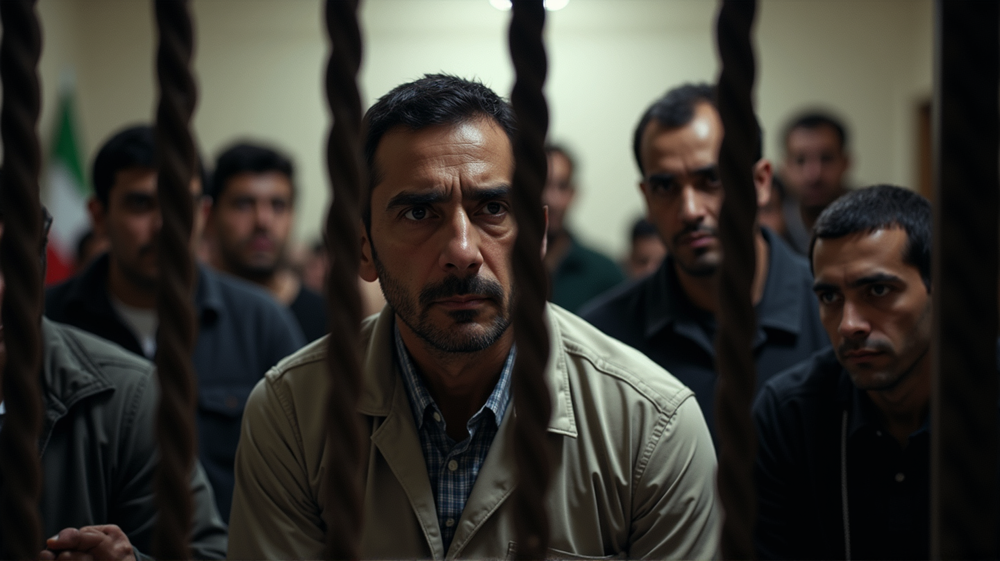
Iran's Dark Tactics: Inmates Claim Atrocious Treatment During Transfer
In a gripping report surfacing from Iran, political prisoners have made damning allegations against the authorities, asserting that brute force was employed during a recent inmate transfer. The events unfolded 45 days after the Israeli strikes had caused significant turmoil, leaving a mark on the narratives of inmate treatment.
An Unyielding Night Unfolds
According to the accounts of 14 political prisoners, the night of August 6, 2025, turned distressing as they were summoned for a transfer back to Evin Prison. A defying stance was taken as prisoners refused the use of handcuffs and leg shackles — demands they previously succumbed to under the duress of bombing-related emergency.
Despite initial agreements on restraint-free transfers, a clash ignited when police sought to enforce shackles on the prisoners, leading to reported beatings and injuries. Names such as Mehdi Mahmoudian and Abolfazl Ghadiani became emblematic of the violence described in a chilling letter penned by those involved.
Hunger, Dehydration, and Denial
In a jarring contrast to official statements labeling the transfer as “calm and uneventful,” prisoners laid bare a reality marked by deprivation — food and water withheld during an arduous six-hour confinement in a bus, exacerbating the plight of sick inmates.
The stark discord between government narratives and inmate testimonies fuels a conversation on accountability and truth, encapsulated in the call for transparency by activists and international observers. As stated in ایران اینترنشنال, probing for the truth becomes paramount when narratives diverge so sharply.
Zahra Rahnavard’s Fiery Rebuke
Zahra Rahnavard, a stalwart leader of Iran’s Green Movement, issued an impassioned denunciation of the prison system’s conduct. Her words, steeped in discontent over unyielding authoritarianism post-war, echo the frustration over missed opportunities for reform.
Rahnavard’s criticisms draw upon the nation’s hopes for reconciliation and reform — hopes dashed by escalating repression, public beatings, and harsh transfers. Her call for the release of political prisoners and governmental solidarity underscores a plea resounding among Iran’s reform-minded populace.
The Demand for Accountability Rings Louder
The prisoners’ accounts, paired with Rahnavard’s stirring rhetoric, not only call into question the actions taken but also the very governance facilitating such occurrences. The demand for a formal apology and concrete reforms reverberates through activist channels and beyond Iran’s borders.
While the course of justice remains uncertain, the cries for accountability and human rights persistence are far from silenced. The Iranian government’s response to these allegations will undoubtedly shape not just domestic sentiment but also international perceptions concerning the nation’s human rights record.