Losing the Tug-of-War: How America Faltered in the Information Battle with China
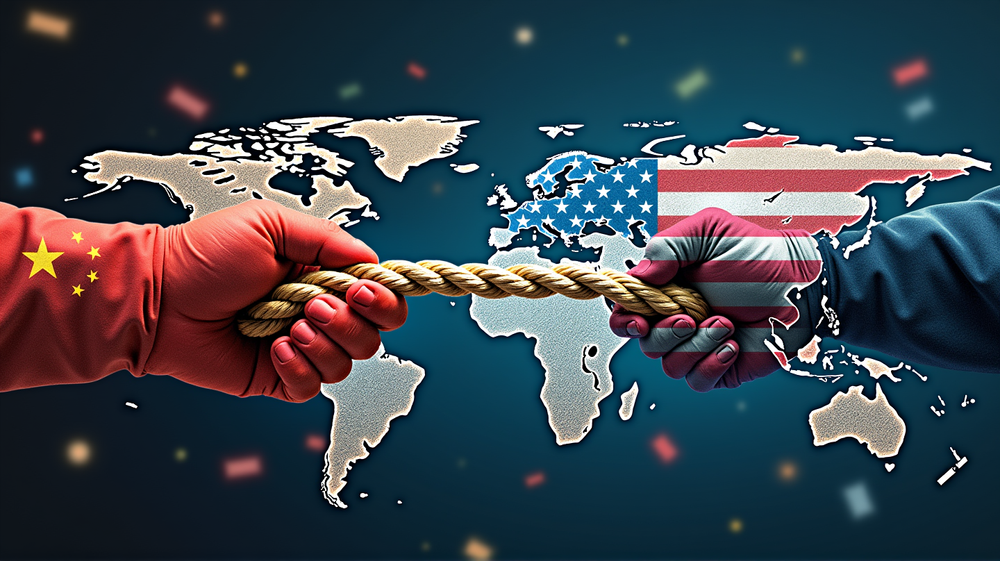
In a rapidly changing global landscape, the battle for hearts and minds sees China gaining substantial ground against America. But who truly lost this information war, and how did it happen?
Unleashing China’s Soft Power
Beijing’s strategic push in global media narratives has witnessed influential personalities like streamer IShowSpeed drawing massive audiences with his visit to Shenzhen. Such moments highlight the effectiveness of China’s state-backed media platforms like CGTN in shaping international perspectives. According to Semafor, this approach contrasts sharply with the US, which once relied on cultural products like Disney films to sell its values globally.
The Waning Power of American Media
After the Cold War, the US allowed its official broadcasting efforts to wane, betting instead on its private sector’s prowess in cultural representation. However, these private entities couldn’t rival state-driven campaigns like China’s robust outreach programs. As described in the article, the US’s response to propaganda, particularly against Russian misinformation, was marred by inefficacy and market perceptions of censorship.
Financial Disparity and Strategic Retreat
The economic aspect of this war cannot be ignored. At the height of fostering global media influence, the US found itself outspent by China in almost every arena. Former officials recount strained efforts to counter China’s proliferation of Xinhua news services across Asia and Africa. As Ben Smith discusses, this fiscal discrepancy led to America’s withdrawal from vital initiatives, limiting its global outreach and narrative control.
Bipartisan Concerns and Strategic Missteps
The political realm offers little consolation. Critiques from both sides of the aisle lament the reduction of programs like Radio Free Asia, while political machinations focus internally rather than addressing the broader Chinese challenge. With the Global Engagement Center shuttered, audiences in sensitive areas now miss American narratives, leaving a void that China readily fills.
A Reflective Lens on Propaganda Strategies
Ben’s view points out a shift from wolf warrior diplomats back to traditional, soft approaches by China, contrasting America’s current strategy. This realignment poses further questions about how propaganda will evolve and its implications for global power balances.
Room for Debate
Though some argue the US remains active in other cultural engagement avenues, such as academic exchanges and diplomatic diplomacy, others insist that without direct countermeasures in media and information, these efforts have limited impact. The conversation about aligning truthful messaging with national interests remains pertinent, as observed in ongoing debates.
Notable Observations
From international editorials to official reports, the belief that the United States’ diminishing role in global media creates space for China dominates the discourse. As the stakes rise, so does the urgency for reevaluating strategies to reclaim influence.
In the unfolding narrative, the question “Who lost the information war with China?” now shifts to what comes next in adapting to a world where information is power.