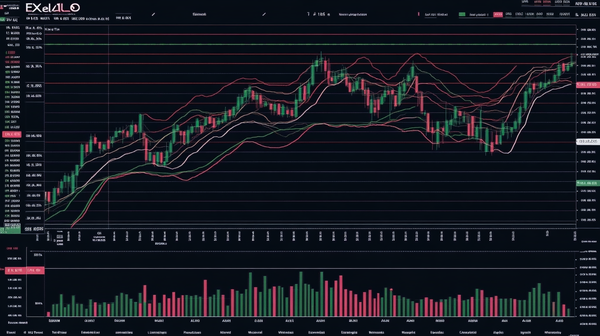
Albion Capitholm Trading Platform Alternatives 2026
Albion Capitholm Trading Platform Alternatives 2026: Reliable Options for Online Traders
Leverage is a loud seduction. It whispers “1:500” and pretends risk is optional. That’s the first thing I watch for when readers ask about Albion Capitholm and then—usually after a spread surprise, a withdrawal delay, or a support loop—start hunting for Albion Capitholm alternatives that feel more grown-up. Based on what’s commonly visible from offshore CFD venues in this category, Albion Capitholm looks positioned as a forex/CFD-first broker: a proprietary WebTrader with a mobile app, a menu of major/minor FX pairs, indices, commodities, and a smaller list of crypto CFDs. Expect the usual retail packaging: a low-ish entry ticket (often around $250), high leverage, and costs that can look fine on a quiet chart but bite during news when slippage and wider spreads appear. If you’re in the US, the bigger issue is access—many offshore CFD shops restrict US residents outright, and “workarounds” are a fast path to frozen accounts once KYC/AML gets serious. For EU/UK traders, the difference is protection: FCA/ASIC/CySEC frameworks, segregated client funds, and compensation schemes can matter more than an extra indicator on a WebTrader. The point of this guide is not to cheerlead for any broker. It’s to map safer, verifiable competitors to Albion Capitholm, matched to what you actually trade.
Disclaimer: This article is for informational purposes only and does not constitute investment advice. CFDs and other leveraged products involve a high risk of loss and may not be suitable for all investors.
Key Takeaways (TL;DR)
- Offshore-style brokers typically pair high leverage (often ~1:500) with thinner investor protections; regulated alternatives can add safeguards like segregated funds and formal complaint channels.
- Compare costs using round-turn trade cost (spread + commission + swaps), not headline “from” spreads—especially if you trade frequently.
- If you want real stocks/ETFs (not CFDs), you’ll likely need a multi-asset broker such as IBKR or Saxo rather than a CFD-only venue.
- Switching platforms is a process: complete KYC at the new broker first, export your trade history, then withdraw using the original funding rail to avoid AML friction.
What Is Albion Capitholm and How Does Its Trading Platform Work?
For traders who mainly click in and out of forex and index CFDs, Albion Capitholm appears built as a retail CFD venue rather than a “true” multi-asset brokerage with direct market access. That usually means the broker is the price-maker (market maker) or routes flow internally, with execution quality depending on how the dealing model is run. Publicly, firms in this segment often sit under an offshore framework; for consistency in this review, I treat Albion Capitholm as operating via the Seychelles FSA route, which is not the same protection level as FCA, ASIC, CySEC, or NFA oversight. This context is why platforms like Albion Capitholm can feel convenient—until you need strict rules, transparent dispute paths, or institutional-grade reporting.
Albion Capitholm Web Trading Platform: Core Features and Tools
The typical stack here is a proprietary WebTrader paired with iOS/Android apps. You usually get functional charting with common indicators (moving averages, RSI, MACD), drawing tools, and basic timeframe control—enough for discretionary trading, less ideal for systematic work. Order tickets in these interfaces tend to cover market/limit/stop and simple stop-loss/take-profit, while more advanced order management (partial fills, algorithmic order types, depth-of-market) is often limited. Mobile parity is “good enough” for monitoring and closing trades, but heavy analysis and multi-chart workflows still feel cramped. Account dashboards usually emphasize margin level, open P/L, and funding, which matters when leverage is high and margin calls arrive fast.
Trading Fees, Spreads, and Account Types at Albion Capitholm
Cost is where many competitors to Albion Capitholm separate themselves. A common retail configuration is a Standard-style account with EUR/USD around 2.0 pips in typical conditions, plus swaps (overnight financing) on leveraged positions. Some brokers in this tier also advertise Raw/ECN-style pricing—think ~0.0–0.4 pips plus a commission roughly $6 round-turn per standard lot—though the real question is execution quality during volatility, not the headline minimum. Watch for non-trading fees too: withdrawal charges, currency conversion markups, and inactivity fees that quietly compound if you park an account. If your strategy trades often, round-turn cost-of-trade is the only metric that respects math.
When Do Traders Start Looking for Albion Capitholm Alternatives?
The moment you treat trading like engineering—inputs, outputs, failure modes—you start noticing where a broker’s structure can hurt you. Albion Capitholm alternatives become relevant when the platform is fine for casual clicks but weak for repeatable execution, transparent oversight, or strategy scaling. High leverage can amplify this: a small spread increase, a slightly worse fill, or a swap surprise turns into an account-level event when you’re running tight margin. For US/EU readers in particular, the biggest “signal” is the difference between an offshore rulebook and a regulator that can actually sanction, compensate, and enforce.
- You need MT4/MT5 or cTrader for EAs/automation, and a WebTrader-only workflow blocks strategy execution or backtesting consistency.
- Your withdrawals start taking longer than expected, or you’re asked for repeated documents beyond reasonable KYC/AML steps.
- You’re paying “quiet” costs—swap/overnight fees or wide typical spreads (around 2.0 pips on EUR/USD)—that make your monthly P/L look like it’s leaking.
- You want real stock/ETF ownership (voting rights, transfers, corporate actions), but the broker only offers stock exposure as CFDs.
How to Choose a Reliable Alternative to the Albion Capitholm Trading Platform
Choose your next broker the way you’d choose a hardware wallet: verify first, then trust. For alternatives to the Albion Capitholm trading platform, I treat the decision as a fit-to-strategy exercise: your instruments, your holding period, your need for automation, and your tolerance for slippage under stress. Price matters, but survivability matters more—especially when leverage and CFDs turn small mistakes into forced liquidations.
Regulation, Safety, and Investor Protection
Start with the regulator’s public register: FCA (UK), ASIC (Australia), CySEC (Cyprus/EU), and NFA/CFTC (US) are concrete reference points. In the UK, FSCS coverage can go up to £85,000 for eligible claims; in Cyprus, the ICF can cover up to €20,000—details vary by entity and client classification. Look for segregated client funds language, negative balance protection (common in EU/UK retail regimes), and a clear legal entity name that matches the register. If you can’t tie the broker’s entity to a regulator entry, you’re not comparing equals.
Available Markets and Instruments
“More symbols” is marketing; “the right instruments” is utility. If you only trade FX and index CFDs, a specialist might be enough. If you need stocks, ETFs, options, or futures, you’ll want a multi-asset venue with real market access rather than a CFD wrapper. Crypto is its own trapdoor: many brokers offer crypto CFDs (price exposure only) while others provide spot custody; neither is “Bitcoin.” Bitcoin is bearer asset—21 million, and not a coin more—so understand what you’re actually buying.
Trading Costs: Spreads, Commissions, and Other Fees
Use round-turn costs as your ruler: spread + commission per lot, then add swaps if you hold overnight. A scalper doing 200 standard lots/month can bleed thousands if the effective spread is even 0.5 pips worse than expected. Also check non-trading fees: inactivity penalties, withdrawal fees, and FX conversion charges. If you’re comparing Albion Capitholm alternatives, don’t let maximum leverage distract you; leverage is not a discount, it’s a multiplier on errors.
Platforms, Tools, and Execution Quality
Platform choice is strategy choice. MT4/MT5 and cTrader open the door to automation, custom indicators, and deeper order control; proprietary platforms can be smooth but limited. Execution model matters too: market maker vs STP/ECN/DMA changes how fills behave in fast markets. Slippage and re-quotes show up during news, thin liquidity hours, or crypto weekend gaps. If execution quality is opaque, run a small live test and log your fills versus quotes over a week.
Support, Education, and Overall User Experience
Support is a risk control function, not a comfort feature. Check hours (24/5 vs 24/7), language coverage, and whether you can reach a human when funding is stuck. Education matters if you’re new to CFDs—margin call mechanics, swap math, and position sizing should be explained plainly. Mobile parity is also real: if you manage risk on your phone, you need stable order modification, alerts, and a clean margin view without hidden menus.
Albion Capitholm and Different Asset Classes: When Alternatives May Be Better
Albion Capitholm Forex and CFD Trading
On FX/CFDs, the trade-off is usually simplicity versus pricing/execution transparency. Albion Capitholm-style venues commonly list ~30–50 FX pairs, ~8–15 indices, and ~5–10 commodities, with leverage often marketed around 1:500 and EUR/USD spreads around 2.0 pips on a standard account. That can work for low-frequency discretionary trading, but it’s expensive for high turnover. Pepperstone and IC Markets are often chosen by active FX traders because they support MT4/MT5 and cTrader, and their Raw-style accounts typically price tighter spreads with explicit commissions—making it easier to audit your true cost per round turn. If your edge is small (most are), shaving effective spread and improving fill quality can matter more than chasing a larger leverage number.
Albion Capitholm Stock and ETF Trading
Stock/ETF trading is where “broker” versus “CFD shop” becomes obvious. With offshore CFD-first platforms, equities are frequently offered only as CFDs—no shareholder rights, no transferability, and different tax/documentation behavior depending on jurisdiction. If you need real stocks/ETFs, Interactive Brokers (IBKR) is the cleanest answer for many US/EU traders: broad market access, options and futures, and a long operating history under major regulators (SEC/FINRA in the US, FCA in the UK, plus other regional entities). Saxo Bank is another strong multi-asset alternative, especially in Europe, with a polished platform stack and wide instrument coverage. This is a core reason regulated options vs Albion Capitholm can be worth the extra onboarding friction.
Albion Capitholm Crypto Trading
If Albion Capitholm offers crypto, it’s typically crypto CFDs—price exposure, not on-chain coins, and not self-custody. That distinction isn’t philosophy; it’s mechanics. With CFDs, you’re taking counterparty risk and paying financing/spread costs, and weekend gaps can hit hard because crypto trades 24/7 while many CFD desks do not. For traders who want regulated crypto-CFD exposure, IG and Plus500 are commonly used in jurisdictions where available, because their entities sit under recognized regulators (such as FCA/CySEC/ASIC depending on region) and they provide standardized risk controls like negative balance protection for retail where required. If you want actual bitcoin, withdraw to self-custody—banks and fiat are not your friends, and neither is “paper bitcoin.”
Best Albion Capitholm Alternatives for 2026: Comparison of Top Trading Platforms
Interactive Brokers (IBKR): Key Facts and How It Compares to Albion Capitholm
Regulation: SEC/FINRA (US), FCA (UK), IIROC (Canada) via regional entities
Markets: Stocks, ETFs, options, futures, FX, bonds (market access varies by entity)
Fees: FX pricing is typically commission-based with tight spreads; stock/ETF commissions vary by market and plan
Platform: Trader Workstation (TWS), web and mobile apps, APIs
Best For: Multi-asset traders who want real market access (not CFD-only)
Pepperstone: Key Facts and How It Compares to Albion Capitholm
Regulation: FCA, ASIC, CySEC, DFSA (entity-dependent)
Markets: FX and CFDs (indices, commodities; crypto CFDs where permitted)
Fees: Standard spreads often around ~1.0–1.3 pips on EUR/USD; Raw accounts can be ~0.0–0.3 pips + commission (varies by platform/entity)
Platform: MT4, MT5, cTrader, TradingView integration (availability varies)
Best For: Active FX traders optimizing for low round-turn costs
Saxo Bank: Key Facts and How It Compares to Albion Capitholm
Regulation: FCA, MAS, DFSA via group/regional entities
Markets: Stocks, ETFs, bonds, FX, options, futures, CFDs (product set varies by jurisdiction)
Fees: Tiered pricing; FX spreads typically competitive for larger accounts; commissions apply on exchange-traded products
Platform: SaxoTraderGO, SaxoTraderPRO
Best For: Portfolio-style traders combining FX with listed products
OANDA: Key Facts and How It Compares to Albion Capitholm
Regulation: CFTC/NFA (US), FCA, ASIC, IIROC (entity-dependent)
Markets: FX (plus CFDs in certain regions; US offering differs)
Fees: Typically spread-only pricing; EUR/USD can often be ~0.6–1.2 pips depending on conditions and account type
Platform: OANDA web/mobile, MT4 (availability varies)
Best For: Risk-first traders who value strong regulatory coverage
IG: Key Facts and How It Compares to Albion Capitholm
Regulation: FCA, ASIC, MAS via regional entities
Markets: CFDs (indices, FX, shares), spread betting (UK/IE), some exchange access in certain regions
Fees: Spreads vary by market; FX spreads are often competitive on major pairs; overnight financing applies on CFDs
Platform: IG web platform, mobile app, MT4 (where offered)
Best For: Index-CFD traders who want a mature platform stack
Plus500: Key Facts and How It Compares to Albion Capitholm
Regulation: FCA, CySEC, ASIC, MAS via regional entities
Markets: CFDs on FX, indices, commodities, shares; crypto CFDs where permitted
Fees: Spread-based pricing; costs vary by instrument and volatility; financing applies to overnight CFD holds
Platform: Plus500 proprietary WebTrader and mobile app
Best For: Simplicity-focused CFD traders who don’t need MT4/cTrader
Comparison Summary
| Platform | Regulation | Main Markets | Typical Costs | Best For |
|---|---|---|---|---|
| Interactive Brokers (IBKR) | SEC/FINRA, FCA, IIROC | Stocks/ETFs, options, futures, FX, bonds | Commission-based; tight FX pricing; exchange fees/commissions vary | Multi-asset traders who want real market access (not CFD-only) |
| Pepperstone | FCA, ASIC, CySEC, DFSA | FX + CFDs (indices/commodities; crypto CFDs where allowed) | Standard ~1.0–1.3 pips; Raw ~0.0–0.3 pips + commission | Active FX traders optimizing for low round-turn costs |
| Saxo Bank | FCA, MAS, DFSA | Stocks/ETFs, options, futures, FX, CFDs | Tiered spreads/commissions; typically better with larger balances | Portfolio-style traders combining FX with listed products |
| OANDA | CFTC/NFA, FCA, ASIC, IIROC | FX (CFDs in select regions) | Spread-only; EUR/USD often ~0.6–1.2 pips in normal conditions | Risk-first traders who value strong regulatory coverage |
| IG | FCA, ASIC, MAS | CFDs (FX/indices/shares); spread betting in UK/IE | Variable spreads; overnight financing on CFDs | Index-CFD traders who want a mature platform stack |
| Plus500 | FCA, CySEC, ASIC, MAS | CFDs across FX/indices/commodities/shares | Spread-based; instrument-dependent; financing for overnight holds | Simplicity-focused CFD traders who don’t need MT4/cTrader |
How to Safely Move from Albion Capitholm to Another Broker
Switching brokers is less like “opening a new app” and more like moving your operational risk to a new counterparty. Treat the sequence as damage control: verify regulation, secure access, then move funds in a way that won’t trigger AML reversals. I’ve seen traders blow up not from markets, but from rushed migrations—closing positions in a panic, missing swap charges, or losing access to statements. If you’re coming from Albion Capitholm, assume positions won’t transfer and plan your exits deliberately.
- Confirm the new broker’s legal entity on the regulator’s register (FCA Register, ASIC Connect, CySEC database, or NFA BASIC) and match the entity name to the website footer and account agreement.
- Open the new account and complete KYC (ID + proof of address) before you touch your old account; approvals often clear quickly, but delays happen when documents don’t match.
- Flatten risk on the old platform by closing open CFD positions or reducing size; don’t assume “position transfer” is possible across brokers.
- Export statements, trade history, and funding records for tax and dispute purposes; keep copies offline.
- Withdraw funds using the original deposit method where possible; many brokers enforce source-of-funds rules under AML, and mismatched rails can stall payouts.
Ready to Explore Albion Capitholm?
If you’re still evaluating the platform, check onboarding terms, regional eligibility, and the exact entity you would be contracting with. Then compare it side-by-side against regulated Albion Capitholm alternatives on execution tools, funding rules, and total trading costs—before you commit meaningful capital.
FAQ: Albion Capitholm Alternatives and Trading Platforms
What is the best alternative to Albion Capitholm in 2026?
The best option depends on what you trade and whether you need real market access or just CFDs. For real stocks/ETFs plus futures/options access, Interactive Brokers (IBKR) is hard to beat; for FX-focused trading with MT4/MT5/cTrader, Pepperstone is often a cleaner fit. If your main goal is a straightforward CFD interface under major regulation, IG or Plus500 can be simpler. This is the core logic behind the best Albion Capitholm alternatives 2026 list above.
Is Albion Capitholm a safe broker/platform?
Albion Capitholm appears aligned with an offshore framework (treated here as Seychelles FSA), which generally offers weaker investor protections than FCA/ASIC/CySEC/NFA regimes. That doesn’t automatically mean fraud, but it does change the risk profile: fewer formal safeguards, different dispute resolution, and less clarity around client-money protections. If you use it, keep position sizing conservative—CFDs plus high leverage can erase capital quickly.
Can I trade stocks, futures, or crypto with Albion Capitholm?
Expect mainly forex and CFDs; stocks/ETFs are often offered as CFDs rather than real ownership, and futures access is typically not the core offering in this broker category. Crypto exposure, when available, is usually via crypto CFDs (price exposure only), not on-chain coins. For listed futures and broad equities, IBKR or Saxo are better aligned; for regulated crypto-CFD access, IG or Plus500 may be available depending on your region.
What should I check before switching from Albion Capitholm to another platform?
Verify the new broker’s entity on the regulator’s register and confirm protections like segregated client funds and (where applicable) negative balance protection. Next, map your strategy needs—platform stack (MT4/MT5/cTrader), execution model, and your true round-turn costs including swaps. Finally, export records and plan withdrawals from Albion Capitholm using the original funding method to reduce AML-related delays.
About the Author: Kenji Tanaka is a Tokyo-based financial writer and active trader focused on market structure, execution, and risk. I studied cryptography at the University of Tokyo (incomplete) and I’m unapologetically Bitcoin-orthodox: 21 million — and not a coin more. I distrust banks and fiat, which is exactly why I’m strict about counterparty risk and verifiable regulation when discussing CFD brokers.