Anchor Bondiment Trading Platform Alternatives 2026
Anchor Bondiment Trading Platform Alternatives 2026: Reliable Options for Online Traders
Leverage is a blade. Used well, it’s precise; used carelessly, it takes fingers. That’s the mindset I bring when people ask about Anchor Bondiment and why they keep hunting for something sturdier in 2026. Anchor Bondiment appears to sit in the offshore CFD/forex segment, typically associated with lighter oversight, higher headline leverage (often around 1:500), and a proprietary WebTrader that feels “good enough” until your strategy needs more. Traders get drawn in by simple onboarding, a low-ish minimum deposit (commonly around $250), and access to the usual menu: roughly a few dozen FX pairs, indices, commodities, and a short list of crypto CFDs.
The problem is not that CFDs exist—CFDs are just a wrapper. The problem is the wrapper plus weak guardrails: how client funds are handled, how disputes are resolved, and whether execution quality holds up during volatility. If you trade around news, slippage and re-quotes matter more than any marketing banner. If you hold positions, swaps/overnight financing quietly becomes your largest “fee.” And if you’re in the US, many offshore CFD venues aren’t even an option.
This guide maps practical Anchor Bondiment alternatives for a US/EU-focused audience: platforms with clearer regulatory footing, stronger disclosure, and toolsets that can actually support disciplined risk management—whether you’re a manual trader or you run systems.
Disclaimer: This article is for informational purposes only and does not constitute investment advice. CFDs and other leveraged products carry a high risk of loss and may not be suitable for all investors.
Key Takeaways (TL;DR)
- Offshore, high-leverage CFD platforms can amplify execution and withdrawal risks; compare investor protection features (segregated funds, compensation schemes) before you fund.
- Cost comparisons should use round-turn trading cost (spread + commission + expected slippage), not just “from 0.0 pips” headlines.
- If you want real stocks/ETFs (not equity CFDs), multi-asset brokers like Interactive Brokers or Saxo are in a different league than CFD-only venues.
- Switching platforms is easiest when you KYC the new broker first, export tax/trade history second, then withdraw using the original funding method to reduce AML friction.
What Is Anchor Bondiment and How Does Its Trading Platform Work?
From what’s typically observable for this category, Anchor Bondiment operates as an offshore-style forex/CFD venue, most consistent with a Seychelles FSA framework rather than a top-tier onshore regime. The product mix is usually CFD-first: FX pairs (often ~30–50), major indices, a handful of commodities, and crypto CFDs (commonly ~10–30). That positioning tends to appeal to short-term traders who want fast access, high leverage, and a single web interface—less so to investors who want exchange-traded assets, deep reporting, or a long paper trail.
Anchor Bondiment Web Trading Platform: Core Features and Tools
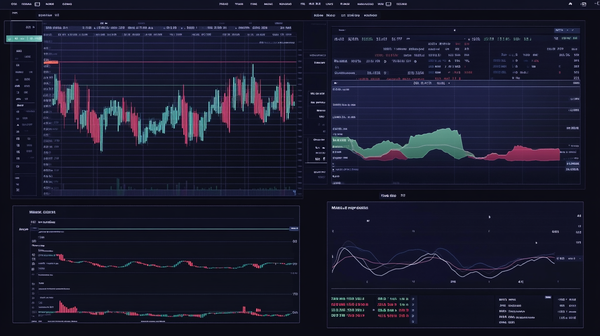
Expect a proprietary WebTrader with basic-to-mid tooling: clean watchlists, one-click trading, and charting that covers the essentials without feeling institutional. Chart packages in this tier usually provide common indicators (moving averages, RSI, MACD), a standard set of drawing tools (trendlines, fibs), and a handful of order controls such as market/limit/stop, plus stop-loss and take-profit. Mobile apps on iOS/Android often mirror the core workflow—quotes, chart checks, and position management—but the deeper workspace (multi-chart layouts, advanced alerts) usually remains a desktop-first experience. In other words, it’s similar to many platforms like Anchor Bondiment: functional, but not built for complex execution workflows.
Trading Fees, Spreads, and Account Types at Anchor Bondiment
Pricing in this offshore CFD segment commonly centers on a Standard-style account where EUR/USD spreads sit around ~2.0 pips in typical conditions, with trading costs embedded in the spread rather than a separate commission. Some brokers in the same bracket also offer a “Raw/ECN-like” tier (often 0.0–0.4 pips plus roughly $5–$8 round-turn commission), but terms vary and can change with liquidity. Overnight financing (swap) is the silent line item: hold a leveraged CFD for weeks and you feel it. Also watch for non-trading fees—withdrawal charges, currency conversion costs, and inactivity fees—which can be more painful than a pip here or there.
When Do Traders Start Looking for Anchor Bondiment Alternatives?
Pressure points show up fast once real money is on the line. Some traders hit a wall when they need tighter execution analytics; others get uneasy about offshore dispute resolution during drawdowns. My view is simple: if you can’t explain your broker’s legal jurisdiction, segregation policy, and execution model, you’re trading with one hand tied. That’s why Anchor Bondiment alternatives become a serious topic when the account size grows, or when a strategy depends on consistent fills rather than hope.
- You need MT4/MT5 or cTrader to run an EA, copy a systematic workflow, or backtest with consistent order handling—and the current WebTrader doesn’t support it.
- You’re trading news or tight stops, and you want clearer disclosure on slippage, re-quotes, and whether execution is market maker or STP/ECN.
- Your plan requires real stocks/ETFs (ownership, corporate actions, proper reporting), not stock CFDs that behave like derivatives only.
- You’re uncomfortable wiring larger balances to an offshore framework, especially where compensation schemes like FSCS/ICF don’t apply.
How to Choose a Reliable Alternative to the Anchor Bondiment Trading Platform
Selection is not a beauty contest; it’s risk budgeting. Start by defining what you’re protecting (capital, strategy edge, or access to specific markets), then choose a broker whose legal structure and tooling match that goal. For alternatives to the Anchor Bondiment trading platform, I weight three things heavily: enforceable oversight, transparent cost math, and execution you can measure in live conditions.
Regulation, Safety, and Investor Protection
For US/EU traders, oversight isn’t a badge—it’s a dispute pathway. Look for brokers under the FCA, ASIC, CySEC, or (in the US) NFA/CFTC where applicable. FCA-regulated firms can fall under FSCS protection up to £85,000 in certain cases; CySEC firms may be covered by the ICF up to €20,000 (eligibility depends on circumstances). Segregated client funds, negative balance protection (common in UK/EU retail), and clear complaints procedures matter far more than headline leverage.
Available Markets and Instruments
Write down what you actually trade: FX scalps, index CFDs, long-term ETF accumulation, options hedges, or futures for macro. Offshore CFD venues usually cover FX/indices/commodities adequately, but they rarely match multi-asset access (real stocks, ETFs, options, futures, bonds) from brokers like Interactive Brokers or Saxo. If your goal is diversified exposure, “brokers similar to Anchor Bondiment” may simply be the wrong category.
Trading Costs: Spreads, Commissions, and Other Fees
Spreads are only the visible part. Compare total round-turn cost: spread + commissions + expected slippage, and don’t ignore swap/overnight fees if you hold positions. A Raw-style account might show 0.x pips but charge commission; a Standard account might charge no commission but widen spreads during volatility. Also check non-trading fees: inactivity charges, withdrawal fees, and conversion costs can erase a month of careful trading.
Platforms, Tools, and Execution Quality
Platform choice is strategy choice. MT4/MT5 remain common for EAs; cTrader is popular with execution-focused retail traders; proprietary platforms can be excellent, but you need evidence: order types, depth-of-market, and stable uptime. Execution model matters too—market maker vs STP/ECN/DMA changes how your orders interact with liquidity. If you’re moving away from Anchor Bondiment, insist on clarity here, because “fast execution” claims are meaningless without fill statistics in your own logs.
Support, Education, and Overall User Experience
Good support reduces operational risk. Test response times before funding big: live chat availability during your market hours, competent answers on margin calls and swaps, and clear KYC/withdrawal guidance. Education matters less to veterans, but quality research and platform tutorials help you avoid avoidable mistakes. Finally, check mobile parity—if you must manage risk away from your desk, the app can’t be an afterthought.
Anchor Bondiment and Different Asset Classes: When Alternatives May Be Better
Anchor Bondiment Forex and CFD Trading
Anchor Bondiment’s core lane is likely FX and CFDs: a workable list of major/minor pairs plus indices and commodities, paired with high leverage (often around 1:500). The trade-off is that offshore CFD execution can be hard to evaluate until volatility hits—exactly when slippage and stop execution matter most. Regulated competitors to Anchor Bondiment, such as Pepperstone (FCA/ASIC/CySEC/DFSA) or IG (FCA/ASIC/MAS), typically offer clearer disclosures and more mature infrastructure. Cost-wise, many regulated FX specialists can price EUR/USD around ~0.1–0.3 pips plus commission on Raw accounts, or ~0.8–1.2 pips on Standard-style pricing, depending on region and account type. If you’re a frequent trader, that delta compounds—especially when you measure it as round-turn cost, not a headline spread.
Anchor Bondiment Stock and ETF Trading
Where offshore CFD platforms often fall short is true investment access. Stock/ETF exposure, if offered at all, is commonly via CFDs—no shareholder rights, no direct exchange access, and financing costs that punish long holds. For traders who want real equities or ETFs (and proper reporting), Interactive Brokers (IBKR) is the obvious heavyweight: broad global exchanges, options/futures, and institutional-grade reporting under SEC/FINRA in the US and FCA in the UK (among others). Saxo Bank is another strong choice for multi-asset access and research tooling under top regulators (e.g., FCA/DFSA/MAS). These are not “just another CFD venue”; they are infrastructure for building a portfolio—if you can tolerate stricter KYC and a more professional interface.
Anchor Bondiment Crypto Trading
Crypto on many CFD brokers is exposure, not ownership. That distinction matters to me because paper Bitcoin is not Bitcoin; it’s a contract priced in fiat terms, with counterparty risk stapled to it. Anchor Bondiment likely offers a menu of crypto CFDs (often ~10–30 coins), which can be useful for short-term hedging but will never let you withdraw on-chain. If you want regulated crypto CFDs within a broader brokerage framework, Plus500 (FCA/CySEC/ASIC/MAS) and IG are common regulated options in supported regions. Just keep it honest: crypto CFDs add leverage on top of volatility. Risk controls—position sizing, hard stops, and margin discipline—matter more here than any platform UI.
Best Anchor Bondiment Alternatives for 2026: Comparison of Top Trading Platforms
Interactive Brokers (IBKR): Key Facts and How It Compares to Anchor Bondiment
Regulation: SEC/FINRA (US), FCA (UK), IIROC (Canada)
Markets: Stocks, ETFs, options, futures, FX, bonds
Fees: FX spreads vary by venue/size; commissions apply on many exchange-traded products (generally low, but plan-dependent)
Platform: Trader Workstation (TWS), IBKR Mobile, Client Portal API
Best For: Real multi-asset execution and reporting (portfolio-first traders)
Pepperstone: Key Facts and How It Compares to Anchor Bondiment
Regulation: FCA, ASIC, CySEC, DFSA
Markets: FX, CFDs (indices, commodities, some crypto CFDs depending on region)
Fees: EUR/USD often ~0.0–0.3 pips + commission on Razor/Raw; ~0.8–1.2 pips on Standard (varies by entity)
Platform: MT4, MT5, cTrader, TradingView (integration where available)
Best For: System traders and scalpers who need MT4/MT5/cTrader
IG: Key Facts and How It Compares to Anchor Bondiment
Regulation: FCA, ASIC, MAS
Markets: CFDs (FX, indices, commodities, shares), spread betting (UK/IE), limited crypto CFDs where permitted
Fees: Typical FX spreads often around ~0.6–1.2 pips on majors (varies by product and region); financing applies on held CFDs
Platform: IG web platform, mobile app; MT4 available in supported regions
Best For: Broad CFD market access with strong research tools
Saxo Bank: Key Facts and How It Compares to Anchor Bondiment
Regulation: FCA, DFSA, MAS
Markets: Stocks, ETFs, options, futures, FX, bonds, CFDs
Fees: FX spreads typically from ~0.6 pips (tier/volume dependent); commissions apply on exchange-traded instruments
Platform: SaxoTraderGO, SaxoTraderPRO
Best For: Active investors who want pro-grade analytics and global exchanges
OANDA: Key Facts and How It Compares to Anchor Bondiment
Regulation: CFTC/NFA (US), FCA (UK), ASIC (AU), IIROC (Canada)
Markets: FX (core), CFDs in certain regions (indices/commodities where offered)
Fees: Pricing typically spread-based; majors often around ~0.8–1.5 pips depending on region and market conditions
Platform: OANDA Trade (web/mobile), MT4
Best For: US-eligible FX traders who prioritize oversight and transparency
Plus500: Key Facts and How It Compares to Anchor Bondiment
Regulation: FCA, CySEC, ASIC, MAS
Markets: CFDs (FX, indices, commodities, shares, crypto CFDs where permitted)
Fees: Primarily spread-based; typical major FX spreads often around ~0.6–1.5 pips depending on instrument and conditions
Platform: Plus500 proprietary WebTrader and mobile app
Best For: Beginners who want a simple, app-first CFD interface
Comparison Summary
| Platform | Regulation | Main Markets | Typical Costs | Best For |
|---|---|---|---|---|
| Interactive Brokers (IBKR) | SEC/FINRA, FCA, IIROC | Real stocks/ETFs, options, futures, FX, bonds | Low commissions (plan-based); FX spreads vary by venue/size | Real multi-asset execution and reporting (portfolio-first traders) |
| Pepperstone | FCA, ASIC, CySEC, DFSA | FX + CFDs (indices/commodities; some crypto CFDs) | ~0.0–0.3 pips + commission (Raw); ~0.8–1.2 pips (Standard) | System traders and scalpers who need MT4/MT5/cTrader |
| IG | FCA, ASIC, MAS | CFDs across major asset classes; spread betting (UK/IE) | Often ~0.6–1.2 pips on major FX; financing on held CFDs | Broad CFD market access with strong research tools |
| Saxo Bank | FCA, DFSA, MAS | Stocks/ETFs/options/futures/FX/bonds + CFDs | FX from ~0.6 pips (tiered); commissions on exchanges | Active investors who want pro-grade analytics and global exchanges |
| OANDA | CFTC/NFA, FCA, ASIC, IIROC | FX (core); CFDs where offered | Mostly spread-based; majors often ~0.8–1.5 pips | US-eligible FX traders who prioritize oversight and transparency |
| Plus500 | FCA, CySEC, ASIC, MAS | CFDs (FX, shares, indices, commodities, crypto CFDs) | Spread-based; majors often ~0.6–1.5 pips | Beginners who want a simple, app-first CFD interface |
How to Safely Move from Anchor Bondiment to Another Broker
Switching brokers is operational risk, not just a sign-up form. Treat the move like a controlled migration: verify oversight, preserve records, and avoid creating a window where you’re forced to trade under stress. Even if your goal is simply to find better Anchor Bondiment alternatives, remember that leveraged accounts can unravel fast during transfer delays, especially if you keep positions open across major events.
- Confirm the new broker’s authorization on the regulator’s public register (FCA Register, ASIC Connect, CySEC listing, or NFA BASIC for the US) and screenshot the entry for your records.
- Open the new account and complete KYC/AML first (ID + proof of address). Getting verified before you withdraw reduces the chance you’re stuck between platforms.
- Flatten exposure: close open CFD positions rather than assuming they can be “moved.” If you must keep exposure, recreate it as fresh entries at the new broker with updated sizing and margin buffers.
- Withdraw from Anchor Bondiment using the original funding rail where possible (card-to-card, bank-to-bank, same wallet), because AML policies often reject mismatched payout routes.
- Export and archive trade history, statements, and funding logs before you consider the account “done.” Tax reporting and dispute resolution both depend on this paper trail.
Ready to Explore Anchor Bondiment?
If you’re still evaluating account types, platform tools, or regional eligibility, checking the current onboarding flow can help you compare it against the best Anchor Bondiment alternatives 2026 list above. Read the fee schedule, confirm withdrawal methods, and match the platform stack to your strategy before committing meaningful capital.
FAQ: Anchor Bondiment Alternatives and Trading Platforms
What is the best alternative to Anchor Bondiment in 2026?
The best alternative depends on whether you want real multi-asset access or mostly FX/CFDs. For real stocks/ETFs and professional reporting, Interactive Brokers (IBKR) is hard to beat; for FX-focused execution with MT4/MT5/cTrader, Pepperstone is a strong match. Traders who want broad CFD coverage with research often land on IG, while US-based FX traders commonly prefer OANDA under CFTC/NFA oversight.
Is Anchor Bondiment a safe broker/platform?
Anchor Bondiment appears to operate under an offshore-style framework consistent with Seychelles FSA oversight rather than top-tier regimes like the FCA or NFA. That doesn’t automatically mean “unsafe,” but it usually means fewer investor-protection backstops (for example, FSCS/ICF schemes generally don’t apply in the same way). If you use it, limit exposure, document everything, and consider whether a regulated substitute fits your risk tolerance better.
Can I trade stocks, futures, or crypto with Anchor Bondiment?
With platforms like this, stocks and ETFs are often not offered as real exchange-traded ownership; when available, they’re typically provided as CFDs. Crypto is commonly offered as crypto CFDs (paper exposure), not on-chain withdrawal. If you need real stocks/ETFs or futures, Interactive Brokers or Saxo are better-aligned choices than most brokers similar to Anchor Bondiment.
What should I check before switching from Anchor Bondiment to another platform?
Before switching, verify the new broker on the regulator’s official register, then review client-fund segregation, negative balance protection, and the complaint process. Next, compare round-turn trading costs (spread + commission + realistic slippage) and confirm the platform stack you need (MT4/MT5/cTrader or proprietary). Finally, plan the withdrawal sequence so your payout method matches your deposit method to reduce AML delays.
About the Author: Kenji Tanaka is a Tokyo-based market observer and experienced trader with a background in cryptography studies (University of Tokyo, incomplete). He approaches broker risk with the same skepticism he reserves for banks and fiat: verify the rules, verify the incentives, and never confuse leverage with skill—21 million, and not a coin more.