Baillétance Trading Platform Alternatives 2026 Guide
Baillétance Trading Platform Alternatives 2026: Reliable Options for Online Traders
Leverage is a blade. It cuts fast, and it cuts both ways. If you’re trading FX/CFDs through an offshore-style venue, the real question isn’t “how high is the leverage?”—it’s “what happens when a dispute, a withdrawal delay, or a platform outage hits?” That’s where Baillétance alternatives enter the picture for US/EU traders who want clearer rules, stronger oversight, and tools that match a serious strategy.
Based on what’s commonly seen with offshore CFD brokers, Baillétance appears positioned as a forex-and-CFD-first platform: a proprietary WebTrader, a mobile app, and headline conditions that may include high maximum leverage (often around 1:500 in this segment) with a relatively accessible minimum deposit (frequently around $250). Typical pricing for a standard-style account in this category is often near 2.0 pips on EUR/USD, with “raw/ECN-like” tiers sometimes advertised alongside commissions. That mix can be tempting—especially if you’re chasing short-term setups—but it often comes with thinner investor protections, fewer transparency hooks, and more friction when you need clean documentation for taxes and risk controls.
In this 2026 guide, I’ll map practical alternatives to the Baillétance trading platform, with an emphasis on regulation (FCA, ASIC, CySEC, NFA), execution model, cost-of-trade, and what you actually get: real stocks/ETFs versus CFDs, platform stack (MT4/MT5/cTrader versus proprietary), and risk safeguards like segregated client funds and negative balance protection.
Disclaimer: This article is for informational purposes only and does not constitute investment advice. CFDs and other leveraged products carry a high risk of loss and are not suitable for all investors.
Key Takeaways (TL;DR)
- Offshore-style CFD venues can offer high leverage, but regulated substitutes typically add stronger client-money rules, clearer complaints pathways, and (in some regions) compensation schemes.
- Compare brokers using round-turn trading cost (spread + commission) and execution quality (slippage, re-quotes, order controls), not marketing leverage numbers.
- Want real stocks/ETFs instead of stock CFDs? Multi-asset firms like IBKR or Saxo are built for that; many CFD-first platforms won’t be.
- Switching safely means verifying regulation on the public register, opening and KYC-verifying the new account first, then withdrawing via the same rails used for deposits.
What Is Baillétance and How Does Its Trading Platform Work?
For traders who live in FX and index CFDs, Baillétance reads like a typical offshore-oriented broker: a CFD-centric product menu (forex pairs, indices, commodities, and often crypto CFDs), retail-friendly onboarding, and leverage that can reach roughly 1:500. The model is generally closer to “platform-first” than “market-access-first,” meaning you’re trading contracts rather than owning underlying assets. US clients are commonly restricted across platforms like Baillétance, and other sanctioned jurisdictions are usually blocked as well. That doesn’t automatically make it unusable—but it does change your risk math: legal recourse, transparency, and client-fund protections may not match what FCA/ASIC/CySEC-regulated firms provide.
Baillétance Web Trading Platform: Core Features and Tools
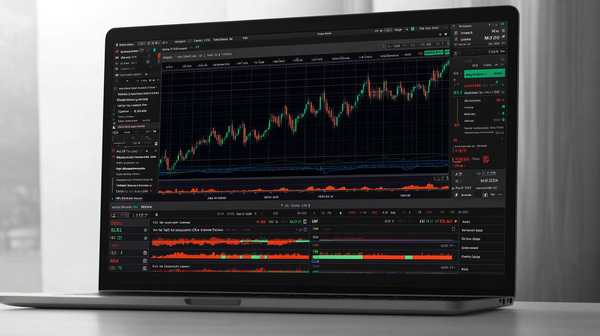
Expect a proprietary WebTrader designed for broad retail use: quick chart switching, common indicators, and one-click dealing for major FX/CFD instruments. Charting depth is usually “enough for discretionary trading” (trendlines, Fibonacci tools, multiple timeframes), but it can feel thin if you rely on custom scripts, advanced order routing, or automated strategies that are native to MT4/MT5 or cTrader. Mobile apps on iOS/Android generally mirror the basics—watchlists, simple alerts, position management—while the account dashboard focuses on margin, equity, and funding actions. Execution may be fine in calm markets; during news spikes, slippage control and order protections matter more than glossy UI, and that’s where competitors to Baillétance can separate themselves.
Trading Fees, Spreads, and Account Types at Baillétance
Pricing in this category typically centers on spread-first accounts. A standard-style EUR/USD spread around 2.0 pips is common, with higher costs effectively “baked in” for simplicity. Some brokers in this segment also float a raw/ECN-like tier—think 0.0–0.4 pips plus roughly $6 round-turn commission per standard lot—though the real-world outcome still depends on execution and slippage. Overnight financing (swap) is a major hidden line item for swing traders, and withdrawal or inactivity fees can appear depending on payment rail and account status. If you’re comparing platforms like Baillétance, write the full cost stack down before you fund: spread, commission, swap, and any non-trading charges.
When Do Traders Start Looking for Baillétance Alternatives?
Regulation is usually the first crack in the wall. Once you’ve experienced a messy withdrawal, a platform freeze during volatility, or a dispute where “support said no,” you stop caring about the shiny leverage number and start caring about enforceable rules. That’s why Baillétance alternatives aren’t just about features—they’re about containment: limiting what can go wrong when leverage, margin calls, and fast markets collide. And yes, costs matter too; a wide spread is a slow bleed that shows up month after month.
- You need a broker whose license you can verify on the FCA/ASIC/CySEC/NFA public register, not a brand page and a promise.
- Your strategy requires MT4/MT5 or cTrader for EAs, custom indicators, or more granular order controls than a basic WebTrader offers.
- You’re paying something like ~2.0 pips on EUR/USD and the math no longer works for scalping or higher-frequency execution.
- You want real stocks/ETFs (with proper market access) instead of stock CFDs that don’t provide shareholder rights.
How to Choose a Reliable Alternative to the Baillétance Trading Platform
Pick the broker the same way you’d size risk: define what must not fail, then choose the structure that reduces that failure mode. For most people, that means prioritizing regulation and client-money handling first, then matching platform and costs to your strategy. “Best” is not universal; the right fit depends on whether you trade news spikes, run automation, or hold positions long enough for swap to dominate your P&L.
Regulation, Safety, and Investor Protection
Start with hard oversight. FCA (UK), ASIC (Australia), CySEC (EU), and NFA/CFTC (US) frameworks typically impose standards around marketing, leverage limits (in many regions), complaints handling, and how client money is held. Look for language about segregated client funds, and understand compensation where it applies: the UK’s FSCS can cover eligible claims up to £85,000, while Cyprus’ ICF can cover up to €20,000 for eligible clients. Offshore setups may not offer comparable backstops, which changes the tail risk of your trading operation.
Available Markets and Instruments
Match the menu to your actual intent. If you only trade FX majors and a couple of index CFDs, an FX/CFD specialist may be enough. If you’re building a long-term book—stocks, ETFs, bonds, options, futures—you’ll want a multi-asset broker that offers real market access rather than wrapping everything as CFDs. Crypto is its own category: crypto CFDs are a price bet; on-chain BTC is custody and settlement. Don’t confuse them just because the ticker looks familiar.
Trading Costs: Spreads, Commissions, and Other Fees
Headlines lie; round-turn cost tells the truth. A “tight spread” account can still be expensive once commission is added, and a “simple spread-only” account can be costly if the spread is persistently wide. Add swap/overnight financing if you hold beyond a day, plus any inactivity or withdrawal fees. If you trade one standard lot of EUR/USD frequently, a difference of 0.8–1.2 pips per round trip is not trivia—it can decide whether a strategy survives.
Platforms, Tools, and Execution Quality
Platform is workflow. MT4/MT5 remain common for automation and indicators; cTrader is popular for execution tools and transparency features; proprietary platforms vary wildly in depth. Execution model matters too: market maker setups can be fine for many traders, but STP/ECN/DMA-style routing can reduce conflicts for certain styles—especially around fast moves where slippage, re-quotes, and partial fills show up. If you’re leaving Baillétance, test the new venue during volatile sessions before scaling size.
Support, Education, and Overall User Experience
Support becomes “real” only when something breaks. Check service hours in your timezone, language coverage, and how quickly the broker resolves funding tickets. Education matters less for veterans, but clear margin rules, transparent fee schedules, and solid platform documentation reduce mistakes. Finally, make sure the mobile app isn’t an afterthought—being able to manage risk, set alerts, and reduce exposure from a phone can prevent a bad day from becoming a disaster.
Baillétance and Different Asset Classes: When Alternatives May Be Better
Baillétance Forex and CFD Trading
For core FX/CFD trading, Baillétance likely offers a workable list—think roughly a few dozen FX pairs, a handful of commodities, and major indices—paired with leverage that can reach about 1:500. The trade-off is that offshore-style pricing and execution details are often harder to evaluate in advance, and the standard spread profile (around 2.0 pips on EUR/USD) can be a drag if you trade frequently. By contrast, FX specialists like Pepperstone and IC Markets are built around MT4/MT5/cTrader stacks and tend to publish clearer account structures, including raw-spread options where you can measure round-turn costs more cleanly. In fast markets, execution quality shows up as slippage; that’s not a footnote—over a month of active trading it can outweigh the difference between “good” and “great” spreads.
Baillétance Stock and ETF Trading
If you want stocks and ETFs, the key question is ownership. Many CFD-first venues either don’t provide real equities, or they offer stock exposure mainly through CFDs—no shareholder rights, no voting, and different tax/document workflows. That’s fine for short-term speculation, but it’s not the same product as holding a share. Multi-asset brokers such as Interactive Brokers and Saxo Bank focus on broad market access—listed equities, ETFs, options, futures, and more—so you can build a portfolio alongside tactical trades. For US/EU traders in 2026 who care about transparency and long-term positioning, that difference is structural: you’re moving from “contract betting” toward actual market rails.
Baillétance Crypto Trading
Crypto on CFD platforms is usually crypto CFDs: you’re trading a derivative price feed, not holding coins on-chain. That can be useful for hedging or short exposure, but it doesn’t give you self-custody, network settlement, or the one asset that actually matters to me: Bitcoin. “21 million — and not a coin more.” If Baillétance provides crypto CFDs (often 10–30 coins in this segment), understand the risks: leverage amplifies volatility, and overnight financing can stack up quickly. Regulated alternatives like IG and Plus500 (where available) offer crypto CFDs under tighter oversight in certain jurisdictions, though regional rules differ. If your goal is long-term BTC ownership, that’s a different path entirely: use proper on-chain custody practices, not a CFD ticket.
Best Baillétance Alternatives for 2026: Comparison of Top Trading Platforms
Interactive Brokers (IBKR): Key Facts and How It Compares to Baillétance
Regulation: SEC/FINRA (US), FCA (UK), IIROC (Canada) (entity depends on region)
Markets: Stocks, ETFs, options, futures, bonds, FX (spot), funds (availability varies by region)
Fees: FX priced via tight spreads plus commissions (varies by tier/venue); stocks/ETFs typically commission-based or tiered pricing depending on region
Platform: Trader Workstation (TWS), IBKR Desktop/Mobile, Client Portal; API access
Best For: Serious multi-asset traders who want real market access
Pepperstone: Key Facts and How It Compares to Baillétance
Regulation: FCA (UK), ASIC (Australia), CySEC (EU), DFSA (Dubai)
Markets: FX and CFDs (indices, commodities, some shares as CFDs depending on region)
Fees: EUR/USD often ~0.0–0.3 pips on Razor/Raw-style accounts + commission; ~1.0+ pip typical on Standard (varies by entity/conditions)
Platform: MT4, MT5, cTrader, TradingView integration (availability varies)
Best For: MT4/MT5/cTrader users running systematic or EA-driven FX/CFD strategies
Saxo Bank: Key Facts and How It Compares to Baillétance
Regulation: FCA (UK), MAS (Singapore), DFSA (Dubai) (entity depends on residency)
Markets: Stocks, ETFs, options, futures, bonds, FX, and CFDs (product access varies by region)
Fees: FX spreads can be competitive on major pairs (tiered by account level); commissions apply on exchange-traded products
Platform: SaxoTraderGO, SaxoTraderPRO
Best For: Portfolio builders who still want active trading tools
OANDA: Key Facts and How It Compares to Baillétance
Regulation: CFTC/NFA (US), FCA (UK), ASIC (Australia), IIROC (Canada)
Markets: Primarily FX; CFDs offered outside the US (indices/commodities depending on region)
Fees: Typically spread-based pricing; major-pair spreads often around ~0.6–1.2+ pips depending on market conditions and entity
Platform: OANDA Trade (web/mobile), MT4 (availability varies by region)
Best For: FX-focused traders who prioritize well-known oversight and straightforward pricing
IG: Key Facts and How It Compares to Baillétance
Regulation: FCA (UK), ASIC (Australia), MAS (Singapore)
Markets: CFDs (indices, FX, commodities, shares CFDs), and other products depending on region (including spread betting in the UK)
Fees: Often competitive spreads on major FX pairs (commonly ~0.6+ pips on EUR/USD in typical conditions); financing applies for overnight holds
Platform: IG proprietary web platform and mobile app; MT4 offered in some regions
Best For: Active CFD traders who want a mature platform and broad index coverage
CMC Markets: Key Facts and How It Compares to Baillétance
Regulation: FCA (UK), ASIC (Australia), BaFin (Germany)
Markets: CFDs across FX, indices, commodities, and shares CFDs (availability varies by region)
Fees: FX spreads can be low on majors (often ~0.7+ pips typical on EUR/USD depending on conditions); additional costs include financing for holds
Platform: Next Generation platform, mobile app; MT4 offered in some jurisdictions
Best For: Chart-driven discretionary traders who want rich analysis tools
Comparison Summary
| Platform | Regulation | Main Markets | Typical Costs | Best For |
|---|---|---|---|---|
| Interactive Brokers (IBKR) | SEC/FINRA, FCA, IIROC (by entity) | Real stocks/ETFs, options, futures, bonds, FX | FX tight spreads + commission (tiered); exchange fees/commissions on listed products | Serious multi-asset traders who want real market access |
| Pepperstone | FCA, ASIC, CySEC, DFSA | FX + CFDs (indices/commodities; shares CFDs in some regions) | Raw ~0.0–0.3 pips + commission; Standard ~1.0+ pip typical | MT4/MT5/cTrader users running systematic or EA-driven FX/CFD strategies |
| Saxo Bank | FCA, MAS, DFSA (by entity) | Stocks/ETFs, options, futures, bonds, FX, CFDs | Tiered FX spreads; commissions on exchange-traded assets | Portfolio builders who still want active trading tools |
| OANDA | CFTC/NFA, FCA, ASIC, IIROC | FX (plus CFDs outside the US) | Usually spread-only; EUR/USD often ~0.6–1.2+ pips depending on conditions | FX-focused traders who prioritize well-known oversight and straightforward pricing |
| IG | FCA, ASIC, MAS | CFDs across FX/indices/commodities/shares CFDs; region-dependent products | EUR/USD often ~0.6+ pips typical; overnight financing for holds | Active CFD traders who want a mature platform and broad index coverage |
| CMC Markets | FCA, ASIC, BaFin | CFDs across FX/indices/commodities/shares CFDs | EUR/USD often ~0.7+ pips typical; financing costs for multi-day positions | Chart-driven discretionary traders who want rich analysis tools |
How to Safely Move from Baillétance to Another Broker
Switching brokers is not a “click and done” task; it’s operational risk management. Treat it like moving funds between vaults: verify the destination first, then move in controlled steps. A rushed transfer can turn a normal withdrawal into a weeks-long headache—especially once leverage, margin requirements, and open positions enter the picture.
- Confirm the new broker’s license on the regulator’s public register (FCA Register, ASIC Connect, CySEC database, or NFA BASIC), and match the legal entity name—not just the brand.
- Open the new account and complete KYC/AML checks before you touch your existing balance; ID and proof-of-address requests are routine, and delays happen.
- Flatten exposure first: close open CFD positions at your current broker and re-enter on the new venue if you still want the trade—position transfers between brokers are rarely supported.
- Withdraw from Baillétance using the same payment method you used to deposit, because many compliance teams will reject “mismatched rails” under AML rules.
- Export statements, confirmations, and full trade history before you stop using the old account; your tax reporting and performance review depend on clean records.
- Start small on the new platform: test spreads, swaps, order types, and slippage with minimal size during active market hours, then scale only after the workflow feels reliable.
Ready to Explore Baillétance?
If you’re still evaluating where Baillétance fits versus regulated substitutes, review the current onboarding steps, funding methods, and regional eligibility carefully. Then compare spreads, swap rates, and platform tools against the broker shortlist above before committing meaningful capital.
FAQ: Baillétance Alternatives and Trading Platforms
What is the best alternative to Baillétance in 2026?
The best alternative depends on whether you want real multi-asset access or CFD-first trading. For US/EU traders who want listed stocks/ETFs and deep tooling, Interactive Brokers (IBKR) is usually the cleanest step up. If your focus is FX/CFDs with MT4/MT5/cTrader, Pepperstone is often a strong fit, while IG and CMC Markets can suit traders who want broad index CFD coverage under major regulators.
Is Baillétance a safe broker/platform?
Baillétance appears to operate more like an offshore/unregulated CFD venue than a top-tier regulated broker, which generally means fewer formal investor-protection mechanisms. That doesn’t prove wrongdoing, but it does increase tail risk around disputes, client-money safeguards, and enforcement. If safety is your priority, lean toward FCA/ASIC/CySEC/NFA-regulated firms with clear segregated-funds policies and documented complaint processes.
Can I trade stocks, futures, or crypto with Baillétance?
With Baillétance, the most likely offering is FX and CFDs, sometimes including crypto CFDs—meaning derivative exposure, not coin ownership. Real stocks/ETFs and exchange-traded futures are more typically available through multi-asset brokers like IBKR or Saxo rather than CFD-first platforms. If you specifically want crypto CFDs under tighter oversight, brokers like IG or Plus500 (where available) are usually the regulated route.
What should I check before switching from Baillétance to another platform?
Before switching, verify the new broker’s exact legal entity on the regulator’s register and confirm which jurisdiction your account will be under. Next, compare round-turn costs (spread + commission), swap/overnight rates, and execution controls (slippage handling, order types) because those directly affect results. Finally, complete KYC first and plan the withdrawal path so deposits and withdrawals follow the same rails under AML rules.
About the Author: Kenji Tanaka is a Tokyo-based financial journalist and active trader with a cryptography background (University of Tokyo, incomplete). I’m Bitcoin-orthodox—banks and fiat are structural counterparty risk to me—so I obsess over custody, settlement, and the fine print behind leverage. 21 million — and not a coin more.