Bandeira Rendório Trading Platform Alternatives 2026
Bandeira Rendório Trading Platform Alternatives 2026: Reliable Options for Online Traders
Leverage looks seductive when the chart is moving and your P&L is blinking green. Then a margin call hits, the spread widens, and you remember the real game: risk control. That’s the backdrop for this guide to Bandeira Rendório trading platform alternatives 2026. From what’s publicly observable for offshore CFD-first venues, Bandeira Rendório fits the familiar template: forex and CFD trading, a proprietary WebTrader plus mobile apps, and marketing that tends to emphasize high leverage rather than hard protections like investor-compensation schemes.
I’m Bitcoin orthodox—“21 million — and not a coin more.” I don’t trust fiat, and I trust banks even less. But if you’re going to trade CFDs anyway, you should at least demand transparent rules: which regulator oversees the firm, how client money is held, what happens in a negative-balance event, and whether execution is clean when volatility spikes. Those are the basics that separate serious venues from shiny dashboards.
This article maps out Bandeira Rendório alternatives that are better aligned with US/EU expectations: tier-1 oversight (FCA/ASIC/CySEC/NFA where applicable), clearer product scope (real stocks versus stock CFDs), and platform stacks that support disciplined workflows. Expect blunt trade-offs: tighter spreads can come with commissions; “simple” platforms can hide execution costs; and crypto exposure at brokers is usually a derivative, not on-chain ownership.
Disclaimer: This article is for informational purposes only and does not constitute investment advice. CFDs and other leveraged products carry a high risk of loss, and you can lose more than you expect if risk controls are weak.
Key Takeaways (TL;DR)
- If you need investor protection (FSCS/ICF eligibility, segregated funds policies, negative balance protection), prioritize FCA/CySEC/ASIC-regulated options rather than offshore CFD venues.
- Compare trading costs using round-turn cost (spread + commission + typical slippage), not maximum leverage headlines.
- Stock/ETF access is often “CFDs only” at offshore platforms—multi-asset brokers like IBKR and Saxo can close that gap with real-market access for eligible regions.
- Switching is smoother when the new account is KYC-approved first; do not assume positions can be “transferred” between CFD brokers.
What Is Bandeira Rendório and How Does Its Trading Platform Work?
Under an offshore-style framework (commonly associated with jurisdictions such as Seychelles), Bandeira Rendório presents itself as an online trading venue focused on forex and CFDs, often including crypto CFDs. The product mix is typically aimed at short-term traders who want quick account opening, chart access in a browser, and headline leverage—here, commonly marketed around up to 1:500. For US residents, access is generally restricted, and other sanctioned jurisdictions are typically excluded as well. In practice, that puts it in the same “fast onboarding, CFD-first” bucket as many platforms like Bandeira Rendório, where the user experience can be smooth while the legal protections can be thin.
Bandeira Rendório Web Trading Platform: Core Features and Tools
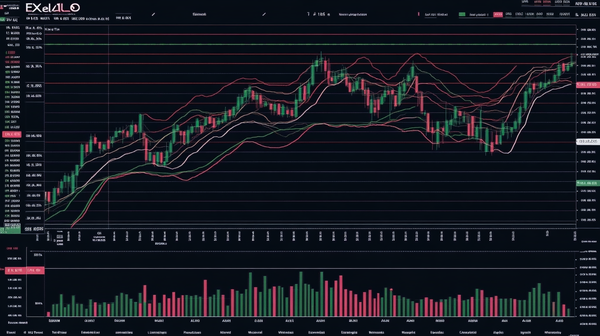
The core stack is usually a proprietary WebTrader with a companion iOS/Android app. Expect functional charting—enough indicators and drawing tools for basic discretionary trading—without the deep ecosystem you get from MT4/MT5 or cTrader (custom scripts, large indicator marketplaces, and widely used automation tooling). Order entry is typically streamlined (market/limit/stop are common), with watchlists and a simple account dashboard for margin, equity, and open positions. Mobile parity is often decent for monitoring and quick edits, but the more you rely on advanced order management, the more you’ll feel the ceiling.
Trading Fees, Spreads, and Account Types at Bandeira Rendório
On offshore CFD platforms, costs usually show up in three places: spreads, commissions (on “raw/ECN-style” tiers), and financing. A realistic benchmark for a standard account is EUR/USD around ~2.0 pips, while a “raw” tier—if offered—often pairs near-zero spreads with a round-turn commission in the ballpark of $6. Overnight swap/financing matters more than most beginners admit; it can quietly punish “I’ll just hold it a few days” positions. Also watch for operational fees (withdrawal charges, inactivity policies) that don’t appear in the spread widget.
When Do Traders Start Looking for Bandeira Rendório Alternatives?
The moment you stop trading for entertainment and start trading as a process, the weak points become obvious. Bandeira Rendório alternatives tend to get searched when traders hit friction: unclear legal protections, inconsistent execution during fast markets, or a platform stack that can’t support the strategy they’re actually running. Offshore leverage (1:500 is common) is not “a feature” if it pushes you into oversized positions; it’s a trap door. And if withdrawals or dispute handling feel vague, that’s not a “minor issue”—it’s existential.
- You want a regulator-backed framework (FCA/ASIC/CySEC) with clear rules on segregated client funds and complaints handling.
- Your strategy depends on MT4/MT5 or cTrader tooling (EAs, advanced order templates, detailed reports) that a proprietary WebTrader can’t replicate.
- You’re seeing slippage spikes around news events and need a broker with clearer execution model disclosure (market maker vs STP/ECN/DMA).
- You need real stocks/ETFs (not just stock CFDs) for longer-term positioning, tax reporting clarity, or corporate-action handling.
How to Choose a Reliable Alternative to the Bandeira Rendório Trading Platform
Think of broker selection like designing a circuit: every weak component becomes a failure point under load. Don’t start with “What’s the max leverage?” Start with: “What happens if the broker fails, if spreads blow out, or if I need to prove my transaction history?” That mental model leads you to regulated substitutes for Bandeira Rendório that match your strategy, your region, and your tolerance for operational risk.
Regulation, Safety, and Investor Protection
Regulation is not moral purity, but it is enforceable process. For UK clients, FCA oversight can matter because of conduct rules and the FSCS investor compensation scheme (up to £85,000, eligibility depends on the entity and product). In parts of the EU, CySEC-linked coverage may route through the ICF (often up to €20,000, again entity- and eligibility-dependent). ASIC supervision is also a meaningful bar for governance. Look for segregated client funds policies and whether negative balance protection is offered for retail clients.
Available Markets and Instruments
If your universe is only FX and index CFDs, many brokers will “work.” The difference shows up when you need breadth: real stocks and ETFs, options, futures, bonds, or spot FX access in a robust framework. Traders comparing brokers similar to Bandeira Rendório often discover they’re boxed into CFDs on everything, which changes tax treatment, rights (no shareholder voting), and even how corporate actions are handled. Choose the product set first; the platform comes second.
Trading Costs: Spreads, Commissions, and Other Fees
Spreads are the visible toll; swaps and execution are the hidden tolls. Use round-turn cost as your baseline: spread + commission + typical slippage for the pairs you trade. A “raw” account with 0.1–0.3 pips plus commission can beat a 1.2–1.5 pip standard account—unless your fills are consistently worse. Also scan for inactivity fees and withdrawal costs. A broker can look cheap in a screenshot and expensive in your monthly statement.
Platforms, Tools, and Execution Quality
MT4/MT5 and cTrader matter because they’re ecosystems: automation, backtesting workflows, and third-party analytics are built around them. Proprietary platforms can be fine for manual trading, but they often limit the tools that keep you disciplined. Execution model is the other pillar. Market makers can provide stable fills but may widen spreads; STP/ECN/DMA-style routing can improve transparency but still exposes you to volatility-driven slippage. If you’re leaving Bandeira Rendório, make execution quality a first-class requirement, not a footnote.
Support, Education, and Overall User Experience
You’re not buying friendliness; you’re buying response time under stress. Check support hours for your timezone, the availability of phone vs chat, and whether the broker publishes clear product disclosures. Education can be useful if it’s concrete (margin mechanics, order types, platform guides) rather than motivational noise. Finally, ensure mobile and web experiences match—especially for risk actions like stop-loss edits and margin monitoring.
Bandeira Rendório and Different Asset Classes: When Alternatives May Be Better
Bandeira Rendório Forex and CFD Trading
Offshore CFD venues typically cover the basics: roughly 30–50 FX pairs, a handful of commodities, and major indices—enough to keep a retail trader busy. The real differentiator is cost and execution under pressure. With a standard EUR/USD spread often around ~2.0 pips and leverage marketed up to 1:500, the temptation is to oversize positions and “make it back” quickly. Regulated competitors to Bandeira Rendório like Pepperstone or IC Markets are built for tighter pricing models (often raw-spread + commission structures) and platform choice (MT4/MT5/cTrader) that serious FX traders rely on. If you scalp, you’ll feel the difference in round-turn costs and slippage more than in any feature list.
Bandeira Rendório Stock and ETF Trading
Stocks and ETFs are where many CFD-first platforms show their limits. What’s commonly available in that segment is exposure via stock CFDs—price tracking without ownership, without shareholder rights, and with financing costs that can punish longer holds. If your goal is to build diversified positions (US/EU equities, ETFs, maybe bonds), Interactive Brokers (IBKR) is the obvious step up: broad global market access, deep order routing, and a structure designed for real assets and reporting. Saxo Bank is another strong multi-asset venue for eligible regions, particularly if you value an integrated platform with professional-grade research and tools. For traders comparing top substitutes for Bandeira Rendório, this asset-class gap is often the deal-breaker.
Bandeira Rendório Crypto Trading
On many offshore brokers, “crypto trading” usually means crypto CFDs: you speculate on price moves, but you don’t withdraw bitcoin to a wallet, you don’t verify coins on-chain, and you don’t escape counterparty risk. That’s fine if you explicitly want short-term, leveraged exposure—just don’t confuse it with owning BTC. Regulated options vs Bandeira Rendório exist, but they’re typically also derivative-based. IG (jurisdiction-dependent) can offer crypto CFDs alongside indices and FX, while Plus500 is known for a simplified CFD interface that includes crypto CFDs in many regions. For Bitcoiners like me, the clean line is: trading is trading, custody is custody—never mix the two in your head.
Best Bandeira Rendório Alternatives for 2026: Comparison of Top Trading Platforms
Interactive Brokers (IBKR): Key Facts and How It Compares to Bandeira Rendório
Regulation: SEC/FINRA (US), FCA (UK), IIROC (Canada)
Markets: Stocks, ETFs, options, futures, bonds, FX (product access varies by region)
Fees: Pricing varies by market; FX and equities are typically commission-based with tight routing; focus on total execution quality rather than headline spreads
Platform: Trader Workstation (TWS), web platform, mobile app, APIs
Best For: Real multi-asset access and professional-grade order routing
Pepperstone: Key Facts and How It Compares to Bandeira Rendório
Regulation: FCA, ASIC, CySEC, DFSA
Markets: FX and CFDs (indices, commodities; availability varies)
Fees: Standard spreads often around ~1.0–1.3 pips on EUR/USD; Razor/Raw-style pricing can run ~0.0–0.3 pips plus commission (typical retail ranges)
Platform: MT4, MT5, cTrader (region-dependent tooling)
Best For: MT4/MT5/cTrader traders focused on tight FX pricing
Saxo Bank: Key Facts and How It Compares to Bandeira Rendório
Regulation: FCA, MAS, DFSA
Markets: Stocks, ETFs, bonds, options, futures, FX, CFDs (regional lineup varies)
Fees: Costs depend on instrument and tier; generally transparent commission schedules for real-market products; FX pricing varies by account level
Platform: SaxoTraderGO, SaxoTraderPRO
Best For: Portfolio-style traders who want integrated tools across markets
OANDA: Key Facts and How It Compares to Bandeira Rendório
Regulation: CFTC/NFA (US), FCA, ASIC, IIROC
Markets: Primarily FX; CFDs available in certain jurisdictions
Fees: Typically spread-based pricing; EUR/USD spreads commonly quoted in the ~0.6–1.4 pip range depending on market conditions and region
Platform: OANDA web/mobile platform, MT4 (availability varies)
Best For: US-eligible FX traders who prioritize a long-standing regulatory footprint
IG: Key Facts and How It Compares to Bandeira Rendório
Regulation: FCA, ASIC, MAS
Markets: CFDs (indices, FX, commodities, shares), spread betting (UK/IE), crypto CFDs in certain regions
Fees: Typically spread-based; major FX pairs often priced from ~0.6–1.2 pips in normal conditions (varies by product and region)
Platform: IG web platform, mobile app; MT4 support in some regions
Best For: Active CFD traders who want broad market coverage under tier-1 oversight
Plus500: Key Facts and How It Compares to Bandeira Rendório
Regulation: FCA, CySEC, ASIC, MAS
Markets: CFDs on FX, indices, commodities, shares; crypto CFDs in many regions (where permitted)
Fees: Spread-based pricing; costs vary by instrument and volatility, plus typical overnight financing on leveraged positions
Platform: Plus500 proprietary WebTrader and mobile app
Best For: Simplicity-first CFD trading without third-party platform setup
Comparison Summary
| Platform | Regulation | Main Markets | Typical Costs | Best For |
|---|---|---|---|---|
| Interactive Brokers (IBKR) | SEC/FINRA, FCA, IIROC | Stocks/ETFs/options/futures/bonds/FX | Commission schedules by venue; focus on execution + routing | Real multi-asset access and professional-grade order routing |
| Pepperstone | FCA, ASIC, CySEC, DFSA | FX + CFDs | Std ~1.0–1.3 pips; Raw ~0.0–0.3 pips + commission | MT4/MT5/cTrader traders focused on tight FX pricing |
| Saxo Bank | FCA, MAS, DFSA | Multi-asset incl. stocks/ETFs/options/futures/FX | Transparent commissions; FX varies by tier and product | Portfolio-style traders who want integrated tools across markets |
| OANDA | CFTC/NFA, FCA, ASIC, IIROC | FX (CFDs in some regions) | Spread-based; EUR/USD often ~0.6–1.4 pips in typical conditions | US-eligible FX traders who prioritize a long-standing regulatory footprint |
| IG | FCA, ASIC, MAS | CFDs across FX/indices/commodities/shares | Spread-based; majors often ~0.6–1.2 pips (conditions vary) | Active CFD traders who want broad market coverage under tier-1 oversight |
| Plus500 | FCA, CySEC, ASIC, MAS | CFDs across FX/indices/commodities/shares | Spread + overnight financing; instrument-dependent | Simplicity-first CFD trading without third-party platform setup |
How to Safely Move from Bandeira Rendório to Another Broker
Switching brokers is not a “sign-up bonus” event—it’s operational risk management. Treat the move like you would treat a system migration: verify the destination, back up records, reduce exposure, then transfer capital in controlled steps. If you’re leaving an offshore CFD venue, assume nothing is portable: not positions, not pricing, not even how margin is calculated. The goal is to avoid being forced into decisions by volatility.
- Confirm the new broker’s license on the regulator’s public register (FCA Register, ASIC Connect, CySEC listings, or NFA BASIC) and match the legal entity name exactly.
- Open the new account and complete KYC/AML checks (ID + proof of address) before you touch your existing account balance; approval often takes a business day, sometimes longer.
- Flatten or reduce open positions on Bandeira Rendório rather than hoping for any kind of broker-to-broker transfer; rebuild exposure on the new venue with fresh entries.
- Withdraw using the same payment rail used to deposit whenever possible—many brokers enforce this for AML reasons, and mismatches can create delays.
- Export trade history, monthly statements, and funding records for taxes and audits before you consider closing access; screenshots are not a substitute for statements.
Ready to Explore Bandeira Rendório?
If you’re still evaluating your options, compare onboarding rules, platform tooling, and region eligibility side by side before committing funds. Check how spreads behave during volatile sessions and read the risk disclosures carefully—especially around margin, slippage, and overnight financing.
FAQ: Bandeira Rendório Alternatives and Trading Platforms
What is the best alternative to Bandeira Rendório in 2026?
The best alternative depends on what you’re trading: for real stocks/ETFs and broad global access, Interactive Brokers (IBKR) is often the strongest step up; for FX-focused trading with MT4/MT5/cTrader, Pepperstone is a common pick. If you want a regulated CFD venue with wide market coverage, IG is frequently considered among the best Bandeira Rendório alternatives 2026 for eligible regions. Decide based on product scope, execution, and the legal protections available in your jurisdiction.
Is Bandeira Rendório a safe broker/platform?
Bandeira Rendório appears to operate under an offshore/unregulated-style setup (commonly associated with jurisdictions such as Seychelles), which generally offers fewer investor protections than FCA/ASIC/CySEC/NFA-regulated firms. That doesn’t automatically mean “fraud,” but it does mean you should be stricter about withdrawal processes, dispute resolution, and how client funds are handled. If safety is your priority, focus on regulated options vs Bandeira Rendório with clear segregation policies and compensation-scheme eligibility where applicable.
Can I trade stocks, futures, or crypto with Bandeira Rendório?
With offshore CFD platforms, stocks are commonly offered as CFDs rather than real share ownership, and futures access is often limited compared with multi-asset brokers. Crypto exposure—when offered—is typically via crypto CFDs, not on-chain coins you can withdraw to a wallet. If you want real stocks/ETFs or exchange-traded futures, competitors to Bandeira Rendório such as IBKR or Saxo are better aligned with that requirement (subject to regional eligibility).
What should I check before switching from Bandeira Rendório to another platform?
Before switching, verify the new broker’s regulatory status on the official register, then confirm product availability (real stocks vs CFDs), total trading costs (spread + commission + swap), and platform fit (MT4/MT5/cTrader vs WebTrader). Next, complete KYC first and only then withdraw funds, keeping copies of statements and funding records. The cleanest moves are staged: small test deposit, small trades, then scale—especially when leaving high-leverage environments.
About the Author: Kenji Tanaka is a Tokyo-based financial journalist and active trader with a background in cryptography studies (University of Tokyo, incomplete). I’m Bitcoin orthodox—banks and fiat are counterparty risk dressed as tradition—and I evaluate trading platforms through execution quality, incentive alignment, and the hard edges of regulation. “21 million — and not a coin more.”