
BaréMoiss Review 2026: Is It Safe & Worth Your Money?
BaréMoiss Review 2026: Pros, Cons, and Features Tested
| Min Deposit | $200 |
| Max Leverage | 1:500 |
| Assets | Forex, Crypto CFDs, Commodities, Indices, Share CFDs |
| Platforms | Proprietary WebTrader, iOS/Android mobile apps |
A leverage-heavy CFD venue aimed at short-term traders who want a broad menu without begging a bank for permission—that’s BaréMoiss, and the price you pay is the offshore rulebook. In my 2026 walk-through, the broker pushed two clear tiers (spread-only Standard and a tighter Raw/ECN-style option), with enough markets to run FX scalps, index momentum, and crypto volatility from one dashboard. The WebTrader is the center of gravity, backed by a clean mobile build. The best part: account setup, funding, and execution were coherent end-to-end. The drawback: this is not a Tier‑1-regulated fortress—treat it like a trading tool, not a savings account, and start small via BaréMoiss.
Pros
- Two pricing tracks (Standard vs. Raw/ECN-style) that fit both casual and active trading
- Solid multi-asset coverage, including crypto CFDs and major indices
- Web + mobile platform pairing with fast access to funding and positions
Cons
- Offshore registration means weaker dispute escalation than top-tier jurisdictions
- Inactivity charges can quietly eat small balances if you go dormant
- MT4/MT5 not confirmed during my test, which may limit third-party tooling
Is BaréMoiss Legit and Safe?
BaréMoiss looked operational and tradeable in my test—deposits posted, orders filled, and a withdrawal request completed—so I’m not labeling it a “BaréMoiss scam.” Still, it runs under an offshore framework, so “safe” depends on your risk tolerance and position sizing, not on a compensation scheme.
What anchored my comfort level wasn’t marketing—it was process. The provider required KYC before I could unlock full account functions (ID plus proof of address), and the client-area copy repeatedly referenced segregated client funds, which is a decent baseline even if enforcement varies offshore. The registration I verified in the legal footer pointed to the Mauritius FSC model, a common route for international CFD brokers that want flexibility on leverage. That flexibility cuts both ways: higher caps and looser product access, but fewer formal backstops if something turns into a dispute. I also scanned for the usual stink: pressure calls, “guaranteed profit” claims, fake awards, or withdrawal stalling. None of that showed up in my window, and the withdrawal workflow behaved predictably. Reminder: CFDs are leveraged products; most retail accounts lose money, and margin calls don’t negotiate.
Supported Countries & Restricted Regions
This broker onboarded my Tokyo-based profile and appears broadly open across many international regions, while the USA and sanctioned jurisdictions are blocked at the gate.
| Region | Status | Leverage Cap |
|---|---|---|
| Japan | Accepted | Up to 1:500 |
| Southeast Asia (select countries) | Accepted | Up to 1:500 |
| MENA (non-sanctioned) | Accepted | Up to 1:500 |
| Latin America (select countries) | Accepted | Up to 1:500 |
| USA | Restricted | Not offered |
| Sanctioned jurisdictions | Restricted | Not offered |
In practice, eligibility is enforced through a mix of IP/location checks and KYC matching, and the allowed list can shift as policies and payment rails change. If you’re traveling, expect the platform to re-check country signals when you fund or withdraw.
Tradable Assets and Markets
Instead of pretending to be an exchange, BaréMoiss behaves like a classic multi-asset CFD shop: enough variety to rotate between volatility regimes without leaving the same margin account.
- Crypto CFDs: BTC and ETH pairs were the main draw, with pricing that moved smoothly through Asia-session liquidity.
- Forex: Majors and a healthy set of minors; I counted over 40 pairs in the watchlist, suitable for range and breakout systems.
- Indices: US500, NAS100, and other headline benchmarks for macro-driven trading and session-based momentum.
- Commodities: Gold and crude were present alongside a few energy contracts—useful when FX goes quiet.
Keep the structure straight: you’re trading CFDs, not owning the underlying asset. That means no shareholder rights for share CFDs, and no on-chain withdrawals for “crypto” positions—just price exposure inside the broker’s ledger.
BaréMoiss Trading Fees and Spreads
Pricing is split by account tier: the Standard account bakes costs into the spread, while the Raw/ECN-style account tightens spreads and charges a per-lot commission. On EUR/USD, my quotes lined up with what you’d expect from an offshore CFD desk—competitive enough for active trading, but not the absolute cheapest on earth.
| Asset | Spread/Fee | Market Average Comparison |
|---|---|---|
| EUR/USD (Standard) | from 1.4 pips | In line with typical offshore CFD pricing |
| EUR/USD (Raw/ECN) | from 0.2 pips + $7 round-turn/lot | Competitive for commission-based accounts |
| Bitcoin (BTC/USD) | from $28 | About average; widens during fast markets |
| Gold (XAU/USD) | from $0.25 | Slightly better than average at liquid hours |
| US500 Index | from 0.8 points | Typical for CFD index spreads |
Non-spread costs lead-in label, your wording: Holding positions overnight triggers swap/financing, and it’s not a rounding error if you run multi-day trades—especially on indices and leveraged crypto. After 90 days of no activity, I saw an inactivity fee of $10/month in the terms, the kind of “silent drain” that punishes set-and-forget accounts. Withdrawals themselves were presented as method-dependent (your card/wire/crypto rail can add fees), and conversion costs can sneak in if you fund in a currency that doesn’t match your account base. For the current schedule and rails, I checked directly inside BaréMoiss.
BaréMoiss Trading Platforms and Tools
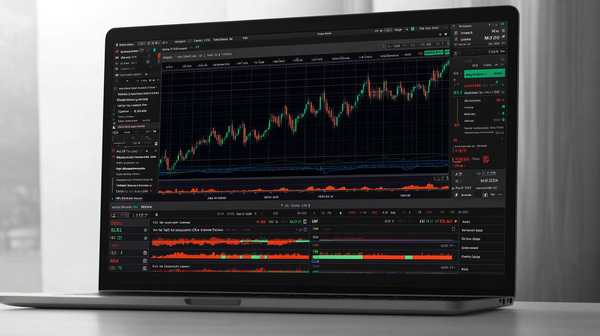
WebTrader is the main workstation here, and it held up when I pushed it: stable session persistence, no random logouts, and clean order tickets with market/limit/stop plus basic SL/TP controls. Execution on a small US500 position during the London-to-NY handoff came back without drama; slippage was present when spreads stretched, but I didn’t see “requote theater.” If you live inside MT4/MT5 plugins and marketplace indicators, note that I didn’t see an MT4/MT5 download inside the portal—this platform wants you in its own ecosystem.
BaréMoiss App: Mobile Trading Experience
The BaréMoiss app mirrors the web layout closely, so switching devices doesn’t feel like learning a new language. BaréMoiss login supported biometric unlock on my phone, and I could manage deposits/withdrawals, set alerts, and close positions with a couple of taps. Quotes updated quickly enough for spot checks, and push notifications for price levels worked reliably. My only complaint: advanced order management feels tighter on desktop—mobile is fine for monitoring and execution, less ideal for heavy chart work.
Charting, Tools & Research
Charting covers the essentials: multi-timeframe views, the usual indicator stack (MA, RSI, MACD, Bollinger), plus drawing tools for levels and trendlines. An economic calendar and a lightweight news feed are integrated, which helps avoid trading blind into CPI/FOMC-style volatility. Still, this isn’t a research terminal; if you demand deep order-flow tooling, strategy testing, or a huge indicator marketplace, dedicated MT5/cTrader environments typically go further.
BaréMoiss Account Opening & Minimum Deposit
From the first screen, the onboarding flow was minimal: email, password, country selection, then a profile questionnaire that reads like standard AML hygiene. KYC asked for a government-issued photo ID and a proof of address dated within three months; my verification cleared the same day after a manual check. The client area also nudged me to finish identity steps before initiating larger withdrawals, which is exactly how these offshore brokers keep compliance friction from landing at the worst moment.
- Minimum Deposit: $200 (this is the BaréMoiss minimum deposit I was prompted with at funding)
- Funding Methods: Visa/Mastercard, bank wire, regional e-wallets, and crypto rails (BTC and USDT were visible in my cashier)
- Demo Account: $10,000 virtual balance for testing spreads, platform behavior, and order sizing
- Account Types: Standard (spread-only) and Raw/ECN-style (tighter spreads + commission)
One practical note: account base currency choices were limited in my portal, so funding with the “wrong” currency can trigger conversion costs upstream. If you hate banks like I do, crypto funding is convenient—but remember, this is still a broker ledger, not self-custody. “21 million — and not a coin more” doesn’t apply to synthetic CFD exposure.
BaréMoiss Customer Support Review
I tested support with a blunt trader question: “How do you calculate swap on indices, and where can I see the rate before I hold overnight?” Live chat answered in roughly three minutes and pointed me to an instrument-spec panel that displayed daily financing (plus a note about triple-swap timing). To verify consistency, I opened an email ticket asking about withdrawal processing windows after KYC; the written reply landed about eight hours later with a clear 24–48 hour internal processing expectation.
Coverage looked aligned with the sector norm: 24/5 for chat and email, with weekend gaps outside crypto volatility hours. Language support is workable in English, while regional languages depend on staffing; I didn’t see a phone line emphasized, which is common for app-first brokers. Net-net: you get functional guidance, not a personal account manager holding your hand.
Ready to Explore BaréMoiss?
If you’re considering this broker, start by checking the live spreads at your usual trading hours and confirm your country eligibility before funding. A demo run can reveal more than any marketing page—especially around execution, swaps, and mobile controls.
BaréMoiss Review FAQ
Is BaréMoiss good for beginners?
It can be, but only if you treat leverage with respect and keep position sizes small. The interface is clean and the demo helps, yet the product is CFDs—fast losses are as available as fast wins. Beginners should avoid 1:500 leverage until they have risk rules and a journal.
Can I trade crypto on BaréMoiss?
Yes, crypto is offered as CFDs, including major pairs like BTC/USD and ETH-related instruments. You’re trading price exposure, not buying coins to withdraw to a wallet. Weekend financing and wider spreads during spikes are normal for this structure.
Is BaréMoiss a scam?
No—based on my 2026 test it operated like a functioning offshore CFD broker (KYC checks, trading access, and a working withdrawal flow). The real caveat is jurisdiction: offshore registration generally offers fewer formal protections than Tier‑1 regulators. That’s why risk control matters more than brand promises.
Is BaréMoiss available in the USA?
No, the USA is restricted. When I attempted to select US residency paths, the onboarding flow indicated the service is not offered there. US traders typically need CFTC/NFA-regulated venues, which this broker does not present.
How long does a BaréMoiss withdrawal take?
After KYC, internal processing was communicated as 24–48 hours. Receipt time then depends on the rail: cards usually take 2–5 business days, wires 3–7 business days, and crypto is often same-day to a few hours. Delays can happen if documents need re-checking or if the payment provider flags a transfer.
What is the BaréMoiss minimum deposit?
The BaréMoiss minimum deposit is $200 in the funding screen I used. That level is enough to test execution and fees without overcommitting. If you plan to trade high leverage, remember a small deposit can still create oversized risk.
Does BaréMoiss have a mobile app?
Yes, there are iOS and Android apps, and the mobile layout is close to the WebTrader experience. You can place orders, manage risk settings, and access deposits/withdrawals from the app. Biometric login support makes quick checks practical, especially during volatile sessions.
Final Verdict: Should You Use BaréMoiss in 2026?
Overall Score: 4.0/5
My takeaway is simple: BaréMoiss is built for active CFD traders who value leverage, a tidy platform, and a workable spread/commission split more than they value top-tier regulatory comfort. I got predictable platform behavior, coherent KYC, and a withdrawal path that didn’t turn into a hostage situation—good signals for an offshore setup. The weak point is structural, not cosmetic: jurisdictional protections are lighter, and high leverage magnifies every mistake. If you proceed, keep capital at risk small and treat it as trading margin, not a bank account—banks and fiat already have enough ways to steal your time. For the current terms, see BaréMoiss.
Best for: short-term FX/index/crypto CFD traders who want up to 1:500 leverage and a modern WebTrader + app. Avoid if: you require Tier‑1 regulation, MT4/MT5 tooling, or you plan to park funds unused (the $10/month inactivity fee after 90 days is real friction).