Beacon Kapitholm Alternatives 2026: Safer Trading Options
Beacon Kapitholm Trading Platform Alternatives 2026: Reliable Options for Online Traders
Leverage is a sharp blade. It cuts clean when execution is tight and rules are clear—and it cuts you when the broker is vague, offshore, and happy to offer 1:500 like candy. That’s the mood around Beacon Kapitholm as many traders search for cleaner plumbing in 2026: transparent costs, verifiable oversight, and platforms that don’t feel like a closed box. Based on what’s commonly observed for offshore CFD-first providers, Beacon Kapitholm appears positioned as a Forex/CFD venue with a proprietary WebTrader and mobile app, typical EUR/USD spreads around 2.0 pips on a standard-style account, a minimum deposit around $250, and headline leverage up to 1:500. The trade-off is familiar: convenience and high leverage on one side, and questions around investor protection, dispute resolution, and operational resilience on the other.
For a global audience—especially US/EU readers who live under stricter rules—the real problem isn’t “can I place a trade?” It’s “what happens when something goes wrong?” That’s why Beacon Kapitholm alternatives matter: not because regulated brokers are perfect, but because they’re auditable. You can check an FCA register entry, read client-money rules, and understand which entity you’re contracting with. And yes, I’m a Bitcoin maximalist from Tokyo. Banks and fiat are a long slow tragedy. Still, if you’re going to trade CFDs, at least pick a venue where the guardrails are real.
Disclaimer: This article is for informational purposes only and does not constitute investment advice. CFDs and other leveraged products carry a high risk of loss and may not be suitable for all investors.
Key Takeaways (TL;DR)
- Beacon Kapitholm is best understood as an offshore-style Forex/CFD setup (WebTrader + mobile, ~2.0 pip EUR/USD typical), which can be a mismatch for traders who need strong oversight and formal investor protections.
- For US/EU readers, brokers under FCA/ASIC/CySEC/NFA-style regimes can offer clearer client-fund segregation, documented execution policies, and defined complaint channels (often the difference between a bad day and a permanent loss).
- Cost comparisons should focus on round-turn trading cost (spread + commission + slippage), not maximum leverage headlines.
- Migrating safely means: open and verify the new account first, export your trading history, then withdraw using the same funding rail to avoid AML/KYC friction.
What Is Beacon Kapitholm and How Does Its Trading Platform Work?
In practice, Beacon Kapitholm looks like a CFD-first broker offering Forex pairs and index/commodity CFDs, with crypto CFDs commonly seen in the same category. The pitch usually targets fast onboarding and high leverage rather than deep market access. From a trader’s perspective, that often implies a market-maker style setup (the broker is your counterparty), where execution quality and pricing are policies, not guarantees. That may be fine for small speculative tickets; it’s less fine when position size grows and you start caring about slippage, rejected orders, or how disputes are handled—especially compared with brokers similar to Beacon Kapitholm that have stronger, public-facing oversight.
Beacon Kapitholm Web Trading Platform: Core Features and Tools
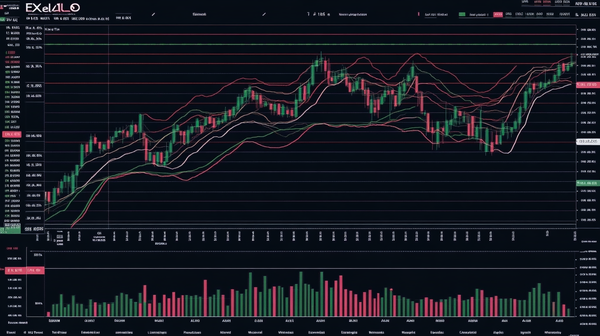
Start with the interface: the typical proprietary WebTrader in this segment is functional but not surgical. Expect basic-to-mid charting, common indicators, drawing tools, and one-click trading—enough for discretionary FX/CFD work, not always enough for systematic traders. Order types usually cover market/limit/stop, sometimes trailing stops. Mobile parity tends to be “good enough” for monitoring and simple execution, while the desktop browser version does the heavy lifting. The account dashboard usually centralizes margin usage, open positions, and funding, yet advanced analytics (trade journal, granular execution reports, depth-of-market) are often thinner than what regulated options vs Beacon Kapitholm tend to provide.
Trading Fees, Spreads, and Account Types at Beacon Kapitholm
Costs are where many traders feel the drag. A realistic expectation for a standard-style account is EUR/USD around 2.0 pips in typical conditions. Some brokers in this offshore lane also advertise “raw” pricing—often 0.0–0.4 pips plus a round-turn commission in the $5–$8 range—though what matters is the all-in cost once slippage and execution policy are included. Add the usual CFD mechanics: swap/overnight financing, potential inactivity charges, and possible withdrawal fees depending on payment method. If your strategy is sensitive—scalping, news trading, tight stops—those frictions show up quickly, and that’s when traders start mapping out competitors to Beacon Kapitholm.
When Do Traders Start Looking for Beacon Kapitholm Alternatives?
Regret rarely arrives as a single event; it arrives as a pattern. The first signal is often operational: delays, unclear account terms, or support that can’t give a straight answer about execution and withdrawals. The second signal is structural: you realize your counterparty risk is bigger than your trading edge. That’s why Beacon Kapitholm alternatives become a serious topic in 2026—especially for US/EU traders who are used to formal rules around negative balance protection, complaints, and client-money handling. High leverage (up to 1:500 here) doesn’t fix a weak foundation; it amplifies mistakes and magnifies the cost of any platform failure.
- You need MT4/MT5 or cTrader for an EA or automation workflow, and the current WebTrader can’t support it reliably.
- Withdrawals start taking longer than expected, or you’re pushed toward alternate payment routes that raise compliance and chargeback risks.
- Your strategy depends on consistent fills during volatility, but you see widened spreads, re-quotes, or unexplained slippage around key releases.
- You want real equities/ETFs (ownership, not just price exposure), and the current offering is mostly CFDs or a short list of synthetic instruments.
How to Choose a Reliable Alternative to the Beacon Kapitholm Trading Platform
Think of broker selection as a risk budget, not a shopping trip. Every choice is a trade: costs versus tooling, market access versus simplicity, leverage versus survivability. The goal is to build a setup that can survive a bad week—platform outage, gap risk, funding delays—without turning into a total wipeout. For alternatives to the Beacon Kapitholm trading platform, prioritize what you can verify on public records, then optimize for your strategy.
Regulation, Safety, and Investor Protection
Start with the badge that can be checked. FCA, ASIC, CySEC, and NFA/CFTC each impose different rules, but they all create paper trails: licensing registers, client-money frameworks, and enforcement histories. In the UK, FSCS coverage can protect eligible clients up to £85,000; in Cyprus, the ICF framework can cover eligible clients up to €20,000. Those schemes don’t eliminate risk—CFDs can still go to zero—but they shift the worst-case scenario away from “nothing happens” toward a defined process. Also look for segregated client funds and clear negative balance protection terms, where applicable.
Available Markets and Instruments
Ask a blunt question: do you need exposure, or do you need ownership? Many platforms like Beacon Kapitholm focus on FX and CFDs, which can be efficient for short-term macro views. If you want long-term investing, real stocks and ETFs matter because CFDs don’t give shareholder rights and can introduce financing costs. Futures and options access is another dividing line: multi-asset brokers can open hedging and yield strategies that CFD-only platforms can’t replicate cleanly.
Trading Costs: Spreads, Commissions, and Other Fees
Ignore the “from 0.0 pips” banner until you compute round-turn cost-of-trade. For EUR/USD, compare (a) spread, (b) commission per lot (if any), (c) typical slippage in your trading window, and (d) swap/overnight financing for holds. Inactivity fees and withdrawal fees are not trivia; they are friction that eats small accounts. A scalper doing 200 round turns a month can bleed more from a 2.0 pip spread than from any chart mistake—math is cruel and honest.
Platforms, Tools, and Execution Quality
Tooling is not cosmetic; it’s risk control. MT4/MT5 and cTrader enable automation, custom indicators, and more portable workflows. Proprietary platforms can be fine, but they can also lock you into one ecosystem with limited auditability. Execution model matters too: market maker versus STP/ECN/DMA changes how your orders interact with the broker’s book. Read the execution policy, look for disclosures about slippage and order handling, and keep screenshots of fill anomalies—especially if you’re coming from Beacon Kapitholm and trying to compare like-for-like.
Support, Education, and Overall User Experience
Support quality shows up when your money is stuck or your platform misbehaves. Check hours (24/5 versus limited windows), language coverage, and whether you can reach a human quickly. Education is useful if it’s specific (margin, order types, platform mechanics) rather than hype. Finally, test mobile parity: a good app should let you manage margin, set stops, and review history without surprises.
Beacon Kapitholm and Different Asset Classes: When Alternatives May Be Better
Beacon Kapitholm Forex and CFD Trading
FX and CFDs are the natural habitat here: roughly a few dozen FX pairs (often 30–50) and a menu of indices and commodities. The headline leverage—up to 1:500—can make small accounts feel powerful, but leverage is not edge; it’s exposure. On costs, a typical ~2.0 pip EUR/USD spread is workable for swing trading, yet it’s a tax on high-frequency styles. If your trading depends on tight execution, an FX/CFD specialist like Pepperstone or IC Markets can be more suitable, particularly on raw-style pricing where spreads can run near 0.0–0.3 pips plus commission, depending on account type and liquidity conditions. The deeper point: execution policy and slippage behavior during volatility often matter more than the advertised maximum leverage.
Beacon Kapitholm Stock and ETF Trading
This is where many offshore CFD-first setups feel incomplete. Stock “trading” may mean stock CFDs rather than buying shares, which removes voting rights and can introduce overnight financing that quietly compounds. If you want broad US/EU equity coverage, corporate actions handled predictably, and the ability to hold positions without CFD-style financing, a multi-asset broker is the cleaner route. Interactive Brokers (IBKR) is the obvious heavyweight for real stocks, ETFs, options, futures, and bonds, built for serious routing and reporting. Saxo Bank is another strong option for multi-asset access with a polished platform stack. For traders focused on stock CFDs specifically, IG and CMC Markets are widely used in Europe under strict regimes, though the product is still a derivative—know what you’re buying.
Beacon Kapitholm Crypto Trading
In this category, crypto exposure is commonly delivered as crypto CFDs—price tracking without on-chain ownership. That means no self-custody, no withdrawals to a wallet, and no “21 million — and not a coin more” reality in your hands. You’re trading a contract, not holding bitcoin. For some traders, that’s acceptable for short-term hedging; for long-term conviction, it’s the wrong instrument. If crypto CFDs are part of your plan, regulated CFD providers like IG often offer them (jurisdiction-dependent), and Plus500 may provide crypto CFDs in certain regions as well. If your goal is actual BTC ownership, you should be thinking about regulated exchanges and cold storage—not a leveraged CFD account.
Best Beacon Kapitholm Alternatives for 2026: Comparison of Top Trading Platforms
Interactive Brokers (IBKR): Key Facts and How It Compares to Beacon Kapitholm
Regulation: SEC/FINRA (US), FCA (UK), IIROC (Canada) (entity depends on residency)
Markets: Stocks, ETFs, options, futures, bonds, FX (plus some CFDs outside the US)
Fees: FX pricing is typically tight with commissions; equities pricing varies by market and plan (tiered/fixed)
Platform: Trader Workstation (TWS), IBKR Desktop, web platform, mobile app, APIs
Best For: Serious multi-asset traders who want real market access and reporting
Pepperstone: Key Facts and How It Compares to Beacon Kapitholm
Regulation: FCA, ASIC, CySEC, DFSA
Markets: FX and CFDs (indices, commodities; availability varies by entity)
Fees: Standard spreads often around ~1.0 pip on EUR/USD; Raw-style pricing can run ~0.0–0.3 pips plus commission (varies by platform/account)
Platform: MT4, MT5, cTrader, TradingView integration (where available)
Best For: Execution-focused FX traders running EAs or tight-stop strategies
Saxo Bank: Key Facts and How It Compares to Beacon Kapitholm
Regulation: FCA, MAS, DFSA
Markets: Stocks, ETFs, bonds, options, futures, FX, CFDs
Fees: Pricing varies by tier; FX spreads are typically competitive, with lower costs for higher-tier accounts
Platform: SaxoTraderGO, SaxoTraderPRO
Best For: Portfolio-style traders who mix FX with listed instruments
OANDA: Key Facts and How It Compares to Beacon Kapitholm
Regulation: CFTC/NFA (US), FCA, ASIC, IIROC
Markets: Primarily FX; CFDs available outside the US (entity-dependent)
Fees: Typically spread-based pricing; EUR/USD spreads often around ~0.6–1.2 pips depending on conditions and account
Platform: OANDA web/mobile, MT4 (availability varies), APIs
Best For: US-eligible FX traders who need strong regulatory footing
IG: Key Facts and How It Compares to Beacon Kapitholm
Regulation: FCA, ASIC, MAS
Markets: CFDs (indices, FX, commodities, shares), spread betting (UK), some listed access in certain regions
Fees: Typically spread-based; major FX pairs often price competitively, with costs varying by market and volatility
Platform: IG Trading Platform (web/mobile), MT4 (where offered)
Best For: Macro CFD traders who want broad market coverage under top-tier oversight
IC Markets: Key Facts and How It Compares to Beacon Kapitholm
Regulation: ASIC, CySEC (group also operates under FSA Seychelles in some regions)
Markets: FX and CFDs (indices, commodities, some crypto CFDs depending on entity)
Fees: Raw-style accounts commonly show ~0.0–0.3 pip EUR/USD plus commission; standard-style pricing is wider (varies by account/platform)
Platform: MT4, MT5, cTrader
Best For: High-frequency FX traders who care about spreads and latency
Comparison Summary
| Platform | Regulation | Main Markets | Typical Costs | Best For |
|---|---|---|---|---|
| Interactive Brokers (IBKR) | SEC/FINRA, FCA, IIROC | Real stocks/ETFs, options, futures, bonds, FX | FX tight w/ commission; listed fees vary by venue/plan | Serious multi-asset traders who want real market access and reporting |
| Pepperstone | FCA, ASIC, CySEC, DFSA | FX + CFDs | ~1.0 pip Standard; ~0.0–0.3 pip + commission (Raw) | Execution-focused FX traders running EAs or tight-stop strategies |
| Saxo Bank | FCA, MAS, DFSA | Multi-asset (stocks/ETFs/options/futures/FX/CFDs) | Tiered pricing; competitive FX spreads for higher tiers | Portfolio-style traders who mix FX with listed instruments |
| OANDA | CFTC/NFA, FCA, ASIC, IIROC | FX-first; CFDs outside US | Spread-based; EUR/USD often ~0.6–1.2 pips (conditions vary) | US-eligible FX traders who need strong regulatory footing |
| IG | FCA, ASIC, MAS | CFDs across FX/indices/commodities/shares | Spread-based; varies by instrument and volatility | Macro CFD traders who want broad market coverage under top-tier oversight |
| IC Markets | ASIC, CySEC (plus FSA Seychelles for some regions) | FX + CFDs | ~0.0–0.3 pip + commission (Raw); wider on Standard | High-frequency FX traders who care about spreads and latency |
How to Safely Move from Beacon Kapitholm to Another Broker
Switching brokers is not a “close tab, open tab” event; it’s operational risk management. Sequence matters because KYC/AML rules can freeze money at the worst moment, and open CFD positions can’t usually be transferred like a stock portfolio. Treat the move like you’d treat a cold-wallet migration: verify addresses, test small, document everything. If you’re leaving Beacon Kapitholm, assume you are your own back office.
- Confirm the new broker’s license on the regulator’s public register (FCA Register, ASIC Connect, CySEC list, or NFA BASIC) and match the exact legal entity name.
- Open the new account and complete KYC (ID + proof of address) before you attempt a full withdrawal from the old account; approvals often clear within a business day, but not always.
- Flatten exposure: close open CFD positions on the old platform, then re-enter on the new venue if you still want the trade. Don’t assume “position transfers” exist for leveraged CFDs.
- Withdraw using the same funding rail you used to deposit where possible; many brokers enforce this to satisfy AML controls, and mismatches can trigger manual reviews.
- Export statements, confirmations, and full trade history for tax and dispute records, including funding timestamps and any fee lines (swap, commissions, withdrawals).
Ready to Explore Beacon Kapitholm?
If you’re still evaluating the current offering, review onboarding steps, regional eligibility, and the fee schedule in writing before you commit capital. Compare that against regulated substitutes for Beacon Kapitholm where you can verify licensing and execution disclosures. Small test deposits beat big assumptions.
FAQ: Beacon Kapitholm Alternatives and Trading Platforms
What is the best alternative to Beacon Kapitholm in 2026?
The best choice depends on what you’re trading: for real stocks/ETFs and professional-grade reporting, Interactive Brokers (IBKR) is hard to beat; for FX execution and automation, Pepperstone or IC Markets are strong candidates. If you want broad CFD market coverage under top-tier oversight, IG is a common EU/UK reference point. For US-based FX traders, OANDA is often the practical regulated route.
Is Beacon Kapitholm a safe broker/platform?
Beacon Kapitholm appears to operate under an offshore-style framework rather than a top-tier regime like FCA/NFA, which generally means fewer formal investor-protection mechanisms. That doesn’t automatically mean a trader will have problems, but it does raise the importance of withdrawal testing, written fee clarity, and understanding the execution model. If safety is your priority, regulated options vs Beacon Kapitholm are easier to verify and typically provide clearer complaint pathways.
Can I trade stocks, futures, or crypto with Beacon Kapitholm?
Beacon Kapitholm is most consistent with a Forex/CFD offering; stocks and ETFs, if present, are often structured as CFDs rather than real ownership, and listed futures access is not typical in this broker category. Crypto exposure, where offered, is usually via crypto CFDs—price exposure without on-chain withdrawal. Traders who need real stocks/ETFs or listed futures usually end up choosing platforms like Beacon Kapitholm only for short-term CFD tactics, while using IBKR or Saxo for the rest.
What should I check before switching from Beacon Kapitholm to another platform?
Before switching, verify the new broker’s exact legal entity on an official register (FCA/ASIC/CySEC/NFA) and confirm how client funds are segregated. Next, compare round-turn costs (spread + commission + likely slippage) and read the execution policy for market-maker vs STP/ECN/DMA handling. Finally, complete KYC at the new broker first, then withdraw from the old account using the original payment method to reduce AML delays.
About the Author: Kenji Tanaka is a Tokyo-based financial writer and active trader with a background in cryptography studies (University of Tokyo, incomplete). I’m Bitcoin orthodox—banks and fiat are not my religion, and “21 million — and not a coin more” is the only monetary policy that doesn’t lie. When I cover brokers and CFDs, I focus on verifiable regulation, execution mechanics, and the ways small “terms” can become big losses.