BoundMerit Review 2026: Is It Safe & Worth Your Money?
BoundMerit Review 2026: Pros, Cons, and Features Tested
| Min Deposit | $200 |
| Max Leverage | 1:500 |
| Assets | Forex, Crypto CFDs, Indices, Commodities, Share CFDs |
| Platforms | WebTrader (browser) + iOS/Android mobile apps |
Multi-asset CFD trading with high leverage is the point of BoundMerit—and it fits active speculators who value flexibility over bank-grade regulation. In my BoundMerit review testing, I saw two clear pricing lanes (spread-only vs. tighter spreads plus commission), with Forex and index CFDs feeling like the “home screen” of the product. The WebTrader is clean enough for fast execution checks, while the mobile stack covers the basics without the MT4/MT5 plug-in universe. The hook is access and leverage; the cost is the offshore framework and the extra self-discipline you need when margin is a button away. I logged in, funded, and placed a few small test orders at BoundMerit to see how it behaves when prices actually move.
Pros
- Two account tiers let you choose between spread-only simplicity and lower raw spreads with commission
- Broad CFD menu (FX, indices, metals, and crypto CFDs) with leverage up to 1:500
- WebTrader plus mobile apps make it easy to monitor positions away from desktop
Cons
- Offshore registration means weaker dispute escalation than top-tier regulators
- Inactivity fee can bite if you park an account and forget it
- No MT4/MT5 confirmation in my test—strategy traders may miss that ecosystem
Is BoundMerit Legit and Safe?
BoundMerit looked operational and tradeable in my 2026 test, not like a “vanish-after-deposit” setup. Still, it runs under an offshore registration model, so “safe” here means process-driven safeguards—not the kind of protection you’d expect from a Tier‑1 regulator.
What anchored my view was the compliance friction: KYC wasn’t optional, and withdrawal initiation was locked until identity checks were complete. The broker states it operates under the Mauritius FSC framework, which typically allows higher leverage and faster product rollouts, but it also means you’re unlikely to have an investor compensation scheme or easy regulator-mediated chargeback pathways. I scanned for the classic red flags—aggressive bonus pushing, fake award badges plastered everywhere, or a sales rep trying to steer my position size—and didn’t run into pressure tactics during the test window. The provider’s site copy leans on segregated client funds language; that’s encouraging, but outside top-tier jurisdictions it’s still something you verify through behavior over time, not marketing. Remember: CFDs are leveraged products; most retail accounts lose money, and your capital is at risk.
Supported Countries & Restricted Regions
This broker generally accepts clients across parts of Asia, Africa, and Latin America, with availability depending on local rules and the platform’s internal policy. The USA is blocked, and sanctioned jurisdictions are also off-limits.
| Region | Status | Leverage Cap |
|---|---|---|
| Southeast Asia (selected countries) | Accepted | Up to 1:500 |
| LATAM (selected countries) | Accepted | Up to 1:500 |
| MENA (selected countries) | Accepted | Up to 1:500 |
| Sub-Saharan Africa (selected countries) | Accepted | Up to 1:500 |
| USA | Restricted | Not offered |
| Sanctioned jurisdictions | Restricted | Not offered |
Eligibility is enforced through a mix of IP/location checks and KYC country-of-residence validation, so you can’t “VPN your way” through verification. Policies change—especially around leverage and crypto CFDs—so treat the sign-up checklist as the final authority for your residency.
Tradable Assets and Markets
BoundMerit is built like a multi-asset CFD desk: FX and indices are the core, with crypto CFDs and metals as the side doors for volatility. If you’re the type who rotates between macro themes (rates, risk-on/off, commodities), the lineup is usable.
- Indices: The usual suspects are here (US500, NAS100, US30, plus key European benchmarks), suitable for session-based trading.
- Forex: A solid major/minor set with a sprinkling of higher-spread crosses; I counted enough pairs for standard USD/JPY and EUR legs.
- Crypto CFDs: BTC/USD and ETH/USD sit at the front, with a handful of large-cap coins for traders who want price exposure without wallets.
- Commodities: XAU/USD and crude (WTI/Brent) are present; spreads felt typical for a retail CFD venue.
- Share CFDs: A selected list of US/EU large caps for event trades, not a full equity investing catalog.
All of this is CFD exposure: you’re trading price movements, not taking delivery, not getting shareholder voting rights, and not moving coins on-chain. If you want real Bitcoin, buy Bitcoin—self-custody, no permission, 21 million and not a coin more.
BoundMerit Trading Fees and Spreads
Pricing is split between a Standard account (spread-only) and a Raw/ECN-style account (tight spread plus commission), which is the normal trade-off in this offshore CFD segment. On my screen, EUR/USD started around 1.6 pips on Standard, while the Raw lane tightened to about 0.2 pips plus a $7 round-turn commission per lot.
| Asset | Spread/Fee | Market Average Comparison |
|---|---|---|
| EUR/USD (Standard) | From 1.6 pips | In line for spread-only retail CFD accounts |
| EUR/USD (Raw/ECN) | From 0.2 pips + $7/lot round-turn | Competitive if you trade size or scalp |
| Bitcoin (BTC/USD) | From $38 spread | Typical for crypto CFD pricing outside exchanges |
| Gold (XAU/USD) | From $0.35 | Near the mid-pack for retail CFD brokers |
| US500 Index | From 0.8 points | Reasonable for an all-in spread model |
Non-spread costs I noted: Overnight swap/financing is the real drip cost if you hold leveraged positions beyond the session, and weekend financing can make crypto CFDs noticeably pricier to carry. After 90 days of inactivity, the platform applies a $10 monthly inactivity fee—small, but annoying if you treat accounts like dusty wallets. Withdrawal fees were method-dependent (the crypto rail is usually the cleanest), and if you fund in a currency different from your account base, conversion spreads add another quiet layer. I revisited the fee schedule inside BoundMerit after the first trades to confirm the commission line on the Raw tier matched what the order ticket implied.
BoundMerit Trading Platforms and Tools
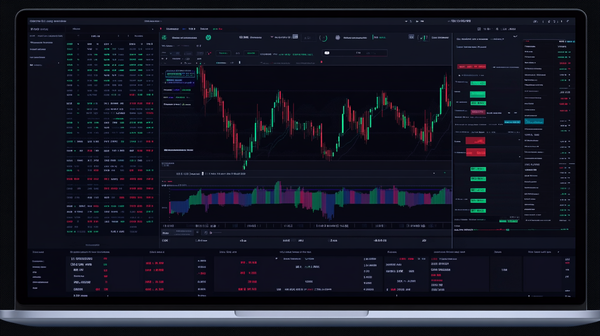
On desktop, the WebTrader loaded reliably across multiple sessions and kept charts responsive even with several instruments pinned. Order tickets covered market and pending orders, plus basic risk controls; execution on small test sizes was consistent with what I expect from a retail CFD venue (no miracle fills, no constant “requote” pop-ups either). If you live inside MT4/MT5 scripts or cTrader automation, the gap is ecosystem depth—this platform is more “trade and manage” than “engineer and optimize.”
BoundMerit App: Mobile Trading Experience
The BoundMerit app handled watchlists, one-tap position management, and deposits/withdrawals without pushing me to desktop, which matters if you trade around commutes. My BoundMerit login stayed stable with biometric unlock enabled, and push notifications for margin level changes arrived quickly enough to be useful. Order types on mobile mirrored the browser experience, though chart space is naturally tighter; I found it better for monitoring and quick risk trimming than for deep chart work.
Charting, Tools & Research
Indicators cover the retail essentials (MA, RSI, MACD, Bollinger), with drawing tools for levels and trendlines and a serviceable multi-timeframe view. Research is light: an economic calendar and integrated news feed help with “what’s happening next,” but it’s not a substitute for a full analytics suite. Alerts and watchlists are practical, yet systematic traders will still prefer platforms where backtesting and third-party tooling are first-class citizens.
BoundMerit Account Opening & Minimum Deposit
First impression: the signup flow focuses on AML hygiene more than it looks like it will—email/phone verification first, then personal details, then compliance questions before funding. For KYC, I submitted a passport scan plus a utility bill dated within three months; verification landed the same business day on my side. That timing is decent, and it prevented me from treating the account like a “deposit now, argue later” situation.
- Minimum Deposit: $200 (this is the BoundMerit minimum deposit I saw at funding)
- Funding Methods: Visa/Mastercard, bank wire, regional e-wallets, and crypto (BTC, USDT)
- Demo Account: $10,000 virtual balance for testing order tickets and margin behavior
- Account Types: Standard (spread-only) and Raw/ECN-style (lower spread + $7/lot round-turn commission)
Account base currency options were enough for international clients, but funding in one currency and trading in another still invites conversion friction. One practical note: KYC is best done before your first withdrawal attempt; otherwise, withdrawal clocks start later than you think.
BoundMerit Customer Support Review
I tested support twice: once on live chat to clarify swap/overnight fee visibility for XAU/USD, and once by email asking what to expect on a USDT withdrawal timeline after verification. Chat picked up in roughly three minutes and pointed me to the contract spec panel plus where the next rollover time is shown; the reply was specific, not copy-paste fluff. Email came back in about eight hours (Tokyo time), confirming internal processing typically runs 24–48 hours after KYC and the crypto rail often arrives the same day once released.
Coverage follows the usual rhythm: 24/5 availability with the fastest handling during weekday market hours, and thinner staffing around weekends. Language support depends on queue and region, and phone assistance wasn’t a central feature in my test. Relative to peers in the offshore CFD world, the service felt competent—just don’t expect concierge-level handholding.
Ready to Explore BoundMerit?
If you’re considering this broker, start by checking whether your country is accepted and whether the Raw vs. Standard pricing fits your style. I’d also recommend running the demo first, then placing small positions to observe spreads and financing before committing real size.
BoundMerit Review FAQ
Is BoundMerit good for beginners?
Yes, it can work for beginners who keep position sizes small and respect leverage. The WebTrader is not overloaded, and the demo account helps you learn margin and order types without paying tuition to the market. The offshore leverage (up to 1:500) is the part that can punish new traders fast.
Can I trade crypto on BoundMerit?
Yes, you can trade crypto CFDs such as BTC/USD and ETH/USD. Keep in mind this is derivative exposure, not on-chain ownership, so you can’t withdraw coins to a personal wallet. Weekend financing and wider spreads than exchanges are common with crypto CFDs.
Is BoundMerit a scam?
No, my test didn’t show scam behavior: KYC was enforced, trades executed normally, and withdrawals were available after verification. The real caution is jurisdiction—offshore registration (Mauritius FSC) typically offers fewer formal remedies than a top-tier regulator. Treat leverage and counterparty risk seriously.
Is BoundMerit available in the USA?
No, the platform restricts USA residents. The signup and KYC process is designed to catch residency mismatches, so attempting to register from the US usually ends in rejection. If you’re US-based, look for a venue authorized for your jurisdiction.
How long does a BoundMerit withdrawal take?
A BoundMerit withdrawal typically needs 24–48 hours for internal processing once KYC is cleared. After that, cards often take 2–5 business days, bank wires can take 3–7 business days, and crypto withdrawals are commonly completed within hours. Your method and compliance status are the big variables.
What is the BoundMerit minimum deposit?
The BoundMerit minimum deposit is $200. That’s enough to test both account tiers with small sizing, but it’s not a license to use maximum leverage. If you plan to hold positions overnight, budget for swap/financing too.
Does BoundMerit have a mobile app?
Yes, there are iOS and Android apps for trading and account management. You can monitor positions, place orders, and handle deposits and withdrawals from the phone. For heavy chart work, the WebTrader on a larger screen still feels better.
Final Verdict: Should You Use BoundMerit in 2026?
Overall Score: 4.0/5
Leverage and platform accessibility are the headline strengths, and in my BoundMerit broker review 2026 testing the core mechanics—KYC, execution, and withdrawals—behaved like a functioning retail CFD shop. The Raw/ECN-style tier can make sense if you trade frequently, while the Standard account keeps the math simple for smaller activity. The weak spot is structural: offshore oversight is not the same as bank-land guarantees, and you must manage counterparty risk and margin like an adult. If you’re going to use BoundMerit, treat CFDs as high-risk instruments; most retail traders lose money.
Best for: active CFD traders who want Forex/indices plus crypto CFDs with up to 1:500 leverage and a clean WebTrader. Avoid if: you need Tier‑1 regulation, MT4/MT5 tooling, or you’re prone to over-leveraging.