CapitalPro Trading Platform Alternatives 2026
CapitalPro Trading Platform Alternatives 2026: Reliable Options for Online Traders
Leverage is a sharp knife. Used with skill, it cuts clean; used with ego, it cuts your account. That’s why I treat “offshore CFD brokers with big promises” the way I treat fiat money: convenient until it fails, then suddenly everyone remembers counterparty risk. CapitalPro sits in that high-leverage, CFD-first corner of the market—typically presented as an offshore provider (often linked to Seychelles-style frameworks), with a proprietary WebTrader and a mobile app aimed at fast onboarding rather than deep tooling.
For many traders, the friction starts when real money meets real processes: withdrawals, slippage around news, and how disputes are handled when something breaks. If your broker can’t be cleanly verified on a top-tier regulator’s public register, you’re not just trading EUR/USD—you’re trading the broker. And that’s where CapitalPro alternatives enter the conversation: not because “new is shiny,” but because execution quality, fund segregation, and investor-protection rules are not vibes; they’re guardrails.
This guide focuses on US/EU priorities: clear regulation (FCA/ASIC/CySEC/NFA), transparent costs (spread + commission + swap), and platform choices (MT4/MT5/cTrader vs proprietary). I’ll also call out the uncomfortable truth: many “crypto” offerings at CFD brokers are price exposure, not ownership—no on-chain withdrawal, no self-custody, no “not your keys.”
Disclaimer: This article is for informational purposes only and does not constitute investment advice. CFDs and other leveraged products carry a high risk of loss, and you can lose more quickly than expected—trade only with risk you can afford to lose.
Key Takeaways (TL;DR)
- If you care about safety, prioritize brokers you can verify on FCA/ASIC/CySEC/NFA registers and that hold client money in segregated accounts.
- Compare total trading cost by “round-turn” (spread + commission + slippage), not by headline leverage like 1:500.
- Switching platforms isn’t a button-click: open and verify the new account first, export history for taxes, then withdraw using the original funding method for AML compliance.
What Is CapitalPro and How Does Its Trading Platform Work?
From a trader’s seat, CapitalPro looks like a classic offshore CFD venue: forex pairs, index and commodity CFDs, and usually a small menu of crypto CFDs—built for quick access and aggressive leverage rather than long-term investing. Public-facing setups in this segment are commonly tied to an offshore jurisdiction such as Seychelles (not FCA/ASIC/CySEC/NFA), which changes what “protection” really means when something goes wrong. The product mix targets short-term speculators: margin trading, fast deposits, and a simplified platform rather than DMA-style market access.
CapitalPro Web Trading Platform: Core Features and Tools
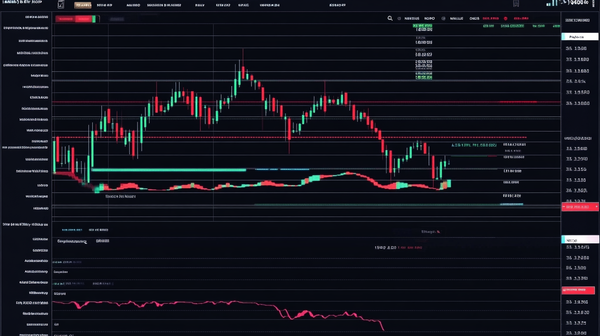
The platform stack is typically a proprietary WebTrader with a matching iOS/Android app—functional, but rarely “institutional.” Expect the basics: watchlists, one-click trading, common chart types, and a reasonable set of indicators and drawing tools. Order controls usually cover market/limit/stop with editable SL/TP, but advanced conditional orders and strategy automation are often thin versus MT4/MT5 or cTrader. Execution can feel fine in calm markets, yet during volatility the real test is slippage handling and whether fills match the quotes you saw on-screen—an area where brokers similar to CapitalPro can vary dramatically.
Trading Fees, Spreads, and Account Types at CapitalPro
Cost presentation in offshore CFD land is often “from X,” so I prefer to think in typical, not minimum. A reasonable working estimate for a Standard-style account is EUR/USD around 2.0 pips, with higher spreads on minors and crypto. Some brokers in this bracket advertise “Raw/ECN” tiers that pair near-zero spreads (say 0.0–0.4 pips) with a commission around $6–$8 round-turn; if offered, it’s still worth checking how often spreads truly sit near zero. Add swap/overnight financing, plus potential withdrawal or inactivity fees depending on account rules.
When Do Traders Start Looking for CapitalPro Alternatives?
Regulation is the first crack in the wall. If your broker can’t be confirmed under a tier-1 regulator, you’re depending on policies rather than enforceable obligations—especially around segregated client funds and dispute resolution. That’s why CapitalPro alternatives become relevant when the trading itself isn’t the problem; the structure around it is. I’ve seen traders tolerate a mediocre WebTrader for months, then switch the week a withdrawal takes “just a bit longer,” or when a margin call triggers faster than their risk model expected.
- You need MT4/MT5 or cTrader for an EA/scalping workflow, but the current proprietary WebTrader can’t run it reliably.
- Your strategy depends on consistent execution during news, yet you’re seeing wider spreads and unpredictable slippage at the worst moments.
- You want clearer protections (segregated funds, negative balance protection, formal complaints handling) than offshore frameworks usually provide.
- You’re trying to trade real stocks/ETFs for longer-term exposure, but the menu is mostly CFDs (no shareholder rights, no transferability).
How to Choose a Reliable Alternative to the CapitalPro Trading Platform
Pick the broker the way you’d size a position: start with risk limits, then optimize for cost and tooling. “Best” is not universal—an FX scalper, an options trader, and a long-term ETF investor live in different worlds. For alternatives to the CapitalPro trading platform, I score candidates on enforceable oversight, product fit, and the mechanics that determine whether you can exit cleanly when conditions turn ugly.
Regulation, Safety, and Investor Protection
For US/EU traders, names matter because rules follow names. FCA (UK), ASIC (Australia), CySEC (EU), and NFA/CFTC (US) each impose capital requirements, conduct rules, and client-money standards. Under the FCA, eligible clients may have FSCS coverage up to £85,000; in Cyprus, ICF coverage can reach €20,000 (eligibility and terms vary). Look for segregated client funds, clear negative balance protection where applicable, and a regulator register entry that matches the broker’s legal entity—not just a logo on a website.
Available Markets and Instruments
Write down what you actually need to trade. If you want spot FX and index CFDs, an FX/CFD specialist can be enough. If you want real stocks/ETFs (not CFD wrappers), you’re in multi-asset territory like IBKR or Saxo. Futures and options require a different infrastructure again—margining, exchange access, and disclosures that many platforms like CapitalPro simply don’t target. Crypto is its own fork: CFD exposure is not on-chain ownership, and that difference matters when you care about custody and transfer.
Trading Costs: Spreads, Commissions, and Other Fees
Stop comparing marketing numbers. The metric that hits your P&L is the round-turn cost: spread paid on entry/exit plus commission, plus the hidden tax of slippage. For example, a “2.0 pip typical” EUR/USD spread is expensive for a frequent trader, even if the platform offers 1:500 leverage. Also check swap/overnight fees (especially on indices and crypto CFDs), inactivity charges, and withdrawal costs. A cheaper headline spread can still lose if execution quality is poor.
Platforms, Tools, and Execution Quality
Tooling dictates what strategies are even possible. MT4/MT5 support matters for EAs and custom indicators; cTrader appeals to traders who like depth-of-market and a modern UI; proprietary platforms vary from excellent to toy-like. Execution model matters too: market maker vs STP/ECN vs DMA changes how orders are filled and how conflicts are managed. If you’re evaluating competitors to CapitalPro, test for requotes, measure latency at your usual trading hours, and keep an eye on slippage distribution—not just average fill speed.
Support, Education, and Overall User Experience
Bad support is a trading cost, just delayed. Confirm live chat hours that match your timezone, email response expectations, and whether you can reach a competent human when compliance questions arise. Documentation should cover margin call mechanics, stop-out levels, and fee schedules in plain language. Mobile parity matters if you manage risk on the move; watchlist sync, push alerts, and reliable order modification can save you when volatility spikes.
CapitalPro and Different Asset Classes: When Alternatives May Be Better
CapitalPro Forex and CFD Trading
Forex and CFDs are where CapitalPro typically lives: roughly 30–50 FX pairs, a handful of indices, and a small commodities list—often paired with very high leverage (commonly up to 1:500). The problem isn’t that leveraged CFDs exist; it’s that leverage amplifies everything, including execution flaws. A “typical” EUR/USD spread around 2.0 pips can be a quiet bleed for active traders, and during volatility the real cost becomes spread expansion plus slippage. FX/CFD specialists like Pepperstone and IC Markets are often chosen by traders who care about tighter pricing (especially on Raw-style accounts) and broader platform support (MT4/MT5/cTrader). If your edge is small—scalping, high frequency, short holding times—cost-per-round-turn and fill quality matter more than advertised maximum leverage.
CapitalPro Stock and ETF Trading
Stock and ETF access is where offshore CFD venues frequently disappoint. Even when “shares” appear in the product list, the exposure is commonly via CFDs—meaning no shareholder rights, no exchange voting, and no transfer to a long-term custody account. If you want to invest, not just speculate, that difference is structural. Multi-asset brokers such as Interactive Brokers (IBKR) and Saxo Bank are built for real listed markets: stocks and ETFs across exchanges, plus options and futures in many regions. That wider toolkit changes your risk management: you can hedge with options, use exchange-traded stops where available, and hold unleveraged positions instead of keeping everything on margin. For traders comparing regulated options vs CapitalPro, “real market access” is often the cleanest reason to move.
CapitalPro Crypto Trading
Crypto at CFD brokers is usually “price exposure only.” You can go long or short, but you can’t withdraw to a wallet, verify on-chain reserves, or self-custody—so it’s not Bitcoin; it’s a contract tied to a broker’s balance sheet. That might be acceptable for short-term hedging, but it’s a different animal than owning sats. In this category, some regulated CFD venues like IG and Plus500 commonly offer crypto CFDs (availability varies by region and regulation), which can be preferable if you insist on a clearer supervisory framework and more standardized risk disclosures. Still, keep your eyes open: crypto CFDs can carry wider spreads, higher overnight financing, and gap risk. If you’re a “21 million—no more” maximalist like me, remember: paper BTC is still paper.
Best CapitalPro Alternatives for 2026: Comparison of Top Trading Platforms
Interactive Brokers (IBKR): Key Facts and How It Compares to CapitalPro
Regulation: SEC/FINRA (US), FCA (UK), IIROC (Canada)
Markets: Stocks, ETFs, options, futures, bonds, FX
Fees: FX pricing varies by structure; typically tight with explicit commissions; stock/ETF commissions depend on region and tier
Platform: Trader Workstation (TWS), IBKR Desktop/mobile, Client Portal APIs
Best For: Serious multi-asset traders who want real exchange access
Pepperstone: Key Facts and How It Compares to CapitalPro
Regulation: FCA (UK), ASIC (Australia), CySEC (EU), DFSA (UAE)
Markets: FX, CFDs (indices, commodities, some shares depending on entity)
Fees: Standard accounts often around ~1.0 pip+ on EUR/USD; Razor/Raw-style pricing can run ~0.0–0.3 pips plus commission (varies by platform/entity)
Platform: MT4, MT5, cTrader, TradingView integration (where available)
Best For: Spread-sensitive FX traders running MT4/MT5 or cTrader
Saxo Bank: Key Facts and How It Compares to CapitalPro
Regulation: FCA (UK), MAS (Singapore), DFSA (UAE)
Markets: Stocks, ETFs, bonds, FX, options, futures, CFDs
Fees: Costs vary by tier and market; FX spreads are typically competitive with transparent pricing; commissions apply on exchange-traded products
Platform: SaxoTraderGO, SaxoTraderPRO
Best For: Portfolio-style traders mixing FX with listed assets
OANDA: Key Facts and How It Compares to CapitalPro
Regulation: CFTC/NFA (US), FCA (UK), ASIC (Australia), IIROC (Canada)
Markets: FX (primary), CFDs in some jurisdictions (indices/commodities)
Fees: Typically spread-only pricing on core FX; EUR/USD commonly around ~0.6–1.2 pips depending on account and market conditions
Platform: OANDA web/mobile, MT4 (availability varies)
Best For: US-eligible FX traders prioritizing oversight and transparency
CMC Markets: Key Facts and How It Compares to CapitalPro
Regulation: FCA (UK), ASIC (Australia), BaFin (Germany)
Markets: CFDs (FX, indices, commodities, shares), plus listed share dealing in some regions
Fees: FX spreads can be competitive (often sub-1 pip on EUR/USD in normal conditions); costs vary by product; financing applies on overnight CFD holds
Platform: CMC Next Generation, MT4 (where offered)
Best For: Active CFD traders who want deep charting in a proprietary platform
Plus500: Key Facts and How It Compares to CapitalPro
Regulation: FCA (UK), CySEC (EU), ASIC (Australia), MAS (Singapore)
Markets: CFDs (FX, indices, commodities, shares, crypto CFDs where permitted)
Fees: Primarily spread-based pricing; typical costs vary by instrument with additional overnight funding and possible inactivity fees
Platform: Plus500 WebTrader, Plus500 mobile app
Best For: Beginners who want a simple CFD-only interface
Comparison Summary
| Platform | Regulation | Main Markets | Typical Costs | Best For |
|---|---|---|---|---|
| Interactive Brokers (IBKR) | SEC/FINRA, FCA, IIROC | Stocks/ETFs, options, futures, bonds, FX | Competitive; commission-based on many products; FX often tight with explicit fees | Serious multi-asset traders who want real exchange access |
| Pepperstone | FCA, ASIC, CySEC, DFSA | FX, CFDs | EUR/USD ~1.0 pip+ (Standard) or ~0.0–0.3 pips + commission (Razor/Raw-style) | Spread-sensitive FX traders running MT4/MT5 or cTrader |
| Saxo Bank | FCA, MAS, DFSA | Stocks/ETFs, FX, options, futures, CFDs | Tiered pricing; spreads/commissions vary by market and account level | Portfolio-style traders mixing FX with listed assets |
| OANDA | CFTC/NFA, FCA, ASIC, IIROC | FX (primary), some CFDs by region | Often spread-only; EUR/USD commonly ~0.6–1.2 pips (conditions vary) | US-eligible FX traders prioritizing oversight and transparency |
| CMC Markets | FCA, ASIC, BaFin | CFDs (FX/indices/commodities/shares) | Often sub-1 pip EUR/USD in normal markets; financing costs on overnight holds | Active CFD traders who want deep charting in a proprietary platform |
| Plus500 | FCA, CySEC, ASIC, MAS | CFDs including crypto CFDs where permitted | Spread-based; overnight funding and possible inactivity fees | Beginners who want a simple CFD-only interface |
How to Safely Move from CapitalPro to Another Broker
Switching brokers is operational risk management, not a vibe shift. The goal is to avoid being forced into bad trades because of timing, verification delays, or withdrawal constraints. Keep in mind: leveraged CFD exposure can move fast, and a sloppy migration can create accidental hedges or duplicated risk. If you’re coming from CapitalPro, assume positions won’t “transfer” across brokers—plan to close and reopen deliberately.
- Confirm the new broker’s legal entity on the regulator’s public register (FCA Register, ASIC Connect, CySEC list, or NFA BASIC) and match it to the website terms you’ll sign.
- Open the new account and complete KYC/AML early (ID + proof of address), so you’re not stuck waiting when markets are moving.
- Audit your open positions and margin usage; reduce leverage before you start moving funds so a small price shock doesn’t trigger a margin call mid-transfer.
- Close positions at the old broker and re-enter on the new venue only when you’ve validated spreads, swaps, and order behavior with small size.
- Withdraw funds using the same method you used to deposit whenever possible; many firms enforce “source of funds” rules and will reject mismatched routes.
Ready to Explore CapitalPro?
If you’re still considering it, check the onboarding flow, product list, and fee schedule for your region before funding an account. Then compare it against the regulated options above—platform stack, execution model, and withdrawal rules—so you’re choosing with your eyes open.
FAQ: CapitalPro Alternatives and Trading Platforms
What is the best alternative to CapitalPro in 2026?
The best alternative depends on what you trade and whether you need real listed assets or just CFDs. For broad, real-market access (stocks/ETFs/options/futures), Interactive Brokers (IBKR) is hard to ignore; for FX-focused trading with MT4/MT5/cTrader, Pepperstone is often a strong fit. If you mainly want CFDs with strong charting in a proprietary platform, CMC Markets is worth a serious look. For this guide’s best CapitalPro alternatives 2026 list, I prioritized verifiable oversight and clearer cost disclosure.
Is CapitalPro a safe broker/platform?
CapitalPro appears to operate in an offshore/unregulated-style setup (commonly seen under jurisdictions like Seychelles), which generally provides fewer enforceable protections than FCA/ASIC/CySEC/NFA supervision. That doesn’t automatically mean fraud, but it does mean you should treat counterparty risk as higher and protections like compensation schemes as less robust. If safety is your priority, focus on regulated options vs CapitalPro where segregated client funds, complaints handling, and reporting obligations are clearer.
Can I trade stocks, futures, or crypto with CapitalPro?
With brokers in this segment, forex and CFDs are typically the core offering, with crypto often available as CFDs on a limited set of coins. Stock exposure, if present, is commonly via share CFDs rather than owning real shares; exchange-traded futures are often not offered in the same way a multi-asset broker provides. If you need real stocks/ETFs or listed futures, platforms like CapitalPro usually aren’t built for that—IBKR and Saxo are better aligned.
What should I check before switching from CapitalPro to another platform?
Before switching, verify the new broker’s exact legal entity on the regulator’s register and confirm client-money handling (segregated funds, negative balance protection where applicable). Next, compare round-turn costs (spread + commission) and review swap/overnight fees so your holding strategy doesn’t get quietly taxed. Finally, export statements and trade history from CapitalPro before closing anything, then test the new setup with small size to observe spreads and slippage.
About the Author: Kenji Tanaka is a Tokyo-based financial writer and active trader with a background in cryptography studies at the University of Tokyo (incomplete). He’s Bitcoin-orthodox—“21 million — and not a coin more”—and approaches brokers with the same skepticism he reserves for banks and fiat: trust is earned through verifiable rules, not promises.