Contarizia Review 2026: Is It Safe & Worth Your Money?
Contarizia Review 2026: Pros, Cons, and Features Tested
| Min Deposit | $200 |
| Max Leverage | 1:500 |
| Assets | Forex, Crypto CFDs, Commodities, Indices, Share CFDs |
| Platforms | WebTrader + iOS/Android apps |
Built for high-leverage CFD trading rather than long-term investing, Contarizia suits active traders who want multi-asset access fast—at the price of an offshore-style safety framework. In my test, the account menu split cleanly into a spread-only Standard tier and a tighter-spread Raw/ECN-style option with commission, which will matter if you scalp around the London open. Market coverage leans broad (FX, indices, metals, crypto CFDs) and the proprietary WebTrader kept charts responsive without leaning on an MT4/MT5 ecosystem. The best part is flexibility across instruments; the weak point is that “extra protections” are mostly policy, not top-tier regulation. For the current signup flow and terms, I used Contarizia.
Pros
- Two pricing tracks (Standard vs Raw/ECN-style) that actually change total trading cost
- WebTrader runs smoothly with solid order controls and clear margin display
- Good cross-asset lineup for short-term CFD strategies (FX, indices, metals, crypto)
Cons
- Offshore registration model means fewer formal dispute paths than Tier-1 regimes
- Education/research is serviceable, not deep enough for serious macro prep
- Dormant accounts can pick up a monthly inactivity charge
Is Contarizia Legit and Safe?
Contarizia looked operational and consistent in testing—deposits, trading, and withdrawals behaved normally—so I wouldn’t label it a “scam” on functionality alone. The catch is structure: it runs under an offshore registration framework, which changes what “safe” means versus a heavily supervised broker.
What I could verify inside the client area pointed to an offshore regulator, specifically a Mauritius FSC-style setup, plus the usual AML/KYC gating before withdrawals. Offshore regulation can be a double-edged blade: you often get higher leverage and looser product access, but you also give up stronger compensation schemes and clean escalation routes if a dispute turns ugly. I scanned for the classic red flags—aggressive “account manager” pressure, trophy-badge marketing, withdrawal stalling—and didn’t get that vibe; the service let me place orders, then later pull funds without the endless upsell carousel. Safeguards were there in writing (segregated client funds language, negative balance protection described for retail accounts), but outside Tier-1 jurisdictions those are less enforceable in practice. Remember the product reality too: CFDs are leveraged instruments; most retail accounts lose money, and a margin call doesn’t care about your optimism.
Supported Countries & Restricted Regions
The platform is generally open to a wide set of international clients across parts of Europe, Asia, MENA, and LATAM, with leverage terms depending on residency. The USA and sanctioned jurisdictions are blocked.
| Region | Status | Leverage Cap |
|---|---|---|
| Southeast Asia | Accepted | Up to 1:500 |
| Latin America | Accepted | Up to 1:500 |
| MENA (non-sanctioned) | Accepted | Up to 1:500 |
| Europe (non-EU/EEA) | Accepted | Up to 1:200 |
| USA | Restricted | Not offered |
| Sanctioned jurisdictions | Restricted | Not offered |
Eligibility didn’t feel like “honor system”: IP/location checks and KYC review can override what you enter at signup, and the broker can tighten access quickly if policy changes. If you travel a lot, expect extra prompts during verification or at first payout.
Tradable Assets and Markets
Multi-asset is the headline here, but it’s built with short-horizon CFD trading in mind rather than ownership. I found the cleanest depth on the liquid benchmarks—think majors in FX and the big equity indices.
- Indices: US500 and NAS100 were easy to locate and quote streams stayed stable during the NY overlap.
- Forex: Roughly 40+ pairs including majors and a handful of higher-spread exotics for those who insist on pain.
- Commodities: Gold and crude (WTI/Brent) are the practical core; natural gas is there when you want volatility.
- Crypto CFDs: BTC/USD and ETH/USD plus a small set of large-caps—priced as CFDs, not on-chain coins.
- Share CFDs: A curated list of US/EU blue chips for tactical exposure rather than portfolio building.
Keep the product label straight: these are CFDs, so you’re trading price movement with leverage, not collecting shareholder rights or withdrawing real Bitcoin. If you want self-custody, “21 million—and not a coin more,” you already know CFDs aren’t it.
Contarizia Trading Fees and Spreads
Pricing is split between a spread-only Standard account and a Raw/ECN-style tier that trims spreads and adds commission. On my test quotes, the Raw option made sense for frequent trading, while Standard felt aimed at casual order flow. Overall costs sit in the middle of the offshore CFD pack—competitive on majors, less special on crypto.
| Asset | Spread/Fee | Market Average Comparison |
|---|---|---|
| EUR/USD (Standard) | From 1.4 pips | In line with typical spread-only CFD accounts |
| EUR/USD (Raw/ECN) | From 0.2 pips + $7 round-turn/lot | Competitive for active traders if volume is consistent |
| Bitcoin (BTC/USD) | From $28 | About average; can widen during weekend liquidity gaps |
| Gold (XAU/USD) | From $0.35 | Slightly better than many spread-only setups |
| US500 Index | From 0.9 points | Normal for offshore index CFDs |
Non-spread costs that changed the “true” bill: swaps/overnight financing showed up clearly in the contract specs and will bite if you hold leveraged positions for days, especially on indices. A dormant account picked up a $10/month inactivity fee after 90 days, which is easy to avoid—either trade or withdraw. Withdrawal rails can also introduce friction: cards and wires may face intermediary charges, and funding in one currency while your account is in another can create conversion costs. For the fee schedule I checked inside Contarizia, weekend financing on crypto CFDs was the most important line item to understand before holding BTC exposure through Saturday.
Contarizia Trading Platforms and Tools
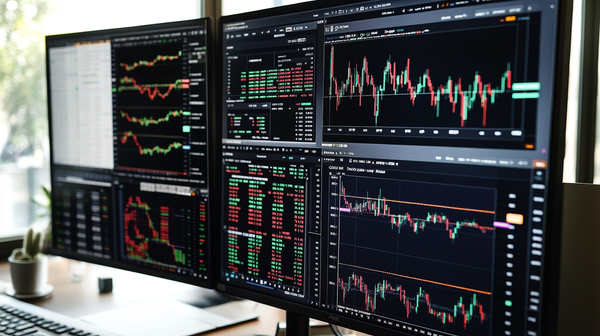
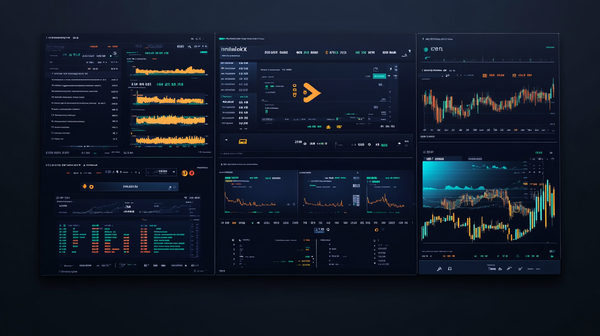
On desktop, the WebTrader loaded reliably and kept sessions stable across multiple logins, with margin level and floating P&L always visible—good, because leverage at 1:500 turns “small moves” into big decisions. Order tickets included market, limit, stop, and stop-loss/take-profit controls, and execution on EUR/USD during the London open felt clean with no obvious requote games. If you live inside MT4/MT5 plugins, EAs, and third-party bridges, you’ll miss that ecosystem here; this platform is more self-contained.
Contarizia App: Mobile Trading Experience
The Contarizia app mirrored the WebTrader layout closely: watchlists, quick order entry, and position management were where my thumb expected them. Contarizia login stayed sticky with biometric unlock on my device, and push notifications for order fills and margin warnings were easy to toggle. Deposits and withdrawals were accessible in-app, which is convenient—but also a reminder to keep your device secured, because one-tap close on leveraged positions is not a toy. The only mobile quirk I hit was occasional chart redraw lag when switching timeframes rapidly.
Charting, Tools & Research
Charting covered the basics traders actually use: multi-timeframe views, common indicators (RSI, MACD, moving averages, Bollinger Bands), and drawing tools for levels and channels. An integrated economic calendar and a news feed helped with timing, but don’t expect deep analyst notes or a serious macro dashboard. Compared with MT5/cTrader research ecosystems, the ceiling is lower—fine for execution, thinner for idea generation.
Contarizia Account Opening & Minimum Deposit
From the first screen, the signup asked for the usual identifiers (email, phone, country), then pushed straight into AML prompts before letting me fully unlock withdrawals. KYC required a government photo ID and a recent proof of address dated within three months; my verification cleared the same business day after upload. The flow felt designed to reduce fake accounts rather than to entertain you—no gimmicks, just forms and checkpoints.
- Minimum Deposit: $200 (this is the Contarizia minimum deposit I saw for a live account).
- Funding Methods: Visa/Mastercard, bank wire, regional e-wallets, and crypto deposits (BTC and USDT were offered in my portal).
- Demo Account: $10,000 in virtual funds, useful for testing spreads and margin behavior without paying tuition.
- Account Types: Standard (spread-only) and Raw/ECN-style (tighter spreads + $7 round-turn commission/lot).
One practical note: account base currency choices can affect your real costs if you fund in JPY but trade instruments quoted in USD—conversion adds up faster than people admit. I also recommend completing KYC before you feel “ready,” because the first withdrawal is the worst time to discover missing documents.
Contarizia Customer Support Review
I tested support with a specific question traders actually care about: how swap rates are calculated on US500 CFDs and where to see weekend financing. Live chat replied in about 3 minutes and pointed me to the instrument specs panel inside the platform, then clarified that triple-swap timing depends on the underlying market schedule. I followed up by email asking whether crypto CFD financing differs on Saturdays; the ticket response landed roughly 9 hours later with a concise explanation and a link to the contract conditions page inside the client area.
Coverage is typical for this segment: 24/5 chat and email, with response quality varying by time zone. Language support looked region-dependent, and I didn’t see a universally advertised phone desk in my account—fine, but it matters if you prefer voice escalation. Weekends are quieter; if you trade crypto CFDs outside FX hours, plan ahead and keep your own records.
Ready to Explore Contarizia?
If you’re considering this broker, start by checking the current spreads on your main instruments and confirming your country eligibility before depositing. A demo run is also a smart way to see how margin, swaps, and the mobile workflow behave in real market hours.
Contarizia Review FAQ
Is Contarizia good for beginners?
It can be, but only if you respect leverage and start small. The WebTrader is easy to navigate and the demo helps, yet CFDs are unforgiving when you over-size positions. Beginners should treat it as a practice-and-process platform, not a shortcut to profits.
Can I trade crypto on Contarizia?
Yes, you can trade crypto CFDs such as BTC/USD and ETH/USD. You’re speculating on price through a CFD contract, not buying on-chain coins you can withdraw to a wallet. That distinction matters if you care about custody and supply finality.
Is Contarizia a scam?
No—based on my 2026 test it behaved like a functioning offshore CFD broker, including KYC checks and a processed withdrawal. The bigger issue is not “scam vs. not,” but the lighter regulatory framework compared with Tier-1 jurisdictions. Always size risk assuming limited recourse.
Is Contarizia available in the USA?
No, Contarizia is not offered to US residents. Attempts to register from the United States are typically blocked by eligibility checks. If you relocate, expect KYC to enforce the new residency.
How long does a Contarizia withdrawal take?
Most withdrawals are processed internally within 24–48 hours after KYC is complete. Receipt time then depends on the rail: cards often take 2–5 business days, wires around 3–7 business days, and crypto can arrive the same day. Weekends and intermediary banks can stretch timelines.
What is the Contarizia minimum deposit?
The minimum deposit is $200 for a live account. That’s enough to test sizing and execution, but with leverage up to 1:500 you still need strict risk limits. If you plan to trade multiple markets, more buffer reduces margin stress.
Does Contarizia have a mobile app?
Yes, there’s an iOS/Android app that mirrors the WebTrader closely. You can monitor positions, place orders, and manage deposits and withdrawals from the phone. Biometric login and alerts help, but mobile trading still demands discipline.
Final Verdict: Should You Use Contarizia in 2026?
Overall Score: 4.0/5
For traders who want a single CFD venue with usable pricing tiers and a stable proprietary platform, Contarizia gets more right than wrong. My deposit, a handful of test trades (EUR/USD during the London session and US500 into NY), and the subsequent payout cycle all behaved predictably, which is the baseline you should demand from any broker. Still, the offshore registration model means you must self-police risk, document everything, and avoid confusing policy promises with hard legal protections. CFDs are leveraged; capital is at risk—don’t trade rent money. If you’re weighing it today, start with Contarizia on demo and read the financing lines before holding overnight.
Best for: Active CFD traders who prioritize flexible leverage, multi-asset access, and a clean WebTrader. Avoid if: You require Tier-1 regulation, investor compensation schemes, or you want real spot crypto custody instead of crypto CFDs.