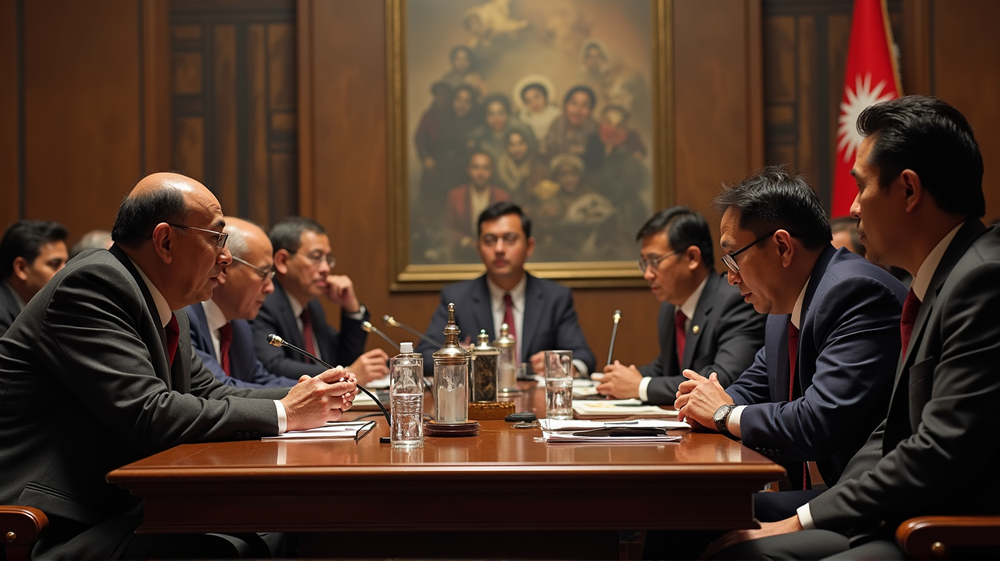
Drama Unfolds as Ministry Halts Civil Service Bill in Upper House
In a riveting twist, the momentum to finalise Nepal’s Federal Civil Service Bill has been disrupted by the Ministry of Federal Affairs and General Administration. As the clock ticks towards the constitutional deadline, tensions have risen in the National Assembly where definitive agreements seemed within reach.
Provisions Under Scrutiny
Committees and ministers are caught in a web of contention over debated bill provisions, notably concerning the retirement age and the rights of civil servants. Remarkably, the House of Representatives’ prior decision to increase the retirement age incrementally—from 58 to 60—has faced resistance. The Ministry insists on implementing a 59-year retirement age, revealing a divergence in perspectives that threatens the process.
Additionally, there is a push to restrict civil servants from engaging in teaching roles. This proposed change has sparked dynamic discourse; under-secretaries have been pivotal educators in civil service preparatory classes, but their continuation is now questioned by senior authority figures with alleged interests.
Competition in Civil Service Hierarchy
The committee’s hesitation looms equally over the issue of permitting free competition among non-gazetted first-class employees. While officials argue for limited free competition to enable competitive promotions, committee members weigh the consequences of such foundational changes. According to The Kathmandu Post, this is an issue that resonates across hierarchical bounds within the service landscape.
Cooling-off Period and Legislative Amendments
Amid the heightened drama, the committee is in the midst of resolving a pivotal amendment: instituting a two-year cooling-off period before retired bureaucrats can claim state appointments. This aligns with broader transparency and accountability efforts.
The presence of 130 amendment proposals—an outpouring from lawmakers—further illustrates the intricacies at play. With coalition dynamics and individual aspirations intertwined, the political theatre continues.
Regional Implications and Administrative Structures
The bill also delineates new frameworks for appointing chief administrative officers under provincial civil service commissions and envisages interim measures with federal depots. Yet, provincial appointments retain stipulations threatening provincial autonomy, a longstanding regional demand.
A Race Against Time
The urgency echoes across these chambers; the upper house finds itself against a mid-week deadline to send the endorsed bill to the lower house. As this legislation rides the waves of bureaucratic scrutiny and Ministry interventions, only time will reveal the outcome of this legislative saga.
In an arena grappling with power, future governance structures of Nepal hang in the balance, poised between stalled legacies and forward-thinking reforms.