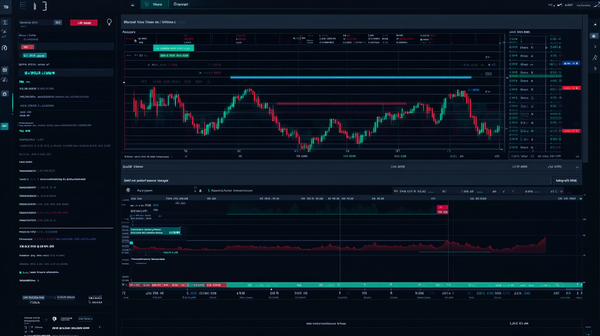
Epargiance Trading Platform Alternatives 2026
Epargiance Trading Platform Alternatives 2026: Reliable Options for Online Traders
Markets don’t care about your feelings, and neither do leveraged CFDs. If you’re using an offshore-style CFD venue with high leverage and a glossy WebTrader, you’re taking two bets at once: your trade idea, and the platform’s plumbing. That’s the real reason “Epargiance alternatives” is a search phrase with teeth in 2026—people aren’t just chasing tighter spreads; they’re trying to reduce counterparty risk, withdrawal friction, and execution surprises.
Based on what’s commonly seen in this broker category, Epargiance looks like a Forex/CFD-first provider operating under an offshore framework (often associated with jurisdictions such as SVG). The product mix typically centers on major/minor FX pairs, indices, commodities, and crypto CFDs—fast to open, easy to market, and (too often) light on verifiable investor protections. Expect a proprietary WebTrader plus mobile apps, a minimum deposit around $250, typical EUR/USD spreads around 2.0 pips on a standard-style account, and headline leverage up to about 1:500. That’s workable for short-term speculators, but it’s not the same as having transparent oversight, segregated client funds you can verify, or a track record you can audit.
Disclaimer: This article is for informational purposes only and does not constitute investment advice. CFDs and other leveraged products carry a high risk of loss and are not suitable for everyone.
Key Takeaways (TL;DR)
- Prioritize brokers you can verify on public registers (FCA, ASIC, CySEC, NFA), not just a logo on a website.
- Compare “round-turn” trading cost (spread + commission + expected slippage), not leverage headlines like 1:500.
- If you want real stocks/ETFs (not CFDs), multi-asset venues like IBKR or Saxo are structurally different from CFD-only platforms.
- Migration is a sequence: open and KYC the new account first, then close exposure, then withdraw—rushing this is how traders get stuck.
What Is Epargiance and How Does Its Trading Platform Work?
From a trader’s-eye view, Epargiance fits the familiar offshore CFD mold: a broker-like interface that routes you into Forex and CFD contracts rather than owning underlying assets. The target user is usually retail—people who want quick onboarding, high leverage, and a simple “trade now” dashboard instead of deep market access. That model can be functional for directional trading, but it also concentrates risk in the platform itself: pricing feed quality, order handling, and withdrawal policies matter as much as your strategy. Traders comparing platforms like Epargiance should separate “can I place a trade?” from “can I verify the venue’s protections?”—those are not the same question.
Epargiance Web Trading Platform: Core Features and Tools
The typical Epargiance-style stack is a proprietary WebTrader paired with iOS/Android apps. Charting is usually serviceable—enough indicators for basic trend/momentum work, drawing tools for levels and channels, and quick switching between watchlists. Order tickets often support market and limit orders, sometimes stop orders and basic take-profit/stop-loss attachments. Where proprietary terminals tend to lag top-tier competitors is workflow: fewer advanced order types, thinner customization, and less transparency around execution quality (fill speed, re-quotes, and how slippage is handled during volatility). Mobile parity is commonly decent for monitoring and closing risk, but heavy analysis is still easier on desktop.
Trading Fees, Spreads, and Account Types at Epargiance
Fee schedules in this segment often lean on spread-based pricing. A reasonable expectation for a standard-style account is EUR/USD around 2.0 pips in normal conditions, with wider spreads during news or thin liquidity. Some offshore CFD venues advertise “raw” pricing tiers (for example 0.0–0.4 pips) but then charge a commission—commonly in the $5–$8 round-turn range per standard lot—so the all-in cost can still land close to, or above, regulated peers once slippage is included. Also watch the quiet fees: swap/overnight financing on CFDs, potential inactivity charges after months without trading, and withdrawal fees that can turn “cheap trading” into expensive friction.
When Do Traders Start Looking for Epargiance Alternatives?
One brutal lesson: the moment you care about getting money out, you start caring about who holds it. Traders usually begin hunting for Epargiance alternatives when the platform experience stops matching the risk they’re taking—whether that’s high leverage paired with thin protections, costs that quietly expand in volatile markets, or tool limitations that block a real strategy. The goal isn’t perfection; it’s reducing avoidable failure modes: questionable oversight, unclear execution, and support that goes silent precisely when the market gets loud.
- You need MT4/MT5 or cTrader for an EA/scalping workflow, and the current WebTrader doesn’t support your automation or order management style.
- Withdrawal timelines feel unpredictable, or you’re pushed toward payment methods you didn’t use for deposits (a common AML “argument” used badly).
- Your strategy is spread-sensitive (news trading, short-hold mean reversion), and a ~2.0 pip EUR/USD baseline is bleeding the edge.
- You want verifiable safeguards—segregated client funds, negative balance protection, and a regulator you can check on a public register.
How to Choose a Reliable Alternative to the Epargiance Trading Platform
Think of selecting a replacement as building a “risk budget” before you chase features. Costs matter, yes, but custody and oversight matter more—especially when your instrument is a CFD and the broker is effectively your counterparty. Competitors to Epargiance range from simple CFD apps to deep multi-asset institutions, so match the venue to your intent: hedging, long-term investing, active FX trading, or systematic execution.
Regulation, Safety, and Investor Protection
Start with what you can verify. FCA (UK), ASIC (Australia), CySEC (EU), and NFA/CFTC (US) each maintain public registers—use them. Stronger regimes often require segregated client funds and enforce conduct rules with real teeth. In the UK, the FSCS can protect eligible client money up to £85,000 if a firm fails; in Cyprus, the ICF framework can cover eligible clients up to €20,000. These schemes don’t remove trading risk, but they can reduce platform-failure risk.
Available Markets and Instruments
List what you actually need to trade. If you only want FX majors and index CFDs, a specialized FX/CFD broker may be fine. If you want real stocks and ETFs (ownership exposure, not a synthetic CFD), you’ll need a multi-asset broker with exchange access. Options and futures are a separate tier again—margin rules, platform complexity, and reporting all change. “Alternatives to the Epargiance trading platform” should be judged by whether they offer the right instruments in your jurisdiction, not by how many tickers they advertise.
Trading Costs: Spreads, Commissions, and Other Fees
Compare costs the way a professional would: round-turn, all-in. Spread is only one piece; commission, swap/overnight rates, and expected slippage during your trading hours can dominate. A tight raw spread with a high commission can end up similar to a wider spread with zero commission—until volatility hits and slippage widens the gap. If you trade frequently, even a 0.3–0.6 pip difference on EUR/USD can compound into meaningful drag over a month.
Platforms, Tools, and Execution Quality
Platform choice is strategy choice. MT4/MT5 and cTrader support automation, custom indicators, and established workflows; proprietary platforms can be clean but sometimes limit advanced order handling. Execution model matters: market maker setups can be fine for small sizes, while STP/ECN/DMA-style routing tends to be preferred when you care about pricing transparency and fills. If you’re migrating from Epargiance, test execution with small orders around your usual sessions and watch how stops and limits behave in fast markets.
Support, Education, and Overall User Experience
Support isn’t about politeness; it’s about speed and documentation when money is on the line. Check hours (24/5 vs limited windows), available languages, and whether responses are logged and auditable. Education can be useful, but don’t overvalue glossy webinars; prioritize clear product disclosures and fee transparency. Mobile apps should match desktop for risk controls—position sizing, margin visibility, and quick order edits—so you’re not blind when volatility spikes.
Epargiance and Different Asset Classes: When Alternatives May Be Better
Epargiance Forex and CFD Trading
Forex and CFDs are where Epargiance-style venues usually focus: a few dozen FX pairs (often 30–50), major indices, and a small set of commodities. The catch is that “available” doesn’t equal “efficient.” With a typical EUR/USD spread near 2.0 pips on standard pricing and leverage that can reach about 1:500, the math can punish overtrading and amplify small execution issues into big P&L swings. Regulated FX specialists like Pepperstone and OANDA tend to win on transparency: clearer execution disclosures, more established platform ecosystems (MT4/MT5/cTrader or robust proprietary terminals), and compliance standards that reduce the odds of withdrawal drama. If your edge is thin, cost and slippage control are not optional—they are the strategy.
Epargiance Stock and ETF Trading
Here’s the line most retail traders only learn after paying for it: stock CFDs are not the same as owning stocks. With a CFD, you generally don’t get shareholder rights, and you’re exposed to the broker’s pricing and financing terms. Offshore CFD brokers may offer “stocks” mainly as CFDs, or provide limited coverage compared with true exchange access. Multi-asset institutions like Interactive Brokers (IBKR) and Saxo Bank are built for real stocks and ETFs across major exchanges, with tools for routing, reporting, and (for qualified clients) options/futures layers. For anyone trying to build a portfolio—not just punt a short-term move—this is the category gap that matters most.
Epargiance Crypto Trading
Crypto on many CFD platforms is typically “price exposure only” via crypto CFDs—no on-chain withdrawal, no self-custody, no proof-of-reserves, just a contract. That can be fine for hedging or short-term trading, but don’t confuse it with owning bitcoin. I’m from Tokyo, I’m allergic to fiat games, and I’ll say it plainly: paper exposure is not the asset. If you still want regulated derivatives exposure, IG and Plus500 are examples of regulated CFD providers that often include crypto CFDs in certain regions, with clearer risk disclosures and tighter oversight than offshore venues. Region rules change fast, so verify eligibility before funding.
Best Epargiance Alternatives for 2026: Comparison of Top Trading Platforms
Interactive Brokers (IBKR): Key Facts and How It Compares to Epargiance
Regulation: SEC/FINRA (US), FCA (UK), IIROC (Canada)
Markets: Stocks, ETFs, options, futures, bonds, FX
Fees: FX pricing varies by setup; stock/ETF commissions are typically low with tiered options depending on region and routing
Platform: Trader Workstation (TWS), IBKR Desktop, Client Portal (web), mobile app, APIs
Best For: Real multi-asset access (stocks/ETFs/options/futures) instead of CFD-only exposure
Pepperstone: Key Facts and How It Compares to Epargiance
Regulation: FCA (UK), ASIC (Australia), CySEC (EU), DFSA (Dubai)
Markets: FX, CFDs (indices, commodities, some crypto CFDs depending on region)
Fees: EUR/USD often ~0.0–0.3 pips on Razor/Raw-style pricing plus commission; ~1.0+ pip typical on Standard-style pricing
Platform: MT4, MT5, cTrader, TradingView integration (where available)
Best For: Active FX traders who want MT4/MT5/cTrader and competitive all-in pricing
IG: Key Facts and How It Compares to Epargiance
Regulation: FCA (UK), ASIC (Australia), MAS (Singapore)
Markets: CFDs (FX, indices, commodities, shares CFDs), spread betting (UK/IE)
Fees: Spread-based pricing; majors can be competitive in liquid hours, with costs rising during volatility
Platform: IG proprietary web platform, mobile app (MT4 available in some regions)
Best For: CFD traders who value a long-established, heavily supervised brokerage model
OANDA: Key Facts and How It Compares to Epargiance
Regulation: CFTC/NFA (US), FCA (UK), ASIC (Australia), IIROC (Canada)
Markets: FX (and CFDs in some non-US regions)
Fees: Typically spread-based; costs depend on instrument and session, with transparent reporting tools for many accounts
Platform: OANDA web, mobile app, MT4 (availability varies), APIs
Best For: FX-first traders who care about oversight, reporting, and risk controls
Saxo Bank: Key Facts and How It Compares to Epargiance
Regulation: FCA (UK), MAS (Singapore), DFSA (Dubai)
Markets: Stocks, ETFs, bonds, FX, options, futures, CFDs
Fees: Pricing varies by tier; FX spreads are generally competitive for larger accounts, with commissions on exchange-traded products
Platform: SaxoTraderGO, SaxoTraderPRO
Best For: Portfolio-minded traders who want research, multi-asset depth, and robust platform tooling
Plus500: Key Facts and How It Compares to Epargiance
Regulation: FCA (UK), CySEC (EU), ASIC (Australia), MAS (Singapore)
Markets: CFDs (FX, indices, commodities, shares CFDs, crypto CFDs depending on region)
Fees: Primarily spread-based; additional costs can include overnight funding on held CFD positions
Platform: Plus500 proprietary web platform and mobile app
Best For: Simple CFD execution for beginners who want a clean interface over platform complexity
Comparison Summary
| Platform | Regulation | Main Markets | Typical Costs | Best For |
|---|---|---|---|---|
| Interactive Brokers (IBKR) | SEC/FINRA, FCA, IIROC | Real stocks/ETFs, options, futures, FX, bonds | Varies by product; generally low commissions with professional-grade routing choices | Real multi-asset access (stocks/ETFs/options/futures) instead of CFD-only exposure |
| Pepperstone | FCA, ASIC, CySEC, DFSA | FX + CFDs (indices/commodities; some crypto CFDs by region) | Raw: ~0.0–0.3 pips + commission; Standard: ~1.0+ pip | Active FX traders who want MT4/MT5/cTrader and competitive all-in pricing |
| IG | FCA, ASIC, MAS | CFDs (FX/indices/commodities/shares CFDs); spread betting (UK/IE) | Spread-based; competitive in liquid sessions, wider during volatility | CFD traders who value a long-established, heavily supervised brokerage model |
| OANDA | CFTC/NFA, FCA, ASIC, IIROC | FX (CFDs in some non-US regions) | Spread-based pricing; transparency tools vary by region/account | FX-first traders who care about oversight, reporting, and risk controls |
| Saxo Bank | FCA, MAS, DFSA | Stocks/ETFs/bonds, FX, options, futures, CFDs | Tiered pricing; FX spreads can be strong for larger accounts; commissions on exchanges | Portfolio-minded traders who want research, multi-asset depth, and robust platform tooling |
| Plus500 | FCA, CySEC, ASIC, MAS | CFDs across major asset categories (availability varies by region) | Spread-based; overnight funding on held CFD positions | Simple CFD execution for beginners who want a clean interface over platform complexity |
How to Safely Move from Epargiance to Another Broker
Switching brokers isn’t a vibe; it’s an operational checklist. Treat the move like you’re reducing exposure to a single point of failure: you want the new account fully functional before you touch the old balance. Also remember: leveraged products magnify mistakes in both trading and process—closing positions, withdrawing, and redeploying capital in a rush is how small problems become expensive.
- Confirm the new broker on the regulator’s register (FCA Register, ASIC Connect, CySEC directory, or NFA BASIC) and match the legal entity name—not just the brand.
- Open the new account and complete KYC/AML first (ID + proof of address). Don’t assume you can withdraw and re-deposit quickly if verification is pending.
- Flatten risk on the old venue: close open positions or replicate them as fresh trades at the new broker, because position transfers between brokers usually aren’t a thing.
- Initiate withdrawals from Epargiance using the original deposit method where possible; many payment rails enforce this for AML reasons.
- Download statements, trade history, and funding logs before you lose access—tax reporting and dispute resolution both depend on your own records.
Ready to Explore Epargiance?
If you’re still evaluating your setup, review the current onboarding flow, instrument list, and trading conditions side-by-side with regulated substitutes. Check whether your country is eligible and whether the platform stack matches your strategy before committing capital.
FAQ: Epargiance Alternatives and Trading Platforms
What is the best alternative to Epargiance in 2026?
The best alternative depends on whether you need real multi-asset access or primarily FX/CFDs. For real stocks/ETFs plus options/futures, Interactive Brokers and Saxo Bank are strong picks; for FX-focused trading with MT4/MT5/cTrader, Pepperstone is often a better fit. If you want a simpler CFD app with strong regulation, Plus500 or IG can be easier to operate.
Is Epargiance a safe broker/platform?
Epargiance appears to sit in an offshore/unregulated category rather than under top-tier oversight like FCA, ASIC, CySEC, or NFA. That doesn’t automatically mean fraud, but it does mean fewer independently enforced protections such as investor-compensation schemes and clearer conduct supervision. If platform safety is your priority, regulated options vs Epargiance are easier to verify and typically offer stronger client-funds rules.
Can I trade stocks, futures, or crypto with Epargiance?
Epargiance-style offerings typically focus on Forex and CFDs, with “stocks” often delivered as share CFDs rather than real equity ownership, and crypto commonly offered as crypto CFDs. Futures access is usually limited compared with true multi-asset brokers. If you need exchange-traded stocks/ETFs or listed futures, brokers similar to Epargiance won’t match what IBKR or Saxo provides.
What should I check before switching from Epargiance to another platform?
Before switching, verify the new broker’s legal entity on the regulator’s public register and confirm your region is accepted (US restrictions are common for offshore CFD venues). Next, compare round-turn costs (spread + commission + likely slippage) and confirm the platform stack (MT4/MT5/cTrader vs proprietary) matches your strategy. Finally, document your funding and trade history and plan the withdrawal sequence so you aren’t forced into rushed, high-risk trades during the transition.
About the Author: Kenji Tanaka is a Tokyo-based financial journalist and active trader with a cryptography background (University of Tokyo, incomplete). I’m a Bitcoin orthodox—“21 million — and not a coin more”—and I’m openly skeptical of fiat incentives and bank-custody risk, which is why my platform reviews obsess over verification, execution quality, and withdrawal mechanics.