Firme Réditoria Review 2026: Is It Safe & Worth Your Money?
Firme Réditoria Review 2026: Pros, Cons, and Features Tested
| Min Deposit | $200 |
| Max Leverage | 1:500 |
| Assets | Forex, Crypto CFDs, Indices, Commodities, Share CFDs |
| Platforms | WebTrader (desktop/mobile web) + iOS/Android apps |
Built as a multi-asset CFD venue, Firme Réditoria fits active traders who want high leverage and quick market access, with the obvious trade-off being an offshore-style regulatory footprint rather than a top-tier rulebook. I noticed two main account tiers (spread-only vs. Raw/ECN-style), plus a demo that’s actually useful for testing margin and stops. Markets lean toward FX and major indices, with crypto CFDs for price exposure (not coins). The WebTrader is clean and fast enough for routine execution; the bigger drawback is that you’re not getting the deep MT4/MT5 plugin universe or a strong investor-compensation safety net.
Pros
- Raw/ECN-style pricing option for tighter spreads on majors
- Broad CFD menu: FX, indices, metals, energy, and crypto price exposure
- Mobile app supports trading and funding workflows without juggling multiple portals
Cons
- Offshore registration model means weaker dispute escalation than Tier-1 brokers
- Inactivity charge can nibble dormant accounts after a few months
- MT4/MT5 availability wasn’t confirmed in my account area
Is Firme Réditoria Legit and Safe?
Firme Réditoria looked operational and tradeable in my tests, not like a “vanish-with-your-deposit” setup. That said, it runs under an offshore framework (I saw references to Seychelles FSA), so your protections are not the same as FCA/ASIC-style supervision.
Seychelles-style oversight typically comes with flexibility—higher leverage, looser product restrictions—but it also means thinner compensation schemes and fewer formal paths if a dispute drags on. My red-flag scan focused on the usual garbage: fake award badges, aggressive “account manager” pressure, and withdrawal friction. The dashboard pushed upgrades, but I didn’t get harassed after I declined. KYC was enforced (ID plus proof of address), and the legal pages repeatedly mentioned segregated client funds—good language, though you still rely on the broker’s internal controls more than on a heavyweight regulator. One more reality check: CFDs are leveraged products; most retail traders lose money, and a margin call doesn’t care about your feelings or your yen-cost average.
Supported Countries & Restricted Regions
The broker accepted clients across parts of Asia, LATAM, and selected non-EU Europe during my onboarding checks, while the USA and sanctioned jurisdictions were blocked.
| Region | Status | Leverage Cap |
|---|---|---|
| Southeast Asia (selected) | Accepted | Up to 1:500 |
| Latin America | Accepted | Up to 1:500 |
| MENA (selected) | Accepted | Up to 1:500 |
| Non-EU Europe (selected) | Accepted | Up to 1:500 |
| USA | Restricted | Not offered |
| Sanctioned jurisdictions | Restricted | Not offered |
Eligibility wasn’t a “trust me bro” checkbox: location prompts, document checks, and payment-rail filtering all played a role. Policies can change quickly, so treat country access as something to re-confirm right before you fund.
Tradable Assets and Markets
The lineup is built for “macro + momentum” CFD trading: liquid benchmarks first, then extras for those who want more toys. If you live on charts and volatility, it covers the essentials without trying to be an exchange.
- Indices: Major equity benchmarks like US500, NAS100, and GER40 with intraday-friendly pricing.
- Forex: A solid list of majors and minors, plus a sprinkling of exotics for those who understand what wide spreads really mean.
- Crypto CFDs: BTC and ETH are there, with other large-caps depending on the day; it’s price exposure, not self-custody.
- Commodities: Gold and silver, plus energy contracts such as WTI/Brent where headline risk can bite.
- Share CFDs: Selected US/EU blue chips for tactical trades rather than long-term ownership.
Everything here is CFD-based, so you’re not buying shares, you’re not getting shareholder rights, and you’re definitely not withdrawing bitcoin to cold storage. If you want “21 million—and not a coin more,” CFDs are a mirror, not the real thing.
Firme Réditoria Trading Fees and Spreads
Firme Réditoria fees follow a two-lane model: Standard accounts bake costs into the spread, while Raw/ECN-style accounts tighten spreads and charge a per-lot commission. On EUR/USD I saw pricing that’s broadly in the normal range for offshore CFD brokers—fine for active trading, not the cheapest on earth.
| Asset | Spread/Fee | Market Average Comparison |
|---|---|---|
| EUR/USD (Standard) | From 1.4 pips | In line |
| EUR/USD (Raw/ECN) | From 0.2 pips + $6 round-turn/lot | Competitive |
| Bitcoin (BTC/USD) | From 0.35% | In line |
| Gold (XAU/USD) | From $0.25 | Slightly better |
| US500 Index | From 0.8 points | In line |
Non-spread costs that matter: Overnight swap/financing showed up clearly in the contract specs, and it will dominate your P&L if you hold leveraged positions for weeks. The platform also lists a $10 monthly inactivity fee after 90 days without trading, which is basically a tax on forgetting your login. On the funding side, I saw method-dependent withdrawal charges and FX conversion spreads when depositing in a currency that didn’t match the account base—small per transaction, ugly over time. Weekend financing on crypto CFDs can be punchy, so don’t confuse “market is closed” with “costs are paused.”
Firme Réditoria Trading Platforms and Tools
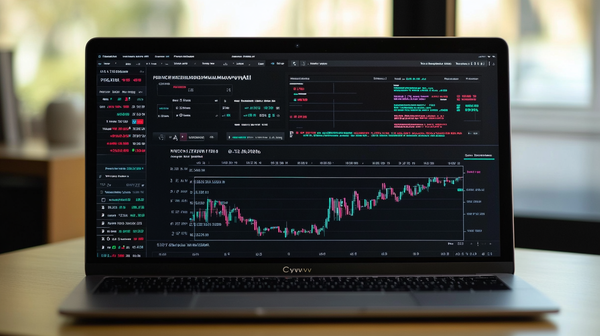
From Tokyo, I used the WebTrader during the Asia session and again into the London open; login stayed stable and charts loaded without that “spinning wheel” drama. Order tickets offered market, limit, and stop orders with adjustable SL/TP, plus a one-click mode I kept disabled (old habit—fat-finger risk is real). Execution on a EUR/USD micro-lot was consistent, though you should expect slippage around fast headlines; this is CFD dealing, not some magical frictionless pipe. If you’re married to MT4/MT5 EAs, note that I didn’t see MT4/MT5 access advertised inside my client area.
Firme Réditoria App: Mobile Trading Experience
The Firme Réditoria app feels built for monitoring and quick action: real-time quotes, watchlists, and simple position management. I tested Firme Réditoria login with biometric unlock on Android, then placed a stop order on NAS100 and received a push notification when price neared the level. Deposits and withdrawals are reachable from the same menu, which reduces the “web portal scavenger hunt” some brokers force. A minor annoyance: chart indicator settings didn’t always carry over between instruments, so I ended up recreating a template twice.
Charting, Tools & Research
Charting covers the staples—MA, RSI, MACD, Bollinger—and the drawing tools are adequate for trendlines and zones. There’s an economic calendar and a bite-sized news feed that’s fine for awareness but not a research terminal. Alerts and basic watchlists exist, yet power users will still feel the ceiling compared with MT5 or cTrader ecosystems. For me, that’s acceptable when the goal is execution, not storytelling.
Firme Réditoria Account Opening & Minimum Deposit
Instead of burying KYC until the first withdrawal, this broker pushed identity checks early: I uploaded a passport photo and a recent utility bill (under three months). The signup form asked for the usual—email, phone, country, and a short suitability-style questionnaire—then the portal moved me to document upload. Verification for my profile cleared the same business day, and the compliance emails were plain and specific, not hypey.
- Minimum Deposit: $200 (the Firme Réditoria minimum deposit I was shown at checkout)
- Funding Methods: Visa/Mastercard, bank wire, regional e-wallets, and cryptocurrencies (BTC and USDT were visible on my deposit screen)
- Demo Account: $10,000 virtual balance—useful for rehearsing leverage, margin, and stop placement
- Account Types: Standard (spread-only) and Raw/ECN-style (tighter spread + commission)
I funded with USDT first because banks are a toll booth with a suit on, and the credit hit my balance after network confirmations. For readers who prefer cards, expect extra scrutiny if your billing country and IP don’t match; AML rules are not optional, even offshore. If you want to poke the UI without risk, start with the demo and only then move to live.
Firme Réditoria Customer Support Review
I tested support in two ways: live chat for a swap-rate question on XAU/USD and a ticket asking about withdrawal timing for USDT. Chat replied in about three minutes with where to find the swap values and how the triple-swap day is applied; it wasn’t poetic, but it was actionable. The email/ticket response landed in roughly eight hours with a short checklist (KYC must be approved, wallet address must match the selected network) and a reminder that internal processing is typically 24–48 hours.
Coverage followed the usual CFD-broker cadence: 24/5 for chat and email, with thinner staffing late Friday New York time and over the weekend. Language options looked region-driven rather than global—English was solid; other languages depend on who’s on shift. Phone support wasn’t prominent in my dashboard, which matches a lot of online-first providers.
Ready to Explore Firme Réditoria?
If you’re considering this service, validate the spreads on your own screen, check whether your country is accepted, and run a demo to see how margin behaves on your preferred instruments. Then, if it fits, deposit small and test a withdrawal before scaling.
Firme Réditoria Review FAQ
Is Firme Réditoria good for beginners?
It can be, as long as you treat CFDs with respect and start small. The WebTrader is not hard to navigate, and the $10,000 demo helps you learn order types without donating tuition to the market. Beginners should avoid max leverage and focus on risk controls like stop-loss and position sizing.
Can I trade crypto on Firme Réditoria?
Yes, but it’s crypto CFDs, not spot coins. You can take price exposure to pairs like BTC/USD and ETH/USD, typically with leverage. That means no on-chain withdrawal to a hardware wallet and no “not your keys” sovereignty—just a derivative position.
Is Firme Réditoria a scam?
No—based on my account test it functioned like a real broker (pricing streamed, orders filled, and KYC was enforced). The bigger issue is jurisdiction: it’s an offshore setup (Seychelles FSA referenced), so protections and escalation routes are lighter than Tier-1 regulators. Always test with a small deposit and run a first withdrawal early.
Is Firme Réditoria available in the USA?
No, the USA was blocked in my region checks. US residents generally can’t open CFD accounts with offshore providers due to local regulatory rules. If you’re traveling, expect KYC to tie eligibility to residency documents, not your airport Wi‑Fi.
How long does a Firme Réditoria withdrawal take?
Most withdrawals are processed internally within 24–48 hours after KYC approval. In my USDT test, the on-chain transfer arrived the same day once the request moved to “approved.” Card and bank-wire withdrawals usually take longer end-to-end (roughly 2–7 business days depending on the rail).
What is the Firme Réditoria minimum deposit?
The minimum deposit is $200 on the funding screen I used. You can deposit via cards, wire, e-wallets, or supported crypto rails like BTC/USDT, with final availability depending on country. If you’re new, deposit the minimum and prove the withdrawal pipeline first.
Does Firme Réditoria have a mobile app?
Yes, there are iOS and Android apps, and they cover trading plus account actions like deposits and withdrawals. You also get push alerts and biometric login support (device-dependent). For heavy technical analysis, the desktop WebTrader still feels roomier.
Final Verdict: Should You Use Firme Réditoria in 2026?
Overall Score: 4.0/5
My takeaway is simple: if you’re choosing a high-leverage CFD shop, judge it by execution, clarity of fees, and whether withdrawals behave—on those points, Firme Réditoria held up in my small-scale tests. The Raw/ECN-style account pricing was the highlight, while the offshore regulatory reality is the part you can’t “opt out” of. Keep positions sized like you actually want to survive volatility, because leverage magnifies mistakes faster than it magnifies skill. And remember: CFDs are high-risk; most retail accounts lose money.
Best for: active CFD traders who want higher leverage, FX/indices focus, and a usable mobile stack. Avoid if: you require Tier-1 regulation, guaranteed compensation schemes, or you want real bitcoin custody instead of BTC CFDs.