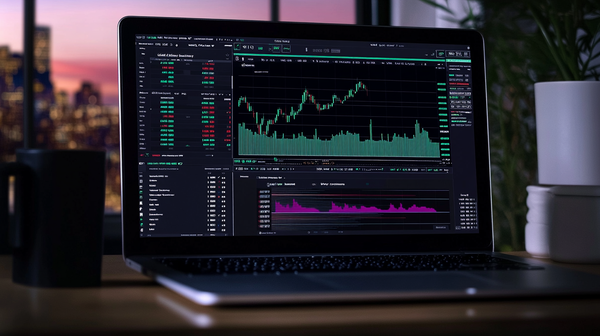
Flusso Valtexis Trading Platform Alternatives 2026
Flusso Valtexis Trading Platform Alternatives 2026: Reliable Options for Online Traders
Leverage looks like freedom until it becomes a margin call. That’s the tension at the center of many offshore CFD platforms, including Flusso Valtexis—a broker-style service that appears built around forex and CFDs, delivered via a proprietary WebTrader and a mobile app. In this category, you typically see headline features that attract active traders (fast onboarding, high leverage, crypto CFD tickers), paired with trade-offs that only show up when you push size: wider spreads, limited transparency on execution model, and thinner investor protections than you’d expect from FCA/ASIC/CySEC-supervised firms.
For a global audience—especially US/EU traders who care about legal clarity, negative balance protection, and clean withdrawals—the question isn’t “Can I place trades?” It’s “What happens when something breaks?” That’s why Flusso Valtexis alternatives matter in 2026: traders are trying to replace uncertainty with enforceable rules, segregated client funds, and platforms they can actually build systems on (MT4/MT5/cTrader, APIs, robust reporting).
I’m a Bitcoin orthodox from Tokyo. I don’t trust banks, and I trust fiat even less. Still, I respect one boring idea: counterparty risk is real. If you’re going to trade CFDs—synthetic exposure, leverage, swap fees, slippage—you want the strongest counterparty you can get, even if it offends your anti-fiat instincts.
Disclaimer: This article is for informational purposes only and does not constitute investment advice. CFDs and other leveraged products carry a high risk of loss; you can lose more than you expect, especially when using high leverage.
Key Takeaways (TL;DR)
- Offshore CFD brokers can offer high leverage (often around 1:500), but regulated alternatives typically offer stronger client-money safeguards and clearer dispute routes.
- Compare trading costs using “round-turn” cost (spread + commissions) and don’t ignore swap/overnight financing if you hold positions past the close.
- If you want real stocks/ETFs (ownership, corporate actions, better reporting), multi-asset firms like IBKR or Saxo are a different universe than CFD-only setups.
What Is Flusso Valtexis and How Does Its Trading Platform Work?
On the surface, Flusso Valtexis fits the familiar template of a CFD-first broker aimed at retail traders: forex pairs, index/commodity CFDs, and usually a menu of crypto CFDs. Publicly observable patterns for this segment point to an offshore framework—commonly something like Seychelles FSA—paired with a proprietary browser platform rather than the deep ecosystem you get from MT4/MT5 or institutional DMA tools. The typical target user is someone who wants quick access, modest minimum funding (often around $250), and leverage that can reach 1:500, without the paperwork load you see at top-tier firms.
Flusso Valtexis Web Trading Platform: Core Features and Tools
Charting is usually the make-or-break feature on WebTrader stacks, and here the experience tends to be “good enough for discretionary trading” rather than “built for systematic execution.” Expect standard indicators, drawing tools, and one-click trading, with a dashboard that tracks margin, open P/L, and basic order management. Order types commonly include market, limit, and stop, while advanced conditional orders and strategy testing tools are often thinner than what platforms like Flusso Valtexis competitors provide on MT5 or cTrader. Mobile parity is typically decent for monitoring and closing risk, but serious analysis still feels cramped on a phone.
Trading Fees, Spreads, and Account Types at Flusso Valtexis
Cost-wise, offshore CFD venues often price retail flow through the spread. A reasonable expectation is a standard EUR/USD spread around 2.0 pips, with “raw” style accounts sometimes advertised in the 0.0–0.4 pip zone but paired with a commission (often $6 round-turn). Overnight swap/financing charges matter if you swing trade; they can quietly dominate P/L over weeks. Watch for non-trading fees too—withdrawal fees or inactivity charges are common pressure points in brokers similar to Flusso Valtexis.
When Do Traders Start Looking for Flusso Valtexis Alternatives?
The first crack usually appears at the worst possible time: volatility spikes, spreads widen, and execution doesn’t match the chart you thought you traded. That’s when traders go hunting for Flusso Valtexis alternatives—not for a prettier interface, but for rules you can enforce and pricing you can model. If your strategy depends on tight fills, predictable margining, or the ability to audit trade reports down to the timestamp, offshore CFD setups can feel like trading through fog. Add withdrawal friction or regional restrictions, and the “easy onboarding” benefit stops being cute.
- You need MT4/MT5 or cTrader for an EA/scalping workflow, and the current WebTrader lacks robust automation and backtesting.
- Your trade log shows frequent negative slippage during news releases, and you want clearer execution disclosures (market maker vs STP/ECN/DMA).
- Spreads near ~2.0 pips on EUR/USD are eating expectancy, especially if you trade high turnover (intraday) strategies.
- You want regulator-backed client protections (segregated funds, formal complaint channels, compensation schemes) rather than an offshore rulebook.
How to Choose a Reliable Alternative to the Flusso Valtexis Trading Platform
Think of broker selection like cryptography: you don’t “trust,” you verify. For alternatives to the Flusso Valtexis trading platform, build a fit-to-strategy checklist, then remove any platform that fails the safety layer—regulation, client money handling, and transparent execution. Only after that should you optimize for costs and tools.
Regulation, Safety, and Investor Protection
Start with the regulator badge that actually has teeth: FCA (UK), ASIC (Australia), CySEC (Cyprus), or NFA/CFTC (US). Under FCA rules, eligible clients may have FSCS coverage up to £85,000 if a firm fails; under CySEC, the ICF can cover up to €20,000 for eligible clients. Look for segregated client funds and clear negative balance protection policies—small text that matters when leverage is involved.
Available Markets and Instruments
Match instruments to your plan, not your emotions. If you want real stocks/ETFs for long-term exposure, you’ll need a multi-asset broker with exchange access—not just stock CFDs. If you’re an FX trader, depth matters: majors/minors, indices, commodities, and whether hedging is permitted. Crypto is its own trap door: CFDs are price exposure only, not on-chain ownership, not self-custody.
Trading Costs: Spreads, Commissions, and Other Fees
Ignore “max leverage” marketing and calculate cost per round trip. A raw account with 0.1–0.3 pips plus commission can be cheaper than a 1.0–1.5 pip all-in spread, depending on your volume. Add swap/overnight fees if you hold positions, and check inactivity and withdrawal fees. The right comparison is total cost of trade, not a single headline spread number.
Platforms, Tools, and Execution Quality
MT4/MT5 and cTrader aren’t “status symbols”—they’re ecosystems (EAs, indicators, VPS workflows). Proprietary platforms can be fine for manual trading, but advanced order control and analytics often lag. Execution model matters: market maker routing may widen spreads in stress; STP/ECN/DMA setups can improve transparency but still carry slippage. If you’re evaluating platforms like Flusso Valtexis, test fills during liquid and illiquid hours.
Support, Education, and Overall User Experience
When money is stuck, UX becomes customer support. Check live chat hours, phone availability, and whether support can explain margin calls, platform logs, and withdrawal steps in plain language. Education is a bonus, not a substitute for controls—but a broker with solid webinars and platform tutorials tends to have better operational maturity. Mobile should mirror core risk controls: stops, margin view, and order modification.
Flusso Valtexis and Different Asset Classes: When Alternatives May Be Better
Flusso Valtexis Forex and CFD Trading
In the offshore CFD world, FX is the flagship product: expect roughly 30–50 pairs, with indices and commodities layered on top. With Flusso Valtexis-style pricing, a typical EUR/USD spread around 2.0 pips can be workable for swing trading, but it’s harsh for short-horizon systems where a few tenths of a pip decide survival. Regulated FX/CFD specialists like Pepperstone and OANDA tend to offer tighter all-in pricing structures and more mature platform stacks (MT4/MT5/cTrader or strong proprietary tools), plus clearer documentation on execution and account protections. Also note the risk geometry: leverage near 1:500 amplifies not just P/L, but errors—slippage, gaps, and your own overconfidence.
Flusso Valtexis Stock and ETF Trading
Here’s where the gap widens. Offshore CFD brokers frequently offer “stocks” as CFDs only—price exposure without shareholder rights, no transferability, and different tax/reporting nuances. If you want actual equities/ETFs (and, in some cases, bonds, options, or futures), you’re shopping in a different aisle. Interactive Brokers (IBKR) is the classic choice for serious multi-asset access—global exchanges, deep product range, and tooling that scales from retail to professional workflows. Saxo Bank is another route for traders who want a polished multi-asset platform and broad market coverage under top-tier regulation. For many traders seeking competitors to Flusso Valtexis, “real ownership vs CFD mirage” is the single biggest functional upgrade.
Flusso Valtexis Crypto Trading
Crypto exposure on CFD platforms is usually just that: exposure. You can go long/short BTC or ETH as contracts, often with leverage, but you can’t withdraw coins to your own wallet because you never owned them on-chain. That’s not a moral argument; it’s a mechanics argument. Traders who want regulated crypto CFDs sometimes use large CFD providers like IG (jurisdiction-dependent) for a more formal framework and clearer risk controls. If your goal is actual Bitcoin custody, none of these CFD platforms replace self-custody—“not your keys” is not a slogan, it’s settlement reality. Still, if you insist on trading price moves, pick regulated options vs Flusso Valtexis where disclosures and protections are stronger.
Best Flusso Valtexis Alternatives for 2026: Comparison of Top Trading Platforms
Interactive Brokers (IBKR): Key Facts and How It Compares to Flusso Valtexis
Regulation: SEC/FINRA (US), FCA (UK), IIROC (Canada) (entity depends on your region)
Markets: Stocks, ETFs, options, futures, bonds, FX (spot/CFD availability varies by jurisdiction)
Fees: FX pricing is typically tight; equities pricing is commission-based (varies by market/plan), with low financing rates relative to many CFD-only venues
Platform: Trader Workstation (TWS), IBKR Desktop, mobile app, APIs
Best For: Real multi-asset ownership and pro-grade tooling
Pepperstone: Key Facts and How It Compares to Flusso Valtexis
Regulation: FCA (UK), ASIC (Australia), CySEC (Cyprus), DFSA (Dubai)
Markets: FX, index CFDs, commodity CFDs, some crypto CFDs (availability varies), share CFDs (region-dependent)
Fees: EUR/USD often ~0.0–0.3 pips on Razor/Raw-style pricing plus commission; Standard accounts commonly ~1.0+ pip all-in
Platform: MT4, MT5, cTrader, TradingView (integration varies by entity)
Best For: Low-latency FX and cTrader execution
Saxo Bank: Key Facts and How It Compares to Flusso Valtexis
Regulation: FCA (UK), MAS (Singapore), DFSA (Dubai)
Markets: Stocks, ETFs, bonds, options, futures, FX, CFDs (product set depends on jurisdiction)
Fees: FX spreads are typically competitive (often ~0.6+ pips on major pairs depending on tier); equities/ETFs are commission-based
Platform: SaxoTraderGO, SaxoTraderPRO
Best For: Global markets with a single, curated platform stack
OANDA: Key Facts and How It Compares to Flusso Valtexis
Regulation: CFTC/NFA (US), FCA (UK), ASIC (Australia), IIROC (Canada)
Markets: FX (core), CFDs in some regions (indices/commodities depending on entity)
Fees: Pricing is usually spread-based; majors can be around ~0.6–1.2 pips in liquid hours depending on region and account type
Platform: OANDA Trade (web/mobile), MT4 (region-dependent)
Best For: Compliance-first FX access (including US eligibility)
IG: Key Facts and How It Compares to Flusso Valtexis
Regulation: FCA (UK), ASIC (Australia), MAS (Singapore)
Markets: CFDs on FX, indices, commodities, shares; crypto CFDs in some jurisdictions; spread betting in the UK (where permitted)
Fees: FX spreads are often competitive (commonly ~0.6+ pips on EUR/USD in liquid conditions); CFD financing applies on leveraged positions
Platform: IG Web Platform, mobile app, MT4 (region-dependent)
Best For: Broad CFD market coverage and risk controls
CMC Markets: Key Facts and How It Compares to Flusso Valtexis
Regulation: FCA (UK), ASIC (Australia), BaFin (Germany)
Markets: CFDs on FX, indices, commodities, treasuries/rates, shares (availability varies by region)
Fees: FX spreads can be low (often ~0.7+ pips on EUR/USD on standard pricing); alpha-style pricing/perks may apply by region
Platform: Next Generation platform, mobile app, MT4 (region-dependent)
Best For: Advanced charting for discretionary CFD traders
Comparison Summary
| Platform | Regulation | Main Markets | Typical Costs | Best For |
|---|---|---|---|---|
| Interactive Brokers (IBKR) | SEC/FINRA, FCA, IIROC (by entity) | Stocks/ETFs, options, futures, bonds, FX | Commission-based (varies); FX typically tight vs spread-only offshore models | Real multi-asset ownership and pro-grade tooling |
| Pepperstone | FCA, ASIC, CySEC, DFSA | FX + major CFD suite | Raw ~0.0–0.3 pips + commission; Standard often ~1.0+ pip | Low-latency FX and cTrader execution |
| Saxo Bank | FCA, MAS, DFSA | Multi-asset: stocks/ETFs/options/futures/FX | FX often ~0.6+ pips (tiered); commissions on equities/ETFs | Global markets with a single, curated platform stack |
| OANDA | CFTC/NFA, FCA, ASIC, IIROC | FX (core), CFDs in some regions | Spread-based; majors often ~0.6–1.2 pips depending on region/liquidity | Compliance-first FX access (including US eligibility) |
| IG | FCA, ASIC, MAS | Wide CFD lineup (FX/indices/shares/commodities) | Often ~0.6+ pips EUR/USD; financing costs on leveraged holds | Broad CFD market coverage and risk controls |
| CMC Markets | FCA, ASIC, BaFin | CFDs across FX/indices/commodities/shares | Often ~0.7+ pips EUR/USD on standard pricing; region-dependent extras | Advanced charting for discretionary CFD traders |
How to Safely Move from Flusso Valtexis to Another Broker
Switching brokers is not a “sign-up and forget” task—it’s operational risk management. Before you pull funds, make sure the new account is approved, your base currency is chosen, and your withdrawal path is clean. Offshore CFD accounts can move fast on deposits and slow on exits, so treat the migration like a checklist, not a mood.
- Verify the new broker on the regulator’s public register (FCA Register, ASIC Connect, CySEC register, or NFA BASIC) and confirm the exact legal entity you’ll be onboarded to.
- Open the new account and complete KYC/AML first (ID + proof of address); don’t wait until you’re under time pressure from open positions.
- Flatten risk: close open CFD positions on your current platform rather than assuming you can “transfer” trades—most retail brokers don’t support position portability.
- Request withdrawals using the same rails you used to deposit (card/bank/wallet), because AML controls often force funds back to source.
- Download statements, full trade history, and funding logs from Flusso Valtexis before you lose dashboard access—tax and dispute resolution both depend on records.
- Start small at the new broker: test a few orders in liquid and illiquid sessions to observe spreads, slippage, and margin behavior before scaling size.
Ready to Explore Flusso Valtexis?
If you’re still evaluating, review current onboarding steps, fees, and regional eligibility side-by-side with regulated options. Screenshot the key conditions (spreads, leverage, withdrawal rules), then compare execution tools and protections before committing meaningful capital.
FAQ: Flusso Valtexis Alternatives and Trading Platforms
What is the best alternative to Flusso Valtexis in 2026?
The best option depends on whether you want real markets or just CFDs. For true multi-asset access (stocks/ETFs/options/futures alongside FX), Interactive Brokers (IBKR) is hard to beat; for FX-focused trading with MT4/MT5/cTrader, Pepperstone is a strong pick in many regions. Traders who prioritize a single integrated platform often shortlist Saxo Bank.
Is Flusso Valtexis a safe broker/platform?
Flusso Valtexis appears consistent with an offshore/unregulated CFD model (often associated with frameworks like Seychelles FSA), which generally offers weaker investor protections than FCA/ASIC/CySEC-supervised brokers. That doesn’t automatically mean fraud, but it does mean fewer enforceable safeguards such as compensation schemes and robust dispute channels. If you use it, limit exposure, control leverage, and prioritize withdrawals/testing early.
Can I trade stocks, futures, or crypto with Flusso Valtexis?
Most brokers in this segment center on forex and CFDs, with “stocks” typically offered as share CFDs rather than real shares, and futures often not offered to retail clients as exchange-traded contracts. Crypto, when available, is usually crypto CFDs—price exposure without on-chain ownership or withdrawals. If you need real stocks/ETFs or exchange-traded futures, platforms like IBKR or Saxo are better fits.
What should I check before switching from Flusso Valtexis to another platform?
Before switching, confirm the new broker’s exact regulated entity on the official register, then finish KYC so you’re not blocked when you want to fund or withdraw. Export your statements and trade history from Flusso Valtexis, close open positions, and run a small execution test at the new venue to observe spreads, swap, and slippage. Finally, align your account base currency, margin settings, and negative balance protection rules with your strategy.
About the Author: Kenji Tanaka is a Tokyo-based financial writer and active trader with a cryptography background (University of Tokyo, incomplete). I’m Bitcoin-orthodox—“21 million, and not a coin more”—and I distrust fiat incentives, which is exactly why I obsess over execution details, counterparty risk, and regulator-grade protections when reviewing trading platforms.