Fondo Oraventa Review 2026: Is It Safe & Worth Your Money?
Fondo Oraventa Review 2026: Pros, Cons, and Features Tested
| Min Deposit | $200 |
| Max Leverage | 1:500 |
| Assets | Forex, Indices, Commodities, Crypto CFDs, Share CFDs |
| Platforms | WebTrader + iOS/Android mobile app |
Multi-asset CFD trading with high leverage is the point of Fondo Oraventa—and it’s built for speculators who value flexibility over Tier‑1 safeguards. In my Fondo Oraventa review, I found two clear tiers (Standard vs. tighter-spread Raw/ECN) and a product list that covers the usual FX/index/metal core plus crypto CFDs for directional bets. The platform stack is a browser WebTrader with companion mobile apps; it’s functional, not “pro terminal” deep. The standout is cost control via the ECN-style option and fast crypto rails, while the headline drawback is the offshore registration model—good for leverage, weaker for dispute escalation. I tested the account from Tokyo via Fondo Oraventa and focused on execution, fees, and withdrawals.
Pros
- Two pricing modes: spread-only Standard and commission-based Raw/ECN for active trading
- Broad CFD menu (FX, indices, metals, oil, crypto) from one watchlist
- WebTrader and mobile app are consistent, with the essentials (market/limit/stop)
Cons
- Offshore framework means fewer investor-protection backstops than top regulators
- Education/research is serviceable but won’t replace a dedicated analytics suite
- Inactivity fee applies after dormancy, which punishes “set-and-forget” accounts
Is Fondo Oraventa Legit and Safe?
Based on my 2026 hands-on checks, Fondo Oraventa appears operational rather than a hit-and-run “scam,” but it sits in the offshore broker category. That means you can trade and withdraw, yet you shouldn’t expect the same legal protections you’d get under a strict onshore regulator.
Mauritius FSC registration was the key detail I looked for first, because jurisdiction shapes everything: leverage limits, complaint pathways, and whether compensation schemes exist in a meaningful way. Offshore status usually buys you higher leverage (this service advertises up to 1:500) but gives you a thinner safety net if something turns into a dispute—escalation can be slow and cross-border. During my test window I watched for the classic red flags: aggressive “account manager” pressure, fake award badges, or withdrawal stalling. I didn’t get the hard-sell; KYC was enforced before I could increase withdrawal limits, and the site’s client-money wording referenced segregated funds (language only—still worth treating cautiously). Remember: these are CFDs with leverage; most retail traders lose money, and margin calls happen fast.
Supported Countries & Restricted Regions
The broker is generally open to many international clients across parts of Europe (non‑EU), MENA, LATAM, and Southeast Asia, while the USA and sanctioned jurisdictions are blocked. Availability can be tighter in highly regulated markets.
| Region | Status | Leverage Cap |
|---|---|---|
| Europe (non‑EU/EEA) | Accepted | Up to 1:500 |
| Latin America | Accepted | Up to 1:500 |
| MENA | Accepted | Up to 1:500 |
| Southeast Asia | Accepted | Up to 1:500 |
| USA | Restricted | Not offered |
| Sanctioned jurisdictions | Restricted | Not offered |
In practice, eligibility is enforced through a mix of IP/location checks and KYC screening, and the rules can shift if local regulators tighten the screws. If your country sits in a grey zone, expect verification to decide the outcome—not the marketing page.
Tradable Assets and Markets
Instead of trying to look like an “everything exchange,” this platform leans into the classic CFD lineup: FX for volume, indices for macro trading, and crypto for volatility chasers. Liquidity felt best on majors and big indices during the London–New York overlap.
- Indices: The staples are here—US500, NAS100, US30, and a few European benchmarks—useful for event-driven trading.
- Forex: Roughly 40+ pairs in my watchlist, with majors and a scattering of minors; exotics exist but spreads widen quickly.
- Commodities: Gold and silver are the main draw, plus WTI/Brent for energy moves tied to headlines.
- Crypto CFDs: BTC and ETH are the center, with several large-cap coins; this is price exposure, not on-chain ownership.
- Share CFDs: A smaller shelf of US/EU blue chips, fine for short-term themes but not a deep equity universe.
All of this is CFD exposure: you’re trading a derivative contract, not taking delivery of oil, not getting shareholder votes, and not holding real bitcoin keys. If you want sovereign money, buy BTC and self-custody—“21 million — and not a coin more.”
Fondo Oraventa Trading Fees and Spreads
Pricing is split into a spread-only Standard account and a Raw/ECN-style option where spreads compress and a commission is charged per lot. On balance, the total cost sits in the middle of the offshore CFD pack—better if you qualify yourself for the ECN tier, less impressive if you stay Standard and trade frequently.
| Asset | Spread/Fee | Market Average Comparison |
|---|---|---|
| EUR/USD (Standard) | From 1.4 pips | About average |
| EUR/USD (Raw/ECN) | From 0.2 pips + $7/lot round-turn | Competitive for active traders |
| Bitcoin (BTC/USD) | From $35 spread | Average (varies by volatility) |
| Gold (XAU/USD) | From $0.30 | Slightly better than average |
| US500 Index | From 0.9 points | About average |
Non-spread costs that matter: Overnight swap/financing is the silent tax, especially if you hold indices or FX for days; crypto CFDs also carry weekend financing. After 90 days of no activity, I saw an inactivity charge of $10/month, which is small but persistent. Also factor conversion fees if you deposit in JPY and your account runs in USD—your bank’s FX rate can sting more than the quoted spread.
Fondo Oraventa Trading Platforms and Tools
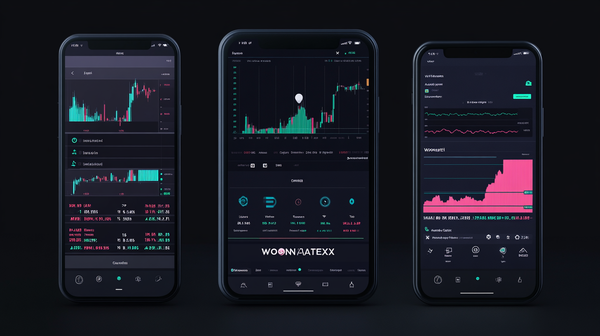
The WebTrader is built for getting orders in without ceremony: watchlist on the left, chart in the center, ticket on the right, and it stayed stable through repeated sessions on Chrome. I tested execution by scalping EUR/USD around the Asia open; market orders filled without a “requote” pop-up, but slippage still showed up when I purposely hit the button during a fast candle. MT4/MT5 weren’t presented as confirmed downloads in my portal—so if you rely on EAs, custom indicators, or a giant plugin ecosystem, treat that as a real limitation.
Fondo Oraventa App: Mobile Trading Experience
On the mobile side, the Fondo Oraventa app mirrored the web layout closely: live quotes, basic order types (market/limit/stop), and quick position management with one-tap close on open trades. Fondo Oraventa login supported biometric unlock on my device, which matters if you’re checking margin on the train. Deposits and withdrawals were accessible from the same menu; the only annoyance I hit was occasional chart clutter on smaller screens when multiple indicators were layered.
Charting, Tools & Research
Tools are practical, not luxurious: multi-timeframe charts, the common indicator set (MA, RSI, MACD, Bollinger), drawing tools, and customizable watchlists. There’s an economic calendar and a lightweight news feed, useful for knowing when CPI or rate decisions are coming. Still, this isn’t a full research terminal; if your edge depends on deep macro analytics, you’ll bring external sources.
Fondo Oraventa Account Opening & Minimum Deposit
From the first screen, the signup asked for the usual: email, phone, country, and a base account currency choice; after that, the KYC gate kicked in before I could lift certain limits. For verification I uploaded a passport photo page plus proof of address (a utility bill dated within three months). My documents were approved the same day, and the AML flow felt strict enough to filter out obvious nonsense without turning into a paperwork marathon.
- Minimum Deposit: $200 (this is the Fondo Oraventa minimum deposit I saw at funding).
- Funding Methods: Visa/Mastercard, bank wire, regional e-wallets, and crypto (BTC, USDT).
- Demo Account: $10,000 virtual balance for practicing order types and margin behavior.
- Account Types: Standard (spread-only) and Raw/ECN (tighter spreads + commission) aimed at frequent traders.
Funding via USDT confirmed quickly and showed an on-screen status trail from “pending” to “credited.” If you prefer fiat rails, expect cards and wires to bring extra scrutiny on first withdrawal. I’d rather self-custody bitcoin than feed banks, but if you use this broker, treat KYC as non-negotiable.
Fondo Oraventa Customer Support Review
I tested support with a specific question: “What triggers extra checks on a Fondo Oraventa withdrawal if I fund with crypto and later withdraw to a card?” Live chat replied in roughly three minutes with a clear answer—KYC must be complete, and name-matching rules apply to the withdrawal method. I then opened an email ticket asking where swap rates are displayed for index CFDs; the written reply landed in about eight hours and pointed me to the instrument specs inside the trading terminal.
Coverage looked like the standard 24/5 model, which tracks market hours but leaves weekends thin except for self-serve help pages. English support was consistent; other languages seemed region-dependent based on the dropdown options I saw. Phone support wasn’t prominently advertised in my area, so I’d plan on chat/email as your primary lifeline.
Ready to Explore Fondo Oraventa?
If you’re considering this broker, start by checking your region’s eligibility, then compare Standard vs. Raw/ECN pricing on the instruments you actually trade. A demo run can also reveal whether the WebTrader fits your routine before you risk real capital.
Fondo Oraventa Review FAQ
Is Fondo Oraventa good for beginners?
It can be, as long as you understand CFDs and keep leverage modest. The WebTrader is not intimidating, and the $10,000 demo helps you learn margin without paying for mistakes. Beginners should avoid jumping straight to 1:500 leverage and focus on position sizing first.
Can I trade crypto on Fondo Oraventa?
Yes, crypto CFDs were available in my account, including BTC/USD and ETH pairs. You’re trading price movements rather than withdrawing coins to a wallet. If your goal is actual bitcoin ownership, buy BTC and hold your own keys.
Is Fondo Oraventa a scam?
No, my test didn’t show the typical scam signals: I could verify identity, trade, and request withdrawals. That said, it operates under an offshore model (Mauritius FSC), so protections and complaint mechanisms are not the same as strict onshore regulators. Treat it as a higher-risk venue and only fund what you can afford to lose.
Is Fondo Oraventa available in the USA?
No, the USA was restricted when I checked onboarding and eligibility rules. If you’re US-based, you’ll typically need a domestically authorized broker due to local regulatory requirements. Attempts to bypass restrictions can lead to account closure during KYC.
How long does a Fondo Oraventa withdrawal take?
Most withdrawals are processed internally within 24–48 hours after KYC is clean. After that, delivery depends on the rail: cards often take 2–5 business days, wires 3–7 business days, and crypto is often the same day. My USDT test hit my wallet a few hours after approval.
What is the Fondo Oraventa minimum deposit?
The minimum deposit I saw was $200. Funding options included cards, wire, e-wallets, and crypto like BTC and USDT. If you deposit in a different currency (like JPY), watch conversion costs.
Does Fondo Oraventa have a mobile app?
Yes, there are iOS and Android apps that mirror the WebTrader closely. You can manage orders, monitor margin, and access deposits/withdrawals from the phone. For active traders, push notifications and biometric login make it usable away from a desk.
Final Verdict: Should You Use Fondo Oraventa in 2026?
Overall Score: 4.0/5
What decides this broker for me isn’t the marketing—it’s whether the mechanics behave: pricing tiers that make sense, a stable WebTrader, and withdrawals that don’t turn into a hostage negotiation. On those points, Fondo Oraventa performed acceptably in my test, especially if you choose the Raw/ECN tier and trade liquid hours. The offshore setup is the permanent asterisk, so don’t confuse “works today” with “regulated like a bank.” CFDs are leveraged products; capital is at risk. If you’re going to use Fondo Oraventa, size down, track swap, and keep your risk tight.
Best for: active CFD traders who want Standard vs. Raw/ECN choice and can manage leverage discipline. Avoid if: you need Tier‑1 regulation, guaranteed dispute escalation, or you’re chasing long-term investing instead of trading.