Fuertana Inversura Alternatives 2026: Safer Broker Options
Fuertana Inversura Trading Platform Alternatives 2026: Reliable Options for Online Traders
Leverage is a blade. In the right hands it cuts clean; in the wrong hands it cuts the trader. That’s the mental model I use when people ask about offshore CFD venues—and it’s also why this guide on Fuertana Inversura alternatives exists for 2026. Fuertana Inversura appears to sit in the familiar offshore/“international” brokerage category (commonly associated with Seychelles-style frameworks), offering mostly forex and CFD trading through a proprietary WebTrader plus mobile apps. The public footprint typically looks like: high maximum leverage (often around 1:500), a modest entry deposit (commonly ~$250), and a product shelf centered on FX pairs, indices, commodities, and crypto CFDs.
For some traders, that’s enough. For many, it’s not. The deal-breakers tend to cluster around three themes: (1) legal protections and dispute pathways, (2) platform depth and execution quality (slippage hurts more than people admit), and (3) whether you’re trading real assets or just a derivative claim (CFDs on “stocks” are not ownership; crypto CFDs are not on-chain Bitcoin). If you’re US/EU-focused—or you simply want clearer rules, segregated client funds, and stronger oversight—regulated options can change the risk profile of your entire trading operation.
Disclaimer: This article is for informational purposes only and does not constitute investment advice. CFDs and other leveraged products carry a high risk of loss and are not suitable for all investors.
Key Takeaways (TL;DR)
- Offshore CFD venues often advertise high leverage (e.g., 1:500), but the bigger question is execution, withdrawals, and enforceable protections.
- Regulated substitutes in this list cover different needs: some are multi-asset (real stocks/ETFs/options), others focus on FX/CFDs with MT4/MT5/cTrader.
- Compare “round-turn” trading cost (spread + commission + swap), not just the headline spread.
- Migration is safer when the new account is KYC-verified before you request the final withdrawal from the old broker.
What Is Fuertana Inversura and How Does Its Trading Platform Work?
From what is typically observed with brokers in this category, Fuertana Inversura operates as a CFD-first venue aimed at retail traders who want simple onboarding and higher leverage than you’ll see under strict EU/UK rules. The regulatory posture is best described as offshore/unregulated for US/EU standards—often aligned with a Seychelles-style framework rather than FCA, ASIC, CySEC, or NFA oversight. Product coverage usually centers on forex (roughly a few dozen pairs), major indices, a small commodities list, and a menu of crypto CFDs. If your goal is “one login for everything,” that’s a different universe than a true multi-asset broker with direct market access.
Fuertana Inversura Web Trading Platform: Core Features and Tools
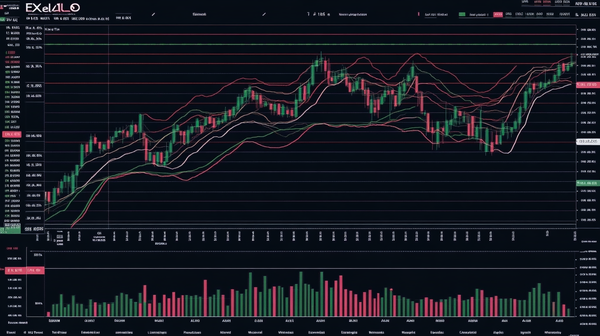
The typical stack here is a proprietary WebTrader with a matching iOS/Android app. Expect competent basics—watchlists, standard indicators, and workable chart layouts—rather than deep institutional tooling. Order tickets usually cover market and limit orders, sometimes stop-loss/take-profit, with execution routed internally (often market-maker style) rather than transparent DMA. Mobile parity is generally decent for monitoring and closing positions, but strategy work (multi-chart layouts, advanced alerts, backtesting) is usually thinner than MT5/cTrader ecosystems. This is why traders comparing platforms like Fuertana Inversura often fixate on platform depth and execution consistency, not just the UI.
Trading Fees, Spreads, and Account Types at Fuertana Inversura
With offshore CFD providers, the cost picture is normally spread-led on “Standard” tiers, with EUR/USD commonly around ~2.0 pips under typical conditions. Some brokers in this segment also advertise a Raw/ECN-style tier (often ~0.0–0.4 pips) but add a commission, frequently in the neighborhood of $6–$8 per round turn. Beyond spreads, watch the quiet costs: swap/overnight financing on leveraged positions, possible inactivity charges, and withdrawal handling fees depending on method. If your strategy holds positions for days, swaps can matter more than the entry spread.
When Do Traders Start Looking for Fuertana Inversura Alternatives?
The moment a trader stops treating “high leverage” as a feature and starts treating it as a liability, the search for Fuertana Inversura alternatives begins. For US/EU traders in particular, the friction is often about enforceability: where do you escalate disputes, how are client funds segregated, and what happens if the venue fails? Execution is the other silent driver—slippage and re-quotes can erase a “good strategy” faster than any bad chart pattern. Add in region restrictions (the USA is commonly off-limits) and you get a very practical motive to move.
- You need MT4/MT5 or cTrader for an EA/scalping workflow that a proprietary WebTrader can’t replicate.
- Your trading journal shows slippage spikes around news releases, suggesting execution quality is costing more than spreads.
- You want stronger regulatory oversight (FCA/ASIC/CySEC/NFA) and clearer rules on segregated client funds.
- Withdrawals take longer than expected or require repeated “verification” loops after profitable periods.
How to Choose a Reliable Alternative to the Fuertana Inversura Trading Platform
Treat broker selection like you’d treat risk sizing: match the venue to your strategy’s failure modes. A swing trader cares about swaps, gap risk, and margin calls; a scalper lives or dies by spread, latency, and slippage; an investor wants real asset custody and corporate-action handling. Once you define what can hurt you, the “best” choice becomes narrower and easier to verify.
Regulation, Safety, and Investor Protection
Regulators are not saints, but they create receipts. FCA (UK), ASIC (Australia), CySEC (Cyprus/EU), and NFA/CFTC (US) each impose standards around disclosures, complaint handling, and (often) segregated client funds. In the UK, the FSCS can protect eligible client money up to £85,000 in certain failure scenarios; in Cyprus, the ICF coverage is commonly cited up to €20,000 for eligible claims. Those protections don’t make trading “safe,” but they do make the venue less opaque.
Available Markets and Instruments
Ask a blunt question: do you want exposure, or ownership? Many offshore CFD venues focus on FX/indices/commodities and offer “stocks” only as CFDs—no shareholder rights, no transfer agent, no long-term investing mechanics. Multi-asset brokers (like IBKR or Saxo) can provide real stocks, ETFs, options, futures, and bonds. If your plan includes portfolio construction—not just short-term CFDs—this single criterion can eliminate most competitors to Fuertana Inversura.
Trading Costs: Spreads, Commissions, and Other Fees
Don’t compare “from 0.0” marketing. Compare the round-turn cost: spread + commissions + any per-trade fees, then layer in swaps if you hold overnight. For example, a Raw account might show ~0.1–0.3 pips on EUR/USD but charge a commission; a Standard account might be ~0.8–1.2 pips with no explicit commission. Your volume decides which is cheaper. A disciplined trader runs the math on their monthly lots, not on a banner ad.
Platforms, Tools, and Execution Quality
Platform choice is strategy choice. MT4/MT5 and cTrader support automation, custom indicators, and a mature tooling ecosystem, while proprietary WebTraders usually optimize for simplicity. Execution model matters too: market maker internalization can be fine for many retail flows, but STP/ECN/DMA-style routing is often preferred by traders who measure slippage and reject rates. If you’re currently on Fuertana Inversura and you can’t export granular fills or analyze execution, you’re trading half-blind.
Support, Education, and Overall User Experience
Support is operational risk. Look for clear hours, documented response channels, and language coverage that matches your needs. Education can be fluff, but high-quality venues publish margin policies, product disclosures, and platform guides that reduce avoidable mistakes. Mobile parity matters more than people admit—if you can’t manage margin during a volatility spike from your phone, your stop-loss becomes a prayer.
Fuertana Inversura and Different Asset Classes: When Alternatives May Be Better
Fuertana Inversura Forex and CFD Trading
On paper, offshore CFD venues look attractive: higher leverage (often around 1:500), lots of tradable symbols, and simple onboarding. The trade-off is that your real “cost” is a bundle—spread, execution, and reliability during stress. With a typical EUR/USD spread around ~2.0 pips on a standard-style account, an active FX trader can bleed quietly across dozens of round trips. FX/CFD specialists like Pepperstone or IC Markets tend to appeal to execution-focused traders because they offer MT4/MT5/cTrader stacks and pricing structures where you can choose spread-only vs raw+commission. If your edge is small (scalping, short-term mean reversion), shaving even a fraction of a pip plus improving fill quality is not cosmetic—it’s existential.
Fuertana Inversura Stock and ETF Trading
Stock “trading” can mean two different things. Some brokers offer stock CFDs (synthetic exposure), while others provide access to real listed shares and ETFs with proper corporate actions and portfolio reporting. Brokers in the offshore CFD lane commonly lean toward CFDs for equities, which means no shareholder rights and different tax/accounting treatment depending on jurisdiction. If you want real ownership, Interactive Brokers (IBKR) is the archetype for breadth—stocks, ETFs, options, futures, and bonds across many markets—while Saxo is a strong multi-asset alternative for traders who value a polished research and platform experience. In other words, alternatives to the Fuertana Inversura trading platform can be a gateway from “betting on price” to actually building a regulated portfolio.
Fuertana Inversura Crypto Trading
Let’s be precise: crypto CFDs are not Bitcoin. They’re a leveraged contract tied to price, settled through your broker, with counterparty risk and financing costs. Offshore platforms often list 10–30 crypto CFDs and market them as “crypto trading,” but you’re not withdrawing coins to self-custody. For regulated exposure, IG and Plus500 are widely used in regions where crypto CFDs are permitted, offering a more structured compliance framework (KYC/AML, disclosures, and regulated complaints processes). If your goal is sovereignty—holding keys—CFDs are the wrong instrument; but if your goal is short-term hedging, regulated options vs Fuertana Inversura can reduce the venue risk even if the market risk remains brutal.
Best Fuertana Inversura Alternatives for 2026: Comparison of Top Trading Platforms
Interactive Brokers (IBKR): Key Facts and How It Compares to Fuertana Inversura
Regulation: SEC/FINRA (US), FCA (UK), IIROC (Canada)
Markets: Stocks, ETFs, options, futures, FX, bonds (multi-market access)
Fees: Varies by product; FX often commission-based with tight spreads on liquid pairs; equities typically low per-share/flat schedules depending on plan
Platform: Trader Workstation (TWS), web portal, mobile app, APIs
Best For: Multi-asset traders who want real markets, not just CFDs
Pepperstone: Key Facts and How It Compares to Fuertana Inversura
Regulation: FCA (UK), ASIC (Australia), CySEC (EU), DFSA (UAE)
Markets: FX and CFDs (indices, commodities, some crypto CFDs where permitted)
Fees: Standard often ~1.0–1.2 pips EUR/USD; Raw-style pricing commonly ~0.0–0.3 pips + commission (varies by entity)
Platform: MT4, MT5, cTrader, TradingView (integration varies), mobile apps
Best For: Execution-sensitive FX traders using MT4/MT5/cTrader
Saxo Bank: Key Facts and How It Compares to Fuertana Inversura
Regulation: FCA (UK), MAS (Singapore), DFSA (UAE)
Markets: Stocks, ETFs, options, futures, bonds, FX, CFDs
Fees: Pricing varies by account tier; FX spreads commonly competitive on majors; commissions apply on exchange-traded products
Platform: SaxoTraderGO, SaxoTraderPRO
Best For: Portfolio-style traders who still want active trading tools
OANDA: Key Facts and How It Compares to Fuertana Inversura
Regulation: CFTC/NFA (US), FCA (UK), ASIC (Australia), IIROC (Canada)
Markets: Primarily FX; CFDs available outside the US depending on entity
Fees: Typically spread-based pricing on core accounts; EUR/USD often around ~0.6–1.2 pips in normal conditions (varies by region and market)
Platform: OANDA web/mobile, MT4 (availability varies by region)
Best For: US-eligible FX traders who prioritize clear oversight
IG: Key Facts and How It Compares to Fuertana Inversura
Regulation: FCA (UK), ASIC (Australia), MAS (Singapore)
Markets: CFDs (indices, FX, shares CFDs), spread betting (UK/IE), crypto CFDs where permitted
Fees: Typically spread-led on CFDs; major FX pairs often competitive; financing/swap applies on leveraged holdings
Platform: IG web platform, mobile app, MT4 (in some regions)
Best For: Macro CFD traders who want broad market coverage in one place
Plus500: Key Facts and How It Compares to Fuertana Inversura
Regulation: FCA (UK), CySEC (EU), ASIC (Australia), MAS (Singapore)
Markets: CFDs (FX, indices, commodities, shares CFDs, crypto CFDs where permitted)
Fees: Generally commission-free CFD pricing with spreads; costs vary by instrument; overnight financing applies
Platform: Plus500 proprietary web platform and mobile app
Best For: Simplicity-first CFD traders who don’t need MT4/MT5
Comparison Summary
| Platform | Regulation | Main Markets | Typical Costs | Best For |
|---|---|---|---|---|
| Interactive Brokers (IBKR) | SEC/FINRA, FCA, IIROC | Real stocks/ETFs, options, futures, FX, bonds | Product-based commissions; FX often tight + commission | Multi-asset traders who want real markets, not just CFDs |
| Pepperstone | FCA, ASIC, CySEC, DFSA | FX + CFDs | ~1.0–1.2 pip (Std) or ~0.0–0.3 pip + commission (Raw) | Execution-sensitive FX traders using MT4/MT5/cTrader |
| Saxo Bank | FCA, MAS, DFSA | Stocks/ETFs, options, futures, FX, CFDs, bonds | Tiered pricing; commissions on exchanges; competitive FX on majors | Portfolio-style traders who still want active trading tools |
| OANDA | CFTC/NFA, FCA, ASIC, IIROC | FX (CFDs outside US depending on entity) | Spread-based; EUR/USD often ~0.6–1.2 pips (region-dependent) | US-eligible FX traders who prioritize clear oversight |
| IG | FCA, ASIC, MAS | CFDs across FX/indices/shares; crypto CFDs where allowed | Spread-led; financing on leveraged holds | Macro CFD traders who want broad market coverage in one place |
| Plus500 | FCA, CySEC, ASIC, MAS | CFDs (multi-market) | Spreads + overnight financing; no separate commission on many CFDs | Simplicity-first CFD traders who don’t need MT4/MT5 |
How to Safely Move from Fuertana Inversura to Another Broker
Switching brokers is not a “click and go” event; it’s a controlled unwind and re-deploy process. Do it like you’d do disaster recovery: preserve records, reduce open exposure, and confirm the new venue works before you move size. And remember: even if the new broker is top-tier regulated, leverage can still liquidate you fast—risk management doesn’t migrate automatically.
- Check the new broker’s license on the regulator’s public register (FCA Register, ASIC Connect, CySEC register, or NFA BASIC) and confirm the legal entity matches your account application.
- Open the new account and complete KYC/AML early (ID + proof of address). Many approvals clear quickly, but delays happen when documents don’t match.
- Flatten exposure before moving money: close positions at your current venue rather than assuming any transfer between brokers is possible.
- Request withdrawal from Fuertana Inversura using the same rails used for deposit when possible; many compliance teams require “same-method” flows to reduce AML risk.
- Export statements, confirmations, and full trade history for tax and performance records before you stop using the old login.
- Start small at the new broker: run a few low-size trades to observe spreads, swaps, and slippage during your normal trading hours before scaling up.
Ready to Explore Fuertana Inversura?
If you’re still evaluating conditions, review the current onboarding steps, instrument list, and regional eligibility carefully—then compare them against the regulated substitutes above. A platform’s UI is easy to demo; withdrawal flow, margin rules, and execution behavior deserve equal attention.
FAQ: Fuertana Inversura Alternatives and Trading Platforms
What is the best alternative to Fuertana Inversura in 2026?
The best alternative depends on whether you need real assets or just CFDs. For true multi-asset access (stocks/ETFs/options/futures), Interactive Brokers (IBKR) is hard to beat; for FX/CFD execution with MT4/MT5/cTrader, Pepperstone is a common shortlist pick. If your focus is broad CFD coverage with a strong regulatory footprint, IG is often considered among the best Fuertana Inversura alternatives 2026 for many regions.
Is Fuertana Inversura a safe broker/platform?
Fuertana Inversura appears to operate under an offshore framework (commonly associated with Seychelles-style oversight) rather than top-tier regulators like the FCA, ASIC, CySEC, or NFA. That doesn’t automatically mean fraud, but it does usually mean fewer enforceable protections and weaker investor-compensation pathways compared with heavily regulated venues. If safety is your priority, favor regulated options vs Fuertana Inversura and verify the exact legal entity on the regulator’s register.
Can I trade stocks, futures, or crypto with Fuertana Inversura?
With brokers similar to Fuertana Inversura, stocks and indices are commonly offered as CFDs rather than as real exchange-traded ownership, and futures access is often limited or packaged as CFD exposure. Crypto is frequently available as crypto CFDs (price exposure, not on-chain coins), typically alongside forex and commodity CFDs. If you specifically want real stocks/ETFs or listed futures, platforms like Fuertana Inversura are usually the wrong tool—consider IBKR or Saxo for those markets.
What should I check before switching from Fuertana Inversura to another platform?
Before switching, confirm the new broker’s regulator and entity name on an official register, then complete KYC so you can fund and trade without delays. Next, reconcile open positions and export your trade history; don’t count on position transfers. Finally, compare round-turn costs (spread + commission) and the execution model (market maker vs STP/ECN/DMA), because that’s where many Fuertana Inversura trading platform alternatives 2026 truly differ.
About the Author: Kenji Tanaka is a Tokyo-based financial journalist and active trader with a background in cryptography studies (incomplete) and a bias toward transparent, verifiable systems. I don’t trust banks or fiat—and I’m uncompromising about Bitcoin’s fixed supply: 21 million, and not a coin more. That skepticism carries into broker reviews: I focus on regulation, execution quality, and whether you own the asset or merely rent price exposure.
Fuertana Inversura alternatives are not about “more leverage.” They’re about cleaner rules, better tooling, and fewer surprises. If you remember one thing: you can’t HODL a CFD.