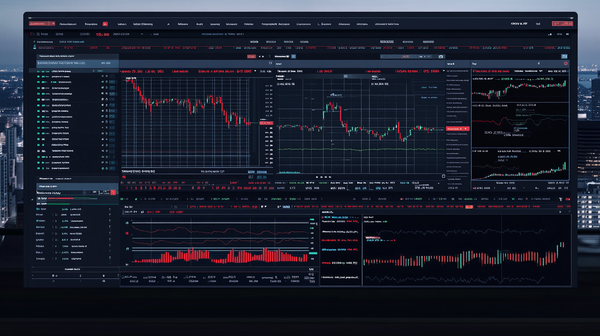
Global Braxen Trading Platform Alternatives 2026
Global Braxen Trading Platform Alternatives 2026: Reliable Options for Online Traders
Leverage is a sugar high. It feels good—until the margin call hits and you realize the house set the rules. That’s the practical reason traders keep searching for Global Braxen alternatives in 2026: they want cleaner execution, clearer oversight, and fewer “trust me, bro” moments around deposits and withdrawals. In the offshore CFD world, the product is often the same (FX pairs, indices, commodities, sometimes crypto CFDs), but the risk profile is not.
Based on what’s commonly seen with offshore-style CFD venues, Global Braxen presents itself as a forex/CFD-first broker with a proprietary WebTrader and mobile apps. That category typically leans on high headline leverage (here we’ll use 1:500 as the working figure), a relatively low entry point (often around $250), and spreads on EUR/USD that can hover around ~2.0 pips on a standard-style account. Those numbers aren’t “evil” by themselves—what matters is how they interact with execution quality, funding rules, and what happens when volatility spikes.
If you’re in the US or EU, the biggest upgrade offered by brokers similar to Global Braxen—but regulated—isn’t a shiny chart. It’s enforceable client-funds rules, public regulator registers, and (in some regions) investor compensation schemes. Traders who care about staying solvent usually start there, then work backward to platform features, costs, and product range.
Disclaimer: This article is for informational purposes only and does not constitute investment advice. CFDs and other leveraged products can move fast against you, and losses can exceed expectations if risk controls are weak.
Key Takeaways (TL;DR)
- Offshore CFD brokers can advertise high leverage (e.g., 1:500), but regulated alternatives typically trade leverage for stronger client-fund safeguards and clearer dispute paths.
- Cost comparisons should use all-in “round-turn” trading costs (spread + commission + swaps), not just a headline spread number.
- If you want real stocks/ETFs (not CFDs), multi-asset firms like Interactive Brokers or Saxo are built for that job.
- Migration is safer when the new account is KYC-approved before you withdraw, and when you export trade/tax history first.
What Is Global Braxen and How Does Its Trading Platform Work?
From a trader’s-eye view, Global Braxen fits the familiar offshore CFD template: it appears focused on forex and CFDs rather than true multi-asset investing. The practical implication is simple—most of what you “own” is a contract (CFD), not the underlying asset, and your experience depends heavily on the broker’s dealing model, pricing feed, and internal risk controls. For many platforms like Global Braxen, the target user is the retail trader who wants quick access to FX pairs, indices, commodities, and a menu of crypto CFDs, usually with high maximum leverage and a low-ish minimum deposit (we’ll use $250 here). US residents are typically not accepted, and other restricted jurisdictions can apply.
Global Braxen Web Trading Platform: Core Features and Tools
The core stack is generally a proprietary WebTrader paired with iOS/Android apps. Expect a functional chart package—good enough for discretionary trading—with common indicators, drawing tools, and basic timeframe control. Order handling in this segment usually includes market and pending orders, plus stop-loss and take-profit fields, though more advanced conditional logic can be limited compared to MT4/MT5 or cTrader. Mobile parity tends to be “close but not identical”: watchlists and simple charting travel well, while deeper layout customization and multi-chart workflows often feel cramped. Account dashboards usually cover balance, margin, open positions, and funding history, but the decisive test is execution under stress—fast markets expose slippage and requotes.
Trading Fees, Spreads, and Account Types at Global Braxen
On costs, offshore CFD brokers frequently package pricing as spread-only on a standard tier, sometimes alongside a “raw” tier with a commission. For a realistic comparison, assume EUR/USD spreads “from around” 2.0 pips on a standard-style account, while a raw/ECN-style setup (if offered) could display 0.0–0.4 pips plus roughly $6 round-turn commission per lot. Add the fees traders forget: swaps/overnight financing on leveraged CFD holds, possible inactivity charges after a period of no trading, and withdrawal frictions depending on method. Those details—more than marketing—are why competitors to Global Braxen get serious attention from experienced traders.
When Do Traders Start Looking for Global Braxen Alternatives?
Numbers can look fine on a landing page; operational reality is what drives the search for Global Braxen alternatives. The first red flag is usually not the spread—it’s uncertainty around oversight, complaint resolution, and what “segregated funds” actually means in practice when a broker sits offshore. Next comes strategy fit: if you need advanced order handling, stable execution during news, or MT4/MT5-style automation, a basic WebTrader can become a ceiling. And yes, leverage cuts both ways; 1:500 magnifies tiny pricing defects into real losses, especially when slippage hits a stop.
- You need MT4/MT5 or cTrader to run an EA/algorithm, but the current WebTrader doesn’t support that workflow cleanly.
- Withdrawals feel slow, inconsistent, or overly manual—especially when you’re asked for repeated documents or method changes.
- You want regulator-backed accountability (FCA/ASIC/CySEC/NFA) rather than an offshore framework for dispute handling.
- Your trading log shows costs stacking up: ~2.0 pip EUR/USD pricing plus swaps makes high-frequency FX trading hard to justify.
How to Choose a Reliable Alternative to the Global Braxen Trading Platform
Pick a broker the way you size a position: define the risk first, then optimize the rest. For alternatives to the Global Braxen trading platform, that means separating “nice-to-have” features (extra indicators, social feeds) from structural protections (regulation, client-funds rules, negative balance protection, transparent execution). Once the safety base is solid, you can choose by strategy: scalping, swing trading, long-term investing, or hedging with options and futures.
Regulation, Safety, and Investor Protection
Start with the paper trail. FCA (UK), ASIC (Australia), CySEC (Cyprus/EU), and NFA/CFTC (US) each publish public registers you can check—names, license numbers, and permissions. In the UK, FSCS protection can apply up to £85,000 in certain failure scenarios; in Cyprus, ICF coverage can apply up to €20,000 for eligible clients. Look for segregated client funds language, negative balance protection (common in UK/EU retail rules), and clear complaint routes. That’s the boring stuff that keeps you alive.
Available Markets and Instruments
Write down what you truly need to trade. FX and index CFDs are widely available across regulated brokers, but “stocks” can mean two very different things: real shares (with corporate actions) versus stock CFDs (no shareholder rights, financing costs). Options and futures are usually the domain of multi-asset firms like Interactive Brokers, not lightweight CFD apps. Crypto is the trickiest: most regulated brokers offer crypto CFDs in some regions, while on-chain ownership is a different category entirely.
Trading Costs: Spreads, Commissions, and Other Fees
Costs are a math problem, not a vibe. Compare the all-in round-turn cost per trade: spread + commission + any expected slippage, then add swaps if you hold overnight. A “raw spread” account with a $5–$8 round-turn commission can beat a 1.5–2.0 pip spread-only account for active FX traders, while a casual trader may prefer simpler spread pricing. Don’t ignore non-trading charges either—deposit/withdrawal fees and inactivity fees can dominate if you trade infrequently.
Platforms, Tools, and Execution Quality
Platform choice is strategy choice. MT4/MT5 remains common for EAs and indicator ecosystems; cTrader is popular with execution-focused traders and cleaner order management. Proprietary platforms can be fine, but test order routing and stability during volatile sessions. Execution model matters: market maker setups can internalize flow; STP/ECN/DMA-style routing aims for external liquidity access, but slippage can still occur. If you’re leaving Global Braxen for something sturdier, ask the new broker how it handles requotes, partial fills, and negative balance scenarios.
Support, Education, and Overall User Experience
Support becomes important the moment money gets stuck. Check live-chat hours against your time zone, email response times, and whether phone support exists for urgent account issues. Language coverage matters for EU clients; so does clear documentation around KYC/AML, funding, and corporate actions. Good education isn’t hype—it’s practical: margin call mechanics, swap schedules, contract specs, and platform tutorials. Mobile parity is also real: if you manage risk on the go, you need full order controls, not just a price viewer.
Global Braxen and Different Asset Classes: When Alternatives May Be Better
Global Braxen Forex and CFD Trading
FX and CFD dealing is where Global Braxen likely concentrates: roughly 30–50 forex pairs, a set of indices (often 8–15), and a small basket of commodities. The headline leverage (commonly up to 1:500 in this offshore band) attracts attention, but leverage is not edge—execution is. If your EUR/USD cost is around ~2.0 pips on a standard-style account, the friction becomes obvious at volume. For regulated substitutes for Global Braxen, FX specialists like Pepperstone and IC Markets are built around MT4/MT5/cTrader stacks, with raw-style pricing models that can be materially cheaper for active traders (typically near 0.0–0.3 pips plus commission, depending on account and entity). The other differentiator is process: regulated brokers tend to publish clearer product disclosure, margin rules, and negative balance policies for retail clients.
Global Braxen Stock and ETF Trading
If your plan involves building a portfolio—real stocks, real ETFs, maybe options—then a CFD-first broker is usually the wrong tool. Stock CFDs can track price, but you typically don’t get shareholder rights, and financing/swap costs can drag on longer holds. That gap is exactly why many traders gravitate to Global Braxen alternatives that are genuine multi-asset houses. Interactive Brokers is the obvious workhorse for US/EU clients who need broad global market access (stocks, ETFs, options, futures, bonds) with a pro-grade order stack. Saxo Bank also serves multi-asset traders who want a unified platform experience and strong research tooling, though fees and minimums can vary by region. For stock/ETF investing, “regulated” is only step one; “is it the real underlying?” is step two.
Global Braxen Crypto Trading
Crypto at offshore CFD brokers is commonly offered as CFDs on a limited list—think 10–30 coins—priced with wider spreads and weekend volatility. That’s price exposure, not ownership: you can’t withdraw coins to a wallet, you can’t verify reserves, and you’re still taking counterparty risk. Some regulated brokers offer crypto CFDs in certain jurisdictions (IG and Plus500 are typical examples, depending on region and rules), which may improve disclosure and complaint routes, but it still isn’t on-chain bitcoin. As a Bitcoin orthodox, I’ll say it plainly: if you want BTC, buy BTC and self-custody. If you want a leveraged short-term instrument, then treat it like a contract with strict risk limits—because a fast wick plus 1:500 leverage is how accounts disappear.
Best Global Braxen Alternatives for 2026: Comparison of Top Trading Platforms
Interactive Brokers (IBKR): Key Facts and How It Compares to Global Braxen
Regulation: SEC/FINRA (US), FCA (UK), IIROC (Canada) (entity depends on region)
Markets: Stocks, ETFs, options, futures, bonds, FX
Fees: FX pricing varies by structure; stock/ETF commissions often tiered; designed for transparent, exchange-linked costs rather than spread-only CFDs
Platform: Trader Workstation (TWS), IBKR mobile, Client Portal; API access
Best For: Real multi-asset investing and hedging (options/futures users)
Pepperstone: Key Facts and How It Compares to Global Braxen
Regulation: FCA (UK), ASIC (Australia), CySEC (EU), DFSA (Dubai)
Markets: FX and CFDs (indices, commodities; availability depends on entity)
Fees: EUR/USD often ~0.0–0.3 pips + commission on Razor/Raw-style accounts; ~1.0+ pip typical on Standard-style pricing
Platform: MT4, MT5, cTrader (offering can vary), plus broker tools
Best For: Active FX traders who care about low spreads and platform choice
Saxo Bank: Key Facts and How It Compares to Global Braxen
Regulation: FCA (UK), MAS (Singapore), DFSA (Dubai) (regional entities vary)
Markets: Stocks, ETFs, bonds, FX, options, futures, CFDs
Fees: Pricing depends on account tier and venue; typically structured commissions for exchange products, with spreads on FX/CFDs
Platform: SaxoTraderGO, SaxoTraderPRO
Best For: Portfolio-style traders who want research plus broad market access
OANDA: Key Facts and How It Compares to Global Braxen
Regulation: CFTC/NFA (US), FCA (UK), ASIC (Australia), IIROC (Canada)
Markets: Primarily FX; CFDs available outside the US depending on entity
Fees: Spread-based pricing is common; EUR/USD often around ~0.6–1.2 pips in typical conditions (varies by region and account setup)
Platform: OANDA web/mobile, MT4 (availability varies)
Best For: US-eligible FX traders who want a long-standing regulated brand
IG: Key Facts and How It Compares to Global Braxen
Regulation: FCA (UK), ASIC (Australia), MAS (Singapore)
Markets: CFDs on FX, indices, commodities, shares; product access varies by region
Fees: Spread-based CFDs; major FX spreads can be competitive in liquid hours, with financing costs on overnight CFD holds
Platform: IG web platform, mobile apps; MT4 supported in many regions
Best For: Broad CFD market coverage for experienced retail traders
IC Markets: Key Facts and How It Compares to Global Braxen
Regulation: ASIC (Australia), CySEC (EU), FSA (Seychelles) (group-level; entity varies)
Markets: FX and CFDs (indices, commodities; crypto CFDs may be available depending on entity)
Fees: EUR/USD often ~0.0–0.3 pips + commission on Raw-style accounts; Standard-style spreads generally wider
Platform: MT4, MT5, cTrader
Best For: Scalpers and algo traders targeting fast execution
Comparison Summary
| Platform | Regulation | Main Markets | Typical Costs | Best For |
|---|---|---|---|---|
| Interactive Brokers (IBKR) | SEC/FINRA, FCA, IIROC | Real stocks/ETFs, options, futures, bonds, FX | Exchange-style commissions; FX pricing by structure | Real multi-asset investing and hedging (options/futures users) |
| Pepperstone | FCA, ASIC, CySEC, DFSA | FX + CFDs | Raw: ~0.0–0.3 pips + commission; Standard: ~1.0+ pip | Active FX traders who care about low spreads and platform choice |
| Saxo Bank | FCA, MAS, DFSA | Stocks/ETFs, options, futures, FX, CFDs | Tiered commissions for exchanges; spreads/financing on FX/CFDs | Portfolio-style traders who want research plus broad market access |
| OANDA | CFTC/NFA, FCA, ASIC, IIROC | FX (CFDs outside US) | Typically spread-based; EUR/USD often ~0.6–1.2 pips | US-eligible FX traders who want a long-standing regulated brand |
| IG | FCA, ASIC, MAS | CFDs across FX/indices/commodities/shares | Spread-based CFDs + overnight financing | Broad CFD market coverage for experienced retail traders |
| IC Markets | ASIC, CySEC, FSA (Seychelles) | FX + CFDs | Raw: ~0.0–0.3 pips + commission; Standard: wider spreads | Scalpers and algo traders targeting fast execution |
How to Safely Move from Global Braxen to Another Broker
A clean switch is less about speed and more about controlling operational risk. Before you move funds, make sure the new broker is real, correctly regulated for your region, and usable for your strategy (platform, order types, margin rules). Then treat the transfer like a two-phase deployment: verify first, migrate second. If you rush, you can end up with money in limbo while markets keep moving.
- Confirm the new broker’s authorization on the regulator’s own database (FCA Register, ASIC Connect, CySEC register, or NFA BASIC) and match the legal entity name exactly.
- Open the new account and complete KYC early (ID + proof of address). Many brokers won’t process full withdrawals or higher limits until verification is done.
- Flatten risk: close open CFD positions rather than assuming they can be transferred. Most retail brokers do not port positions between platforms, so plan your exits.
- Withdraw from Global Braxen using the same funding rail you used to deposit when possible; AML rules often block “third-party” methods and can slow you down.
- Export and archive statements, trade history, and funding records before you deactivate anything—tax reporting and dispute resolution both depend on documentation.
- Start small at the new venue: run a demo, then a low-size live trade to observe spreads, slippage, and swap handling before you scale.
Ready to Explore Global Braxen?
If you’re still evaluating, review the current onboarding steps, product list, and funding rules side-by-side with regulated Global Braxen trading platform alternatives 2026. Regional eligibility can change quickly, so confirm your jurisdiction and read the risk disclosures before committing capital.
FAQ: Global Braxen Alternatives and Trading Platforms
What is the best alternative to Global Braxen in 2026?
The best alternative depends on whether you need real markets or just CFDs. For true stocks/ETFs/options/futures access, Interactive Brokers is often the most complete choice; for FX-focused trading with MT4/MT5/cTrader, Pepperstone or IC Markets are common picks. If you want wide CFD coverage with a long regulatory footprint, IG is frequently considered among the best Global Braxen alternatives 2026.
Is Global Braxen a safe broker/platform?
Safety hinges on regulation and enforceable client protections, and Global Braxen appears closer to an offshore/unregulated CFD setup than a top-tier supervised broker. That doesn’t automatically mean “scam,” but it does mean fewer hard backstops compared with FCA/ASIC/CySEC/NFA-regulated firms. If you use it, keep position sizes small and treat leverage (often marketed as high as 1:500) as a risk amplifier, not a feature.
Can I trade stocks, futures, or crypto with Global Braxen?
With Global Braxen, stocks and ETFs are commonly offered only as CFDs (if offered at all), while futures access as exchange-traded contracts is typically not part of this broker category. Crypto exposure, when available, is usually via crypto CFDs—price tracking without coin withdrawal or on-chain ownership. If you need real stocks or futures, regulated options vs Global Braxen like Interactive Brokers or Saxo are better aligned.
What should I check before switching from Global Braxen to another platform?
Before switching, verify the new broker’s legal entity on the regulator’s public register and confirm your country is accepted. Next, compare all-in costs (spread + commission + swaps) and test execution with a small deposit to observe slippage and order handling. Finally, export statements and funding history, then withdraw following the same method used to deposit to reduce AML-related delays—this migration discipline matters with Global Braxen alternatives.
About the Author: Kenji Tanaka is a Tokyo-based market writer and experienced retail trader with a cryptography background (University of Tokyo, incomplete). I’m Bitcoin-orthodox—“21 million — and not a coin more”—and I treat broker risk the same way I treat fiat risk: assume incentives are misaligned, then verify everything with primary sources.