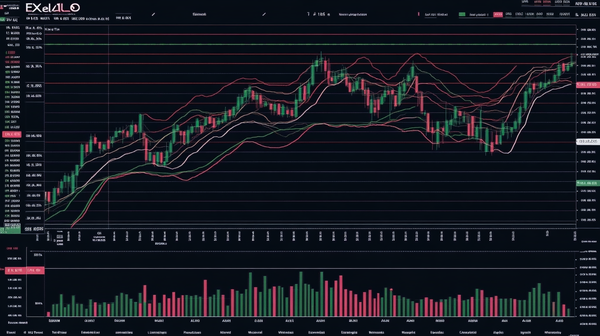
Klavipregio Trading Platform Alternatives 2026 Guide
Klavipregio Trading Platform Alternatives 2026: Reliable Options for Online Traders
Tokyo time, I watch two worlds collide: the hard limits of Bitcoin and the soft promises of leveraged CFD platforms. Klavipregio sits firmly in the second camp—an offshore-style Forex/CFD venue with a proprietary WebTrader and mobile app, usually marketed to retail traders who want fast onboarding, high leverage (often advertised around 1:500), and “everything in one place.” The trade-off is rarely said out loud. Offshore frameworks can mean weaker investor protections, less transparent execution rules, and more friction when a trader asks the only question that matters: “Can I get my money out, cleanly, on time?”
Public details around this brand can be thin, so the practical way to evaluate it is to compare it against what’s typical for this category: Forex pairs (roughly a few dozen), major indices and commodities as CFDs, and a menu of crypto CFDs that offer price exposure but not on-chain ownership. Typical pricing in this segment often lands around “from ~2.0 pips” on EUR/USD on a standard-style account, with swaps (overnight financing) and possible withdrawal/inactivity fees depending on the terms. If that profile matches what you see, then the search for Klavipregio alternatives becomes less about novelty and more about risk control.
This 2026 guide focuses on regulated options—especially for US/EU readers—so you can compare platforms like Klavipregio against brokers that publish clearer rulebooks: regulator oversight, segregated client funds, negative balance protection (where applicable), and verifiable execution disclosures.
Disclaimer: This article is for informational purposes only and does not constitute investment advice. CFDs and other leveraged products carry a high risk of loss and may not be suitable for all investors.
Key Takeaways (TL;DR)
- If you need investor-protection frameworks (FCA/FSCS or CySEC/ICF), offshore-style brokers similar to Klavipregio can be a weak fit.
- Compare cost using “round-turn” trading costs (spread + commission + slippage), not headline leverage like 1:500.
- Switching platforms is a process: complete KYC at the new broker first, then withdraw using the original funding method to avoid AML delays.
What Is Klavipregio and How Does Its Trading Platform Work?
From what is commonly observed with offshore CFD providers, Klavipregio appears positioned as a CFD-first broker rather than a true multi-asset venue with direct market access. Expect the core offering to revolve around Forex and CFDs, with an execution setup that behaves like a market maker for most retail flows (your counterparty is often the broker’s liquidity arrangement, not an exchange). The target audience is typically newer-to-intermediate traders attracted by low entry requirements (a minimum deposit frequently around $250 in this segment) and generous leverage. US residents are commonly blocked, and other restricted jurisdictions may also be excluded due to sanctions and compliance rules.
Klavipregio Web Trading Platform: Core Features and Tools
Most traders meet Klavipregio through a proprietary WebTrader, usually “basic-to-mid” in depth: standard chart types, common drawing tools, and a workable set of indicators for trend and momentum. Order entry is typically simple (market/limit/stop), with a clean account dashboard for deposits, withdrawals, and open-position monitoring. Mobile apps on iOS/Android often mirror the web layout reasonably well, though advanced workflow—multi-chart layouts, hotkeys, deep order-ticket controls—tends to lag behind specialist stacks like MT5 or cTrader. For traders who depend on precision (tight entries, partial fills, fast modifications), execution feel and slippage behavior matter as much as chart cosmetics.
Trading Fees, Spreads, and Account Types at Klavipregio
Cost-wise, competitors to Klavipregio in the offshore CFD lane often quote spreads “from” an attractive number, while real-world trading shows wider typical pricing. A realistic expectation is an EUR/USD spread around ~2.0 pips on a standard-style account, with swaps/overnight financing applying if you hold positions past rollover. Some brands in this category also advertise “raw” or “ECN-like” tiers (0.0–0.4 pips plus a ~$5–$8 round-turn commission), but the key is how consistently those conditions hold during volatility. Also read the fine print for inactivity charges and withdrawal fees—small line items that add up when you’re not trading daily.
When Do Traders Start Looking for Klavipregio Alternatives?
Leverage can be a loud marketing drumbeat, but it’s rarely the reason serious traders move. The trigger is usually trust: the moment you realize your broker relationship is a credit relationship. Once that clicks, Klavipregio alternatives stop being “shopping” and start being basic risk hygiene—especially if the platform sits under an offshore regulator such as the Seychelles FSA framework and you want clearer dispute resolution. Add the reality of CFDs—margin calls, gaps, and overnight financing—and the quality of the rulebook becomes part of your edge.
- You want FCA/CySEC-style safeguards (segregated client funds, formal complaints channels) rather than an offshore-only setup.
- Your strategy depends on MT4/MT5 or cTrader features (EAs, custom indicators, advanced order management) that a proprietary WebTrader can’t replicate.
- Withdrawals feel slow or conditional, especially when you request larger amounts or change payment methods.
- Spreads widen sharply around news events, turning a “2.0 pip” expectation into repeated stop-outs.
How to Choose a Reliable Alternative to the Klavipregio Trading Platform
Think of this selection as a fit-to-strategy exercise with a downside budget. Your “best” choice depends on what you trade (FX vs equities), how you trade (discretionary vs automated), and what failure you refuse to tolerate (withdrawal risk, execution slippage, or platform limits). Regulated options vs Klavipregio also differ in paperwork: stronger oversight means stricter KYC/AML, which is annoying—until it’s the reason your funds are segregated and complaints are handled by a real authority.
Regulation, Safety, and Investor Protection
Start with the regulator’s public register. FCA (UK), ASIC (Australia), CySEC (Cyprus/EU), and NFA/CFTC (US) each impose different conduct rules. In the UK, FSCS coverage can protect eligible clients up to £85,000 if a firm fails; in Cyprus, the ICF can cover up to €20,000 for eligible retail claims. Also confirm whether client funds are held in segregated accounts and whether negative balance protection applies in your region—details that matter more than flashy leverage.
Available Markets and Instruments
Write down what you actually need: FX spot/CFDs, indices, commodities, or real stocks/ETFs. Multi-asset brokers can offer exchange-traded equities and options (you own the asset or the contract), while many CFD-first venues offer only synthetic exposure. If your plan includes long-term investing, dividends, or shareholder rights, CFDs won’t deliver that. If your plan is short-term FX, instrument depth and execution quality outrank the number of “markets” on a landing page.
Trading Costs: Spreads, Commissions, and Other Fees
Spreads are just the visible layer. For a clean comparison, calculate round-turn cost: spread + commissions + typical slippage on your order size. A “raw” account can be cheaper for active traders, but only if commissions are reasonable and execution is stable during liquidity shocks. Don’t ignore swap/overnight fees either—carry costs can quietly dominate P&L if you hold CFD positions for weeks. Inactivity and withdrawal charges are the final trapdoor; read them before you fund.
Platforms, Tools, and Execution Quality
Platform choice is not aesthetic; it shapes what strategies are possible. MT4/MT5 and cTrader support automation, custom indicators, and faster workflow for active trading. Proprietary platforms can be fine for manual traders, but you must understand the execution model: market maker vs STP/ECN vs DMA. STP/ECN-style routing may reduce conflicts, yet slippage still happens—especially on stop orders during news. If you’re comparing Klavipregio with alternatives, ask how fills are handled when liquidity vanishes.
Support, Education, and Overall User Experience
Support is a risk-control feature: funding, withdrawals, platform incidents, and corporate actions all become support tickets eventually. Look for clear hours, multilingual coverage, and documented response channels (chat/email/phone). Education matters less as “beginner content” and more as transparency: margin policies, stop-out levels, order execution notes, and fee schedules written in plain language. Mobile parity also matters if you manage risk on the move—closing positions quickly can be the difference between a controlled loss and a margin call.
Klavipregio and Different Asset Classes: When Alternatives May Be Better
Klavipregio Forex and CFD Trading
On FX and index CFDs, the offshore model often competes on leverage (commonly up to 1:500) and low entry points (often near $250), while regulated peers compete on execution and disclosures. If Klavipregio’s typical EUR/USD spread behaves around ~2.0 pips, an active trader can feel that drag quickly—especially if they trade many round turns per week. Pepperstone and IC Markets are often used by cost-sensitive FX traders because they offer MT4/MT5/cTrader stacks and raw-style pricing structures that can be more efficient for frequent trading (spread close to zero at times plus commission), though slippage still exists. The bigger difference is governance: regulated brokers publish clearer rules on margin, stop-outs, and complaints—less ambiguity when volatility hits.
Klavipregio Stock and ETF Trading
This is where many platforms like Klavipregio show their limits. CFD platforms may list “stocks” and “ETFs,” but the exposure is often synthetic—no shareholder voting, no direct ownership, and financing costs if you hold positions. If you actually want to invest (not just speculate), Interactive Brokers (IBKR) and Saxo Bank are built for real multi-asset access: exchange-traded equities, ETFs, options, and futures in many markets with detailed reporting and portfolio tools. That matters for US/EU traders who care about best execution policies, corporate actions, and tax documents. When you compare alternatives to the Klavipregio trading platform, ask a blunt question: “Do I own the asset, or am I renting price exposure via a CFD?”
Klavipregio Crypto Trading
Crypto on CFD venues is usually crypto CFDs: you track price moves, but you don’t withdraw BTC to a wallet, you don’t verify reserves, and you don’t touch the chain. For a Bitcoin orthodox like me, that’s not Bitcoin—it’s a derivative wrapped in counterparty risk. Still, some traders want short-term hedging or speculative exposure, and regulated CFD firms can provide that with clearer oversight. IG and Plus500, for example, are known in several jurisdictions for offering crypto CFDs (availability varies by region and rule changes). If your goal is actual BTC self-custody, none of these brokers replace an on-chain exchange-and-withdraw workflow; for trading exposure, choose a regulated substitute for Klavipregio with transparent fees and risk controls.
Best Klavipregio Alternatives for 2026: Comparison of Top Trading Platforms
Interactive Brokers (IBKR): Key Facts and How It Compares to Klavipregio
Regulation: SEC/FINRA (US), FCA (UK), IIROC (Canada) (entity depends on your region)
Markets: Stocks, ETFs, options, futures, bonds, FX (and some CFDs outside the US)
Fees: Varies by market; FX pricing often commission-based with tight spreads; equity commissions depend on venue and plan
Platform: Trader Workstation (TWS), IBKR Desktop/Mobile, Client Portal; API access
Best For: Real multi-asset investors who want exchange access (not CFD-only)
Pepperstone: Key Facts and How It Compares to Klavipregio
Regulation: FCA (UK), ASIC (Australia), CySEC (Cyprus), DFSA (Dubai)
Markets: FX and CFDs (indices, commodities; offering depends on entity)
Fees: Standard spreads often around ~1.0+ pip on EUR/USD; Raw accounts commonly target ~0.0–0.3 pips + commission (varies by platform/entity)
Platform: MT4, MT5, cTrader, TradingView integration (availability varies), mobile apps
Best For: Active FX traders prioritizing tight pricing and platform choice
IG: Key Facts and How It Compares to Klavipregio
Regulation: FCA (UK), ASIC (Australia), MAS (Singapore)
Markets: CFDs across FX, indices, commodities, shares (CFDs), and crypto CFDs where permitted
Fees: Typically spread-based for many CFD markets; FX spreads often competitive on majors, varying by conditions
Platform: IG web platform, mobile app; MT4 supported in many regions
Best For: Broad-market CFD traders who value strong oversight and research
OANDA: Key Facts and How It Compares to Klavipregio
Regulation: CFTC/NFA (US), FCA (UK), ASIC (Australia), IIROC (Canada)
Markets: FX (core); CFDs available in some regions (not in the US)
Fees: Commonly spread-only pricing on many accounts; EUR/USD often around ~1.0+ pip depending on conditions and region
Platform: OANDA web/mobile platform; MT4 available in many jurisdictions
Best For: FX-first traders who want a long-standing, compliance-forward brand
Saxo Bank: Key Facts and How It Compares to Klavipregio
Regulation: FCA (UK), DFSA (Dubai), MAS (Singapore) (plus additional local oversight depending on region)
Markets: Stocks, ETFs, bonds, options, futures, FX, and CFDs (product set varies)
Fees: Tiered pricing; FX spreads can be competitive on higher tiers; commissions apply on exchange-traded products
Platform: SaxoTraderGO, SaxoTraderPRO
Best For: Portfolio builders who want premium tools and multi-asset depth
IC Markets: Key Facts and How It Compares to Klavipregio
Regulation: ASIC (Australia), CySEC (Cyprus), FSA Seychelles (group-level, entity depends on region)
Markets: FX and CFDs (indices, commodities, some crypto CFDs where permitted)
Fees: Raw-style accounts often target ~0.0–0.3 pips on EUR/USD + commission; Standard accounts typically wider and spread-only
Platform: MT4, MT5, cTrader
Best For: Scalpers and algo traders focused on execution speed
Comparison Summary
| Platform | Regulation | Main Markets | Typical Costs | Best For |
|---|---|---|---|---|
| Interactive Brokers (IBKR) | SEC/FINRA, FCA, IIROC | Stocks/ETFs, options, futures, bonds, FX | Market-dependent; FX often tight + commission; equities commission-based | Real multi-asset investors who want exchange access (not CFD-only) |
| Pepperstone | FCA, ASIC, CySEC, DFSA | FX + CFDs | Standard ~1.0+ pip; Raw ~0.0–0.3 pip + commission | Active FX traders prioritizing tight pricing and platform choice |
| IG | FCA, ASIC, MAS | CFDs across FX/indices/commodities; share CFDs; crypto CFDs (where allowed) | Mostly spread-based; majors often competitive, variable by market | Broad-market CFD traders who value strong oversight and research |
| OANDA | CFTC/NFA, FCA, ASIC, IIROC | FX (plus CFDs in some regions) | Often spread-only; EUR/USD commonly ~1.0+ pip depending on conditions | FX-first traders who want a long-standing, compliance-forward brand |
| Saxo Bank | FCA, DFSA, MAS | Multi-asset: stocks/ETFs, options, futures, FX, CFDs | Tiered spreads/commissions; generally sharper on higher tiers | Portfolio builders who want premium tools and multi-asset depth |
| IC Markets | ASIC, CySEC, FSA Seychelles (entity varies) | FX + CFDs | Raw ~0.0–0.3 pip + commission; Standard wider spread-only | Scalpers and algo traders focused on execution speed |
How to Safely Move from Klavipregio to Another Broker
Switching brokers is not a leap of faith; it’s a controlled handoff. The goal is simple: reduce operational risk while keeping your trading plan intact. Do the compliance steps first, then the money movement, then the strategy migration. And remember: leveraged CFD exposure can move faster than your withdrawal email thread—so flatten risk before you start the paperwork, especially if you’re migrating away from Klavipregio.
- Confirm the new broker’s license on the regulator’s own database (FCA Register, ASIC Connect, CySEC register, or NFA BASIC), matching the legal entity name—not just the brand.
- Open the new account and complete KYC/AML upfront (ID + proof of address). Many verifications clear quickly, but delays happen when documents don’t match.
- Reduce exposure on the old account: close open positions, cancel pending orders, and remove excess leverage before you initiate any funding changes.
- Request withdrawals using the same rails you used to deposit (card-to-card, bank transfer, e-wallet). Brokers often enforce this to satisfy anti-money-laundering rules.
- Export and store statements: deposits/withdrawals, trade history, and realized P&L. This matters for taxes, disputes, and your own performance review.
Ready to Explore Klavipregio?
If you’re still evaluating, check the current onboarding flow, product list, and regional eligibility in your jurisdiction, then compare it against the regulated substitutes in this guide. Conditions can differ by entity and country, so verify the exact fee schedule and platform stack before you commit real capital.
FAQ: Klavipregio Alternatives and Trading Platforms
What is the best alternative to Klavipregio in 2026?
The best choice depends on whether you want real multi-asset access or mostly CFDs. For US/EU traders who want exchange-traded stocks/ETFs and strong reporting, Interactive Brokers (IBKR) is a common step up; for FX-focused trading with MT4/MT5/cTrader, Pepperstone or IC Markets are often better fits. If you want a broad CFD lineup with heavy regulatory oversight, IG is a frequent shortlist name in “best Klavipregio alternatives 2026” comparisons.
Is Klavipregio a safe broker/platform?
Klavipregio appears closer to an offshore/unregulated model (commonly associated with frameworks like the Seychelles FSA) than to FCA/NFA-grade oversight. That doesn’t automatically mean fraud, but it does mean fewer formal protections (like FSCS/ICF coverage) and typically less transparent enforcement around disputes. If safety is your priority, comparing regulated options vs Klavipregio—especially those with segregated client funds and published execution policies—is the more defensive approach.
Can I trade stocks, futures, or crypto with Klavipregio?
In this category of broker, “stocks” are often offered as CFDs (synthetic exposure), and exchange-traded futures are frequently not offered in the same way a multi-asset broker provides them. Crypto is commonly available as crypto CFDs—price exposure without on-chain ownership or wallet withdrawals—so it’s not the same as holding BTC. If you want real stocks/ETFs or listed futures, brokers similar to Klavipregio usually can’t match what IBKR or Saxo offer.
What should I check before switching from Klavipregio to another platform?
Verify the new broker on the regulator’s public register, then confirm the exact legal entity you’ll be onboarded to (rules can differ by region). Next, compare round-turn trading costs (spread + commission + typical slippage), margin/stop-out policies, and whether negative balance protection applies. Finally, complete KYC at the new broker before you withdraw from Klavipregio, and keep copies of your statements for tax and audit trails.
About the Author: Kenji Tanaka is a Tokyo-based financial journalist and experienced trader with a cryptography background (University of Tokyo, incomplete). I’m Bitcoin-orthodox—“21 million, and not a coin more”—and I treat counterparty risk as a first-class variable, especially in leveraged CFD accounts where rules and withdrawals matter as much as charts.