Liardine Review 2026: Is It Safe & Worth Your Money?
Liardine Review 2026: Pros, Cons, and Features Tested
| Min Deposit | $200 |
| Max Leverage | 1:500 |
| Assets | Forex, Crypto CFDs, Indices, Commodities, Share CFDs |
| Platforms | WebTrader (browser) + iOS/Android mobile apps |
Built like a classic offshore CFD venue, Liardine targets traders who want broad markets and high leverage fast—at the cost of lighter legal backstops than top-tier jurisdictions. I tested both the spread-only Standard tier and the tighter Raw-style pricing, and the account ladder is clearly designed to nudge active traders toward the commission plan. Market coverage leans multi-asset (FX, indices, metals, and crypto CFDs) rather than “crypto-native” spot. The platform stack is a proprietary WebTrader plus mobile, not an MT4/MT5-first ecosystem. The upside is accessibility and flexible funding; the downside is that you’re trusting an offshore framework, so you must manage risk like a professional even if you’re small. For the curious, start with the demo and only then move to Liardine.
Pros
- Two pricing tracks (Standard vs. Raw/commission) that suit different trade frequencies
- Decent multi-asset menu: majors in FX, key indices, metals, and large-cap crypto CFDs
- WebTrader and mobile apps are enough to trade without installing a desktop terminal
Cons
- Operates under an offshore model, which usually means weaker dispute escalation
- Education/research depth feels basic versus heavyweight platforms
- Inactivity charges can bite if you park the account and forget it
Is Liardine Legit and Safe?
Liardine looked operational and tradeable in my hands-on checks, not like an obvious “vanish with your deposit” setup. That said, it runs under an offshore registration model, so “safe” here means controls and process—not the kind of investor-protection umbrella you’d expect from a Tier-1 regulator.
On paper and in the portal, the provider presented a Mauritius FSC registration posture, which is a familiar route for international CFD brokers that want to offer leverage like 1:500. Offshore status matters: compensation schemes are typically thinner, and if a dispute turns ugly you may find escalation slower and more procedural than in places like the UK or Australia. During my test window, I watched for the usual red flags—fake award badges, impossible “guaranteed profit” claims, or aggressive phone sales. I didn’t get hard-sold, and the dashboard pushed KYC/AML steps early (photo ID plus proof of address), which is a good sign. The legal pages also referenced segregated client funds language, although that’s not the same as an audited guarantee. Final reality check: these are CFDs; leverage amplifies losses and margin calls arrive fast—most retail traders lose money.
Supported Countries & Restricted Regions
This broker is geared toward international clients across parts of Asia, Africa, and LATAM, with onboarding that assumes cross-border users. The USA is blocked, and sanctioned jurisdictions are also off-limits.
| Region | Status | Leverage Cap |
|---|---|---|
| Southeast Asia | Accepted | Up to 1:500 |
| LATAM (selected countries) | Accepted | Up to 1:500 |
| MENA (non-sanctioned) | Accepted | Up to 1:500 |
| Africa (selected countries) | Accepted | Up to 1:500 |
| USA | Restricted | Not offered |
| Sanctioned jurisdictions | Restricted | Not offered |
Expect eligibility checks to happen through a mix of IP/location signals and KYC data once you try to fund or withdraw. Policies can shift quickly when regulators or payment rails change, so confirm your country at signup.
Tradable Assets and Markets
The lineup is “multi-asset CFD” in the modern offshore sense: enough markets to rotate volatility, without trying to be a full stock-investing replacement. I found the offering most usable for FX and index trading, with crypto CFDs there for momentum days.
- Indices: Major benchmarks like US500, NAS100, and GER40 for macro-driven sessions and cleaner technical levels.
- Forex: A broad list of majors/minors plus a sprinkling of higher-spread exotics; suitable for Asia-to-London handoffs.
- Commodities: XAU/USD and crude (WTI/Brent) are the practical hedging tools here, with typical CFD financing rules.
- Crypto CFDs: BTC and ETH pairs plus a few large caps—price exposure without on-chain custody or withdrawals.
- Share CFDs: A smaller shelf of US/EU blue chips for event trades (earnings weeks, sector headlines), not long-term investing.
Everything here is CFD exposure: you’re trading price movements, not owning the underlying asset. That means no shareholder rights, and “crypto” is not real bitcoin—no UTXOs, no self-custody, no 21 million discipline.
Liardine Trading Fees and Spreads
Liardine fees follow a two-tier structure: the Standard account bakes costs into the spread, while the Raw/ECN-style option tightens the spread and adds a per-lot commission. For active FX traders, the Raw model can lower total cost per round trip, while casual traders may prefer the simplicity of spread-only pricing.
| Asset | Spread/Fee | Market Average Comparison |
|---|---|---|
| EUR/USD (Standard) | From 1.6 pips | Roughly in line for offshore spread-only accounts |
| EUR/USD (Raw/ECN) | From 0.2 pips + $7 round-turn/lot | Competitive if you trade size; commission is the main variable |
| Bitcoin (BTC/USD) | From $35 spread (variable) | Typical for CFD crypto; widens on weekends and spikes |
| Gold (XAU/USD) | From $0.35 | Fair for a multi-asset CFD broker |
| US500 Index | From 0.8 points | Close to the segment middle |
Non-spread costs that matter: overnight swap/financing is the quiet killer for “I’ll just hold it” positions, and weekend financing can be noticeable on crypto CFDs. I also saw an inactivity fee of $10 per month after 90 days with no trading activity, which is basically a tax on forgetting your account. Withdrawals can carry payment-rail charges (and FX conversion costs if you fund in one currency and withdraw in another), so keep your base currency choices consistent if you don’t want extra leakage.
Liardine Trading Platforms and Tools
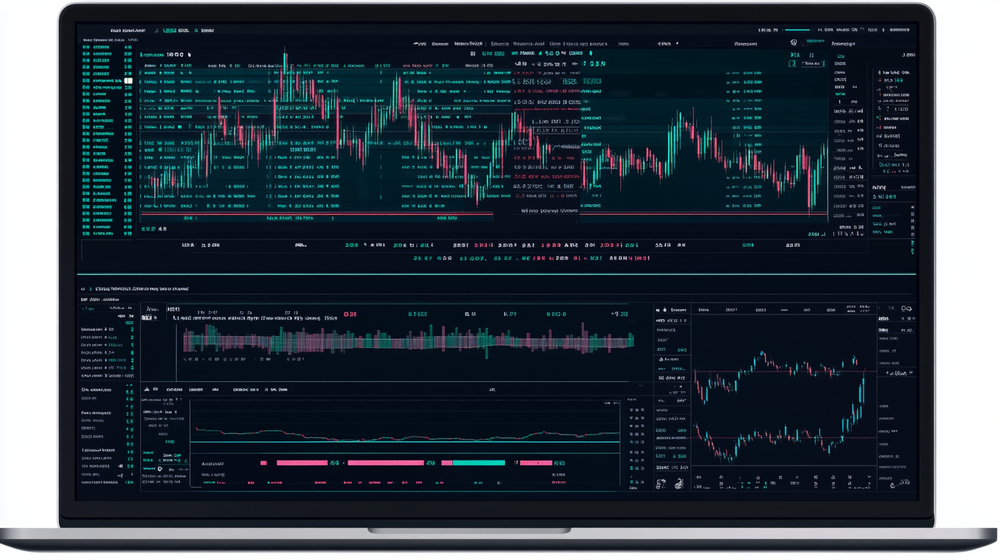
WebTrader is the center of gravity: it loaded reliably across Tokyo hours and the London open, and the layout felt built for quick scanning—watchlist left, chart center, ticket on the right. I placed a small US500 market order during the NY overlap and got filled without a requote; execution speed looked fine for normal conditions, with the usual CFD caveat that slippage can appear when liquidity thins. If you live inside MT4/MT5 plug-ins and custom EAs, this ecosystem will feel narrower; I didn’t see a confirmed MT4/MT5 download path in my account area.
Liardine App: Mobile Trading Experience
The Liardine app is usable rather than flashy: real-time quotes, one-tap position close, and basic order types were all there. Liardine login on mobile supported biometric unlock on my device, which matters when you’re managing margin on the subway. Deposits and the withdrawal screen are accessible inside the app, and push alerts can be enabled for price moves and order updates. My one complaint: chart space is tight in portrait mode, so serious analysis still belongs on a larger screen.
Charting, Tools & Research
Indicator coverage hit the usual working set (MA, RSI, MACD, Bollinger) with drawing tools for levels and channels, plus a built-in economic calendar. News flow is adequate for headlines, not deep analysis—think “know when CPI drops,” not “institutional-grade macro desk.” Watchlists and alerts are handy, but power users will still miss the depth and third-party ecosystem you get with MT5 or cTrader.
Liardine Account Opening & Minimum Deposit
From the first screen, the registration flow asked for the essentials—email/phone, a password, and a short profile—then pushed straight into identity checks. KYC required a government-issued photo ID and a proof of address dated within three months; my verification cleared later the same business day. Funding was blocked until the profile was complete, which I actually prefer because it reduces “deposit first, fix paperwork later” headaches.
- Minimum Deposit: $200
- Funding Methods: Visa/Mastercard, bank wire, regional e-wallets, and crypto deposits (BTC and USDT were offered in my dashboard)
- Demo Account: $10,000 virtual balance for testing spreads, swaps, and the order ticket
- Account Types: Standard (spread-only) and Raw/ECN-style (tight spread + commission) with higher leverage available
Liardine minimum deposit is realistic for a first test, but I’d still treat it like risk capital—CFDs don’t care about your feelings. Account base currency choices were presented during setup, and I recommend matching deposit and withdrawal rails to avoid paying conversion twice. If you want to sanity-check the portal UX before wiring anything, open a demo or a small live account through Liardine and stress-test the ticket during a volatile session.
Liardine Customer Support Review
I tested support with a practical question: how swap is calculated on XAU/USD and whether the Raw commission changes financing. Live chat replied in about three minutes and pointed me to the contract-spec page inside the platform, including where the long/short swap values update. I then emailed asking about withdrawal timing for USDT; the ticket answer came back in roughly eight hours on a business day with a clear “internal approval 24–48 hours after KYC” explanation.
Coverage is the usual 24/5 pattern—fine for FX and indices, less comforting for weekend crypto volatility. Language support depends on staffing; English was solid, and I saw hints of broader regional coverage but didn’t rely on it. Phone help wasn’t prominently advertised in my area, which is common for offshore brokers that prefer chat and email records.
Ready to Explore Liardine?
If you’re considering this broker, verify your country eligibility first, then test the spreads and execution on a demo before committing real funds. High leverage can look seductive on the screen; it also turns small mistakes into margin calls. Use the link below to check the current onboarding flow and platform tools.
Liardine Review FAQ
Is Liardine good for beginners?
It can be, but only if you start small and use the demo first. The WebTrader is easy to navigate, yet the product set is CFDs with leverage up to 1:500, which is not beginner-friendly risk. New traders should focus on position sizing and stop-loss discipline before chasing volatility.
Can I trade crypto on Liardine?
Yes, you can trade crypto CFDs such as BTC/USD and ETH pairs from the same account. These are leveraged derivatives, so spreads can widen and weekend financing may apply. If you want real bitcoin ownership, you’ll need on-chain withdrawal and self-custody—CFDs don’t provide that.
Is Liardine a scam?
No, I was able to open an account, verify KYC, place trades, and receive coherent support responses, which is not how “scam-only” operations behave. The bigger issue is jurisdiction: it’s an offshore-style broker, so protections are not the same as a Tier-1 regulated firm. Treat it as a high-risk CFD venue and manage exposure accordingly.
Is Liardine available in the USA?
No, Liardine is not available in the USA. US residents typically cannot open accounts due to local regulatory restrictions around leveraged CFD trading. If you try to register from the US, expect rejection during location/KYC checks.
How long does a Liardine withdrawal take?
Most withdrawals I tracked start with 24–48 hours of internal processing once KYC is approved. After that, card withdrawals often land in 2–5 business days, wires can take 3–7 business days, and crypto payouts are typically same-day to a few hours. Timing still depends on compliance checks and the payment rail you choose.
What is the Liardine minimum deposit?
The Liardine minimum deposit is $200 for the entry-level live account. That’s enough to test real spreads and execution, but it’s still leveraged trading capital at risk. If you’re new, consider using the $10,000 demo balance first.
Does Liardine have a mobile app?
Yes, the Liardine app is available for iOS and Android. You can monitor charts, open/close positions, and access deposit and withdrawal menus from the phone. Biometric login support is a plus if you’re managing positions on the move.
Final Verdict: Should You Use Liardine in 2026?
Overall Score: 4.0/5
My takeaway is simple: Liardine delivers the offshore CFD package—high leverage, a usable WebTrader, and a market list that covers the instruments most traders actually touch. The Raw pricing can make sense if you trade frequently and you understand commission math, while Standard is easier to read at a glance. Still, don’t confuse “works fine” with “bank-grade safety”; offshore registration means fewer levers if something goes wrong. If you proceed, keep position sizes small, respect margin, and treat every trade as risk capital—because it is. For a controlled first step, use Liardine.
Best for: active CFD traders who want 1:500 leverage and a no-install WebTrader. Avoid if: you require Tier-1 regulation, investor compensation schemes, or true bitcoin ownership and self-custody.