Lucel Patriance Trading Platform Alternatives 2026
Lucel Patriance Trading Platform Alternatives 2026: Reliable Options for Online Traders
Leverage is a sharp knife. In the right hands, it trims risk; in the wrong hands, it cuts to the bone. That’s why “where” you trade matters almost as much as “what” you trade—especially if your current venue sits in the offshore CFD lane. Lucel Patriance appears to operate as a forex/CFD-focused provider with a proprietary WebTrader plus mobile apps, offering the familiar menu: major FX pairs, indices, commodities, and a slice of crypto CFDs. From what is commonly observed in this broker category, you should expect a minimum deposit around $250, headline leverage up to roughly 1:500, and EUR/USD spreads near 2.0 pips on a standard-style account (tighter pricing may exist on commission-based tiers). That “easy access” comes with trade-offs: limited transparency versus top-tier venues, fewer investor protections, and a higher need for self-defense on withdrawals, execution, and dispute resolution.
This guide to Lucel Patriance alternatives is built for US/EU readers who want a cleaner rulebook: recognizable regulators, segregated client funds, clearer execution models, and platforms that match real strategy needs (MT4/MT5/cTrader, APIs, or true multi-asset access). I’m a Bitcoin orthodox from Tokyo—“21 million — and not a coin more.” I don’t trust banks or fiat. But I trust math, incentives, and enforcement. If you’re going to trade CFDs, at least do it where the referee shows up.
Disclaimer: This article is for informational purposes only and does not constitute investment advice. CFDs and other leveraged products carry a high risk of loss and may not be suitable for all investors.
Key Takeaways (TL;DR)
- Offshore-style CFD brokers can offer high leverage (e.g., ~1:500), but regulated venues typically provide stronger guardrails like segregated client funds and formal complaint channels.
- Compare total “round-turn” trading cost (spread + commission + slippage) instead of chasing the lowest advertised spread or the highest leverage number.
- If you switch, open and KYC-verify the new account first—then withdraw using the same funding rail you used to deposit to reduce AML friction.
What Is Lucel Patriance and How Does Its Trading Platform Work?
From a trader’s-eye view, Lucel Patriance fits the offshore CFD-broker template: a forex-and-CFD-first lineup, a proprietary web platform, and mobile access designed for fast onboarding rather than deep market structure. The product mix typically centers on 30–50 FX pairs, a handful of commodities and indices, and crypto exposure via CFDs (price tracking, not ownership). The account pitch often includes high leverage—around 1:500 in this segment—which can amplify both profit and ruin. For traders comparing platforms like Lucel Patriance, the key question is not “Can I place orders?” but “What happens when something goes wrong: execution dispute, delayed withdrawal, or a margin cascade?”
Lucel Patriance Web Trading Platform: Core Features and Tools
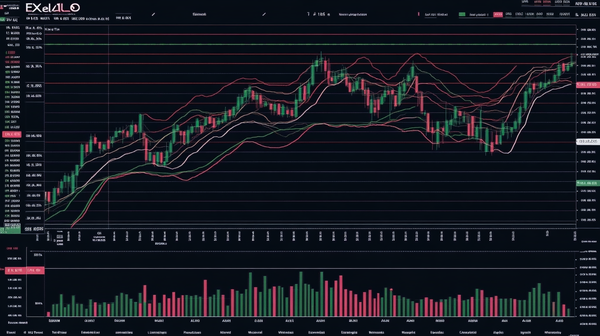
The proprietary WebTrader experience in this category is usually functional, not surgical. Charting tends to cover the essentials—multiple timeframes, a standard indicator set, and basic drawing tools—enough for discretionary trading, less ideal for systematic workflows. Order tickets commonly support market and pending orders, plus stop-loss and take-profit; advanced conditional logic (OCO brackets, server-side trailing, strategy testing) may be thinner than on MT5 or cTrader. Mobile parity is typically decent for monitoring and closing risk, with an account dashboard showing margin usage, open P&L, and funding history. Execution “feel” can vary: during volatile releases, slippage and requotes matter more than pretty charts.
Trading Fees, Spreads, and Account Types at Lucel Patriance
Cost is where many traders misread the fine print. A standard-style account in this lane often shows EUR/USD around ~2.0 pips in normal conditions, while a commission model (sometimes labeled Raw/ECN) may advertise near-zero spreads but add roughly $5–$8 per round-turn. Overnight swap/financing charges apply when holding leveraged positions past rollover, and those swaps can dominate P&L for swing traders. Watch for secondary fees too: withdrawals routed through certain methods, inactivity charges after long dormancy, and conversion fees when your base currency doesn’t match the instrument’s settlement currency. These frictions are why traders benchmark competitors to Lucel Patriance using total cost-of-trade, not slogans.
When Do Traders Start Looking for Lucel Patriance Alternatives?
A switch rarely starts with boredom; it starts with a stress test. The moment you need predictable rules—on execution, margin, or withdrawals—offshore CFD setups can feel like trading on thin ice. Many readers searching Lucel Patriance alternatives are reacting to one of three pressures: risk controls that don’t match their strategy, costs that compound faster than expected, or jurisdictional limits (the US is commonly restricted for these providers). Add high leverage (often ~1:500) and you get a fragile system: a small gap can trigger a margin call before you can blink. That’s not “edge.” That’s exposure.
- You need MT4/MT5 or cTrader for automated strategies, custom indicators, or a workflow the proprietary platform can’t support.
- Your trading log shows slippage widening during news events, making backtests meaningless in live conditions.
- You want clearer legal protections (segregated client funds, regulator oversight, formal dispute pathways) than offshore terms provide.
- You’re paying more in effective spread/commission than expected—especially after factoring swap/overnight fees on multi-day holds.
How to Choose a Reliable Alternative to the Lucel Patriance Trading Platform
Treat broker selection like threat modeling: list what can break (execution, custody, access, compliance), then pick the venue that reduces the biggest risks for your style. “Cheap spreads” are nice, but they don’t compensate for weak investor protections or opaque order handling. For alternatives to the Lucel Patriance trading platform, prioritize enforceable regulation, transparent pricing, and platform tooling that matches your strategy—scalping, hedging, longer-term macro, or multi-asset investing.
Regulation, Safety, and Investor Protection
Start with who can punish bad behavior. FCA (UK), ASIC (Australia), CySEC (EU), and NFA/CFTC (US) all impose reporting and conduct standards, though the details differ. In the UK, the FSCS can cover eligible clients up to £85,000 if a firm fails; in Cyprus, the ICF can cover up to €20,000 (eligibility and conditions apply). Look for segregated client funds policies, negative balance protection where applicable, and clear disclosures on how orders are handled. If you’re comparing regulated options vs Lucel Patriance, this is the part that actually keeps you alive when markets turn nasty.
Available Markets and Instruments
Don’t confuse “number of symbols” with “real market access.” A CFD list may look big, yet still keep you boxed into synthetic exposure. If you want actual stocks/ETFs (ownership rights, corporate actions handled properly), you need a true multi-asset broker with exchange connectivity. Options and futures matter for hedging and defined-risk structures; not every CFD venue offers them. For US/EU readers, brokers similar to Lucel Patriance can be fine for FX/indices CFDs, but they won’t replace a full investment stack if you want equities, bonds, or listed derivatives.
Trading Costs: Spreads, Commissions, and Other Fees
Evaluate cost the way a pro desk does: the round-turn. Spread-only accounts simplify budgeting, but spreads widen in stress. Commission accounts may show tighter raw pricing, but your real cost becomes (spread + commission + slippage). Add swaps for overnight holds, plus potential inactivity and withdrawal fees. A scalper doing 200 round-turns per month will feel a 0.5 pip difference like a punch; a swing trader will feel swaps like gravity. Pick the cost profile that matches your holding period, not your ego.
Platforms, Tools, and Execution Quality
Platforms shape behavior. MT4/MT5 are widespread for EAs and indicator ecosystems; cTrader is popular for execution feel and order management; proprietary platforms can be clean but closed. Ask about the execution model: market maker versus STP/ECN/DMA. STP/ECN/DMA frameworks can reduce conflicts, but they don’t eliminate slippage—latency and liquidity still rule. If you’re coming from Lucel Patriance, test the new venue with a small deposit during a high-volatility window to see how fills behave when it actually matters.
Support, Education, and Overall User Experience
Support isn’t a luxury; it’s operational risk. Check live chat response times, ticket handling, and whether support can explain margin calls, swap calculations, and corporate actions without hand-waving. Education content matters if you’re learning options, futures, or multi-asset risk management, but it should be sober—no “get rich” theater. Mobile parity is also practical: you need the ability to cut exposure quickly. For top substitutes for Lucel Patriance, a boring, consistent UX often beats flashy dashboards.
Lucel Patriance and Different Asset Classes: When Alternatives May Be Better
Lucel Patriance Forex and CFD Trading
In FX/CFDs, the big difference isn’t the symbol list—it’s execution integrity and total costs. Lucel Patriance-style venues typically provide 30–50 FX pairs, 8–15 indices, and a small commodities shelf, with leverage that can reach about 1:500. That leverage looks powerful, but it also compresses the distance to a margin call. Regulated FX/CFD specialists like Pepperstone or OANDA are often chosen for tighter, more transparent pricing structures and mature platform stacks (MT4/MT5/cTrader or robust proprietary tools). If your strategy is sensitive to slippage—news scalps, breakout entries, tight stops—execution model and liquidity access can matter more than the headline spread printed on the website. For many Lucel Patriance alternatives, the “upgrade” is predictability: fewer surprises when volatility spikes.
Lucel Patriance Stock and ETF Trading
Stocks and ETFs are where many offshore CFD platforms show their limits. In this segment, equities are often offered as CFDs (no shareholder rights, no direct participation in corporate actions beyond what the provider mirrors), or they’re absent entirely. If you want real ownership, US/EU traders typically move to multi-asset brokers built for exchange access—Interactive Brokers (IBKR) is the classic choice for broad global equities, ETFs, options, futures, and bonds, while Saxo Bank is strong for a curated but deep multi-asset environment with professional-grade tooling. The practical difference is custody and market structure: with listed products, you get clearer pricing, standardized contract specs, and a regulatory framework designed for investor protection. As competitors to Lucel Patriance go, this is the category that most cleanly separates “trading a price feed” from participating in real markets.
Lucel Patriance Crypto Trading
Crypto exposure on CFD brokers is usually just that—exposure. A crypto CFD tracks price; you don’t withdraw coins to your own wallet, you don’t verify supply, and you don’t exit the counterparty risk of the platform. As a Bitcoin guy, I’ll say it plainly: paper Bitcoin is not Bitcoin. Still, some traders want regulated derivatives exposure for short-term hedges, and certain regulated CFD brokers such as IG can offer crypto CFDs where permitted. Others, like Plus500, also provide crypto CFDs in many regions under a regulated umbrella (eligibility depends on country). If your goal is long-term BTC ownership, the cleaner path is self-custody on-chain—separate from any CFD account. For Lucel Patriance alternatives, be honest about the objective: speculate, hedge, or own. Those are different games with different risks.
Best Lucel Patriance Alternatives for 2026: Comparison of Top Trading Platforms
Interactive Brokers (IBKR): Key Facts and How It Compares to Lucel Patriance
Regulation: SEC/FINRA (US), FCA (UK), IIROC (Canada) (entity depends on your region)
Markets: Stocks, ETFs, options, futures, bonds, FX
Fees: FX pricing is typically tight with commission-based structures; stock/ETF commissions vary by region and plan
Platform: Trader Workstation (TWS), IBKR Desktop/Mobile, Client Portal, APIs
Best For: Multi-asset, exchange-access traders who want real markets
Pepperstone: Key Facts and How It Compares to Lucel Patriance
Regulation: FCA (UK), ASIC (Australia), CySEC (EU), DFSA (Dubai)
Markets: FX, CFDs (indices, commodities, some crypto CFDs where permitted)
Fees: EUR/USD spreads often range from ~0.0–0.3 pips on Razor/Raw-style pricing plus commission; ~1.0+ pip on spread-only accounts (varies)
Platform: MT4, MT5, cTrader (availability varies by entity)
Best For: Execution-focused FX traders using MT4/MT5/cTrader
Saxo Bank: Key Facts and How It Compares to Lucel Patriance
Regulation: FCA (UK), MAS (Singapore), DFSA (Dubai) (entity depends on your region)
Markets: Stocks, ETFs, options, futures, FX, CFDs, bonds
Fees: Pricing is tiered by account level; FX spreads are typically competitive, with commissions/fees varying by market and product
Platform: SaxoTraderGO, SaxoTraderPRO
Best For: Portfolio-style traders combining FX with listed assets
OANDA: Key Facts and How It Compares to Lucel Patriance
Regulation: CFTC/NFA (US), FCA (UK), ASIC (Australia), IIROC (Canada)
Markets: FX (and CFDs in certain jurisdictions)
Fees: Spread-based pricing; EUR/USD commonly around ~0.6–1.2 pips depending on market conditions and region
Platform: OANDA web/mobile platforms, MT4 (availability varies)
Best For: Risk-controlled FX trading with strong regulatory coverage
IG: Key Facts and How It Compares to Lucel Patriance
Regulation: FCA (UK), ASIC (Australia), MAS (Singapore)
Markets: CFDs (indices, FX, commodities, shares), some crypto CFDs where permitted
Fees: Spread-based CFDs; major FX spreads can be competitive in liquid hours, widening in volatility
Platform: IG Trading Platform, MT4 (in some regions)
Best For: Active CFD traders who want broad market coverage
Plus500: Key Facts and How It Compares to Lucel Patriance
Regulation: FCA (UK), CySEC (EU), ASIC (Australia), MAS (Singapore)
Markets: CFDs (FX, indices, commodities, shares, crypto CFDs where permitted)
Fees: Spread-based; costs vary by instrument and volatility, with overnight funding charges on held CFD positions
Platform: Plus500 proprietary WebTrader and mobile app
Best For: Simplicity-first CFD trading on a regulated app
Comparison Summary
| Platform | Regulation | Main Markets | Typical Costs | Best For |
|---|---|---|---|---|
| Interactive Brokers (IBKR) | SEC/FINRA, FCA, IIROC | Stocks/ETFs, options, futures, bonds, FX | Commission-based; tight FX pricing, region-dependent equity fees | Multi-asset, exchange-access traders who want real markets |
| Pepperstone | FCA, ASIC, CySEC, DFSA | FX, CFDs | ~0.0–0.3 pip + commission (Razor/Raw); ~1.0+ pip spread-only | Execution-focused FX traders using MT4/MT5/cTrader |
| Saxo Bank | FCA, MAS, DFSA | Stocks/ETFs, options, futures, FX, CFDs, bonds | Tiered pricing; competitive spreads with product-based fees | Portfolio-style traders combining FX with listed assets |
| OANDA | CFTC/NFA, FCA, ASIC, IIROC | FX (CFDs in some regions) | Typically ~0.6–1.2 pip EUR/USD spread-based (varies) | Risk-controlled FX trading with strong regulatory coverage |
| IG | FCA, ASIC, MAS | CFDs across FX/indices/commodities/shares; crypto CFDs where permitted | Spread-based; competitive in liquid hours, wider in volatility | Active CFD traders who want broad market coverage |
| Plus500 | FCA, CySEC, ASIC, MAS | CFDs (FX, indices, commodities, shares, crypto CFDs where permitted) | Spread-based + overnight funding on held CFDs | Simplicity-first CFD trading on a regulated app |
How to Safely Move from Lucel Patriance to Another Broker
Switching brokers is not a “click and go” event; it’s a controlled unwind and rebuild. Do it like you’d rotate cold storage keys: verify first, then move value in small steps. The main operational risks are failed withdrawals, unexpected margin liquidation during the transition, and losing access to statements you later need for taxes or audits. If you’re exiting Lucel Patriance, plan the sequence so you’re never forced to trade under pressure.
- Confirm the new broker’s license on the regulator’s public database (FCA Register, ASIC Connect, CySEC register, or NFA BASIC) and match the legal entity name exactly.
- Open the new account and complete KYC/AML checks (ID + proof of address) before you touch the old account; verification often clears within a business day, but delays happen.
- Flatten risk on the old venue by closing open positions and cancelling pending orders; assume you cannot “transfer” CFD positions between firms.
- Withdraw funds using the same payment method you used to deposit whenever possible, because many compliance teams will block mismatched rails.
- Download trade history, monthly statements, and funding records before you lose access; keep copies for tax reporting and dispute evidence.
Ready to Explore Lucel Patriance?
If you’re still evaluating your setup, compare pricing, platform tools, and regional eligibility side by side before committing fresh capital. Check leverage limits, margin rules, and withdrawal methods in your country, then test with small size. The goal is clean execution and controllable risk—not drama.
FAQ: Lucel Patriance Alternatives and Trading Platforms
What is the best alternative to Lucel Patriance in 2026?
The best choice depends on whether you need real multi-asset access or just FX/CFDs with better oversight. For exchange-traded stocks/ETFs, Interactive Brokers (IBKR) is a common top pick; for FX execution on MT4/MT5/cTrader, Pepperstone is often favored; for regulated, broad CFD coverage, IG is a frequent shortlist name. In other words: match the venue to the job, not the marketing.
Is Lucel Patriance a safe broker/platform?
Lucel Patriance appears to operate under an offshore framework (commonly associated with places like Seychelles FSA in this broker category), which generally provides fewer investor protections than FCA/ASIC/CySEC/NFA oversight. That doesn’t automatically mean fraud, but it does mean you have less regulatory leverage if a dispute occurs. If safety is the priority, regulated options vs Lucel Patriance typically offer clearer segregation rules, complaint pathways, and (in some regions) compensation schemes.
Can I trade stocks, futures, or crypto with Lucel Patriance?
With brokers in this segment, stocks and ETFs are often CFDs only (if offered), while listed futures are typically not the core product. Crypto exposure is commonly provided as crypto CFDs—price speculation without on-chain ownership or wallet withdrawal. If you want listed futures or true multi-asset investing, many traders move to Lucel Patriance trading platform alternatives 2026 like IBKR or Saxo for exchange access, and use CFD brokers only for specific hedges.
What should I check before switching from Lucel Patriance to another platform?
Before switching, verify the new firm on the regulator’s register, confirm how client funds are held, and read margin/stop-out rules so leverage doesn’t surprise you. Then map your real costs: spread + commission + swaps + likely slippage for your trade style. Finally, withdraw and document everything from Lucel Patriance before you close the account, because statements are your proof when something goes sideways.
About the Author: Kenji Tanaka is a Tokyo-based financial journalist and active trader with a background in cryptography studies (University of Tokyo, incomplete). He writes from a Bitcoin-orthodox perspective—skeptical of fiat incentives and bank-centered risk—while emphasizing verifiable regulation, execution quality, and disciplined risk management for leveraged trading.