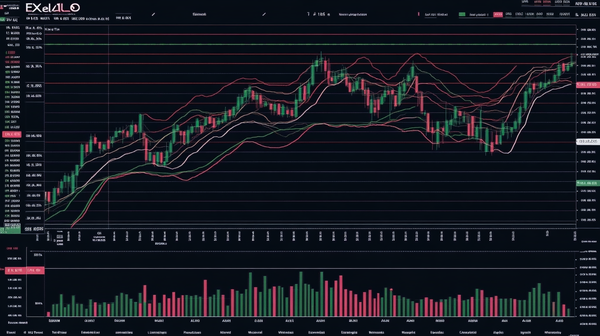
Lucrianza Trading Platform Alternatives 2026 Guide
Lucrianza Trading Platform Alternatives 2026: Reliable Options for Online Traders
Leverage looks exciting on a landing page. It looks very different at 02:17 Tokyo time when spreads widen, slippage bites, and a margin call hits before you can blink. That gap—between marketing and market microstructure—is why people search for Lucrianza alternatives in 2026, especially across the US/EU where rules, disclosures, and recourse matter. In the offshore CFD segment, Lucrianza is commonly presented as a forex-and-CFD-first venue with a proprietary WebTrader and mobile app, offering a broad but familiar menu: major/minor FX pairs, indices, commodities, and often crypto CFDs. Typical conditions in this category include a minimum deposit around $250, leverage up to 1:500, and EUR/USD spreads around ~2.0 pips on a standard-style account. That mix can be “good enough” for casual clicking—until you need predictable execution, transparent costs (swap included), and a regulator you can actually call.
Disclaimer: This article is for informational purposes only and does not constitute investment advice. CFDs and leveraged products involve a high risk of loss and may not be suitable for all investors.
Key Takeaways (TL;DR)
- If you need verifiable oversight (FCA/ASIC/CySEC/NFA) and potential compensation schemes (FSCS/ICF), prioritize regulated brokers over offshore CFD venues.
- Compare round-turn trading cost (spread + commission + swap) rather than headline leverage; “1:500” won’t save a strategy with poor fills.
- Stock/ETF access is often CFDs only on offshore platforms; multi-asset firms like IBKR or Saxo can provide real-market access depending on region.
- Switching safely usually means: open and KYC-verify the new account first, then withdraw using the original funding rail to satisfy AML rules.
What Is Lucrianza and How Does Its Trading Platform Work?
From a trader’s lens, Lucrianza sits in the offshore CFD-broker mold: a single account gives access to leveraged forex and CFDs, usually run on a dealing-desk/market-maker style execution model (or something close to it). Public-facing positioning tends to target retail traders who want simple onboarding, high leverage, and a “trade from anywhere” workflow. A typical offshore footprint for this category is registration under the Seychelles FSA framework, with the US usually restricted and other sanctioned jurisdictions excluded as well. The practical implication is straightforward: your experience hinges less on “features” and more on how the broker handles fills, withdrawals, and dispute resolution when things go wrong—topics that become central when comparing platforms like Lucrianza.
Lucrianza Web Trading Platform: Core Features and Tools
The core stack is usually a proprietary WebTrader plus iOS/Android apps. Expect the basics done competently: multi-timeframe charts, common indicators, drawing tools, watchlists, and one-click trading. Order tickets typically cover market and pending orders (limit/stop), with stop-loss and take-profit attached; advanced order logic (OCO brackets, algorithmic routing) is less common in proprietary retail terminals. Mobile parity is often “good enough” for monitoring and quick actions, but strategy work—multi-chart layouts, deeper analytics, and disciplined journaling—tends to feel cramped. Execution-speed “impressions” can also vary by instrument and volatility: a platform can be smooth while fills still suffer from slippage around news.
Trading Fees, Spreads, and Account Types at Lucrianza
In this segment, fees are usually packaged as spread-only for a standard account and spread-plus-commission for a raw/ECN-style tier. A reasonable working benchmark is EUR/USD from ~2.0 pips on Standard, while a raw-style tier may advertise 0.0–0.4 pips plus roughly $5–$8 round-turn commission per lot (figures vary by provider and liquidity conditions). Overnight financing (swap) is the silent killer for hold strategies; check the long/short swap schedule, not just the headline spread. Also watch for withdrawal processing fees and inactivity charges—small line items that become real money over months.
When Do Traders Start Looking for Lucrianza Alternatives?
The moment your strategy becomes systematic, the broker stops being a “website” and becomes part of your edge—or your drag. That’s the pivot where people start comparing alternatives to the Lucrianza trading platform: not for novelty, but for tighter governance, clearer execution terms, and better tooling. Offshore leverage (often up to 1:500) can amplify returns, yes—but it also amplifies execution errors, swap costs, and liquidation risk. And if your jurisdiction expects stronger safeguards, friction appears fast: region locks, extra KYC steps, or limited recourse when disputes happen.
- You need MT4/MT5 or cTrader for an EA/scalping workflow, but the proprietary terminal can’t replicate your automation or order logic.
- Withdrawals feel inconsistent (processing time, method restrictions, extra documentation) and you want a broker with clearer AML rails and audit trails.
- Your cost model breaks: a ~2.0 pip EUR/USD spread plus slippage turns a marginal strategy negative at higher monthly volume.
- You want investor-protection plumbing (segregated client funds, negative balance protection where applicable, and a regulator with a public register).
How to Choose a Reliable Alternative to the Lucrianza Trading Platform
Treat broker selection like you treat position sizing: define what you must not lose first. For US/EU traders, the “best” choice is rarely the broker with the loudest leverage number; it’s the one whose regulation, execution model, and cost structure match your strategy’s tolerances. I look at it as a three-layer filter—safety, fit, then price—and only after that do I care about UI polish.
Regulation, Safety, and Investor Protection
Start with a regulator you can verify: FCA (UK), ASIC (Australia), CySEC (EU), or NFA/CFTC (US). For FCA firms, the FSCS can provide compensation up to £85,000 in certain failure scenarios; in Cyprus, the ICF can cover up to €20,000 subject to eligibility. Segregated client funds and clear complaints procedures are not “nice-to-haves”—they’re the baseline if you want rules instead of promises.
Available Markets and Instruments
Match the venue to what you truly trade. FX and index CFDs are common nearly everywhere, but real stocks/ETFs, options, and futures access is a different tier of broker infrastructure. If you need DMA-style equities (not just “stock CFDs”), multi-asset firms like Interactive Brokers or Saxo are built for that. If your plan is strictly FX intraday, a specialist with strong execution and transparent pricing may fit better than a giant multi-asset shop.
Trading Costs: Spreads, Commissions, and Other Fees
Price is a full equation: spread + commission + slippage + swap/overnight fee, then any inactivity or deposit/withdrawal charges. Use round-turn cost (open + close) as your comparison unit, not marketing “from 0.0” headlines. A scalper doing 100 round-turn lots/month will feel every 0.2 pip difference; a swing trader will feel swap more than spread. Write your cost model down before you pick a broker.
Platforms, Tools, and Execution Quality
Platform choice is strategy choice. MT4/MT5 ecosystems support indicators and EAs; cTrader tends to attract execution-focused traders; proprietary platforms can be fine but may limit portability. Execution model matters too: market maker vs STP/ECN vs DMA changes how fills, requotes, and negative slippage may show up. If you’re migrating from Lucrianza, test execution on the same instrument during the same session—London open is a different world than late Asia.
Support, Education, and Overall User Experience
When money is stuck, “fast support” stops being a slogan and becomes a survival feature. Check support hours, languages, and escalation paths; request a written answer on fees or KYC so you have a record. Education matters less than clarity: margin-call rules, negative balance protection terms, and swap schedules should be easy to find and consistent. Finally, confirm mobile app parity if you manage risk on the move—closing a position quickly should not require three hidden menus.
Lucrianza and Different Asset Classes: When Alternatives May Be Better
Lucrianza Forex and CFD Trading
On forex and CFD indices, Lucrianza-style offshore venues typically compete on leverage and simplicity: think up to 1:500, a spread-first pricing model, and a mid-tier instrument list (roughly a few dozen FX pairs plus major indices and commodities). The trade-off is that execution transparency can be thinner than at top regulated shops, and the true cost becomes visible during volatility: widened spreads, stop-outs, and slippage around data releases. If FX is your core, specialists like Pepperstone and OANDA are often preferred by traders who obsess over fills and reporting. Pepperstone is popular for MT4/MT5/cTrader workflows and raw-spread accounts; OANDA is valued for FX-centric tooling and regulatory footprint (including the US via CFTC/NFA). In other words: less “casino leverage,” more process.
Lucrianza Stock and ETF Trading
Stocks and ETFs are where the offshore CFD model shows its limits. Many brokers in this lane offer equities exposure mostly as CFDs—no shareholder rights, no voting, and financing costs that can make long holds expensive. Even when “stocks” appear on the menu, the question is whether you’re buying the underlying or trading a synthetic contract. Regulated multi-asset platforms can close that gap. Interactive Brokers (IBKR) is built for real-market access across US/EU venues (availability depends on residency and permissions), with broad equities and ETF coverage alongside options and futures. Saxo Bank is another strong choice for investors who want a unified account across multiple asset classes with professional-grade reporting. For traders comparing competitors to Lucrianza, this is often the decisive difference: real instruments versus CFD wrappers.
Lucrianza Crypto Trading
Crypto on offshore CFD platforms is usually crypto CFDs: price exposure only, no on-chain withdrawals, no self-custody. As a Bitcoin orthodox, that matters. “Not your keys, not your coins” is not a meme; it’s the entire risk model. A CFD can be useful for hedging or short-term speculation, but it is not Bitcoin—just a leveraged bet settled in fiat rails. If you still want regulated derivatives-style exposure, brokers like IG and Plus500 commonly offer crypto CFDs in jurisdictions where permitted, with clearer risk disclosures and tighter compliance. For anyone seeking top substitutes for Lucrianza, separate the goal: trading volatility (CFDs) versus holding the asset (on-chain). Conflating the two is how retail gets wrecked.
Best Lucrianza Alternatives for 2026: Comparison of Top Trading Platforms
Interactive Brokers (IBKR): Key Facts and How It Compares to Lucrianza
Regulation: SEC/FINRA (US), FCA (UK), IIROC (Canada)
Markets: Stocks, ETFs, options, futures, FX, bonds (market access varies by region and permissions)
Fees: FX pricing typically commission-based with tight spreads; equities/derivatives priced per schedule (varies by venue)
Platform: Trader Workstation (TWS), IBKR mobile, web platform, APIs
Best For: Multi-asset traders who want real-market access and deep tooling
Pepperstone: Key Facts and How It Compares to Lucrianza
Regulation: FCA (UK), ASIC (Australia), CySEC (EU), DFSA (Dubai)
Markets: FX and CFDs (indices, commodities, some crypto CFDs where permitted)
Fees: Raw-style accounts commonly ~0.0–0.3 pips + commission; Standard accounts often ~1.0+ pip (instrument dependent)
Platform: MT4, MT5, cTrader, TradingView integration (region dependent)
Best For: Execution-sensitive FX traders running MT4/MT5 or cTrader
Saxo Bank: Key Facts and How It Compares to Lucrianza
Regulation: FCA (UK), MAS (Singapore), DFSA (Dubai)
Markets: Stocks, ETFs, FX, options, futures, bonds, CFDs (product set varies by entity)
Fees: Typically tiered pricing; FX spreads can be competitive on higher tiers; commissions apply on exchange-traded products
Platform: SaxoTraderGO, SaxoTraderPRO
Best For: Portfolio-style traders who want one account across global markets
OANDA: Key Facts and How It Compares to Lucrianza
Regulation: CFTC/NFA (US), FCA (UK), ASIC (Australia), IIROC (Canada)
Markets: Primarily FX; CFDs available in some regions (indices/commodities depending on entity)
Fees: Typically spread-based pricing; EUR/USD often around ~0.6–1.2 pips in liquid hours (varies by account/region)
Platform: OANDA web/mobile, MT4 (availability varies)
Best For: US-eligible FX traders who prioritize strong oversight and reporting
IG: Key Facts and How It Compares to Lucrianza
Regulation: FCA (UK), ASIC (Australia), MAS (Singapore)
Markets: CFDs (FX, indices, commodities, shares), spread betting (UK/IE), crypto CFDs where permitted
Fees: Typically spread-based on CFDs; costs vary by market and volatility; financing applies on leveraged holds
Platform: IG web platform, mobile app; MT4 available in some regions
Best For: Active CFD traders seeking broad market coverage under top-tier regulation
Plus500: Key Facts and How It Compares to Lucrianza
Regulation: FCA (UK), CySEC (EU), ASIC (Australia), MAS (Singapore)
Markets: CFDs (FX, indices, commodities, shares), crypto CFDs where permitted
Fees: Mostly spread-based; overnight financing applies; costs depend on instrument and market conditions
Platform: Plus500 proprietary platform (web + mobile)
Best For: Simple, app-first CFD trading with straightforward platform UX
Comparison Summary
| Platform | Regulation | Main Markets | Typical Costs | Best For |
|---|---|---|---|---|
| Interactive Brokers (IBKR) | SEC/FINRA, FCA, IIROC | Stocks/ETFs, options, futures, FX, bonds | Commission schedules; FX often tight with commission-based model | Multi-asset traders who want real-market access and deep tooling |
| Pepperstone | FCA, ASIC, CySEC, DFSA | FX + CFDs | Raw ~0.0–0.3 pips + commission; Standard ~1.0+ pip (varies) | Execution-sensitive FX traders running MT4/MT5 or cTrader |
| Saxo Bank | FCA, MAS, DFSA | Multi-asset (stocks/ETFs, FX, options, futures, CFDs) | Tiered spreads/commissions; financing on leveraged products | Portfolio-style traders who want one account across global markets |
| OANDA | CFTC/NFA, FCA, ASIC, IIROC | FX-focused; CFDs in some regions | Mostly spread-based; EUR/USD often ~0.6–1.2 pips in liquid hours | US-eligible FX traders who prioritize strong oversight and reporting |
| IG | FCA, ASIC, MAS | CFDs across many markets; spread betting in UK/IE | Spread-based CFDs; financing on holds; varies by instrument | Active CFD traders seeking broad market coverage under top-tier regulation |
| Plus500 | FCA, CySEC, ASIC, MAS | CFDs (FX, indices, commodities, shares) | Spread-based; overnight financing; instrument dependent | Simple, app-first CFD trading with straightforward platform UX |
How to Safely Move from Lucrianza to Another Broker
Switching brokers is not a “sign-up” task; it’s operational risk management. Your objective is continuity: keep access to funds, keep records clean, and avoid forced liquidations during the transition. The steps below apply whether you’re moving to tier-one regulated substitutes for Lucrianza or simply testing brokers similar to Lucrianza with better execution. Remember: leverage magnifies small mistakes into large losses.
- Confirm the new broker’s license on the regulator’s public register (FCA Register, ASIC Connect, CySEC directory, or NFA BASIC) and screenshot the entry for your records.
- Open the new account and complete KYC/AML verification first (ID + proof of address). Most delays happen here, not on the trading desk.
- Flatten exposure on Lucrianza rather than assuming positions can be transferred; in practice you’ll re-enter at the new broker if you still want the trade.
- Withdraw funds using the same method used to deposit whenever possible; many brokers enforce “same-rail” rules to satisfy anti-money-laundering requirements.
- Export statements, confirmations, and funding history for taxes and dispute resolution before you stop using the old account, then store them offline.
Ready to Explore Lucrianza?
If you’re still evaluating platforms like Lucrianza, review current terms, regional eligibility, and the platform stack before committing real capital. Compare your short list against the criteria above—especially regulation, total trading cost, and execution model—then test with small size first.
FAQ: Lucrianza Alternatives and Trading Platforms
What is the best alternative to Lucrianza in 2026?
The best option depends on whether you need real stocks/ETFs or mainly FX/CFDs. For multi-asset access and professional tooling, Interactive Brokers (IBKR) is a frequent top pick; for FX execution with MT4/MT5/cTrader, Pepperstone is a strong candidate. If you want broad CFD coverage under FCA-grade oversight, IG is also a common shortlist name in “best Lucrianza alternatives 2026” comparisons.
Is Lucrianza a safe broker/platform?
Lucrianza appears to operate under an offshore framework (commonly associated with the Seychelles FSA category), which generally offers less investor recourse than FCA/ASIC/CySEC or NFA oversight. That doesn’t automatically mean fraud, but it does mean fewer formal protections and often weaker compensation/complaints pathways. If safety is your priority, regulated options vs Lucrianza usually provide clearer segregation rules, supervision, and documented dispute processes.
Can I trade stocks, futures, or crypto with Lucrianza?
Lucrianza is typically positioned around forex and CFDs; “stocks” are often offered as share CFDs rather than real equity ownership, and futures access is not a standard feature in this offshore CFD model. Crypto exposure, when available, is usually via crypto CFDs—price tracking without on-chain coins or withdrawals. Traders who need exchange-traded stocks/ETFs or futures often move to brokers like IBKR or Saxo instead of relying on platforms like Lucrianza.
What should I check before switching from Lucrianza to another platform?
Verify the new broker’s license on the regulator’s official register, then compare total cost (spread + commission + swap) and execution model for your instruments. Next, complete KYC at the new broker before withdrawing, and export your full trading and funding history for tax and audit trails. Finally, start small: demo or low-size live trades can reveal slippage, margin rules, and platform quirks before you scale.
About the Author: Kenji Tanaka is a Tokyo-based financial journalist and active trader with a background in cryptography studies (incomplete, University of Tokyo). He’s Bitcoin-orthodox—“21 million, and not a coin more”—and approaches brokers with a risk-first mindset shaped by market structure, execution quality, and distrust of opaque fiat plumbing.