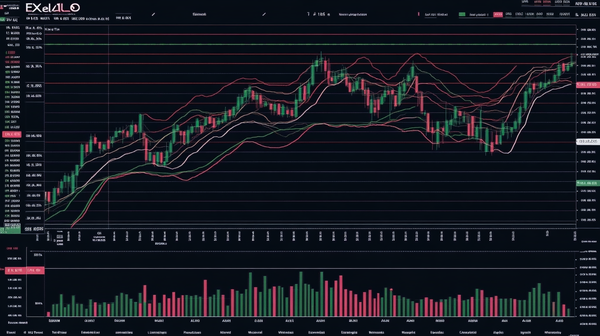
Luvora Capitale Trading Platform Alternatives 2026
Luvora Capitale Trading Platform Alternatives 2026: Reliable Options for Online Traders
Leverage is a sharp knife. It cuts clean when your risk math is right, and it cuts you when it isn’t. That’s the lens I use when people ask about Luvora Capitale and why so many traders—especially in the US/EU orbit—start hunting for safer places to execute. From what’s publicly observable for offshore-style CFD venues, Luvora Capitale fits a familiar profile: forex and CFD-first coverage, a proprietary WebTrader plus mobile apps, marketing that highlights high leverage, and access that typically excludes the United States. In this bracket, it’s common to see a minimum deposit around $250, leverage up to roughly 1:500, and a “standard” EUR/USD spread near 2.0 pips—numbers that can work for small accounts but quickly become expensive for active trading.
So the real question isn’t “Can you place trades?” You can. The question is whether you can verify protections when things go wrong: segregated client funds, negative balance protection, clean withdrawal workflows, and oversight by a regulator that actually answers the phone. That’s why this 2026 guide focuses on Luvora Capitale alternatives that are easier to audit, easier to benchmark on total cost (spread + commission + swap), and more predictable in execution quality. I’ll keep the tone sober: CFDs are leveraged products, slippage is real, and custody risk doesn’t care about your confidence.
Disclaimer: This article is for informational purposes only and does not constitute investment advice. Leveraged products like CFDs carry a high risk of loss and may not be suitable for all investors.
Key Takeaways (TL;DR)
- For US/EU traders, regulated substitutes can be verified on public registers (FCA, ASIC, CySEC, NFA) and often provide clearer rules around client money and complaints.
- Cost comparison should be done using round-turn trading cost: spread + commissions + swap/overnight fees, not leverage headlines.
- If you rely on automation or advanced order handling, prioritize MT4/MT5/cTrader or a robust proprietary stack—basic WebTrader setups can bottleneck serious strategies.
What Is Luvora Capitale and How Does Its Trading Platform Work?
From a trader’s seat, Luvora Capitale looks like an offshore-style CFD broker built around leveraged speculation rather than long-term investing. The core menu is typically forex pairs (roughly 30–50), index and commodity CFDs, and a smaller list of crypto CFDs. The operating style in this segment is commonly “broker as counterparty” (market maker), which isn’t automatically bad—but it raises the importance of execution transparency, conflict-of-interest controls, and how disputes are handled. Access is usually aimed at international retail traders outside restricted jurisdictions; the USA is generally off-limits, and other sanctioned regions are commonly excluded.
Luvora Capitale Web Trading Platform: Core Features and Tools
The platform stack is usually a proprietary WebTrader with a companion iOS/Android app—functional, but rarely deep in the way pro traders expect. You typically get basic charting, a set of common indicators, and drawing tools for trendlines and support/resistance. Order entry tends to cover market and limit orders, with stop-loss and take-profit available, though advanced order logic (OCO brackets, partial fills visibility, or detailed execution reporting) can be thin. Mobile parity is often decent for monitoring and closing positions, while analytics, journaling, and risk controls usually live in a simple account dashboard rather than a true multi-module terminal—something you’ll notice when comparing platforms like Luvora Capitale against tier-1 venues.
Trading Fees, Spreads, and Account Types at Luvora Capitale
For pricing, offshore CFD brokers typically monetize via spreads, swaps, and sometimes withdrawal or inactivity fees. A reasonable expectation for a standard-style account is EUR/USD around 2.0 pips in normal conditions, with wider spreads during volatile sessions. Some brokers in this category also offer a “raw/ECN-like” tier with spreads near 0.0–0.4 pips plus about $6–$8 round-turn commission, but the key is whether execution quality actually matches the label. Overnight financing (swap) can materially change results for swing trades, and high leverage (often up to 1:500) makes margin calls arrive fast when price gaps or news spikes hit.
When Do Traders Start Looking for Luvora Capitale Alternatives?
Trust breaks quietly. It can be a spread that balloons around data releases, a withdrawal that becomes a ticket chain, or the uncomfortable realization that your broker’s oversight is hard to verify. In 2026, the most practical reason traders search for Luvora Capitale alternatives is simple: they want a platform where rules, protections, and dispute paths are written in something stronger than marketing copy. Costs matter too—2.0 pips on EUR/USD doesn’t feel like much until you multiply it by months of entries and exits, especially for short-horizon systems.
- You need MT4/MT5 or cTrader for algorithmic execution, trade copiers, or advanced order/indicator ecosystems that a basic WebTrader can’t replicate.
- Your strategy is sensitive to slippage and requotes, and you want clearer execution reporting (fills, timestamps, and order handling) tied to a known execution model.
- Withdrawals feel unpredictable, or you’re asked for repeated documents after profitable trading—friction that turns risk management into paperwork.
- You want investor-protection frameworks (segregated client funds, complaint escalation, compensation schemes where applicable) instead of offshore-only accountability.
How to Choose a Reliable Alternative to the Luvora Capitale Trading Platform
Think of broker selection as matching your strategy to a legal and operational “container.” The container decides what happens if a trade goes wrong, a platform fails, or a dispute lands in your inbox. For alternatives to the Luvora Capitale trading platform, I prioritize what can be verified externally: regulator registers, client-money rules, and a platform stack that supports the way you actually trade—manual, systematic, or long-only investing.
Regulation, Safety, and Investor Protection
Start with oversight you can check without begging support. FCA (UK), ASIC (Australia), CySEC (Cyprus/EU), and NFA/CFTC (US, for eligible products) all publish registers. In the UK, FSCS protection can apply up to £85,000 in certain cases; in Cyprus, ICF coverage is commonly cited up to €20,000. Segregated client funds matter, but so does enforcement culture—rules are only real when a regulator has teeth.
Available Markets and Instruments
Write down what you need to trade, then cross off the noise. FX and index CFDs may be enough for a day trader; an investor usually wants real stocks/ETFs (with ownership rights) rather than stock CFDs. Options and futures are their own world—margining, contract specs, and exchange routing. “Crypto trading” also splits cleanly into CFDs (price exposure) versus holding the asset itself (custody and on-chain transfer). Competitors to Luvora Capitale often differ most on this single point.
Trading Costs: Spreads, Commissions, and Other Fees
Ignore the headline “from 0.0 pips” unless you also see commission and typical spreads during liquid hours. Compare round-turn cost: spread + commission + expected slippage, then add swap/overnight fees if you hold positions. A scalper doing 200 round-turn EUR/USD trades per month pays a completely different bill at 2.0 pips versus 0.2 pips + commission—even before you account for execution. Also check inactivity fees and withdrawal charges; small line items become big when you rebalance capital frequently.
Platforms, Tools, and Execution Quality
Platform choice is strategy choice. MT4/MT5 supports a deep EA ecosystem; cTrader is popular for fast order handling and clean UI; proprietary platforms can be excellent when backed by tier-1 infrastructure. Ask how orders are executed: market maker, STP, ECN, or DMA. Each model has trade-offs, but the must-have is transparency—fill quality, slippage behavior, and stable uptime. If you’re benchmarking platforms like Luvora Capitale, this is often where the difference becomes obvious.
Support, Education, and Overall User Experience
Good support is boring—until you need it. Look for clear hours, multilingual coverage (especially for EU clients), and documented response times. Education matters less than many ads suggest, but a broker that explains margin calls, negative balance protection, and order types usually has fewer surprises. Finally, check mobile parity: a strong app should let you manage risk (modify stops, reduce exposure) without hunting through menus.
Luvora Capitale and Different Asset Classes: When Alternatives May Be Better
Luvora Capitale Forex and CFD Trading
Forex and CFD access is the center of gravity for Luvora Capitale-style venues: a few dozen FX pairs, major indices, and a short list of commodities, typically with leverage up to about 1:500 and a standard EUR/USD spread around 2.0 pips. The issue isn’t “can you trade EUR/USD?”—it’s whether your total cost and execution are stable enough to build a repeatable edge. Regulated FX/CFD specialists like Pepperstone or OANDA tend to offer clearer cost structures and stronger oversight, plus platform options (MT4/MT5/cTrader or robust proprietary stacks) that fit systematic workflows. If your method depends on tight stops, slippage control matters as much as the quoted spread.
Luvora Capitale Stock and ETF Trading
Stock and ETF exposure at offshore CFD-first brokers is commonly CFD-only, meaning you don’t own shares, you don’t get shareholder rights, and corporate actions can be handled differently than with real brokerage custody. That gap is precisely where tier-1 multi-asset firms earn their keep. Interactive Brokers (IBKR) is built for real-market access—stocks, ETFs, options, futures, and more—with a structure that suits investors and serious traders who care about routing, reporting, and long-term portability. Saxo Bank also targets multi-asset clients with broad market coverage and professional-grade tooling. If your 2026 plan includes building a real portfolio (not just leveraged bets), this is where Luvora Capitale alternatives become a different category entirely.
Luvora Capitale Crypto Trading
Crypto at CFD venues is usually “crypto CFDs”: you’re trading price movement, not holding bitcoin or moving it on-chain. That distinction is not philosophical—it’s operational. No withdrawals to a wallet, no proof-of-reserves, no self-custody. As a Bitcoin orthodox guy in Tokyo, I’ll say it plainly: paper bitcoin is not bitcoin. Still, some traders want regulated exposure via CFDs for hedging or short-term tactics. IG and Plus500 commonly provide crypto CFDs in jurisdictions where permitted, with clearer disclosures than many offshore brands. If your goal is actual ownership, none of these brokers replace self-custody; they’re tools for trading, not sovereignty.
Best Luvora Capitale Alternatives for 2026: Comparison of Top Trading Platforms
Interactive Brokers (IBKR): Key Facts and How It Compares to Luvora Capitale
Regulation: SEC/FINRA (US), FCA (UK), IIROC (Canada) (entity depends on your region)
Markets: Stocks, ETFs, options, futures, FX, bonds, funds (broad multi-market access)
Fees: Varies by product and venue; FX pricing is typically commission-based with tight spreads on major pairs (check your local schedule)
Platform: Trader Workstation (TWS), web and mobile platforms, APIs
Best For: Global multi-asset traders who want real-market access
Pepperstone: Key Facts and How It Compares to Luvora Capitale
Regulation: FCA (UK), ASIC (Australia), CySEC (Cyprus), DFSA (Dubai)
Markets: FX and CFDs (indices, commodities, some crypto CFDs where permitted)
Fees: EUR/USD often ~0.0–0.3 pips on Razor/Raw-style pricing + commission (commonly ~US$6–$8 round-turn); Standard accounts typically ~1.0+ pip spreads
Platform: MT4, MT5, cTrader, TradingView (availability varies), mobile apps
Best For: Spread-sensitive day traders and scalpers
IG: Key Facts and How It Compares to Luvora Capitale
Regulation: FCA (UK), ASIC (Australia), MAS (Singapore)
Markets: CFDs across FX, indices, commodities, shares; crypto CFDs where permitted; spread betting in the UK (where applicable)
Fees: Costs vary by market; FX spreads are typically competitive on majors (often around ~0.6–1.0+ pips depending on conditions and account type)
Platform: Proprietary web platform and mobile apps; MT4 available in some regions
Best For: Macro-driven CFD traders who want strong regulatory footing
Saxo Bank: Key Facts and How It Compares to Luvora Capitale
Regulation: FCA (UK), MAS (Singapore), DFSA (Dubai) (entity depends on region)
Markets: Stocks, ETFs, bonds, mutual funds, options, futures, FX, CFDs
Fees: Tiered pricing; FX spreads can be low on liquid pairs with higher-tier accounts; commissions apply on exchange-traded products (schedule varies)
Platform: SaxoTraderGO, SaxoTraderPRO
Best For: Portfolio-style traders mixing investing with tactical hedges
OANDA: Key Facts and How It Compares to Luvora Capitale
Regulation: CFTC/NFA (US), FCA (UK), ASIC (Australia), IIROC (Canada)
Markets: FX (spot FX where permitted), CFDs in certain jurisdictions (product set varies by region)
Fees: Typically spread-based pricing on major FX pairs; spreads often in the ~0.8–1.5+ pip range depending on market conditions and account setup
Platform: OANDA web and mobile platforms; MT4 (availability varies)
Best For: FX-first traders who prioritize transparent pricing and oversight
Plus500: Key Facts and How It Compares to Luvora Capitale
Regulation: FCA (UK), CySEC (Cyprus), ASIC (Australia), MAS (Singapore)
Markets: CFDs (FX, indices, commodities, shares, crypto CFDs where permitted)
Fees: Spread-based; typical costs vary by instrument and volatility, often wider than raw-commission models but simple to understand
Platform: Proprietary WebTrader and mobile apps
Best For: Simplicity-focused CFD traders who don’t need MT4/MT5
Comparison Summary
| Platform | Regulation | Main Markets | Typical Costs | Best For |
|---|---|---|---|---|
| Interactive Brokers (IBKR) | SEC/FINRA, FCA, IIROC | Stocks/ETFs, options, futures, FX, bonds | Product-based; FX commonly tight + commission model | Global multi-asset traders who want real-market access |
| Pepperstone | FCA, ASIC, CySEC, DFSA | FX + CFDs | Raw: ~0.0–0.3 pips + ~US$6–$8 RT; Standard: ~1.0+ pip | Spread-sensitive day traders and scalpers |
| IG | FCA, ASIC, MAS | CFDs (FX, indices, commodities, shares) | Often ~0.6–1.0+ pip on major FX (varies); market-dependent | Macro-driven CFD traders who want strong regulatory footing |
| Saxo Bank | FCA, MAS, DFSA | Multi-asset: stocks/ETFs, options/futures, FX/CFDs | Tiered; commissions on exchange products; FX spreads vary by tier | Portfolio-style traders mixing investing with tactical hedges |
| OANDA | CFTC/NFA, FCA, ASIC, IIROC | FX (plus CFDs in some regions) | Spread-based; often ~0.8–1.5+ pips on majors depending on conditions | FX-first traders who prioritize transparent pricing and oversight |
| Plus500 | FCA, CySEC, ASIC, MAS | CFDs across major asset classes | Spread-based; instrument- and volatility-dependent | Simplicity-focused CFD traders who don’t need MT4/MT5 |
How to Safely Move from Luvora Capitale to Another Broker
Switching brokers is not a vibe check—it’s operational risk control. The clean way is to set up the new venue first, verify it on a regulator register, and only then unwind exposure and move funds. I treat this like a migration in production systems: logs backed up, permissions checked, small test transaction first. If you rush, you create avoidable margin and withdrawal risk—especially with leveraged CFDs.
- Confirm the new broker’s authorization on the official database (FCA Register, ASIC Connect, CySEC register, or NFA BASIC) and match the legal entity name to the account-opening documents.
- Open the new account and complete KYC/AML verification early (ID + proof of address). Most reputable providers clear this quickly, but delays happen when names or addresses don’t match.
- On Luvora Capitale, reduce risk before moving money: close or scale down open positions and remove unused pending orders so you don’t trigger a margin call during the transition.
- Withdraw funds using the same rails you used to deposit whenever possible. Many brokers enforce “return to source” rules to meet AML requirements, and mismatched methods can slow processing.
- Export trade history, monthly statements, and funding records for taxes and audit trails before you lose access or your dashboard view changes.
Ready to Explore Luvora Capitale?
If you’re still evaluating the current offer, treat it like any other execution venue: confirm your regional eligibility, read the fee schedule (including swaps), and compare platform tooling against the regulated options above. Take screenshots of key terms and keep your documentation tight before sending additional capital.
FAQ: Luvora Capitale Alternatives and Trading Platforms
What is the best alternative to Luvora Capitale in 2026?
The best choice depends on whether you need real investing access or mainly FX/CFDs. For broad, verifiable multi-asset coverage, Interactive Brokers (IBKR) is hard to beat; for low-spread FX/CFD execution with MT4/MT5/cTrader, Pepperstone is a common shortlist pick. In other words, the “best Luvora Capitale alternatives 2026” split into two camps: real-market brokers versus CFD-focused specialists.
Is Luvora Capitale a safe broker/platform?
Safety is difficult to establish at the same level as a tier-1 regulated broker because Luvora Capitale is generally presented in the offshore/unregulated category (commonly associated with jurisdictions like Seychelles FSA). That doesn’t automatically mean fraud, but it does mean fewer externally enforced protections and weaker investor-compensation pathways than FCA/CySEC frameworks. If you use it, keep position sizing small and assume that leverage and withdrawal friction are the stress points.
Can I trade stocks, futures, or crypto with Luvora Capitale?
It’s typically positioned around forex and CFDs, with crypto exposure often offered as crypto CFDs rather than on-chain ownership. Stocks and ETFs, when available in this style of venue, are usually CFDs (no share ownership), and exchange-traded futures are commonly not part of the core offer. If you want real stocks/ETFs or futures routing, look at IBKR or Saxo Bank as regulated options vs Luvora Capitale.
What should I check before switching from Luvora Capitale to another platform?
Before switching, verify the new broker’s license on the regulator’s public register and confirm the exact legal entity you’ll be contracting with. Next, complete KYC first, then plan the move: close or hedge exposure, withdraw via the same funding method, and export statements from Luvora Capitale for taxes. Finally, test execution with a small deposit—slippage and order handling can differ more than the marketing suggests.
About the Author: Kenji Tanaka is a Tokyo-based financial journalist and active trader with a cryptography background (University of Tokyo, incomplete). I’m Bitcoin-orthodox—“21 million, and not a coin more”—and I view broker selection as counterparty risk management first, strategy second, especially when CFDs and leverage are involved.