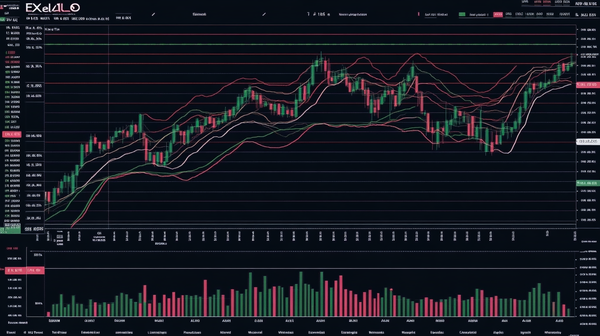
Marrawick AI Trading Platform Alternatives 2026
Marrawick AI Trading Platform Alternatives 2026: Reliable Options for Online Traders
Leverage is a drug, and offshore CFD platforms know it. If you’ve been circling Marrawick-style “AI trading” brands, you’ve likely seen the same recipe: a proprietary WebTrader, fast onboarding, high headline leverage, and a pitch that makes risk feel optional. That’s why a serious review of Marrawick AI starts with one question: what happens when things go wrong—pricing spikes, a margin call hits, or a withdrawal gets “reviewed” for days?
Based on what’s commonly observable in this broker category, Marrawick AI appears positioned as an offshore CFD-first provider (often tied to jurisdictions such as Seychelles) offering forex and CFD markets, plus crypto CFDs. The typical package is a basic-to-mid WebTrader and mobile app, with pricing that can look fine at first glance yet becomes expensive once spreads, overnight swap, and execution slippage are added up. Expect leverage around 1:500, a minimum deposit around $250, and a EUR/USD spread that often sits near 2.0 pips on a standard-style account—fine for casual clicks, punishing for frequent trading.
This guide is for people who want cleaner plumbing: stronger regulation, clearer product disclosures, better execution tools (MT4/MT5/cTrader or true multi-asset access), and fewer surprises. You’ll get a curated list of Marrawick AI alternatives, a cost-and-safety checklist, and a migration plan that respects reality: capital at risk, KYC/AML friction, and no magic “transfer” button between brokers.
Disclaimer: This article is for informational purposes only and does not constitute investment advice. CFDs and other leveraged products involve a high risk of loss and may not be suitable for all investors.
Key Takeaways (TL;DR)
- If you need real stocks/ETFs (not just CFDs), start with Interactive Brokers or Saxo Bank—this is where “ownership” and market access become concrete.
- For active FX/CFD trading, compare round-turn trading cost (spread + commission) and execution model; Pepperstone and IC Markets are built for tighter pricing stacks than typical offshore WebTraders.
- Plan migration like a risk drill: verify the new broker on regulator registers, KYC first, then withdraw using the same method you deposited with to avoid AML holds.
What Is Marrawick AI and How Does Its Trading Platform Work?
Under the hood, Marrawick AI fits the familiar offshore CFD broker profile: a trading brand offering access to forex pairs, indices, commodities, and crypto CFDs through a proprietary platform. Execution is commonly presented as “fast” and “smart,” but in practice this segment usually operates as a market maker (or hybrid) where pricing, slippage, and requotes can differ from what you’d expect at DMA-style venues. The target user is typically a retail trader attracted by simple UX, high leverage, and quick account setup—especially outside the US, which is generally restricted. In other words, it sits in the same neighborhood as many platforms like Marrawick AI: easy entry, harder due diligence.
Marrawick AI Web Trading Platform: Core Features and Tools
The platform stack is usually a browser-based WebTrader with a companion iOS/Android app. Charting tends to be adequate for basic discretionary trading—common indicators, drawing tools, multiple timeframes—but not always deep enough for systematic workflow (custom indicators, robust strategy testing, or advanced order management). Order types are often limited to market/limit/stop with a straightforward position panel, while risk controls can feel “light” compared with institutional-grade toolsets. Mobile typically mirrors the WebTrader experience: quick watchlists, one-tap trading, and account funding screens, but less screen real estate for multi-chart execution. That simplicity is the selling point—and also the ceiling.
Trading Fees, Spreads, and Account Types at Marrawick AI
Costs in this category usually revolve around a standard spread account plus a tighter “raw-style” option. A realistic benchmark is EUR/USD around 2.0 pips on a standard account, while a raw/ECN-flavored tier may advertise 0.0–0.4 pips but add a commission in the neighborhood of $6–$8 per round turn. Overnight financing (swap) matters if you hold CFDs beyond the session; it can quietly dominate your P&L if you carry leveraged positions for days. You may also encounter withdrawal or inactivity fees depending on funding method and account status—details that deserve a slow read before you size up.
When Do Traders Start Looking for Marrawick AI Alternatives?
The moment you stop trading “vibes” and start trading a process, gaps appear. Offshore frameworks, opaque execution, and platform limitations tend to be the pressure points—especially when leverage is high and a few pips of slippage changes the month. Many traders begin hunting Marrawick AI alternatives after they calculate their true cost per round trip (spread + commission + swap) and realize the headline features don’t pay the bills. And if you’re trying to build a repeatable strategy, tooling matters as much as spreads.
- You need MT4/MT5 or cTrader for an EA, custom indicators, or clearer trade journaling than a basic WebTrader offers.
- A withdrawal takes longer than expected, or you’re asked for repeated documentation after you request a payout.
- You want regulator-backed guardrails (segregated client funds, clear complaint channels, compensation schemes) that offshore venues may not provide.
- Your strategy is sensitive to execution quality—news spikes, stop runs, or frequent partial fills—and you suspect the pricing feed isn’t built for that stress.
How to Choose a Reliable Alternative to the Marrawick AI Trading Platform
Don’t pick a broker the way you pick a chart color theme. Treat it like selecting counterparties: you’re choosing where your margin sits, how orders get filled, and what recourse exists if something breaks. For alternatives to the Marrawick AI trading platform, I prefer a “strategy-fit” approach—match your instruments, holding period, and tooling needs to the broker’s regulation, execution model, and fee stack. Then verify everything on the regulator’s own register, not a marketing PDF.
Regulation, Safety, and Investor Protection
Regulation is not moral purity, but it does create enforceable rules. FCA (UK), ASIC (Australia), CySEC (EU), and NFA/CFTC (US) oversight generally means stricter disclosures, audits, and client-money handling. Look for segregated client funds language and confirm the legal entity on public registers. In the UK, FSCS coverage can protect eligible clients up to £85,000 if an FCA-regulated firm fails; in Cyprus, the ICF can cover eligible clients up to €20,000. Those schemes don’t erase trading losses—they’re about broker insolvency risk.
Available Markets and Instruments
Here’s the practical split: some traders need “FX + indices CFDs” and nothing else; others need real stocks/ETFs, options, or futures access. Offshore CFD venues usually emphasize forex, indices, commodities, and crypto CFDs, while true multi-asset brokers can offer listed equities, ETFs, options, and futures with clearer market structure. If your plan involves long-term compounding, owning real shares beats a stock CFD: no shareholder rights exist in a CFD, and you’re exposed to the broker as counterparty.
Trading Costs: Spreads, Commissions, and Other Fees
Compare round-turn cost, not slogans. A EUR/USD spread difference of 1.0 pip is $10 per standard lot per round trip; scale that over 200 round trips and you feel it in your bones. Add commissions on raw accounts, then layer in swap/overnight financing if you hold. Also check non-trading fees: inactivity charges, deposit/withdrawal fees, and currency conversion costs. The cheapest broker is the one that stays cheap when your strategy actually trades.
Platforms, Tools, and Execution Quality
Platform choice is a capability constraint. MT4/MT5 enable a huge ecosystem of EAs and indicators; cTrader often attracts traders who want cleaner order handling and depth-of-market tools; proprietary platforms vary wildly. Execution model matters too: market maker vs STP/ECN/DMA affects how orders are routed and how slippage behaves in fast markets. If you’ve been using Marrawick AI and suspect stops are filled “creatively,” test alternatives with small size during volatile sessions to observe fill quality.
Support, Education, and Overall User Experience
When money is on the line, support isn’t a luxury. Check hours (24/5 vs limited windows), language coverage, and whether you can reach a human without a ticket maze. Education matters most for beginners—platform tutorials, risk modules, margin-call explanations—while experienced traders care about status transparency during outages. Finally, confirm mobile parity: if you manage risk on the go, you need full order management, not just “open/close” buttons.
Marrawick AI and Different Asset Classes: When Alternatives May Be Better
Marrawick AI Forex and CFD Trading
Forex/CFD is where Marrawick-style brokers concentrate: maybe 30–50 FX pairs, roughly 8–15 indices, 5–10 commodities, and leverage that can reach 1:500. The trade-off is usually cost and control. A EUR/USD spread around 2.0 pips is not catastrophic for occasional trades, but it’s heavy for intraday systems; add slippage around news and the edge evaporates. Regulated FX specialists like Pepperstone (FCA/ASIC/CySEC/DFSA) or IC Markets (ASIC/CySEC; group includes FSA Seychelles) typically provide MT4/MT5/cTrader and pricing that can be meaningfully tighter on raw accounts (with commissions), which is exactly what frequent traders need. Execution transparency still varies by entity—read the order execution policy, then test with small size.
Marrawick AI Stock and ETF Trading
Stock and ETF access is where many offshore CFD platforms feel thin. If equities exist at all, they are often stock CFDs—synthetic exposure with financing costs and no shareholder rights, and sometimes a narrower universe of symbols. Traders who want real listed assets (US/EU shares, ETFs, options, futures) should look at Interactive Brokers (SEC/FINRA in the US, FCA in the UK, IIROC in Canada) or Saxo Bank (FCA/DFSA/MAS). These firms cater to multi-asset needs and provide clearer market access, reporting, and corporate action handling. Yes, onboarding is heavier (KYC/AML is real), and the interfaces can feel “pro.” That friction is the price of infrastructure that resembles actual capital markets instead of a casino wrapper.
Marrawick AI Crypto Trading
Crypto on many CFD-first platforms is usually crypto CFDs—price exposure only. No withdrawals to a wallet, no on-chain settlement, and you’re trading a derivative with spread, swap, and counterparty risk. If your philosophy is “not your keys, not your coins,” CFDs are a compromise at best. For traders who still want regulated crypto price exposure inside a brokerage account, IG (FCA/ASIC/MAS) is often cited for crypto CFDs in eligible regions, and Plus500 (FCA/CySEC/ASIC/MAS) also offers crypto CFDs depending on jurisdiction. Treat crypto CFD leverage with extra respect: volatility plus margin can liquidate you faster than your brain can process the candle. 21 million— and not a coin more—doesn’t protect you from bad risk management.
Best Marrawick AI Alternatives for 2026: Comparison of Top Trading Platforms
Interactive Brokers (IBKR): Key Facts and How It Compares to Marrawick AI
Regulation: SEC/FINRA (US), FCA (UK), IIROC (Canada)
Markets: Stocks, ETFs, options, futures, bonds, FX
Fees: FX pricing varies by account/venue; commissions apply on many listed products; costs are typically low for active, larger accounts
Platform: Trader Workstation (TWS), IBKR Desktop, mobile apps, API
Best For: Real multi-asset access (stocks/options/futures) over CFD-only exposure
Pepperstone: Key Facts and How It Compares to Marrawick AI
Regulation: FCA (UK), ASIC (Australia), CySEC (EU), DFSA (Dubai)
Markets: FX and CFDs (indices, commodities, some shares depending on entity)
Fees: EUR/USD often ~0.0–0.3 pips on Razor-style + commission; ~1.0–1.2 pips on Standard-style (varies by entity/conditions)
Platform: MT4, MT5, cTrader, TradingView integration (availability varies)
Best For: Low-spread FX day trading and EA-friendly platform stacks
Saxo Bank: Key Facts and How It Compares to Marrawick AI
Regulation: FCA (UK), DFSA (Dubai), MAS (Singapore)
Markets: Stocks, ETFs, bonds, options, futures, FX, CFDs
Fees: Pricing depends on tier; spreads on major FX pairs are commonly competitive; commissions apply on listed assets
Platform: SaxoTraderGO, SaxoTraderPRO
Best For: Portfolio-style traders who mix FX with listed markets and reporting
IG: Key Facts and How It Compares to Marrawick AI
Regulation: FCA (UK), ASIC (Australia), MAS (Singapore)
Markets: CFDs (FX, indices, commodities, shares), spread betting (UK/IE), crypto CFDs (where available)
Fees: FX spreads often from ~0.6–1.0 pips on majors (varies); financing costs apply to CFD holds
Platform: IG platform (web/mobile), MT4 (in some regions)
Best For: Broad CFD coverage with strong regulatory footprint in key regions
IC Markets: Key Facts and How It Compares to Marrawick AI
Regulation: ASIC (Australia), CySEC (EU); group includes FSA (Seychelles)
Markets: FX and CFDs (indices, commodities, crypto CFDs depending on entity)
Fees: Raw spreads often ~0.0–0.2 pips on EUR/USD + commission (varies by platform/account); standard accounts wider
Platform: MT4, MT5, cTrader
Best For: Scalpers who care about latency, slippage, and raw pricing models
Plus500: Key Facts and How It Compares to Marrawick AI
Regulation: FCA (UK), CySEC (EU), ASIC (Australia), MAS (Singapore)
Markets: CFDs (FX, indices, commodities, shares, crypto CFDs where permitted)
Fees: Typically spread-only pricing; spreads vary by instrument and volatility; overnight financing applies
Platform: Plus500 proprietary web and mobile apps
Best For: Simplicity-first CFD trading without MT4/MT5 complexity
Comparison Summary
| Platform | Regulation | Main Markets | Typical Costs | Best For |
|---|---|---|---|---|
| Interactive Brokers (IBKR) | SEC/FINRA, FCA, IIROC | Stocks/ETFs, options, futures, bonds, FX | Commissions on listed assets; FX pricing varies by venue/account | Real multi-asset access (stocks/options/futures) over CFD-only exposure |
| Pepperstone | FCA, ASIC, CySEC, DFSA | FX + CFDs | Raw ~0.0–0.3 pips + commission; Standard ~1.0–1.2 pips (varies) | Low-spread FX day trading and EA-friendly platform stacks |
| Saxo Bank | FCA, DFSA, MAS | Stocks/ETFs, options, futures, FX, CFDs | Tier-based spreads/commissions; listed products priced via commissions | Portfolio-style traders who mix FX with listed markets and reporting |
| IG | FCA, ASIC, MAS | CFDs + (UK/IE) spread betting; crypto CFDs where available | FX spreads often ~0.6–1.0+ pips; financing on CFD holds | Broad CFD coverage with strong regulatory footprint in key regions |
| IC Markets | ASIC, CySEC (group also FSA Seychelles) | FX + CFDs | Raw ~0.0–0.2 pips + commission (varies); Standard wider | Scalpers who care about latency, slippage, and raw pricing models |
| Plus500 | FCA, CySEC, ASIC, MAS | CFDs (FX, indices, commodities, shares) | Spread-only; variable spreads + overnight financing | Simplicity-first CFD trading without MT4/MT5 complexity |
How to Safely Move from Marrawick AI to Another Broker
Switching brokers is less “signup and go” than people want to admit. Treat it like moving your private keys—except here you don’t have keys, you have counterparty risk. The clean sequence is: verify the new venue, get approved, reduce exposure, then pull funds. If you’re leaving Marrawick AI, assume withdrawals and identity checks can take time, and never keep oversized leveraged positions open while you’re mid-move.
- Confirm the new broker’s legal entity on the regulator register (FCA Register, ASIC Connect, CySEC lists, or NFA BASIC) and match the company name—not just the brand.
- Open the new account and complete KYC/AML early (photo ID + proof of address). Waiting until you “need to withdraw” is how traders get trapped in delays.
- Reduce risk on the old account by closing open CFD positions first; don’t assume positions can be transferred broker-to-broker because they usually cannot.
- Export statements, trade history, and funding records for taxes and dispute evidence. Screenshots are fine, but downloadable reports are better.
- Request withdrawal using the same payment rails used for deposits (a common AML rule). Keep notes of dates, ticket numbers, and confirmation emails.
Ready to Explore Marrawick AI?
If you still want to evaluate the platform directly, do it with a trader’s discipline: check regional eligibility, read the fees page line-by-line, and test execution with small size before committing meaningful capital. Compare conditions against the best Marrawick AI alternatives 2026 list above so you’re measuring reality, not marketing.
FAQ: Marrawick AI Alternatives and Trading Platforms
What is the best alternative to Marrawick AI in 2026?
The best option depends on whether you want real multi-asset access or mainly FX/CFDs. For listed stocks/ETFs, Interactive Brokers and Saxo Bank are strong Marrawick AI alternatives because they offer broader market access and institutional-style reporting. If you’re focused on FX execution and platform choice (MT4/MT5/cTrader), Pepperstone or IC Markets are often more suitable competitors to Marrawick AI than a basic WebTrader setup.
Is Marrawick AI a safe broker/platform?
Marrawick AI appears to operate in an offshore/unregulated-style framework commonly associated with jurisdictions such as Seychelles, which typically provides fewer investor protections than FCA/ASIC/CySEC/NFA oversight. That doesn’t automatically mean fraud, but it does mean you should be stricter about withdrawal testing, fee transparency, and execution behavior. If you want stronger guardrails (segregated funds rules, clearer complaints channels, and potential compensation schemes), regulated options vs Marrawick AI are usually the safer baseline.
Can I trade stocks, futures, or crypto with Marrawick AI?
Marrawick AI is typically positioned around forex and CFDs, and crypto exposure is usually via crypto CFDs rather than on-chain ownership. Stock/ETF access, if present, is commonly via CFDs rather than real share dealing; listed futures are often not part of the core offering. If you need real stocks/ETFs/options/futures, Interactive Brokers or Saxo Bank are top substitutes for Marrawick AI for that specific requirement.
What should I check before switching from Marrawick AI to another platform?
Before switching, verify the new broker’s exact legal entity on the regulator’s public register and confirm client-money protections (segregated funds, negative balance protection where applicable). Then complete KYC first, export your statements, and only afterwards withdraw funds—ideally via the same deposit method to satisfy AML rules. If you’re comparing brokers similar to Marrawick AI, prioritize round-turn trading cost and execution quality testing over headline leverage.
About the Author: Kenji Tanaka is a Tokyo-based trader and financial writer focused on market structure, execution quality, and risk. I studied cryptography at the University of Tokyo (unfinished), and I have zero romance for banks and fiat—21 million, and not a coin more. That bias is why I’m obsessive about counterparty risk, withdrawals, and what you actually own when you “trade.”