Model Exorex 100 Alternatives 2026: Safer Broker Options
Model Exorex 100 Trading Platform Alternatives 2026: Reliable Options for Online Traders
Leverage is a loud temptation. It whispers “easy money” while quietly sharpening the knife of margin calls. That’s the backdrop where offshore CFD platforms live—and where many traders first hear about Model Exorex 100. From what is typically observable in this category, the setup looks familiar: a proprietary WebTrader plus mobile apps, a CFD-heavy menu (forex, indices, commodities, and often crypto CFDs), and headline leverage that can run as high as 1:500. Costs are usually presented as “from” spreads, with EUR/USD often landing around 2.0 pips on a standard-style account. Minimum deposits commonly sit near $250.
If that profile matches what you’ve seen, you’re already reading this for the right reason. Traders don’t leave a platform because of vibes; they leave when money movement gets complicated, when execution feels slippery during volatility, or when they realize “crypto trading” is just a synthetic CFD IOU—not the bearer asset. That’s why this guide focuses on Model Exorex 100 alternatives that are transparent about regulation, execution model, and what you actually own. For a US/EU audience, the boring details—FCA registers, NFA BASIC, segregated client funds, and compensation schemes—matter more than shiny dashboards. Banks and fiat still disgust me, but if you’re going to trade CFDs, at least do it under rules that can be enforced.
Disclaimer: This article is for informational purposes only and does not constitute investment advice. CFDs and other leveraged products carry a high risk of loss and may not be suitable for all investors.
Key Takeaways (TL;DR)
- Offshore CFD venues can offer high leverage (often up to ~1:500), but that same leverage accelerates losses and makes slippage more painful during fast markets.
- For US/EU traders, regulated brokers (FCA/ASIC/CySEC/NFA frameworks) typically provide clearer rules around client fund segregation, complaints, and disclosures than offshore setups.
- Compare “round-turn” trading cost (spread + commission) and not just the headline spread; swap/overnight fees can dominate costs for multi-day holds.
What Is Model Exorex 100 and How Does Its Trading Platform Work?
Instead of being a full multi-asset brokerage where you can buy real shares and hold them, Model Exorex 100 is best understood as a CFD-first trading venue aimed at short-term speculators. Public-facing details in this segment often point to an offshore footprint—commonly a registration tied to jurisdictions such as Seychelles—paired with a broad “global” marketing posture while restricting the USA and other sanctioned regions. The product mix is usually built around forex pairs and CFDs on indices and commodities, with crypto exposure frequently delivered through CFDs rather than on-chain ownership. If you’re comparing platforms like Model Exorex 100, focus less on the number of buttons and more on whether the firm is accountable to a top-tier regulator when something goes wrong.
Model Exorex 100 Web Trading Platform: Core Features and Tools
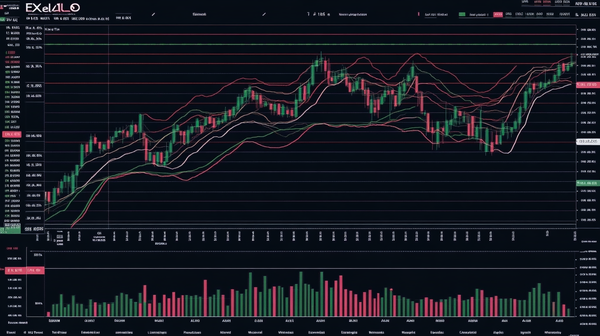
The typical stack here is a proprietary WebTrader with a matching iOS/Android app—convenient, but often basic-to-mid in depth. Charting usually covers the essentials (multiple timeframes, a workable set of indicators, drawing tools for trendlines and zones), yet advanced workflow features can be thin: fewer conditional order types, limited customization, and less robust trade journaling than MT4/MT5 or pro-grade systems. Execution is generally presented as “fast,” but during news spikes the real test is slippage handling and whether you can audit fills with clean timestamps. Mobile parity tends to be decent for monitoring and simple order entry, while heavier analysis is more comfortable on desktop.
Trading Fees, Spreads, and Account Types at Model Exorex 100
Cost presentation commonly follows the offshore CFD playbook: a Standard-style account with EUR/USD spreads around 2.0 pips, and sometimes a “raw/ECN” tier advertising near-zero spreads plus a commission (often in the neighborhood of $6–$8 round-turn per lot). Overnight financing (swap) is where many traders get surprised—especially if you hold index or crypto CFDs for days. Some providers also attach withdrawal handling fees or set conditions that slow withdrawals unless documentation is perfectly aligned. Competitors to Model Exorex 100 in regulated markets tend to be more explicit about fee schedules and risk disclosures, even if they aren’t “cheap” on every instrument.
When Do Traders Start Looking for Model Exorex 100 Alternatives?
Paper profits are easy; clean withdrawals are the real audit. A common reason traders search for Model Exorex 100 alternatives is friction around funding, verification, or payout timelines—especially once account size grows and AML checks tighten. Another push factor is strategy fit: scalpers and systematic traders live or die by execution quality, and a proprietary WebTrader may not support the tooling they need. And yes, regulation matters—not as a moral sticker, but as a practical lever when disputes happen. If you’re using leverage, small differences in slippage and spread become large differences in outcome.
- You need MT4/MT5 or cTrader for EAs, custom indicators, or a workflow the current WebTrader can’t support.
- Higher-frequency trading exposes inconsistent fills, widening spreads, or stop/limit behavior that feels unreliable during volatile releases.
- You want real equities/ETFs (ownership and corporate actions), not stock CFDs that expire into cash adjustments.
- KYC/AML requirements become stricter at withdrawal time and the process starts to feel unpredictable or slow.
How to Choose a Reliable Alternative to the Model Exorex 100 Trading Platform
Think like a risk manager first, trader second. A good substitute isn’t the one with the loudest leverage banner—it’s the one whose rules are clear when markets gap and emotions spike. For regulated options vs Model Exorex 100, build your decision around three pillars: enforceable oversight, strategy-compatible costs, and execution you can test and measure.
Regulation, Safety, and Investor Protection
Start with who can punish the broker. FCA (UK), ASIC (Australia), CySEC (EU), and NFA/CFTC (US) frameworks create different obligations, but all are meaningfully stronger than offshore-only supervision. In the UK, FCA-regulated firms can fall under FSCS protection (up to £85,000 in certain cases), while Cyprus has the ICF (up to €20,000) for eligible clients. Also look for segregated client funds policies and negative balance protection where applicable. This is where many Model Exorex 100 alternatives earn their keep: fewer “trust me” promises, more enforceable process.
Available Markets and Instruments
Match the broker’s product list to what you actually trade. FX and index CFDs may be enough for a macro trader; an investor building long exposure needs real stocks and ETFs. Options and futures access is another dividing line—many CFD venues don’t offer listed derivatives at all. Crypto is the biggest trap: “crypto trading” can mean CFDs only, which is price exposure without on-chain ownership, withdrawals, or custody control. For platforms like Model Exorex 100, assume CFDs dominate unless a broker explicitly offers spot equities/ETFs or listed markets.
Trading Costs: Spreads, Commissions, and Other Fees
Stop comparing marketing numbers; compare round-turn cost. A raw account with 0.1–0.3 pips plus commission can be cheaper than a “commission-free” 1.2–1.8 pip spread, depending on your volume. Then add the silent fees: swap/overnight financing, currency conversion, and inactivity charges. If you scalp 100 lots a month, a 0.5 pip difference can become a serious line item; if you swing trade, swap can dominate. The best Model Exorex 100 alternatives 2026 are the ones that make these costs legible upfront.
Platforms, Tools, and Execution Quality
Tooling is not decoration—it’s edge. MT4/MT5 supports a massive ecosystem of indicators and EAs; cTrader is popular for execution and depth-of-market style interfaces; proprietary platforms vary wildly in stability and features. Execution model matters too: market maker vs STP/ECN/DMA changes how orders are handled, and it influences slippage during fast markets. Before committing funds, test order types, partial fills, and stop behavior on a demo or with small size. I’d rather have boring execution than flashy charts.
Support, Education, and Overall User Experience
When something breaks, you will want a human answer—fast, and in a language you can use under stress. Check support hours (24/5 vs limited), live chat responsiveness, and whether the broker provides meaningful education on margin, swap, and risk controls instead of hype. Mobile parity matters if you manage risk on the move, but desktop stability matters when markets are moving and you’re adjusting stops. A broker can be regulated and still feel clumsy; usability is part of safety.
Model Exorex 100 and Different Asset Classes: When Alternatives May Be Better
Model Exorex 100 Forex and CFD Trading
In offshore CFD setups, forex breadth is usually decent—think a few dozen pairs—yet the real question is cost plus execution under pressure. If EUR/USD is roughly 2.0 pips on a standard-style offering and leverage can reach 1:500, you’re paying for access with higher friction and higher risk. Regulated FX/CFD specialists like Pepperstone and OANDA tend to publish clearer execution disclosures, offer established platforms (MT4/MT5/cTrader depending on the firm), and provide more predictable operational handling for deposits and withdrawals. For traders who scalp, the difference between a stable spread/commission structure and a spread that expands at the worst moment can be the difference between a strategy working and bleeding out.
Model Exorex 100 Stock and ETF Trading
Stock exposure at many CFD-first venues is commonly delivered as stock CFDs—price tracking without shareholder rights, voting, or the same corporate action mechanics you get with real holdings. That’s a meaningful gap if you’re building longer-term positions or want diversified ETF exposure without swap costs and synthetic pricing quirks. Interactive Brokers (IBKR) is a frequent choice for real multi-venue equities access, with broad availability across stocks, ETFs, options, futures, and bonds (product availability depends on region and permissions). Saxo Bank is another multi-asset alternative that focuses on a wide product shelf and a more “portfolio-aware” experience. If your goal is investing, not short-term CFD speculation, the substitutes for Model Exorex 100 should include brokers that offer real securities rather than only contracts.
Model Exorex 100 Crypto Trading
Let me be blunt: a crypto CFD is not Bitcoin. It’s a derivative claim priced off Bitcoin, settled in fiat, and subject to broker rules—no on-chain withdrawal, no self-custody, no “not your keys.” Offshore platforms often list 10–30 coins as CFDs, which can be fine for short-term hedging, but it’s not ownership. If you want regulated crypto price exposure through CFDs, brokers like IG and Plus500 (where available) are commonly used in certain jurisdictions for crypto CFDs, with clearer risk language and established oversight compared with offshore venues. Still, even in regulated wrappers, crypto CFDs can gap hard; use position sizing like you respect volatility—because volatility will not respect you.
Best Model Exorex 100 Alternatives for 2026: Comparison of Top Trading Platforms
Interactive Brokers (IBKR): Key Facts and How It Compares to Model Exorex 100
Regulation: SEC/FINRA (US), FCA (UK), IIROC (Canada) (entity depends on your region)
Markets: Stocks, ETFs, options, futures, bonds, funds, FX (availability varies by jurisdiction)
Fees: FX pricing is typically tight with commissions; equities pricing varies by market and plan (tiered/fixed schedules)
Platform: Trader Workstation (TWS), IBKR Desktop, mobile app, Client Portal, APIs
Best For: Global multi-asset traders who want real market access
Pepperstone: Key Facts and How It Compares to Model Exorex 100
Regulation: FCA (UK), ASIC (Australia), CySEC (EU), DFSA (UAE)
Markets: FX and CFDs (indices, commodities, some crypto CFDs depending on region)
Fees: Typical EUR/USD spreads ~0.0–0.3 pips on Razor-style pricing plus commission; ~1.0+ pip range on Standard-style pricing
Platform: MT4, MT5, cTrader (plus broker-integrated tools)
Best For: Execution-focused FX traders and algo users
IG: Key Facts and How It Compares to Model Exorex 100
Regulation: FCA (UK), ASIC (Australia), MAS (Singapore)
Markets: CFDs on FX, indices, commodities, shares (product set varies by country)
Fees: Costs vary by instrument; spreads are typically competitive on major FX, with additional financing costs on leveraged holds
Platform: IG Trading Platform, mobile app, MT4 (where offered)
Best For: Broad-market CFD traders who value a long operating history
Saxo Bank: Key Facts and How It Compares to Model Exorex 100
Regulation: FCA (UK), MAS (Singapore), DFSA (UAE) (entity depends on region)
Markets: Stocks, ETFs, bonds, options, futures, FX, CFDs (varies by jurisdiction)
Fees: FX spreads typically competitive with tiered pricing; investing fees depend on product and exchange
Platform: SaxoTraderGO, SaxoTraderPRO
Best For: Portfolio-style traders mixing investing and tactical trading
OANDA: Key Facts and How It Compares to Model Exorex 100
Regulation: CFTC/NFA (US), FCA (UK), ASIC (Australia), IIROC (Canada)
Markets: FX (core), CFDs in some regions (indices/commodities), limited crypto CFDs where permitted
Fees: Pricing typically spread-based; costs vary by account type and region, with transparent reporting tools
Platform: OANDA platforms, MT4 (where available), mobile apps, APIs
Best For: FX-first traders who want strong regulatory footing
Plus500: Key Facts and How It Compares to Model Exorex 100
Regulation: FCA (UK), CySEC (EU), ASIC (Australia), MAS (Singapore)
Markets: CFDs on FX, indices, commodities, shares, and crypto CFDs where allowed
Fees: Generally spread-based pricing; overnight financing applies on leveraged positions
Platform: Plus500 proprietary platform (web and mobile)
Best For: Simplicity-driven CFD traders who avoid platform complexity
Comparison Summary
| Platform | Regulation | Main Markets | Typical Costs | Best For |
|---|---|---|---|---|
| Interactive Brokers (IBKR) | SEC/FINRA, FCA, IIROC (by entity) | Real stocks/ETFs, options, futures, bonds, FX | Commission schedules; FX typically tight with commission | Global multi-asset traders who want real market access |
| Pepperstone | FCA, ASIC, CySEC, DFSA | FX + CFDs (indices/commodities; some crypto CFDs by region) | ~0.0–0.3 pip + commission (Razor-style) or ~1.0+ pip (Standard-style) | Execution-focused FX traders and algo users |
| IG | FCA, ASIC, MAS | CFDs across FX/indices/commodities/shares (varies) | Variable spreads + financing on leveraged holds | Broad-market CFD traders who value a long operating history |
| Saxo Bank | FCA, MAS, DFSA (by entity) | Multi-asset investing + trading (stocks/ETFs/options/futures/FX/CFDs) | Tiered spreads/commissions depending on product and level | Portfolio-style traders mixing investing and tactical trading |
| OANDA | CFTC/NFA, FCA, ASIC, IIROC | FX core; CFDs in some regions | Typically spread-based; transparency varies by region/account | FX-first traders who want strong regulatory footing |
| Plus500 | FCA, CySEC, ASIC, MAS | CFDs across major asset classes (crypto CFDs where permitted) | Spread-based + overnight financing | Simplicity-driven CFD traders who avoid platform complexity |
How to Safely Move from Model Exorex 100 to Another Broker
Switching brokers is not a “click-and-go” task; it’s a controlled unwind of counterparty risk. Treat the sequence like you would a trade plan: verify, reduce exposure, move funds, then scale back in. And remember—during migration you can be tempted to overtrade to “make back” fees or time; that’s how small mistakes compound. If you’re moving away from Model Exorex 100, do it deliberately, not emotionally.
- Confirm the new broker’s authorization on the regulator’s own register (FCA Register, ASIC Connect, CySEC directory, or NFA BASIC) and make sure the legal entity name matches your onboarding contract.
- Open the new account and complete KYC (ID + proof of address) before you touch your existing account balance; approvals can be quick, but delays happen.
- Flatten risk on the old account by closing open CFD positions rather than assuming you can “transfer” them—most retail brokers don’t support position portability.
- Withdraw funds using the same rail you used to deposit when possible; AML controls often require “closed-loop” withdrawals back to the original method.
- Export statements, trade history, and funding records for taxes and dispute documentation before you reduce activity or request account closure.
Ready to Explore Model Exorex 100?
If you’re still evaluating it, verify today’s onboarding requirements, product limits in your country, and the full fee schedule (including swap and withdrawals). Compare that reality against the regulated substitutes above, then decide where your risk belongs.
FAQ: Model Exorex 100 Alternatives and Trading Platforms
What is the best alternative to Model Exorex 100 in 2026?
The best alternative depends on whether you need real multi-asset access or just FX/CFDs with tight execution. For real stocks/ETFs and broad global markets, Interactive Brokers (IBKR) is hard to ignore; for FX trading with MT4/MT5/cTrader support, Pepperstone is a strong shortlist candidate. If you prefer a simpler proprietary interface, Plus500 is often used where its regulatory entity supports your region.
Is Model Exorex 100 a safe broker/platform?
Model Exorex 100 appears consistent with an offshore/unregulated-or-lightly-regulated CFD model (often associated with jurisdictions such as Seychelles), which generally provides fewer enforceable protections than FCA/ASIC/CySEC/NFA frameworks. That doesn’t automatically mean a user cannot trade, but it does raise counterparty risk: disputes, withdrawals, and recourse can be harder. If safety is your priority, compare regulated options vs Model Exorex 100 and verify the legal entity on the regulator’s public register.
Can I trade stocks, futures, or crypto with Model Exorex 100?
You can usually trade stock exposure only as CFDs in this offshore CFD category, while listed futures are often not offered as exchange-traded products. Crypto access, where available, is typically via crypto CFDs—price exposure without on-chain ownership or withdrawals. If you want listed futures or real stocks/ETFs, brokers similar to Model Exorex 100 won’t be the best fit; IBKR or Saxo Bank are more aligned with those needs.
What should I check before switching from Model Exorex 100 to another platform?
Before switching, verify the new broker’s regulator and entity name on the official register, then complete KYC so withdrawals and funding aren’t delayed. Next, compare round-turn costs (spread + commission) and read the swap/overnight fee schedule for the instruments you actually trade. Finally, pull your statements from Model Exorex 100 and test the new platform with small size to observe slippage and order behavior in real conditions.
About the Author: Kenji Tanaka is a Tokyo-based financial writer and active trader with a background in cryptography studies (University of Tokyo, incomplete). I’m Bitcoin-orthodox—21 million, and not a coin more—so I’m allergic to counterparty risk, opaque leverage games, and fiat-era trust assumptions. My work focuses on practical market structure, execution quality, and the real-world mechanics of moving money safely.