Muntveen Review 2026: Is It Safe & Worth Your Money?
Muntveen Review 2026: Pros, Cons, and Features Tested
| Min Deposit | $200 |
| Max Leverage | 1:500 |
| Assets | Forex, Crypto CFDs, Commodities, Indices, Share CFDs |
| Platforms | Proprietary WebTrader, iOS/Android apps |
Built for traders who want fast access to leveraged CFDs without the bank-first ritual, Muntveen sits in the “offshore broker” lane: flexible leverage and broad markets, but lighter investor backstops than top-tier regulators. I saw two main pricing tiers—spread-only for casual flow and a tighter-spread, commission account aimed at frequent execution. The menu leans multi-asset (FX, indices, metals, crypto CFDs) and the trading stack is a proprietary WebTrader plus mobile. The upside is speed and simplicity; the drawback is the offshore framework and the usual CFD risks, especially at 1:500.
Pros
- Two account tiers let you choose between simplicity (spread-only) and tighter pricing (commission)
- Broad CFD lineup across FX, indices, metals, and major crypto pairs
- Clean proprietary WebTrader with a usable mobile companion for monitoring and quick orders
Cons
- Offshore registration means weaker dispute escalation than FCA/ASIC-style regimes
- High leverage (up to 1:500) can blow accounts up quickly if risk controls are sloppy
- Long-hold positions can get expensive once swaps, weekend financing, and FX conversion kick in
Is Muntveen Legit and Safe?
Muntveen looked operational and tradeable in my 2026 test—orders executed, KYC was enforced, and withdrawals processed—so it didn’t behave like a typical “vanish-with-your-deposit” setup. Still, it runs under an offshore registration model, which means fewer formal protections if something goes wrong.
On the legal wrapper, the broker presents itself as registered under the Seychelles FSA style of offshore supervision, which is common for high-leverage CFD venues that want to serve a wide range of countries. In practice that’s a double-edged blade: you may get higher leverage and fewer product constraints, but you usually don’t get robust compensation schemes, and cross-border complaints can turn into a paperwork marathon. My red-flag scan was focused on the things that matter: withdrawal behavior and pressure tactics. I didn’t get spammed with “account managers,” and the site didn’t plaster fake trophy badges everywhere. The provider did require KYC (photo ID + proof of address) before processing my withdrawal request, and its legal pages referenced segregated client funds language—useful, though not a magic shield offshore. Remember: CFDs are leveraged products; most retail traders lose money, and capital is at risk.
Supported Countries & Restricted Regions
This broker accepts many international clients across parts of Asia, MENA, and LATAM, while keeping heavily regulated or sanctioned jurisdictions off the table. The USA is restricted, alongside sanctioned countries.
| Region | Status | Leverage Cap |
|---|---|---|
| Southeast Asia | Accepted | Up to 1:500 |
| Middle East & North Africa (MENA) | Accepted | Up to 1:500 |
| Latin America | Accepted | Up to 1:500 |
| Non-EU Europe | Accepted | Up to 1:200 |
| USA | Restricted | Not offered |
| Sanctioned jurisdictions | Restricted | Not offered |
Eligibility isn’t just a checkbox—IP location and KYC documents are used to confirm residency, and the accepted list can shift when compliance policies change. If you’re traveling, expect the platform to ask questions when your login location and ID country don’t match.
Tradable Assets and Markets
The lineup is multi-asset, but it’s built with CFD-style short-term trading in mind: you can swing indices, hedge FX exposure, or punt on crypto volatility without touching spot custody.
- Crypto CFDs: BTC/USD and ETH/USD were the main liquid pairs I focused on, with additional large-cap tokens appearing as secondary contracts.
- Forex: A solid majors list plus a meaningful bench of minors; I counted enough pairs to run both trend and mean-reversion playbooks.
- Indices: US500, NAS100, and other headline benchmarks are offered for macro-driven trading and session-based setups.
- Commodities: Gold and crude are the staples; spreads widened slightly around busier market moments, as you’d expect.
All of this is CFD exposure: you’re trading price movement, not owning the underlying asset. That means no shareholder voting, and no on-chain withdrawal—crypto here is a derivative, not “your keys, your coins.”
Muntveen Trading Fees and Spreads
Pricing is split between a Standard account (spread-only) and a Raw/ECN-style tier that tightens spreads but charges commission. On my test watchlist, the all-in costs landed in the typical offshore-CFD range: not the cheapest on earth, not outrageous either, with the Raw tier making more sense once you trade size.
| Asset | Spread/Fee | Market Average Comparison |
|---|---|---|
| EUR/USD (Standard) | From 1.6 pips | In line for offshore CFD brokers |
| EUR/USD (Raw/ECN) | From 0.2 pips + $7 round-turn/lot | Competitive for active traders |
| Bitcoin (BTC/USD) | From $28 spread (variable) | Average for crypto CFDs; can widen on volatility |
| Gold (XAU/USD) | From $0.30 | Slightly better than many spread-only feeds |
| US500 Index | From 0.9 points | Middle of the pack |
Costs beyond the spread matter more than people admit, especially if you hold positions: swaps/overnight financing will bite on FX and indices, and crypto CFDs can add weekend financing that changes the math of “just hold it.” I also noted an inactivity fee of $10 per month after 90 days of dormancy, which punishes the “deposit and forget” habit. Depending on your base currency, conversion can show up as a quiet leak when you fund in one currency and trade in another. For a fee schedule sanity check, I cross-referenced the broker’s contract specs directly on Muntveen before scaling position size.
Muntveen Trading Platforms and Tools
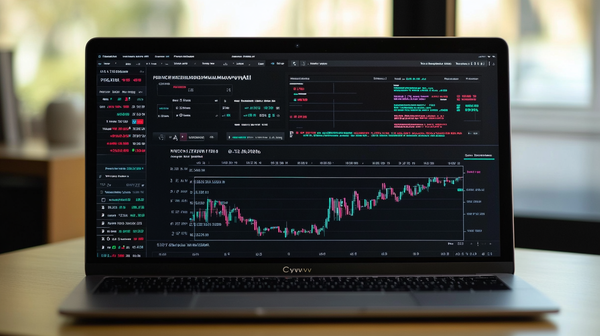
The WebTrader is the core experience: it held stable through repeated sessions, and the layout is geared toward quick scanning—watchlist on the side, chart center, ticket floating. Order choices covered the essentials (market, limit, stop, plus SL/TP), and execution felt consistent when I sent a small EUR/USD test order around the London open. If you live inside MT4/MT5 plug-ins and third-party trade managers, you’ll feel the gap; this platform is more “built-in toolkit” than expandable ecosystem.
Muntveen App: Mobile Trading Experience
The Muntveen app on Android mirrored the WebTrader logic well: quotes updated smoothly, and I could adjust stops without hunting through menus. The Muntveen login supported biometric unlock on my device, which matters when you’re checking margin in a crowded train in Tokyo. Deposits and withdrawals were accessible from the same sidebar, and push notifications were available for price alerts—useful, though I’d still rather manage risk with hard stops than with phone pings. One quirk: dense chart screens get cramped in landscape unless you hide panels aggressively.
Charting, Tools & Research
Indicators covered the standard playbook—MA, RSI, MACD, Bollinger—plus drawing tools for levels and channels. An economic calendar and a compact news feed were integrated, enough for macro awareness if you’re trading CPI/FOMC volatility. The ceiling is real, though: advanced strategy testing, deep order-flow tools, and cTrader-style depth features aren’t the focus here. For most retail CFD traders, it’s “enough,” not “a lab.”
Muntveen Account Opening & Minimum Deposit
After entering email, phone, and a basic personal profile, the onboarding pushed me into identity checks before I could meaningfully move money out later. KYC required a government-issued photo ID and a proof of address dated within three months; my verification cleared the same business day. The flow is built to satisfy AML rules without turning the process into a bank-style interrogation—ironic, because banks still pretend they’re the guardians while printing fiat like confetti.
- Minimum Deposit: $200
- Funding Methods: Visa/Mastercard, bank wire, regional e-wallets, and crypto (BTC, USDT)
- Demo Account: $10,000 virtual balance for testing spreads, slippage, and margin behavior
- Account Types: Standard (spread-only) and Raw/ECN-style (tighter spreads + commission)
The Muntveen minimum deposit is reachable for most retail traders, but don’t confuse “reachable” with “safe”—leverage magnifies mistakes faster than any tuition. Base currency choices were standard (USD/EUR-style), so if you fund in JPY you should watch conversion charges and card bank fees. I prefer funding with crypto for speed, but remember: this is still a CFD account, not a self-custody wallet.
Muntveen Customer Support Review
I tested live chat with a practical question: how swap/overnight fees are displayed per instrument before you hold a position through rollover. A human reply came back in about three minutes with a clear pointer to the contract specs page and where the long/short swap values sit on the ticket. I followed up via email asking about withdrawal processing after KYC; the ticket reply landed in roughly nine hours, confirming internal handling in 24–48 hours depending on checks.
Coverage is aligned with the usual retail CFD schedule: support is effectively 24/5, with weekends quieter unless you’re trading crypto CFDs. Language availability felt region-dependent, and I wouldn’t assume phone support unless it’s explicitly offered for your country. The helpful part is that answers were operational (where to find X, how long Y takes) rather than pure copy-paste marketing.
Ready to Explore Muntveen?
If you’re considering this broker, start by verifying your country eligibility, then use a demo to watch spreads during your usual trading hours. After that, fund small, test a withdrawal once, and only then decide whether the platform earns larger risk.
Muntveen Review FAQ
Is Muntveen good for beginners?
It can be, if you treat it like a training ground and keep leverage modest. The interface is simpler than a full MT5 workstation, and the $10,000 demo helps you learn margin and order placement. Beginners should still expect a learning curve around swaps, stop placement, and risk sizing.
Can I trade crypto on Muntveen?
Yes, you can trade crypto CFDs such as BTC/USD and ETH/USD. You’re speculating on price movement with leverage, not buying on-chain coins. If you want real Bitcoin ownership, withdraw to self-custody instead of trading a derivative.
Is Muntveen a scam?
No—based on my 2026 test, it behaved like a functioning CFD broker: KYC checks were enforced and withdrawal requests were processed. The more important caveat is jurisdictional: it operates offshore, so legal protections can be thinner than with Tier-1 regulators. Always assume CFD trading can lose money and size positions accordingly.
Is Muntveen available in the USA?
No, it’s restricted for U.S. residents. The platform also blocks various sanctioned jurisdictions, and eligibility can change with compliance updates. If you have U.S. tax residency, don’t expect account approval.
How long does a Muntveen withdrawal take?
Most withdrawals are queued internally within 24–48 hours after KYC is satisfied. After that, receipt time depends on the rail: cards often take 2–5 business days, wires 3–7, and crypto can arrive the same day. I recommend doing a small test withdrawal before scaling capital.
What is the Muntveen minimum deposit?
The Muntveen minimum deposit is $200. That’s enough to start, but it’s not enough to survive reckless 1:500 leverage. Use the demo first, then fund what you can afford to lose.
Does Muntveen have a mobile app?
Yes, it offers iOS/Android mobile trading alongside the WebTrader. The app supports monitoring, order management, deposits, and withdrawals, plus biometric sign-in on compatible devices. For complex analysis, desktop is still more comfortable, but mobile works for risk checks.
Final Verdict: Should You Use Muntveen in 2026?
Overall Score: 4.0/5
If your goal is to trade liquid CFDs with flexible leverage and you’re comfortable operating outside bank-approved playgrounds, Muntveen is a credible option—provided you respect the offshore rulebook. I liked the split between Standard and Raw pricing, the usable WebTrader, and the mobile experience for managing margin on the move. The negatives are exactly what you’d expect: offshore protections are thinner, long holds accumulate swaps, and high leverage punishes sloppy sizing. CFDs are high-risk instruments; most retail accounts lose money, so treat this like trading, not like “investing.”
Best for: active CFD traders who want a simple proprietary platform and can self-manage risk. Avoid if: you need Tier-1 regulatory cover, plan to hold for weeks, or can’t resist over-leveraging.