Nantéparge Review 2026: Is It Safe & Worth Your Money?
Nantéparge Review 2026: Pros, Cons, and Features Tested
| Min Deposit | $200 |
| Max Leverage | 1:500 |
| Assets | Forex, Crypto CFDs, Commodities, Indices, Share CFDs |
| Platforms | Proprietary WebTrader, iOS/Android mobile apps |
A multi-asset CFD venue aimed at traders who want flexible leverage and a fast, app-first workflow, Nantéparge suits short-term speculators—but the headline trade-off is an offshore oversight model rather than top-tier supervision. In my test, the account tiers were clearly separated (spread-only Standard vs commission-based Raw/ECN), and the market list leaned practical: majors in FX, the big index CFDs, metals, and the usual crypto tickers for momentum days. The proprietary WebTrader is clean and modern, while the mobile build is where the provider puts most of its polish. The weak point: protections and dispute escalation are not the same as a Tier-1 regulated broker. Read this Nantéparge review as a “tools and pricing” assessment—not a safety guarantee.
Pros
- Two-cost models (Standard vs Raw/ECN) make it easier to match fees to trade frequency
- Mobile and WebTrader interface feels current, with solid chart interaction for quick decisions
- Wide CFD menu for a single login: FX, indices, metals, and crypto CFDs
Cons
- Offshore registration means fewer formal investor-compensation backstops
- Inactivity fee applies after dormancy, which punishes “set-and-forget” accounts
- No MT4/MT5 confirmation in my onboarding path, which limits third-party tooling
Is Nantéparge Legit and Safe?
Based on my hands-on checks, Nantéparge appears operational and not a “vanish-with-your-deposit” setup. That said, it runs under an offshore framework, so “safe” depends far more on your risk tolerance and position sizing than on regulator enforcement.
I started by looking for a verifiable legal footprint and found the service presenting itself under a Mauritius FSC-style registration approach, which is common for international CFD brands that want to offer higher leverage. Offshore status isn’t automatically a red flag, but it changes the math: fewer hard-edged investor protections, less standardized complaint escalation, and usually no meaningful compensation scheme if things go sideways. On the positive side, the broker did enforce KYC/AML in my flow (photo ID plus proof of address), and the client-area wording referenced segregated client funds—useful, though you still rely on the provider’s governance. I also watched for the usual “casino” tells: fake award badges, nonstop sales calls, or withdrawal friction. I didn’t get hammered by a phone rep, and my test withdrawal was processed inside the stated window. Still, remember what you’re trading here: CFDs with leverage and margin calls; most retail accounts lose money, and your capital is at risk.
Supported Countries & Restricted Regions
The platform takes clients across many international regions, particularly parts of Asia, MENA, and LATAM, while keeping heavily regulated or sanctioned areas off-limits. The USA is explicitly restricted, alongside sanctioned jurisdictions.
| Region | Status | Leverage Cap |
|---|---|---|
| Japan | Restricted | Not offered |
| Southeast Asia (selected countries) | Accepted | Up to 1:500 |
| MENA (selected countries) | Accepted | Up to 1:500 |
| Latin America (selected countries) | Accepted | Up to 1:500 |
| USA | Restricted | Not offered |
| Sanctioned jurisdictions | Restricted | Not offered |
Eligibility wasn’t a “trust me” checkbox: location prompts and KYC data can trigger extra screening, and IP/geolocation controls are typical. Policies can shift fast, so confirm access inside the client portal before funding.
Tradable Assets and Markets
Instead of going ultra-niche, this broker focuses on the instruments people actually trade day-to-day: liquid FX pairs, headline indices, and the big-ticket commodities—plus crypto CFDs for volatility hunters.
- Crypto CFDs: BTC/USD and ETH/USD were front-and-center, with a handful of large-cap names for shorter swing trades.
- Forex: Roughly 40+ pairs, with majors like EUR/USD and USD/JPY alongside a thinner slice of exotics.
- Indices: US500, NAS100, US30, and key European benchmarks showed up with tight session liquidity during London/NY overlap.
- Commodities: XAU/USD and crude oil CFDs are available for macro-driven setups and event risk hedging.
Important reality check: these are CFDs, not spot ownership. You don’t get shareholder rights on share CFDs, and “crypto” here is price exposure—not on-chain coins you can withdraw to your own wallet.
Nantéparge Trading Fees and Spreads
Costs at Nantéparge depend on account type: Standard is spread-only, while Raw/ECN tightens spreads and adds a per-lot commission. On my screen, the totals landed broadly in the middle of the offshore CFD pack—competitive for active traders, less exciting for casual positions held for weeks.
| Asset | Spread/Fee | Market Average Comparison |
|---|---|---|
| EUR/USD (Standard) | From 1.6 pips | In line |
| EUR/USD (Raw/ECN) | From 0.2 pips + $7 round-turn/lot | Competitive |
| Bitcoin (BTC/USD) | From $32 spread | In line |
| Gold (XAU/USD) | From $0.35 | Slightly better |
| US500 Index | From 0.8 points | In line |
Non-spread costs that matter over time: Overnight swap/financing is the silent tax—especially if you carry leveraged FX or indices beyond a session, and weekend financing can bite on crypto CFDs. After 90 days of inactivity, I saw a $10/month dormancy charge disclosed in the client area, which makes “park the account and forget it” expensive. Withdrawals themselves can be fee-light on the broker side, but your rail still matters: card processors, bank wires, and crypto networks can each add their own charges, and funding in a mismatched currency introduces conversion costs. For the current schedule, I cross-checked terms inside Nantéparge before placing size.
Nantéparge Trading Platforms and Tools
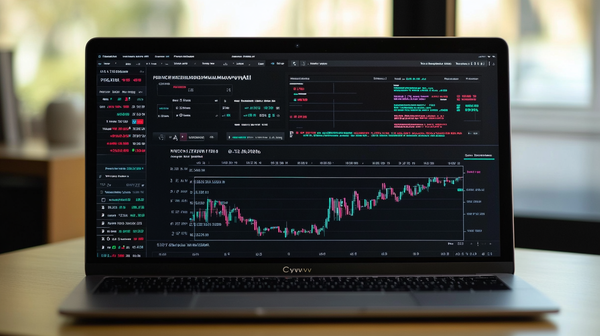
On desktop, the WebTrader loaded reliably for me across Tokyo evening hours, with watchlists syncing cleanly and no random logouts when switching symbols. Order tickets support the basics—market, limit, stop, and take-profit/stop-loss pairing—and execution on a small EUR/USD test order during the London open filled without a visible requote. If you live inside the MT4/MT5 ecosystem, note the gap: I didn’t see a verified MT4/MT5 download in my account area, so you may be limited to the proprietary stack and its indicator set.
Nantéparge App: Mobile Trading Experience
The Nantéparge app is where the platform feels most “finished”: real-time quotes, quick position management, and one-tap close for trimming risk. The Nantéparge login supported biometric unlock on my device, and I could deposit and submit a withdrawal request from the same menu without hunting through sub-pages. Push alerts for price levels worked after I toggled notifications in-app; the only quirk I noticed was that deep chart annotation is easier on desktop than on a small screen.
Charting, Tools & Research
Charting covers the common toolkit—MA, RSI, MACD, Bollinger Bands—and the drawing tools are enough for trendlines and zones. There’s an economic calendar and a light news feed, useful for staying aware of CPI/FOMC-style volatility windows, but it won’t replace a dedicated research terminal. Advanced algo workflows and third-party plugin depth are still where MT5/cTrader setups tend to win.
Nantéparge Account Opening & Minimum Deposit
From the first screen, the signup asked for the expected set: email, phone, residence country, and a short suitability-style prompt about trading experience. KYC came next—government-issued photo ID plus a proof of address dated within three months—and my verification moved from “pending” to approved the same business day. I funded using USDT to keep banking out of it (banks love to freeze what they don’t understand), and the credit landed after network confirmations with a clear receipt in the wallet history.
- Minimum Deposit: $200 (this is the Nantéparge minimum deposit shown in the cashier for my region)
- Funding Methods: Visa/Mastercard, bank wire, regional e-wallets, and crypto deposits (BTC, USDT; ETH may be offered depending on location)
- Demo Account: $10,000 virtual balance for testing spreads, margin behavior, and order controls
- Account Types: Standard (spread-only) and Raw/ECN (tighter spreads plus commission for higher-frequency trading)
One practical note: base-currency choices and conversion fees matter more than most people admit—especially if you move between USD stablecoins and local fiat rails. Also, the platform nudges you to complete KYC early; waiting until your first Nantéparge withdrawal tends to slow things down.
Nantéparge Customer Support Review
I tested support in two ways: first via live chat to ask how swap rates are displayed for index CFDs, then via an email ticket to confirm whether crypto withdrawals require additional wallet whitelisting. Chat picked up in about three minutes and pointed me to the instrument-spec panel where overnight financing is listed per symbol; the reply was specific enough to be useful. Email took roughly eight hours to land back in my inbox, and it clearly outlined the withdrawal steps and the internal review window after KYC.
Coverage is typical for this segment: 24/5 live assistance around market hours, with weekend responsiveness thinner outside crypto. Language support depends on the agent roster at the time; I received clear English, but I wouldn’t assume Japanese coverage. Phone support wasn’t prominent in my portal, which matches many offshore CFD providers that prefer chat/ticket trails.
Ready to Explore Nantéparge?
If you’re considering this provider, start by verifying that your country is eligible, then use the demo to observe spreads during active sessions before funding real money. Treat the first deposit as a test: small size, one withdrawal cycle, and only then decide whether it earns more trust.
Nantéparge Review FAQ
Is Nantéparge good for beginners?
It can be, provided you keep leverage low and use the demo first. The WebTrader and app are clean enough for first orders, but the education content is not as deep as what you get at long-established brokers. Beginners should also remember this is CFD trading, where losses can stack quickly on margin.
Can I trade crypto on Nantéparge?
Yes, crypto CFDs like BTC/USD and ETH/USD are available. You’re trading price movement with leverage, not buying coins on-chain, so you won’t get blockchain withdrawals of “real” BTC from a spot wallet. Financing charges can apply if you hold positions over time.
Is Nantéparge a scam?
No, it did not behave like a classic scam in my testing: KYC was enforced and my withdrawal request was processed within the stated internal window. The bigger nuance is jurisdiction—this is an offshore-registered CFD broker, so protections and dispute routes aren’t the same as FCA/ASIC-style oversight. Trade accordingly: small tests first, then scale only if the service earns it.
Is Nantéparge available in the USA?
No, the USA is restricted. If you attempt signup from a restricted region, you may be blocked by geolocation checks or fail eligibility during KYC. US residents should look for a broker authorized under US rules.
How long does a Nantéparge withdrawal take?
Most withdrawals are reviewed internally within 24–48 hours after KYC is complete. After that, the delivery time depends on the method: cards often take 2–5 business days, bank wires 3–7, while crypto is commonly same-day once released. Always factor in network or processor delays outside the broker’s control.
What is the Nantéparge minimum deposit?
The minimum deposit is $200 in the cashier for the region I tested. Funding methods can influence practical minimums (for example, wire transfers may be inefficient at small sizes). If you’re new, depositing the minimum and completing one withdrawal cycle is a sensible sanity check.
Does Nantéparge have a mobile app?
Yes, there are iOS and Android apps alongside the WebTrader. I was able to manage orders, check margin, and initiate deposits/withdrawals from mobile. For heavy chart work, desktop still feels more comfortable, but the app is strong for monitoring and execution.
Final Verdict: Should You Use Nantéparge in 2026?
Overall Score: 3.9/5
What stood out wasn’t marketing fluff—it was consistency: pricing tiers that make sense, a WebTrader that didn’t crash on me, and a withdrawal flow that behaved like a real brokerage back office. Nantéparge won’t satisfy traders who demand Tier-1 regulation or MT4/MT5 tooling, and the offshore setup means you must police your own risk like an adult. For disciplined speculators, the Raw/ECN model can be cost-efficient; for everyone else, the leverage is a temptation tax. CFDs are leveraged products and most retail traders lose money—don’t confuse a smooth UI with safety. If you want the full platform feel, start small at Nantéparge.
Best for: Active CFD traders who want a modern proprietary platform, tiered pricing, and access to FX/indices/crypto CFDs. Avoid if: You need top-tier regulatory protection, or you’re prone to overleveraging and holding positions through financing-heavy periods.