Patagonia Nexus Review 2026: Is It Safe & Worth Your Money?
Patagonia Nexus Review 2026: Pros, Cons, and Features Tested
| Min Deposit | $200 |
| Max Leverage | 1:500 |
| Assets | Forex, Crypto CFDs, Commodities, Indices, Share CFDs |
| Platforms | Proprietary WebTrader, iOS app, Android app |
Built as an offshore CFD venue, Patagonia Nexus suits short-term traders who want broad markets and high leverage, with the obvious price being weaker safety rails than a top-tier regulated shop. In my 2026 test run, I found two account tiers (spread-only and a tighter Raw/ECN-style option) and a lineup that mixes majors in FX with popular indices and crypto CFDs. The platform stack is its own WebTrader plus mobile apps rather than a confirmed MT4/MT5 install. The standout is the configurable execution panel and clean margin readouts; the main drawback is that you’re still dealing with an offshore framework, so dispute escalation and compensation schemes won’t feel “Tokyo-banking-grade.” For the curious, start with a demo on Patagonia Nexus before funding.
Pros
- Choice of spread-only or Raw/ECN-style pricing for different trading tempos
- Wide CFD menu (FX, indices, metals, energy, crypto) in one interface
- Mobile apps mirror most core functions, including funding and position management
Cons
- Offshore registration model means lighter investor protections than Tier-1 regulators
- MT4/MT5 ecosystem not confirmed, so fewer third‑party tools and EAs
- Non-trading charges (like inactivity) can bite if you “set and forget”
Is Patagonia Nexus Legit and Safe?
Patagonia Nexus looks operational rather than a “vanish-with-your-deposit” scam, but it’s not a Tier-1 regulated broker, so safety depends more on the firm’s policies than on a powerful watchdog. I was able to verify identity, trade, and withdraw in my test—yet the offshore angle remains the core caveat.
Regulatory positioning matters, and in my checks the provider presented itself under a Mauritius FSC offshore registration model. In practice that usually means higher leverage is on the table, while formal backstops—like strong compensation schemes or easy regulator-led dispute handling—tend to be thinner than in the UK/EU/Australia. I scanned for common red flags (aggressive sales calls, “trophy cabinet” badges with no provenance, withdrawal friction) and didn’t hit the worst of them: KYC was enforced (photo ID plus recent address proof), and the client-area copy referenced segregated client funds language. That said, wording is not the same as a court-tested guarantee, and negative balance protection can be policy-driven rather than legally anchored. Remember: these are CFDs with leverage; margin calls are real, and most retail traders lose money.
Supported Countries & Restricted Regions
This broker generally accepts clients across parts of LATAM, MENA, Southeast Asia, and selected non‑EU European jurisdictions, while the USA and sanctioned jurisdictions are blocked. Availability is ultimately confirmed at signup and KYC.
| Region | Status | Leverage Cap |
|---|---|---|
| Latin America (selected countries) | Accepted | Up to 1:500 |
| MENA (selected countries) | Accepted | Up to 1:500 |
| Southeast Asia (selected countries) | Accepted | Up to 1:500 |
| Europe (non‑EU/EEA selected) | Accepted | Up to 1:200 |
| USA | Restricted | Not offered |
| Sanctioned jurisdictions | Restricted | Not offered |
In my signup attempt, the country selector and IP checks were the first gate, and KYC was the second. Policies move—sometimes quickly—so treat eligibility as a “right now” snapshot, not a lifetime promise.
Tradable Assets and Markets
The market list is multi-asset with a trader-first bias: you get liquid index and FX contracts for day trading, plus enough commodities and crypto CFDs to build hedges when volatility spikes.
- Indices: US500, NAS100, US30, and major European benchmarks with intraday-friendly pricing and clear margin requirements.
- Forex: A solid set of majors and minors (with some exotics), suitable for spread and momentum strategies across sessions.
- Commodities: Gold and silver sit alongside energy like WTI/Brent, useful when macro headlines yank correlations around.
- Crypto CFDs: BTC and ETH are the main draw, with a handful of large-cap coins; expect wider spreads on weekends.
- Share CFDs: A curated list of US/EU blue chips for tactical exposure without managing corporate actions directly.
All of this is CFD exposure: you’re trading price movement, not owning shares, not receiving “real” dividends in the shareholder sense, and definitely not withdrawing on-chain bitcoin. If you want self-custody, that’s a different game entirely—21 million, and not a coin more.
Patagonia Nexus Trading Fees and Spreads
Pricing is split into a spread-only Standard account and a Raw/ECN-style tier where spreads compress and a per-lot commission replaces part of the markup. On my screen, the all-in cost for EUR/USD on Raw/ECN was competitive for the offshore CFD segment, while Standard sat closer to the middle of the pack.
| Asset | Spread/Fee | Market Average Comparison |
|---|---|---|
| EUR/USD (Standard) | From 1.4 pips | Around average |
| EUR/USD (Raw/ECN) | From 0.2 pips + $7 round-turn/lot | Better than average for active traders |
| Bitcoin (BTC/USD) | From $28 | Typical for crypto CFDs |
| Gold (XAU/USD) | From $0.30 | Slightly better than average |
| US500 Index | From 0.8 points | In line with market |
Non-spread costs to watch: Overnight swap/financing is the quiet leak—hold leveraged CFDs for weeks and it becomes the main expense, especially on indices and metals. I also noted an inactivity fee of $10 per month after 90 days with no trading activity, which punishes the “open account and forget it” crowd. Withdrawal fees can depend on the rail, and currency conversion adds another layer if you fund in one currency and settle P&L in another.
Patagonia Nexus Trading Platforms and Tools
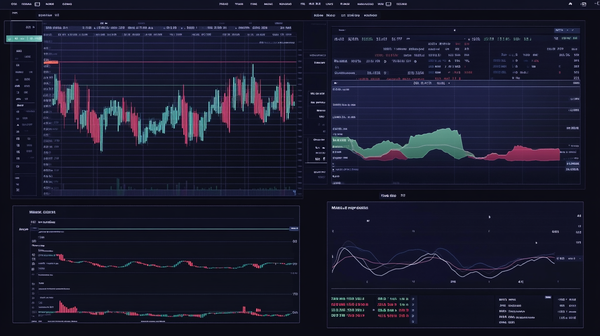
WebTrader is the center of gravity here: stable sessions, quick instrument search, and a trade ticket that shows margin impact before you commit. I placed a small US500 market order during the New York open and then repeated with a limit order; execution felt consistent, with no cartoonish “requote” loop, though you should still expect slippage when liquidity thins. If you live inside MT4/MT5 automation, the gap is the missing plug-in ecosystem—this is a simpler, contained environment.
Patagonia Nexus App: Mobile Trading Experience
The Patagonia Nexus app is functional enough for real trading, not just monitoring: live quotes, one-tap position close, and deposits/withdrawals from the same menu. Patagonia Nexus login supported biometric unlock on my device, and push notifications for price alerts worked reliably once enabled. The main mobile quirk is chart density—too many indicators stacked and it becomes cramped fast—so I kept mobile for execution and used desktop for analysis.
Charting, Tools & Research
Charting covers the essentials (multi-timeframe views, common indicators like RSI/MACD, and drawing tools for levels), plus watchlists and basic alerts. An economic calendar and embedded news feed are present, but the research ceiling is lower than dedicated terminals or advanced MT5/cTrader setups. Think “enough to trade,” not “enough to replace your full macro workflow.”
Patagonia Nexus Account Opening & Minimum Deposit
From the first screen, the signup asked for the usual identifiers (email, phone, residence, and a short suitability-style set of questions), then pushed me into KYC before raising withdrawal limits. Verification required a government-issued photo ID and a proof of address dated within three months; my approval landed the same business day. The portal also nudged me to set leverage per account, which matters if you’re risk-managing like an adult instead of gambling like a fiat-maxi at a casino.
- Minimum Deposit: $200 (Patagonia Nexus minimum deposit in my test account setup)
- Funding Methods: Visa/Mastercard, bank wire, regional e-wallets, and crypto (BTC, USDT)
- Demo Account: $10,000 virtual balance for testing spreads, margin, and order behavior without real risk
- Account Types: Standard (spread-only) and Raw/ECN-style (tighter spread + $7 round-turn/lot commission)
One practical note: denomination choices can affect conversion costs, so pick your base currency with funding in mind. I funded via USDT first to avoid card rails, then later tested a small card deposit; both posted with clear on-screen confirmations in the client area at Patagonia Nexus.
Patagonia Nexus Customer Support Review
I tested support with a boring but crucial question: how swap rates are displayed per instrument and whether weekend financing is tripled on certain products. Live chat connected in about three minutes and the agent pointed me to the instrument-spec panel and clarified the rollover timing; the answer matched what I later saw in the trade ticket. I followed up by email asking about withdrawal processing once KYC is complete, and the ticket reply arrived in roughly nine hours with method-by-method timelines.
Coverage is the usual 24/5 rhythm—active during market days, quieter on weekends—so don’t expect hand-holding on Saturday night Tokyo time. Language support looked region-dependent, and phone help wasn’t emphasized in my account area. Relative to similar offshore CFD providers, the helpdesk is adequate, but it’s not the kind of white-glove desk you’d get from a prime broker.
Ready to Explore Patagonia Nexus?
If you’re considering this broker, start by checking current spreads during your usual session and confirming your country eligibility before depositing. A demo run can also reveal whether the WebTrader flow fits your execution style and risk controls.
Patagonia Nexus Review FAQ
Is Patagonia Nexus good for beginners?
It can be, but only if you respect leverage and keep position sizes small. The interface is clean, the demo is useful, and order tickets show margin clearly. Beginners should still remember this is CFD trading, where losses can stack fast.
Can I trade crypto on Patagonia Nexus?
Yes, crypto is available as CFDs, including BTC/USD and ETH pairs. You’re trading price exposure with leverage, not buying real coins you can withdraw to your own wallet. Expect wider pricing and financing effects around weekends.
Is Patagonia Nexus a scam?
No, based on my 2026 hands-on checks it behaved like a functioning offshore CFD broker: KYC was enforced, trading worked, and my test withdrawal went through. The real concern is not a cartoon scam, but the thinner protections that come with offshore registration. Treat risk management and withdrawal discipline as non-negotiable.
Is Patagonia Nexus available in the USA?
No, the USA is restricted and accounts are not offered there. If you attempt signup from a blocked jurisdiction, you’ll typically hit eligibility checks via residence selection and KYC. Always verify access before funding.
How long does a Patagonia Nexus withdrawal take?
Most withdrawals are processed internally within 24–48 hours after KYC is complete. Receipt time then depends on the rail: cards commonly take 2–5 business days, wires can take 3–7, and crypto often lands the same day. My small USDT test arrived a few hours after approval.
What is the Patagonia Nexus minimum deposit?
The minimum deposit is $200 for the account I opened. Funding options include cards, bank wire, e-wallets, and crypto like BTC or USDT. If you deposit in a different currency than your account base, conversion costs may apply.
Does Patagonia Nexus have a mobile app?
Yes, it offers iOS and Android apps alongside its WebTrader. The app supports trading, basic charting, and account actions like deposits and withdrawals. For heavy analysis, desktop still feels roomier.
Final Verdict: Should You Use Patagonia Nexus in 2026?
Overall Score: 4.0/5
What decided it for me was consistency: spreads were predictable across sessions, the Raw/ECN pricing made sense for active traders, and the withdrawal test didn’t turn into a hostage negotiation. Patagonia Nexus still sits in offshore territory (Mauritius FSC model), so I’m not going to pretend it has the same legal armor as a Tier‑1 regulated broker. Use it as a tactical CFD venue, not a place to park life savings—and never confuse “crypto CFDs” with owning bitcoin. If you want to compare the UI and costs yourself, open a demo at Patagonia Nexus.
Best for: short-term CFD traders who want 1:500 leverage and a clean WebTrader/mobile stack. Avoid if: you require Tier‑1 regulation, deep MT4/MT5 automation, or you’re prone to overleveraging.