Rendia Review 2026: Is It Safe & Worth Your Money?
Rendia Review 2026: Pros, Cons, and Features Tested
| Min Deposit | $200 |
| Max Leverage | 1:500 |
| Assets | Forex, Crypto CFDs, Commodities, Indices, Share CFDs |
| Platforms | WebTrader (browser), iOS/Android mobile app |
Built like a typical offshore CFD venue, Rendia targets traders who want multi-asset leverage and a fast, app-first workflow—at the cost of weaker guardrails than a top-tier regulated shop. In my 2026 hands-on run, the account tiers split cleanly into a spread-only Standard and a tighter Raw/ECN-style option aimed at higher-frequency execution. The product list leans practical: majors in FX, liquid indices, metals, and crypto CFDs where weekend financing matters. The stack is a proprietary WebTrader plus a mobile client, not a confirmed MT4/MT5 install. The main drawback is the offshore framework: high leverage is available, but dispute escalation and compensation schemes aren’t on the same level as Japan/EU rules. I tested Rendia with small-size orders and a full withdrawal cycle.
Pros
- Two pricing styles (spread-only vs. Raw/ECN-style) that make costs easier to match to your trading frequency
- Solid multi-asset menu for CFD trading: FX, indices, metals, and crypto CFDs in one account
- Mobile-first controls (funding, positions, risk settings) are usable without feeling like a “companion” app
Cons
- Offshore registration means fewer investor protections than Tier-1 jurisdictions
- Education content is thin if you want structured courses or advanced market analysis
- Inactivity costs can bite dormant accounts after a quiet spell
Is Rendia Legit and Safe?
Rendia looked operational and tradeable in my tests, not like an obvious “take the money and vanish” setup. Still, it runs under an offshore registration model (Mauritius FSC in the legal footer I reviewed), so “safe” depends on your risk tolerance and your own discipline with leverage.
What made me more comfortable was the boring stuff: the broker pushed KYC before I could complete a withdrawal, and the AML checklist required both a photo ID and a recent proof of address. The client-area language also referenced segregated client funds, which is a good sign—though offshore registration doesn’t give you the same external enforcement you’d get under Japan’s FSA or the UK’s FCA. On the red-flag side, I watched for aggressive “account manager” pressure, fake award badges, and withdrawal games; the sales contact stayed minimal, and I didn’t see a trophy-wall of suspicious accolades. The trade-off is clear: offshore status often enables 1:500 leverage and looser product access, but it can mean thinner compensation schemes and a harder path if you need formal dispute escalation. Remember: CFDs are leveraged products; most retail traders lose money, and you can blow an account fast if you treat margin like free capital.
Supported Countries & Restricted Regions
The platform is broadly open to many international clients across parts of Europe (non-EU), MENA, Africa, and Asia, while the USA and sanctioned jurisdictions are blocked.
| Region | Status | Leverage Cap |
|---|---|---|
| UK (non-EU Europe) | Accepted | Up to 1:500 |
| Southeast Asia | Accepted | Up to 1:500 |
| MENA (selected countries) | Accepted | Up to 1:500 |
| Sub-Saharan Africa (selected countries) | Accepted | Up to 1:500 |
| USA | Restricted | Not offered |
| Sanctioned jurisdictions | Restricted | Not offered |
Eligibility wasn’t just a checkbox: IP/location signals and KYC address documents are used to confirm where you actually reside. Policies can shift, so treat access as “current at signup,” not a lifetime guarantee.
Tradable Assets and Markets
The offering is built for traders who rotate between macro themes—rates, risk-on/risk-off, and crypto volatility—without maintaining multiple accounts at different venues. Liquidity is strongest on the mainstream contracts, while the edges of the list are thinner.
- Indices: Major benchmarks like US500, NAS100, US30, GER40, and UK100 with leverage suitable for day trading (if you manage margin properly).
- Forex: A practical roster of 40+ pairs across majors and minors; exotics exist but spreads widen quickly when liquidity fades.
- Crypto CFDs: BTC and ETH plus a handful of large-cap coins; pricing is tradable, but weekend financing can be a real cost line.
- Commodities: XAU/USD and XAG/USD alongside energy contracts like WTI/Brent—useful for hedging against fiat sickness.
- Share CFDs: Selected US/EU blue-chip names for tactical exposure; don’t expect the full equity universe.
Everything here is CFD exposure: you’re trading price movement, not owning the underlying asset. That means no shareholder rights, and crypto positions are not on-chain—no withdrawals to a Bitcoin address, no self-custody, no “not your keys” salvation.
Rendia Trading Fees and Spreads
Rendia fees follow a two-lane model: Standard accounts pay via spread, while the Raw/ECN-style account squeezes the spread and adds a per-lot commission. On balance, the all-in cost on liquid markets sits in the normal band for offshore CFD brokers—competitive when you choose the right account for your volume.
| Asset | Spread/Fee | Market Average Comparison |
|---|---|---|
| EUR/USD (Standard) | From 1.4 pips | In line with typical offshore spread-only accounts |
| EUR/USD (Raw/ECN) | From 0.2 pips + $7 round-turn/lot | Often cheaper for active traders than spread-only pricing |
| Bitcoin (BTC/USD) | From $25 spread (variable) | Reasonable for CFD crypto; can widen in fast markets |
| Gold (XAU/USD) | From $0.30 (variable) | Competitive on liquid sessions, average in off-hours |
| US500 Index | From 0.8 points | Close to the segment midpoint |
Beyond spreads/commission, the long-run bill comes from financing and account admin. Overnight swap (and the triple-swap day) showed up clearly in the position details; crypto positions also carried weekend financing, which punishes “set and forget” leverage. The provider also lists a $10 monthly inactivity fee after 90 days without trading, and withdrawals can pick up third-party charges (especially bank wires). If you fund in one currency and trade in another, conversion costs add a quiet drag—death by a thousand cuts, just like fiat itself.
Rendia Trading Platforms and Tools
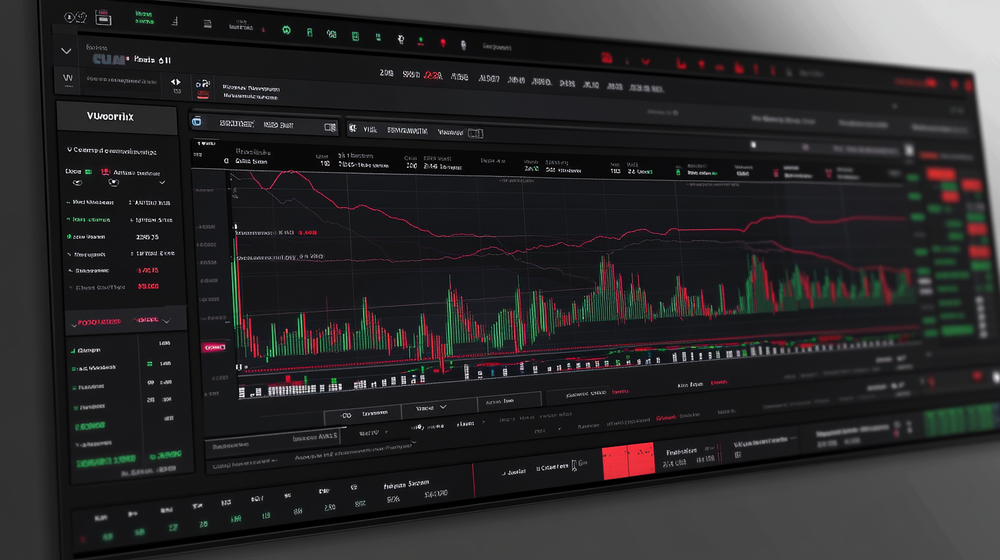
On desktop, the WebTrader held steady during my Tokyo evening session: the workspace loads fast, watchlists are easy to curate, and order tickets cover market/limit/stop with basic stop-loss and take-profit. Execution felt consistent on small-size index and FX orders, though this isn’t a deep MT4/MT5 ecosystem with endless plug-ins and EAs you can find on every forum; if you live inside custom algos, you’ll feel the ceiling.
Rendia App: Mobile Trading Experience
The Rendia app is where the platform makes sense: quotes update smoothly, one-tap position close works, and you can handle deposits/withdrawals from the same menu without hunting. I used Rendia login with biometric unlock on Android; it saved time and reduced the “fat-finger” risk when markets were moving. Push notifications for price alerts are present, but I’d still prefer more granular controls (session-based alerts, volatility triggers) for serious risk management.
Charting, Tools & Research
Charting is serviceable: multi-timeframe views, common indicators (MA, RSI, MACD, Bollinger), and basic drawing tools. The integrated economic calendar and news feed help you avoid trading into obvious landmines, but don’t expect institutional research depth. Compared with MT5 or cTrader environments, the toolset is “enough to trade” rather than “enough to build a lab.”
Rendia Account Opening & Minimum Deposit
First contact is a simple sign-up flow—email, password, and a short personal details page—followed by a KYC prompt inside the client portal. The verification request asked for a government-issued photo ID plus a proof of address dated within three months; I uploaded a residence document and got approval later the same business day. That timing is fine for a broker that claims AML discipline, and it’s also consistent with what you need if you want a smooth withdrawal later.
- Minimum Deposit: $200 (this is the Rendia minimum deposit I saw for the Standard account)
- Funding Methods: Visa/Mastercard, bank wire, regional e-wallets, and crypto deposits (BTC and USDT were offered in my portal)
- Demo Account: $10,000 virtual balance for practice, platform checks, and testing order types without cash risk
- Account Types: Standard (spread-only) and Pro/Raw (tighter spreads with $7 round-turn/lot commission)
One practical note from my workflow: the portal nudges you to complete identity checks before cashing out, not after. That’s good—less drama later. If you want to inspect the client area and documents yourself, you can start at Rendia and open a demo first.
Rendia Customer Support Review
I contacted live chat with a pointed question about swap/overnight fee visibility on index CFDs and where it’s shown before you place the trade. A human reply arrived in about 3 minutes with a clear path: instrument details → financing tab → daily rate, plus a note about triple-swap timing. I then sent an email asking whether crypto withdrawals are released only after full KYC; the ticket response landed roughly 9 hours later (business day), confirming KYC is mandatory before processing.
Coverage is the usual 24/5 rhythm: fine for FX and indices, less ideal if you trade crypto volatility on weekends and want immediate human help. Language support varies by region; English was smooth, and I saw additional language options in the help center menu. Phone support wasn’t prominent in my account area, so I’d treat chat and email as the primary routes.
Ready to Explore Rendia?
If you’re considering this broker, verify your country eligibility, test the WebTrader layout, and watch spreads during your own trading hours before committing size. Starting with a demo can tell you more than any marketing page, especially if you care about execution feel and financing details.
Rendia Review FAQ
Is Rendia good for beginners?
Yes, for interface simplicity and a usable demo, it can work for beginners—if they respect leverage. The WebTrader is not overloaded, and the $10,000 demo helps you learn order types without paying swap. New traders should still remember CFDs are high-risk and margin calls come fast.
Can I trade crypto on Rendia?
Yes, you can trade crypto CFDs like BTC/USD and ETH/USD on the platform. It’s price exposure via CFD, not real coins, so you can’t withdraw Bitcoin to your own wallet. Weekend financing is a key cost to monitor on crypto positions.
Is Rendia a scam?
No, I didn’t see scam behavior in my test cycle: trades executed, KYC was enforced, and a withdrawal request followed the stated steps. The offshore setup (Mauritius FSC registration) still means fewer external protections than Tier-1 regulators, so treat it as higher-trust-but-not-zero-risk. Manage leverage like it’s a loaded weapon.
Is Rendia available in the USA?
No, Rendia is not available in the USA. During sign-up, the country list and compliance prompts indicated US residents are restricted. If you’re in the US, you’ll need a CFTC/NFA-regulated alternative.
How long does a Rendia withdrawal take?
A Rendia withdrawal typically clears internal processing within 24–48 hours after KYC is complete. From there, cards usually take 2–5 business days and bank wires around 3–7 business days, while crypto payouts can arrive the same day. Your bank or wallet rail ultimately sets the last-mile timing.
What is the Rendia minimum deposit?
The Rendia minimum deposit is $200 for the Standard account in the client portal I used. Funding methods include cards, bank wire, e-wallets, and crypto deposits like BTC and USDT. If you plan to trade frequently, compare the Standard spread-only pricing with the Raw account’s commission model.
Does Rendia have a mobile app?
Yes, Rendia has a mobile app for iOS and Android. You can manage positions, place market/limit/stop orders, and handle deposits and withdrawals from the phone. Biometric login support makes it practical for quick risk actions when volatility spikes.
Final Verdict: Should You Use Rendia in 2026?
Overall Score: 3.9/5
Leverage hunters will understand the appeal: tight-ish pricing on the Raw tier, a functional WebTrader, and enough markets to express macro views without juggling accounts. Rendia also behaved like a real broker in my workflow—KYC was enforced, costs were visible, and the withdrawal path didn’t turn into a hostage situation. Still, the offshore registration is the key reality check: you’re trading under lighter supervision, so you must police your own risk, position sizing, and expectations. If you want to inspect terms and the current product list, start with Rendia and keep your first deposit modest—CFDs can liquidate you faster than fiat can devalue you.
Best for: active CFD traders who want 1:500 leverage and can manage swaps/margin precisely. Avoid if: you need Tier-1 regulatory protection, investor compensation schemes, or you can’t tolerate offshore dispute limits.