
Ruvik Nuvra Trading Platform Alternatives 2026
Ruvik Nuvra Trading Platform Alternatives 2026: Reliable Options for Online Traders
Leverage is a knife: it cuts spreads and it cuts accounts. That’s why I’m careful about where I place margin trades—even if my long-term conviction is simple: Bitcoin, spot, self-custody, “21 million — and not a coin more.” Still, many traders around the US and EU use offshore CFD venues for short-term FX and index exposure, and Ruvik Nuvra is typically discussed in that context: a CFD-first broker with a proprietary WebTrader, mobile apps, and conditions that look familiar for the offshore segment (high headline leverage, lower onboarding friction, and a tighter “marketing story” than a transparent regulatory story). When a platform sits outside top-tier oversight, the real question isn’t just spreads; it’s recourse, withdrawals, and what happens when volatility hits and slippage widens.
This guide to Ruvik Nuvra alternatives focuses on regulated brokers and well-known platforms that publish clearer legal entities, maintain segregated client funds, and provide more predictable execution tooling (MT4/MT5/cTrader or established proprietary stacks). I’ll also map choices to strategy: scalping versus swing trading, stock/ETF investing versus CFD speculation, and crypto exposure via CFDs versus real ownership. If you want a broker that behaves more like a utility and less like a casino pit boss, you’ll care about regulation, execution model, and total cost per round-turn trade—not just a “from 0.0” headline.
Disclaimer: This article is for informational purposes only and does not constitute investment advice. CFDs and other leveraged products carry a high risk of loss and may not be suitable for all investors.
Key Takeaways (TL;DR)
- Offshore-style CFD platforms can look cheap on paper, but the practical risk is weak investor protection and limited dispute resolution compared with FCA/ASIC/CySEC/NFA-supervised firms.
- For active FX/CFD traders, compare round-turn costs (spread + commission) and execution quality (slippage/latency), not leverage limits.
- If you want real stocks/ETFs (not CFDs), multi-asset brokers like IBKR or Saxo are structurally different from CFD-first venues.
- Migrate safely by opening and verifying the new account first, then withdrawing using the same payment rails used for deposits to reduce AML friction.
What Is Ruvik Nuvra and How Does Its Trading Platform Work?
From what traders commonly encounter with offshore CFD providers, Ruvik Nuvra presents as a forex-and-CFD-focused venue rather than a true multi-asset brokerage. The typical product mix is margin trading on FX pairs, indices, commodities, and a menu of crypto CFDs—useful for short-term price exposure, but not the same as owning assets outright. The legal and oversight posture generally resembles an offshore registration (often marketed as “global access”), which matters because supervision, audits, and complaint pathways can be thinner than with brokers under the FCA, ASIC, CySEC, or NFA. For people comparing brokers similar to Ruvik Nuvra, the key distinction is whether you’re trading in a tightly governed framework with clear client-money rules, or in a looser environment where policy changes can arrive fast.
Ruvik Nuvra Web Trading Platform: Core Features and Tools
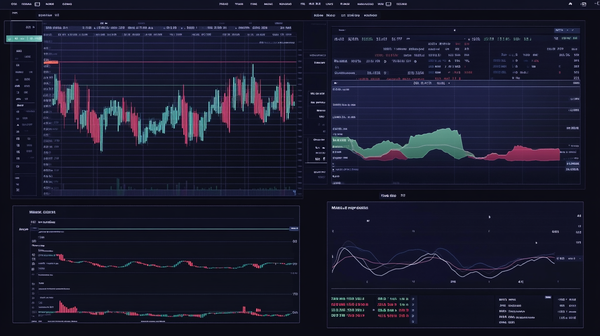
The core stack is usually a proprietary WebTrader with a companion iOS/Android app. Charting tends to be “enough to trade” rather than “enough to build research”: common indicators, basic drawing tools, and timeframes that cover intraday to swing setups. Order entry typically includes market and limit orders with stop-loss/take-profit controls; more advanced conditional logic (OCO brackets, server-side trailing, strategy testing) is often limited versus MT4/MT5 or cTrader ecosystems. Execution can feel responsive during calm sessions, but the real test is fast markets—news spikes are where slippage and partial fills show up. Account dashboards usually cover margin, equity, open P/L, and funding, but deep reporting and export tools may be lighter than at regulated incumbents.
Trading Fees, Spreads, and Account Types at Ruvik Nuvra
Cost presentation in this category often centers on “spread from X,” with a typical Standard-account EUR/USD spread around ~2.0 pips in normal liquidity. Some venues in the same segment advertise a Raw/ECN-style tier with spreads near zero plus commission (often in the ballpark of $6–$8 per round-turn), but what matters is the all-in cost once slippage and re-quotes are included. Expect swap/overnight financing on CFD positions, and watch for non-trading fees such as inactivity or withdrawal processing charges depending on payment method. Minimum deposits frequently cluster near $250, while maximum leverage can reach 1:500—a number that sells dreams and liquidates accounts just as efficiently.
When Do Traders Start Looking for Ruvik Nuvra Alternatives?
A trader doesn’t switch platforms because of one bad candle; they switch because patterns repeat. The most common trigger is risk: unclear oversight, inconsistent execution in volatile sessions, or withdrawal timelines that feel “negotiated” instead of procedural. Cost is the other silent killer—an extra half-pip on EUR/USD compounded across dozens of round-turns can erase a strategy’s edge. For traders scanning Ruvik Nuvra alternatives, the goal is not novelty; it’s predictability: transparent rules, stable funding rails, and a platform stack that matches your method (manual, automated, or API-driven).
- You need MT4/MT5 or cTrader to run an EA/algorithmic workflow, but the current proprietary WebTrader can’t replicate your risk controls or order logic.
- Your strategy is sensitive to slippage (news scalps, tight stops), and fills deteriorate when liquidity thins—turning a backtest into fiction.
- You want stronger investor protections (segregated client funds, negative balance protection where applicable, formal complaints process) rather than offshore “support tickets.”
- You’re trying to trade real stocks/ETFs (with corporate actions and ownership rights) instead of equity CFDs that can be re-quoted or restricted.
How to Choose a Reliable Alternative to the Ruvik Nuvra Trading Platform
Think of broker selection like you’d think of key management in cryptography: the system fails at the weakest link. For alternatives to the Ruvik Nuvra trading platform, I filter candidates by legal supervision, client-money handling, execution design, and total trading cost. Then I map those constraints to the strategy—because the “best” platform for a long-only ETF buyer is a bad fit for a high-frequency FX scalper.
Regulation, Safety, and Investor Protection
Start with the regulator, not the marketing deck. FCA (UK), ASIC (Australia), CySEC (EU), and NFA/CFTC (US) regimes impose reporting, capital rules, and client-fund segregation standards that offshore entities often don’t match. For eligible UK clients under FCA-supervised firms, FSCS coverage can apply up to £85,000 in certain insolvency cases; for CySEC-supervised entities, the ICF can apply up to €20,000. None of this removes trading risk, but it changes the “what if the broker fails?” equation materially.
Available Markets and Instruments
Match instruments to intent. If you need FX and index CFDs, a specialist can be efficient; if you need real stocks, ETFs, options, or futures, you’re in multi-asset territory. Many platforms like Ruvik Nuvra emphasize CFDs first, which means you’re trading a derivative contract, not the underlying asset—no shareholder rights, and sometimes fewer order-routing choices. US traders should also note that many CFD brokers restrict the US entirely; US eligibility often pushes you toward NFA/CFTC-regulated FX and exchange-traded products.
Trading Costs: Spreads, Commissions, and Other Fees
Compare cost per round-turn trade, not slogans. A tight spread with a high commission can be fine; a wider spread with “no commission” can be expensive for active traders. Include swap/overnight fees if you hold positions, and check for inactivity charges if you trade seasonally. If your monthly volume is, say, 200 standard lots in EUR/USD, an extra 0.5 pip can be the difference between a profitable edge and a slow bleed. That’s why “from 2.0 pips” deserves scrutiny.
Platforms, Tools, and Execution Quality
Platform choice is strategy choice. MT4/MT5 ecosystems support EAs, custom indicators, and broad third‑party tooling; cTrader is popular for depth-of-market style workflows; proprietary platforms can be smooth but may limit automation and data export. Execution model matters too: market maker versus STP/ECN/DMA changes how orders are filled and how conflicts are managed. If you’re still using Ruvik Nuvra, pay attention to how it behaves around major releases—slippage and latency are where “paper conditions” fail.
Support, Education, and Overall User Experience
Support is part of your risk plan. You want clear funding instructions, responsive help during margin events, and documentation that matches your region’s rules. Look for consistent multilingual coverage (especially for EU cross-border accounts), straightforward mobile parity, and a help center that explains swaps, margin calls, and negative balance protection in plain language. Education is not a substitute for competence, but good brokers publish execution policies and fee schedules you can actually audit.
Ruvik Nuvra and Different Asset Classes: When Alternatives May Be Better
Ruvik Nuvra Forex and CFD Trading
For FX/CFDs, the main question is whether the venue is built for repeatable execution or for “high leverage attraction.” With offshore-style conditions, EUR/USD around ~2.0 pips on a standard tier is workable for swing traders, but it punishes scalpers who live and die by a pip. In regulated land, brokers like Pepperstone and IG often provide clearer execution disclosures and more mature platform support (MT4/MT5/cTrader at Pepperstone; strong proprietary tooling at IG). Leverage caps may be lower for EU/UK retail accounts, but that’s not a flaw—it forces position sizing discipline. If your edge relies on tight stops, ask for execution statistics and test slippage during liquid and illiquid sessions before scaling size.
Ruvik Nuvra Stock and ETF Trading
Equities separate “trading apps” from broker infrastructure. Many CFD-first venues provide stock exposure only as CFDs, which means you’re not buying the shares; you’re entering a contract whose pricing and corporate actions are handled by the broker. If you want real stocks/ETFs with deeper market access, Interactive Brokers (IBKR) is the obvious heavyweight for US/EU traders because it connects to exchanges for equities, options, and futures, and supports advanced order types. Saxo Bank is another multi-asset choice that leans toward serious portfolio tooling. For long-term investors, this is where regulated options vs Ruvik Nuvra can be a night-and-day difference: custody structure, reporting, and instrument breadth matter more than headline leverage.
Ruvik Nuvra Crypto Trading
Crypto is where I get strict: CFDs are not Bitcoin. A crypto CFD is price exposure with counterparty risk and financing costs; you can’t withdraw to a wallet, you can’t verify reserves, and you can’t self-custody. If Ruvik Nuvra offers crypto CFDs (common in this segment), treat it as a short-term derivative tool, not a “crypto investment.” Among regulated CFD providers, IG (jurisdiction dependent) and Plus500 are better-known for offering crypto CFD exposure within a compliance framework, though availability and leverage limits vary by region. For anyone who actually wants BTC, the correct alternative is not another CFD platform—it’s buying spot on a reputable venue and withdrawing to cold storage. Banks and fiat are fragile; counterparty risk is real.
Best Ruvik Nuvra Alternatives for 2026: Comparison of Top Trading Platforms
Interactive Brokers (IBKR): Key Facts and How It Compares to Ruvik Nuvra
Regulation: SEC/FINRA (US), FCA (UK), IIROC (Canada) (entity depends on region)
Markets: Stocks, ETFs, options, futures, bonds, FX (spot), funds (availability varies)
Fees: FX spreads are typically competitive on larger sizes; stock/ETF commissions vary by plan and venue (often low per trade); financing/margin rates apply
Platform: Trader Workstation (TWS), IBKR Desktop/Web, mobile; API access
Best For: Real multi-asset access (stocks/options/futures) over CFD-only trading
Pepperstone: Key Facts and How It Compares to Ruvik Nuvra
Regulation: FCA (UK), ASIC (Australia), CySEC (EU), DFSA (Dubai)
Markets: FX and CFDs (indices, commodities; crypto CFDs depending on entity)
Fees: Standard spreads often ~1.0–1.2 pips on EUR/USD; Raw accounts can be ~0.0–0.3 pips + commission (varies by platform/entity)
Platform: MT4, MT5, cTrader, TradingView integration (where available)
Best For: Algorithmic FX traders needing MT4/MT5/cTrader
IG: Key Facts and How It Compares to Ruvik Nuvra
Regulation: FCA (UK), ASIC (Australia), MAS (Singapore)
Markets: CFDs (FX, indices, commodities, shares); spread betting in the UK (eligibility rules apply)
Fees: FX spreads often from ~0.6–1.0 pips on major pairs depending on account/type; overnight financing applies on CFDs
Platform: IG Web Platform, mobile; MT4 available in some regions
Best For: Macro index/FX CFD trading with strong research tooling
Saxo Bank: Key Facts and How It Compares to Ruvik Nuvra
Regulation: FCA (UK), MAS (Singapore), DFSA (Dubai) (entity depends on region)
Markets: Stocks, ETFs, bonds, options, futures, FX, CFDs (product availability varies by jurisdiction)
Fees: Tiered pricing; FX spreads can be competitive on higher tiers; equity commissions depend on exchange/plan
Platform: SaxoTraderGO, SaxoTraderPRO
Best For: Serious portfolio builders who still want FX alongside investments
OANDA: Key Facts and How It Compares to Ruvik Nuvra
Regulation: CFTC/NFA (US), FCA (UK), ASIC (Australia), IIROC (Canada)
Markets: FX (spot) and CFDs in certain regions (product set varies by entity)
Fees: Typically spread-based pricing; EUR/USD often around ~0.8–1.4 pips depending on market conditions; financing applies on margin positions
Platform: OANDA web/mobile, MT4 (availability varies)
Best For: US-eligible FX traders who want NFA oversight
Plus500: Key Facts and How It Compares to Ruvik Nuvra
Regulation: FCA (UK), CySEC (EU), ASIC (Australia), MAS (Singapore)
Markets: CFDs (FX, indices, commodities, shares, crypto CFDs where permitted)
Fees: Spread-based; majors often around ~0.6–1.2 pips depending on instrument/conditions; overnight funding applies
Platform: Plus500 proprietary WebTrader and mobile app
Best For: Simple, app-first CFD trading without platform complexity
Comparison Summary
| Platform | Regulation | Main Markets | Typical Costs | Best For |
|---|---|---|---|---|
| Interactive Brokers (IBKR) | SEC/FINRA, FCA, IIROC | Real stocks/ETFs, options, futures, bonds, FX | Low-per-trade equities (plan-dependent); competitive FX on size; margin financing applies | Real multi-asset access (stocks/options/futures) over CFD-only trading |
| Pepperstone | FCA, ASIC, CySEC, DFSA | FX + CFDs (indices/commodities; crypto CFDs by entity) | EUR/USD ~1.0–1.2 (Std) or ~0.0–0.3 + commission (Raw) | Algorithmic FX traders needing MT4/MT5/cTrader |
| IG | FCA, ASIC, MAS | CFDs (FX/indices/commodities/shares); spread betting (UK) | FX often ~0.6–1.0 pips on majors; overnight financing on CFDs | Macro index/FX CFD trading with strong research tooling |
| Saxo Bank | FCA, MAS, DFSA | Stocks/ETFs/options/futures + FX + CFDs (jurisdiction-dependent) | Tiered pricing; competitive FX on higher tiers; exchange-based equity commissions | Serious portfolio builders who still want FX alongside investments |
| OANDA | CFTC/NFA, FCA, ASIC, IIROC | FX (spot); CFDs in certain regions | Spread-based; EUR/USD often ~0.8–1.4 pips (conditions-dependent) | US-eligible FX traders who want NFA oversight |
| Plus500 | FCA, CySEC, ASIC, MAS | CFDs across FX/indices/commodities/shares/crypto (where allowed) | Spread-based; majors often ~0.6–1.2 pips; overnight funding applies | Simple, app-first CFD trading without platform complexity |
How to Safely Move from Ruvik Nuvra to Another Broker
Switching brokers is operational risk, not just a “sign-up.” Do it like you’re rotating keys: verify first, migrate funds second, and only then scale exposure. With leveraged CFDs, a sloppy transition can create forced liquidations (open positions), duplicated risk (hedges that aren’t hedges), or delayed withdrawals. If you’re coming from Ruvik Nuvra, plan for identity checks and payment-method rules on the new venue before you touch your main capital.
- Confirm the new broker’s legal entity on the regulator’s public register (FCA Register, ASIC Connect, CySEC listings, or NFA BASIC) and match the entity name to the account-opening documents.
- Open the new account and complete KYC/AML early (ID + proof of address). Waiting until you need a withdrawal is how small problems become week-long problems.
- Flatten risk on the old platform: close open CFD positions or replicate them freshly at the new broker. Position transfers between CFD brokers are not something you should rely on.
- Withdraw using the same payment method you deposited with where possible. Many firms enforce this to comply with AML rules and to reduce chargeback exposure.
- Download statements, trade history, and funding records for taxes and reconciliation before you lose dashboard access or the reporting window changes.
Ready to Explore Ruvik Nuvra?
If you’re still evaluating, check current region eligibility, funding methods, and the platform stack side-by-side with the regulated options above. Conditions can differ by entity and country, so confirm the legal entity and key fees before committing meaningful size.
FAQ: Ruvik Nuvra Alternatives and Trading Platforms
What is the best alternative to Ruvik Nuvra in 2026?
The best option depends on whether you need real multi-asset access or mainly FX/CFDs. For real stocks/ETFs/options/futures, Interactive Brokers (IBKR) is hard to beat; for FX execution with MT4/MT5/cTrader, Pepperstone is a strong candidate. If you prefer a simpler CFD interface, Plus500 is closer in “feel” to many platforms like Ruvik Nuvra, but with clearer regulation.
Is Ruvik Nuvra a safe broker/platform?
Ruvik Nuvra appears to operate in an offshore/unregulated framework rather than under top-tier regulators like the FCA, ASIC, CySEC, or NFA. That doesn’t automatically mean “scam,” but it does mean fewer formal protections (compensation schemes, strict client-money rules, and regulator-backed dispute channels). If safety is your priority, regulated options vs Ruvik Nuvra typically offer stronger guardrails.
Can I trade stocks, futures, or crypto with Ruvik Nuvra?
Ruvik Nuvra is generally positioned around FX and CFDs, and crypto exposure is commonly via crypto CFDs rather than on-chain ownership. Real exchange-traded futures and full stock/ETF investing are more typical at multi-asset brokers like IBKR or Saxo, while CFD brokers may offer only stock CFDs. If you want actual Bitcoin, the cleanest path is spot purchase and self-custody—not a CFD ticket.
What should I check before switching from Ruvik Nuvra to another platform?
Before switching, verify the new broker’s regulator and legal entity on an official register, then confirm client-fund segregation and negative balance protection terms for your region. Next, map your strategy to the platform stack (MT4/MT5/cTrader vs proprietary) and compare round-turn costs including swaps. Finally, complete KYC at the new broker first, then withdraw from the old account using the same payment method to reduce AML delays.
About the Author: Kenji Tanaka is a Tokyo-based financial writer and active trader with a background in cryptography studies (University of Tokyo, incomplete). He approaches broker comparisons with a risk-first lens—especially around leverage, execution, and custody—because fiat systems and banking incentives rarely align with individual traders. His north star remains Bitcoin: 21 million, and not a coin more.