
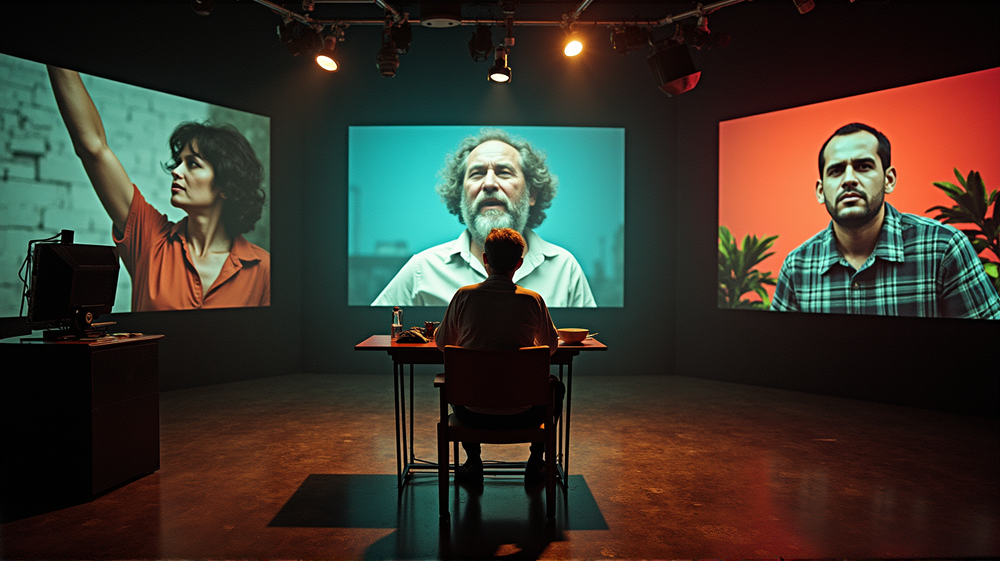
"Silenced Screens: Cuban TV's Cultural Gatekeeping Exposed!"
Experience an in-depth look as Orlando Cruzata, director of the Lucas Awards, exposes the intricate mechanisms of censorship used to guard the Cuban revolution’s image. According to CiberCuba, the director sheds light on practices that attempt to preserve cultural continuity amidst an evolving media landscape.
The Night Watches: Policies to Protect the Revolution
Orlando Cruzata has revealed the vigilance Cuban TV execs maintain to prevent negative discussions about the revolution. It’s a non-negotiable stance aligned with a broader “cultural policy” that seeks to protect revolutionary ideals comparable to safeguarding against discrimination in themes of gender, sexuality, and religion. Consequently, contentious topics are rigorously filtered, ensuring only regime-friendly narratives make the cut.
Between Artistic Freedom and Programming Prudence
While artistic expressions such as reggae represent vibrant facets of cultural identity, the reigning programming policies call for meticulous content curation. Cruzata echoes a principle that holds broadcasted media to a higher standard—anything derogatory or inflammatory faces exclusion. This approach is described not as a blanket ban on creativity but as a careful exercise to maintain both harmonics and the program’s honor.
Censorship’s Shadow on Urban Melodies
Urban music, particularly reggaeton, bears substantial scrutiny due to explicit content that often defies traditional norms. Despite this, there’s an evolving effort to weave these genres into the official tapestry without diluting their core essence. However, rigid quality and lyrical standards are enforced to corral them into a palatable form for mainstream consumption. Here lies an ongoing tug-of-war between youthful expression and authoritative control.
Internal Strife and External Perceptions
Cruzata’s relationship with the authoritative tentacles of Cuban Television mirrors the struggles of many within creative spaces, striving to safely toe the line without stifling authenticity. His public denunciation over exclusion from the 2023 Evaluate Meeting underpins a brewing tension, coaxing many to question the compatibility of free thought with a controlled cultural sphere.
Echoes of a Silenced Legend: Omar Ajete
In sports, former baseball icon Omar Ajete experienced a live muzzling, spotlighting the government’s firm grip on public discourse. During an acclaimed sports broadcast, Ajete’s daring but honest commentary on the plight of retired athletes was cut mid-sentence—symbolizing a society wrestling with voices too loud to ignore yet too brazen to broadcast.
Frequently Asked Questions: Decoding Cuban TV’s Censorship Paradigm
Why Did Cruzata Endorse Media Censorship?
Cruzata rationalizes this as part of a cultural policy aimed at preserving the integrity of the Cuban revolution, shunning content critical of the socialist regime.
How Does Censorship Influence Urban Music’s Airwaves?
Regulations imposed on urban music ensure lyrics and production quality align with approved standards, keenly policing genres like reggaeton for content deemed unfavorable.
The Duel of Authority: Cruzata’s Standoff
Cruzata’s precarious liaison with Cuban television underscores disenchantment borne out of censorship attempts, interpreting exclusions as implicit erasures of dissenting views.
Share your thoughts below!
Join the discourse and connect with us on the ongoing cultural and ideological shift within the Cuban landscape. #Censorship #CubanTV #FreedomOfExpression


