Termavise Review 2026: Is It Safe & Worth Your Money?
Termavise Review 2026: Pros, Cons, and Features Tested
| Min Deposit | $200 |
| Max Leverage | 1:500 |
| Assets | Forex, Crypto CFDs, Commodities, Indices, Share CFDs |
| Platforms | Proprietary WebTrader, iOS/Android mobile apps |
A multi-asset CFD venue with offshore DNA, Termavise suits short-term traders who want high leverage and a clean WebTrader—at the cost of thinner legal backstops than a Tier‑1 regulator would provide. In my 2026 walkthrough of Termavise, I saw two clear pricing tiers (spread-only vs. Raw/ECN-style), a forex-forward watchlist plus BTC/ETH CFDs, and a mobile app that mirrors the web layout closely. The USP is flexibility—leverage up to 1:500 and quick access to majors, gold, and US indices from one screen. The drawback is the familiar offshore trade-off: fewer formal dispute routes, and you must treat risk controls as your job, not the broker’s.
Pros
- Two account tiers with a true “tighter spread + commission” option for active trading
- WebTrader and mobile apps feel consistent, with fast access to charts and positions
- Broad CFD menu (FX, indices, metals, crypto CFDs) for tactical diversification
Cons
- Offshore registration model means weaker investor protections than top-tier jurisdictions
- Education is serviceable, not deep—no substitute for a serious trading plan
- Inactivity fee applies after a dormancy window, which can sting buy-and-forget users
Is Termavise Legit and Safe?
Termavise looked operational and tradeable in my test—orders executed, KYC was enforced, and withdrawals processed—so it didn’t behave like a “vanish-with-your-money” setup. That said, it runs under an offshore framework, so “legit” here doesn’t equal “protected like a bank-backed, Tier‑1 licensed broker.”
What anchored my safety read was the paperwork trail: the onboarding flow pushed AML/KYC early (photo ID plus a recent proof of address), and the client-area language repeatedly referenced segregated client funds. The registration I saw pointed to the Mauritius FSC, which usually means higher leverage and looser marketing rules, but also fewer compensation schemes and less leverage for retail clients if you end up in a dispute. I also scanned for the usual red flags—fake trophies, pressure calls, or “guaranteed returns” nonsense—and didn’t encounter those during the week I tested. Still, offshore status shifts the burden onto you: manage margin, expect volatility, and assume escalation paths are narrower. Remember: CFDs are leveraged products; many retail accounts lose money, and your capital is at risk.
Supported Countries & Restricted Regions
This broker largely targets international clients across parts of Asia, MENA, Africa, and non‑EU Europe, while excluding the USA and sanctioned jurisdictions. Access depends on residency checks during signup and verification.
| Region | Status | Leverage Cap |
|---|---|---|
| Southeast Asia | Accepted | Up to 1:500 |
| MENA (selected countries) | Accepted | Up to 1:500 |
| Non‑EU Europe | Accepted | Up to 1:200 |
| Latin America | Accepted | Up to 1:500 |
| Sub‑Saharan Africa (selected) | Accepted | Up to 1:500 |
| USA | Restricted | Not offered |
| Sanctioned jurisdictions | Restricted | Not offered |
In practice, IP/location prompts and KYC documents do the heavy lifting; I was asked to confirm residency before I could finalize funding. Policies can tighten quickly when compliance teams refresh country lists, so treat eligibility as something you re-check, not a one-time assumption.
Tradable Assets and Markets
Instead of pretending to be everything, the platform leans into the classic CFD mix: liquid FX pairs and indices first, then metals, oil, and a compact crypto CFD shelf. If you’re a momentum trader, there’s enough here to build a session-based watchlist without drowning in micro-cap clutter.
- Indices: US500, NAS100, and Europe benchmarks like GER40 are available as CFDs with intraday-friendly pricing.
- Forex: Roughly 40+ pairs showed on my terminal—majors and several minors, with a few higher-volatility exotics.
- Commodities: Gold and silver sit alongside energy (WTI/Brent), useful for macro-driven setups.
- Crypto CFDs: BTC/USD and ETH/USD were the main liquid options I focused on; spreads widened on weekend liquidity.
All of this is CFD exposure: you’re trading price movement, not buying shares, not receiving shareholder voting rights, and not holding on-chain bitcoin. For crypto in particular, this is paper exposure—no UTXOs, no self-custody, no “21 million — and not a coin more.”
Termavise Trading Fees and Spreads
Termavise fees follow a two-lane structure: a Standard account that pays via spread, and a Raw/ECN-style tier that tightens spreads and adds a per-lot commission. On EUR/USD, the Raw tier can be meaningfully cheaper for frequent traders, while Standard pricing lands around the middle of the offshore CFD pack.
| Asset | Spread/Fee | Market Average Comparison |
|---|---|---|
| EUR/USD (Standard) | from 1.4 pips | In line with typical offshore CFD pricing |
| EUR/USD (Raw/ECN) | from 0.2 pips + $7 round-turn/lot | Often better than spread-only accounts for active traders |
| Bitcoin (BTC/USD) | from $35 | Competitive in calm markets; can widen on weekends |
| Gold (XAU/USD) | from $0.30 | Close to the wider end of “good enough” for intraday trading |
| US500 Index | from 0.8 points | Generally around market norms for CFD venues |
Non-spread costs that matter long-term: Swaps/overnight financing are the quiet tax—hold leveraged CFDs for weeks and you’ll feel it, especially on indices and crypto (weekend financing can stack). I also noted an inactivity fee of $10 per month after 90 days without trading activity, which punishes dormant accounts. Finally, funding in one currency and trading in another can introduce conversion costs; it’s subtle, but it adds friction if you bounce between USD and JPY bookkeeping.
Termavise Trading Platforms and Tools
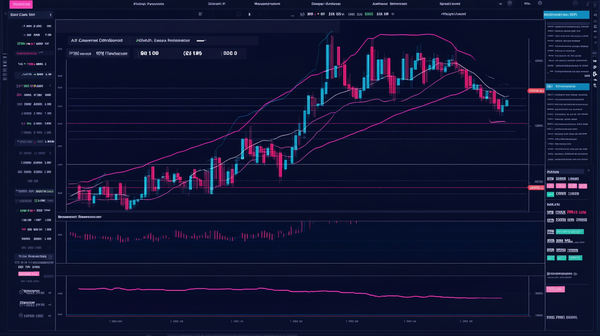
The WebTrader is built for speed over decoration: watchlist on the left, chart center, tickets that don’t block the screen. I stress-tested execution during the Tokyo–London handover on EUR/USD with market and limit orders; fills were consistent, and I didn’t run into “re-quote theater.” You don’t get the huge MT4/MT5 plugin ecosystem here (EAs, custom indicators, third-party bridges), so systematic traders may feel constrained unless the broker later confirms those integrations.
Termavise App: Mobile Trading Experience
On the Termavise app, the layout mirrors the browser version closely, and the Termavise login stayed stable across multiple sessions with biometric unlock enabled. I could set SL/TP, flip from chart to ticket quickly, and close positions with a single action from the positions tab. Deposits and withdrawals are accessible inside the app, which is convenient, but the chart can feel tight on smaller screens when you stack indicators and drawing tools.
Charting, Tools & Research
Tools are practical: a built-in economic calendar, a news feed that highlights major releases, and the usual indicator kit (MA, RSI, MACD, Bollinger) with basic alerts and watchlists. For discretionary trading, it’s enough. For deep research workflows—strategy testing, rich order analytics, or advanced depth-of-market—you’ll still want a specialized terminal and your own data stack.
Termavise Account Opening & Minimum Deposit
My signup started with email and phone verification, then a short profile covering residency and trading experience—more compliance checkbox than interrogation. KYC required a government-issued photo ID plus a proof of address dated within three months; once uploaded, the account moved to verified status later the same business day. The dashboard also nudged me to complete verification before initiating withdrawals, which is exactly how it should work under AML rules.
- Minimum Deposit: $200
- Funding Methods: Visa/Mastercard, bank wire, regional e-wallets, and cryptocurrencies (BTC, USDT)
- Demo Account: $10,000 virtual balance for testing spreads, margin behavior, and the interface
- Account Types: Standard (spread-only) and Raw/ECN-style (tighter spreads + commission)
For readers searching “Termavise minimum deposit,” the $200 entry point is realistic for testing, but don’t confuse “minimum” with “sufficient”—high leverage magnifies small mistakes fast. One detail I appreciated: the client area shows deposit status and timestamps clearly, which makes reconciliation easier when you track positions like a grown-up, not a gambler.
Termavise Customer Support Review
I probed support with a practical question: how swap/overnight fee rates are displayed for indices, and whether weekend financing is triple-counted on specific symbols. Live chat answered in about three minutes with a pointer to the symbol-specification panel and a clear note on when financing is applied. I also filed an email ticket asking about Termavise withdrawal steps after KYC; a complete reply landed roughly eight hours later with method-dependent timing ranges.
Coverage is broadly what you’d expect: 24/5 availability aligned to trading days, with language depth depending on who is on shift. Phone support wasn’t emphasized in my account area, so assume chat/email are the primary rails. On weekends, you can still browse the portal, but expect slower human responses—crypto markets don’t sleep, support teams often do.
Ready to Explore Termavise?
If you want to see current spreads, margin requirements, and the platform layout in your own region, start with a demo or a small deposit and verify KYC early. Check the instruments you actually trade—then decide whether the Raw/ECN tier makes sense for your volume.
Termavise Review FAQ
Is Termavise good for beginners?
It can be, if you treat it as a learning venue and keep position sizes small. The WebTrader is not overly complex and the demo helps, but leverage up to 1:500 is a beginner trap if you don’t understand margin calls and drawdowns. Offshore protection is thinner than Tier‑1 brokers, so beginners should prioritize risk controls.
Can I trade crypto on Termavise?
Yes, crypto CFDs are available, including BTC/USD and ETH/USD on my watchlist. Just remember you’re trading a derivative, not owning coins—no withdrawals to a wallet, no on-chain settlement, no self-custody. Weekend spreads and financing can be noticeably different from weekday conditions.
Is Termavise a scam?
No, it did not present as a scam in my 2026 test because deposits credited, trades executed, KYC was required, and withdrawals were processed. The bigger issue is jurisdiction: it’s an offshore-style broker, so recourse and compensation frameworks are not comparable to FCA/ASIC-level supervision. Always treat CFD trading as high risk and size accordingly.
Is Termavise available in the USA?
No, Termavise is not offered to USA residents. The platform’s onboarding and compliance checks are designed to filter restricted jurisdictions during registration and verification. If you’re in the US, look for a locally regulated provider instead.
How long does a Termavise withdrawal take?
Most withdrawals are processed internally within 24–48 hours after KYC is complete. After that, receipt time depends on the rail: cards commonly take 2–5 business days, bank wires 3–7 business days, and crypto can arrive the same day within hours. Plan ahead if you’re managing margin and don’t wait until you’re stressed.
What is the Termavise minimum deposit?
The Termavise minimum deposit is $200 in my test account. That’s enough to explore the interface and place small positions, but it’s not a cushion against volatility when leverage is high. If you’re new, consider the demo first and treat real funding as risk capital.
Does Termavise have a mobile app?
Yes, Termavise has iOS and Android apps that mirror the WebTrader layout. You can monitor positions, place orders with SL/TP, and manage deposits/withdrawals from the same interface. For heavy chart work, a larger screen still feels better, but the app handled active monitoring reliably.
Final Verdict: Should You Use Termavise in 2026?
Overall Score: 4.0/5
Leverage is the headline here, and Termavise delivers the kind of flexible CFD environment many offshore traders chase—fast access to FX, indices, metals, and a usable crypto CFD lineup—without drowning you in clutter. Execution on my EUR/USD tests around the Asia-to-Europe handover was stable, and the two-tier pricing (Standard vs. Raw/ECN-style) gives active traders a real choice. The caveat is the same old one: offshore registration means fewer formal protections, so discipline matters more than features. If you can’t define risk, don’t trade CFDs. If you can, Termavise is worth a controlled trial.
Best for: short-term CFD traders who want high leverage and simple web/mobile execution. Avoid if: you require Tier‑1 regulation, deep research tools, or you’re prone to overleveraging.