
Valorya Trading Platform Alternatives 2026 (Top Picks)
Valorya Trading Platform Alternatives 2026: Reliable Options for Online Traders
Leverage looks seductive when fiat is melting, but leverage also turns small mistakes into margin calls. That’s the uncomfortable truth behind many offshore CFD setups—and it’s why traders keep asking for Valorya alternatives in 2026. From what is typically observable in this broker category, Valorya presents itself as a Forex/CFD-first venue with a proprietary WebTrader and a mobile app, offering the usual menu: major FX pairs, indices, a handful of commodities, and crypto CFDs. The headline numbers many people notice first—like high leverage (often up to 1:500) and a relatively low minimum deposit (commonly around $250)—are also the exact features that amplify risk if execution, transparency, or dispute resolution is weak.
For US and EU readers especially, the deciding factor is often not “how many instruments,” but who stands behind the rules. Offshore frameworks such as the Seychelles FSA can exist, yet they don’t typically provide the same investor-compensation structure or enforcement muscle as FCA, ASIC, CySEC, or the NFA. If you’re comparing brokers similar to Valorya, the real work is verifying regulation on public registers, understanding whether you’re trading CFDs (not owning the underlying), and calculating round-turn cost (spread + commission + slippage), not just scanning a homepage.
In this guide to Valorya trading platform alternatives 2026, I’ll map practical swap fees, execution models, and platform stacks to the kind of trading you actually do—so your next account is less about vibes and more about survivability.
Disclaimer: This article is for informational purposes only and does not constitute investment advice. CFDs and other leveraged products carry a high risk of loss and may not be suitable for all investors.
Key Takeaways (TL;DR)
- Offshore/high-leverage brokers can offer convenience, but regulated alternatives may add stronger safeguards like segregated client funds and formal complaint paths.
- Compare “round-turn” trading cost (spread + commission + likely slippage), not just maximum leverage or “from 0.0” marketing.
- If you need real stocks/ETFs (not stock CFDs), look at multi-asset brokers such as Interactive Brokers or Saxo Bank.
- Migrate safely by opening and verifying the new account first, exporting your trade history, then withdrawing using the same funding rail to satisfy AML rules.
What Is Valorya and How Does Its Trading Platform Work?
From a trader’s-eye view, Valorya sits in the familiar offshore CFD lane: FX and CFDs are the core offering, with crypto exposure typically delivered via CFDs rather than on-chain ownership. The operational feel is geared toward retail traders who want quick access, high leverage (commonly advertised around 1:500), and a single in-browser terminal rather than a pro-grade stack. That positioning can work for short-term speculation—until you hit questions about execution model, chargebacks, or what happens if a dispute escalates. In the universe of platforms like Valorya, the biggest difference between firms isn’t the number of chart indicators; it’s the strength of the rulebook and how reliably it’s enforced.
Valorya Web Trading Platform: Core Features and Tools
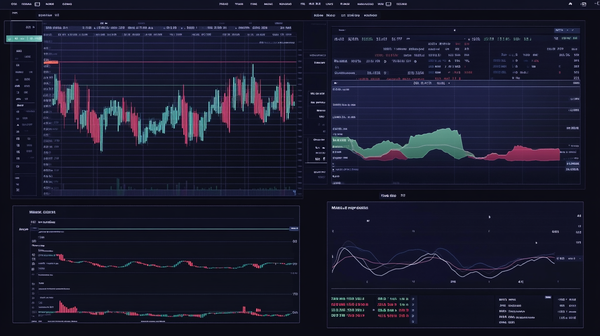
The typical Valorya-style WebTrader aims for “good enough” functionality: responsive charts, watchlists, and a streamlined order ticket. Expect standard order types (market, limit, stop), basic risk controls (SL/TP), and a modest indicator library rather than a deep quant toolkit. Charting usually covers multiple timeframes with drawing tools, but it rarely matches the workflow of MT4/MT5 or cTrader for strategy testing and automation. Mobile apps on iOS/Android usually mirror core functions—positions, balance, deposits/withdrawals, and push alerts—though complex layout customization tends to be thinner on phones. Execution speed can feel fine in calm markets, yet fast news spikes are where slippage and re-quotes (if present) show their teeth.
Trading Fees, Spreads, and Account Types at Valorya
Cost structure in this segment often follows a simple split: a “Standard” style account with the spread baked in, and a “Raw/ECN” style account that pairs tighter spreads with commission. A reasonable working assumption for EUR/USD on a Standard tier is around 2.0 pips typical spread, while Raw pricing can hover near 0.0–0.4 pips plus roughly $6–$8 round-turn commission per standard lot. Add the quiet leak: swap/overnight financing, which can dominate P&L if you hold CFD positions for days. Also watch for withdrawal handling fees and inactivity charges, which are common friction points among competitors to Valorya.
When Do Traders Start Looking for Valorya Alternatives?
Sometimes the catalyst is a single ugly trade: you were right on direction, wrong on execution, and the fill price did the damage. Other times it’s administrative—withdrawals take longer than expected, KYC requests arrive late in the process, or support replies feel scripted. Whatever the trigger, Valorya alternatives tend to get serious consideration when the “total cost of being wrong” becomes clearer than the “potential profit of being right.” Leverage (often up to 1:500) magnifies every pip, and that makes platform reliability and dispute resolution non-negotiable—not a luxury.
- You need MT4/MT5 or cTrader for automation (EAs, backtests, or copy frameworks) and the current WebTrader can’t support that workflow.
- You want a regulator with a well-known public register (FCA, ASIC, CySEC, NFA) and a clearer client-funds segregation framework than Valorya-style offshore setups.
- Your strategy is sensitive to slippage during macro releases, so you’re hunting for stronger execution disclosures (STP/ECN/DMA details) and better fill statistics.
- You’re shifting from short-term CFDs into real stocks/ETFs for longer horizons and don’t want the limitations of “CFDs only” equity exposure.
How to Choose a Reliable Alternative to the Valorya Trading Platform
I treat broker selection like cryptography: assume adversarial conditions and design for failure. The point isn’t paranoia; it’s resilience. A trader comparing alternatives to the Valorya trading platform should translate marketing into checkable facts—register entries, legal entity names, product disclosures, and the real all-in cost of a trade after spreads, commissions, and likely slippage.
Regulation, Safety, and Investor Protection
Start with the regulator that can actually bite: FCA (UK), ASIC (Australia), CySEC (EU), and NFA/CFTC (US) are the names that matter for enforcement. In the UK, FCA-regulated firms may fall under FSCS protection up to £85,000 for eligible claims; in Cyprus, CySEC firms can be linked to the ICF up to €20,000 (eligibility varies). Segregated client funds, negative balance protection (where applicable), and a documented complaints process are the boring details that save you when markets are not boring.
Available Markets and Instruments
Match instruments to purpose. If you only scalp EUR/USD and US30 CFDs, you can survive with a focused FX/CFD broker. If you’re building wealth, you may want real stocks and ETFs (with shareholder rights and proper custody), not equity CFDs. Futures and options also change the risk profile—margining, expiries, assignment—so a multi-asset venue is often the cleaner path. Crypto is its own trap: CFD exposure is price-only; it’s not self-custody, and it doesn’t give you “21 million— and not a coin more.”
Trading Costs: Spreads, Commissions, and Other Fees
Ignore “from” spreads; model your own round-turn cost. That means: average spread in live conditions + commission (if any) + the slippage you typically see around your entry/exit times. Swap/overnight fees matter if you hold CFDs past the session close, and they can be the hidden tax on swing trading. Also read the fee schedule for inactivity charges and withdrawals—small line items can become big when you move money frequently across currencies.
Platforms, Tools, and Execution Quality
Platform choice is strategy choice. MT4/MT5 are common for EA-driven FX trading; cTrader is popular with scalpers for depth-of-market and cleaner order handling; proprietary platforms vary wildly. Execution model matters too: market maker vs STP/ECN/DMA affects how orders are internalized, and it influences slippage behavior during volatility. If your edge is thin, latency and order routing are not “tech talk”—they are P&L.
Support, Education, and Overall User Experience
Speed counts when funds are at risk. Look for support hours that match your trading session, plus multilingual coverage if English isn’t your first language. Education can be fluff, but good brokers publish clear product disclosures, margin-call rules, and platform guides that reduce operational mistakes. Finally, check mobile parity: if you manage risk from a phone, you need reliable alerts, stable charting, and fast position edits—not a pretty interface that freezes during high volume.
Valorya and Different Asset Classes: When Alternatives May Be Better
Valorya Forex and CFD Trading
Forex and index CFDs are usually the center of gravity for Valorya-style brokers: think roughly a few dozen FX pairs (often 30–50), plus 8–15 indices and a small list of commodities. The trade-off is that the package often leans on high leverage (commonly up to 1:500) and a simpler WebTrader, which can be fine for discretionary trades but less ideal for systematic execution. Regulated options vs Valorya tend to be clearer on execution and risk controls. For FX specialists, Pepperstone (FCA/ASIC/CySEC/DFSA) and OANDA (CFTC/NFA in the US plus FCA/ASIC/IIROC elsewhere) are known for robust infrastructure and transparent pricing models. If you scalp, the difference between a ~2.0 pip “typical” spread and a raw-spread-plus-commission setup becomes tangible over a month’s volume—especially once slippage is accounted for.
Valorya Stock and ETF Trading
Stock and ETF access is where many offshore CFD-first platforms disappoint long-term investors. Even when “stocks” are listed, the exposure is often via CFDs—no voting rights, no direct ownership, and financing costs that can make holding expensive. Traders seeking top substitutes for Valorya for equities typically benefit from a true multi-asset broker. Interactive Brokers (SEC/FINRA in the US; FCA in the UK; IIROC in Canada) offers broad access to real shares, ETFs, options, futures, and bonds with a professional-grade toolkit and DMA-style market access in many venues. Saxo Bank (FCA/DFSA/MAS, among others by entity) also caters to multi-asset allocation with sophisticated platform features. If your plan is “buy and hold,” real ownership beats CFDs—especially when overnight fees and corporate action handling enter the picture.
Valorya Crypto Trading
Crypto on CFD platforms is usually a price bet, not possession. You can’t withdraw BTC from a CFD account to your hardware wallet; you’re exposed to the broker’s pricing and risk controls, and the product can be restricted by jurisdiction. That’s fine for short-term hedging, but it’s not Bitcoin in the “keys, not coins” sense. Among brokers similar to Valorya but under stronger oversight, IG (FCA/ASIC/MAS) offers crypto CFDs in certain regions, and Plus500 (FCA/CySEC/ASIC/MAS) also lists crypto CFDs depending on local rules. Treat these as leveraged derivatives with gap risk and weekend volatility. For actual Bitcoin ownership, a regulated exchange and self-custody are a different conversation—one that ends with a seed phrase, not a PDF statement.
Best Valorya Alternatives for 2026: Comparison of Top Trading Platforms
Interactive Brokers (IBKR): Key Facts and How It Compares to Valorya
Regulation: SEC/FINRA (US), FCA (UK), IIROC (Canada)
Markets: Stocks, ETFs, options, futures, bonds, FX
Fees: FX pricing is typically tight with transparent commissions; stock/ETF pricing varies by venue and plan
Platform: Trader Workstation (TWS), IBKR mobile, web platform, API access
Best For: Real multi-asset investing (DMA-style access)
Pepperstone: Key Facts and How It Compares to Valorya
Regulation: FCA, ASIC, CySEC, DFSA
Markets: FX, CFDs (indices, commodities, some crypto CFDs where permitted)
Fees: EUR/USD often ~0.0–0.3 pips on Raw-style pricing + commission; ~1.0+ pip range on Standard-style pricing
Platform: MT4, MT5, cTrader, TradingView integration (where available)
Best For: Low-latency FX scalping and algorithmic setups
IG: Key Facts and How It Compares to Valorya
Regulation: FCA, ASIC, MAS
Markets: CFDs (FX, indices, commodities, shares), spread betting (UK/IE), crypto CFDs in select regions
Fees: Typical costs depend on market; FX spreads can be competitive on majors, with financing on leveraged positions
Platform: Proprietary web platform, mobile apps, MT4 (where offered)
Best For: Broad CFD coverage with strong regulatory footprint
OANDA: Key Facts and How It Compares to Valorya
Regulation: CFTC/NFA (US), FCA, ASIC, IIROC
Markets: FX (core), CFDs in some regions (indices/commodities)
Fees: Pricing is typically spread-based on standard accounts; costs vary by region and instrument
Platform: OANDA web/mobile, MT4 (where available), APIs
Best For: US-eligible FX trading and risk controls
Saxo Bank: Key Facts and How It Compares to Valorya
Regulation: FCA, DFSA, MAS
Markets: Stocks, ETFs, bonds, options, futures, FX, CFDs
Fees: Tiered pricing by account level; spreads/commissions vary by asset and region
Platform: SaxoTraderGO, SaxoTraderPRO
Best For: Portfolio builders who want pro-grade tools
Plus500: Key Facts and How It Compares to Valorya
Regulation: FCA, CySEC, ASIC, MAS
Markets: CFDs (FX, indices, commodities, shares, crypto CFDs where permitted)
Fees: Primarily spread-based pricing; overnight financing applies to leveraged holds
Platform: Proprietary web platform and mobile apps
Best For: Simple, app-first CFD execution
Comparison Summary
| Platform | Regulation | Main Markets | Typical Costs | Best For |
|---|---|---|---|---|
| Interactive Brokers (IBKR) | SEC/FINRA, FCA, IIROC | Real stocks/ETFs, options, futures, bonds, FX | Commission schedules by product/venue; FX typically tight with transparent fees | Real multi-asset investing (DMA-style access) |
| Pepperstone | FCA, ASIC, CySEC, DFSA | FX + CFDs | Raw: ~0.0–0.3 pips + commission; Standard: ~1.0+ pip range | Low-latency FX scalping and algorithmic setups |
| IG | FCA, ASIC, MAS | CFDs across FX/indices/shares; spread betting (UK) | Variable spreads by market; financing on leveraged positions | Broad CFD coverage with strong regulatory footprint |
| OANDA | CFTC/NFA, FCA, ASIC, IIROC | FX (plus regional CFDs) | Typically spread-based; region-dependent pricing | US-eligible FX trading and risk controls |
| Saxo Bank | FCA, DFSA, MAS | Stocks/ETFs, options/futures, FX, CFDs | Tiered spreads/commissions; varies by asset and account level | Portfolio builders who want pro-grade tools |
| Plus500 | FCA, CySEC, ASIC, MAS | CFDs (FX, indices, shares, crypto CFDs where allowed) | Spread-based; overnight fees for holding leveraged CFDs | Simple, app-first CFD execution |
How to Safely Move from Valorya to Another Broker
Switching platforms is not a “sign up and pray” event—it’s an operational migration with counterparty risk. Treat it like a controlled rollout: verify the new broker first, test execution with small size, then move capital in a way that won’t trigger avoidable AML delays. If you keep leveraged CFD exposure during the transition, remember that volatility doesn’t pause just because your paperwork is in progress.
- Confirm the new broker’s exact legal entity on the regulator’s public register (FCA Register, ASIC Connect, CySEC directory, or NFA BASIC) before you deposit.
- Open the new account and complete KYC (ID + proof of address) early, so you’re not stuck mid-withdrawal waiting for verification.
- Export statements, confirmations, and full trade history from Valorya before making changes; you may need them for taxes, audits, or disputes.
- Flatten exposure deliberately: close positions on the old platform and re-enter on the new one if needed—position transfers between CFD brokers are typically not supported.
- Withdraw funds using the same method you used to deposit where possible; many firms will enforce this under AML rules, and mismatches can slow processing.
Ready to Explore Valorya?
If you’re still evaluating, review current onboarding requirements, product disclosures, and region eligibility directly on the broker site. Then compare platform tools, margin rules, and typical trading costs against the Valorya alternatives listed above before you commit meaningful capital.
FAQ: Valorya Alternatives and Trading Platforms
What is the best alternative to Valorya in 2026?
The best alternative depends on whether you want real assets or just CFD exposure. For real stocks/ETFs plus advanced tooling, Interactive Brokers and Saxo Bank are strong picks; for FX/CFD execution and automation, Pepperstone is often a better fit than offshore-style platforms. If you’re US-based and focused on FX, OANDA is a practical regulated route.
Is Valorya a safe broker/platform?
Valorya appears to operate under an offshore framework (commonly seen under jurisdictions such as the Seychelles FSA in this broker segment), which is not the same safety profile as FCA/ASIC/CySEC/NFA oversight. That doesn’t automatically mean fraud, but it usually means weaker investor-protection mechanisms and fewer formal escalation options if something goes wrong. With leveraged CFDs and 1:500-style leverage, the risk is not only market risk—it’s also counterparty and operational risk.
Can I trade stocks, futures, or crypto with Valorya?
Valorya is typically positioned around Forex and CFDs, and any “stocks” or “crypto” access in this category is usually via CFDs rather than direct ownership. Futures are often not offered as exchange-traded contracts on offshore CFD platforms; when available, they’re commonly synthetic CFD versions. If you need real stocks/ETFs or listed futures, a multi-asset broker like Interactive Brokers or Saxo Bank is usually the cleaner match.
What should I check before switching from Valorya to another platform?
Verify regulation on the official register first, then confirm product terms: margin rules, negative balance protection, and how swaps/overnight fees are calculated. Next, compare round-turn trading costs (spread + commission + likely slippage) using your own typical trade size and schedule. Finally, export your records and complete KYC at the new broker before withdrawing from Valorya so you don’t get stuck in a paperwork bottleneck.
About the Author: Kenji Tanaka is a Tokyo-based financial journalist and active trader focused on market structure, execution quality, and the real-world risks of leverage. He studied cryptography at the University of Tokyo (incomplete) and approaches broker due diligence with the same mindset: verify, don’t trust. Bitcoin taught him one rule that fiat institutions still ignore—21 million, and not a coin more.