Vaste Rendébrance Trading Platform Alternatives 2026
Vaste Rendébrance Trading Platform Alternatives 2026: Reliable Options for Online Traders
Leverage can feel like a shortcut—until one fast candle turns it into a trap. That’s the mood many traders report after time on offshore CFD venues, and it’s why searches for Vaste Rendébrance alternatives keep climbing into 2026. Broadly, Vaste Rendébrance presents as an offshore-style forex/CFD broker (commonly seen operating under a Seychelles FSA framework in this segment), with a proprietary WebTrader and mobile app aimed at quick onboarding and frequent trading. The offering typically centers on major/minor FX pairs, index and commodity CFDs, and a menu of crypto CFDs—useful for speculation, but very different from owning assets outright.
Two frictions tend to show up. First: safety and recourse. When the rulebook sits offshore, you often lose the protections traders in the US/UK/EU expect—segregated client funds standards you can verify, formal dispute paths, and compensation schemes like FSCS or ICF. Second: execution and cost transparency. A “from 2.0 pips” EUR/USD spread on a standard-style account may be workable for swing trades, but it punishes high-turnover strategies, and the real bill shows up in slippage, swaps, and withdrawal handling.
This guide to Vaste Rendébrance and its closest substitutes focuses on what matters in practice: regulator quality, true cost-of-trade, execution model, and whether you get real multi-asset access or only CFDs. If you’re comparing platforms like Vaste Rendébrance, treat the decision like custody: the fine print is the product.
Disclaimer: This article is for informational purposes only and does not constitute investment advice. CFDs and other leveraged products can move against you quickly and can result in losses that exceed expectations.
Key Takeaways (TL;DR)
- Offshore-style CFD brokers may offer high leverage (often marketed around 1:500), but tier‑1 regulated alternatives usually trade lower leverage for stronger client protections and clearer complaint channels.
- Compare brokers using round‑turn trading cost (spread + commission + expected slippage), not headline spreads alone—especially if you trade frequently.
- If you want real stocks/ETFs or exchange-traded futures, prioritize multi‑asset brokers (e.g., IBKR, Saxo) rather than CFD-only venues.
- Migrate safely by verifying the new broker on official registers first, then completing KYC before you request withdrawals from your current platform.
What Is Vaste Rendébrance and How Does Its Trading Platform Work?
From a trader’s perspective, Vaste Rendébrance fits the familiar offshore CFD blueprint: FX and CFD products first, a browser-based platform, and a mobile app designed for fast order entry. The execution is typically presented as “brokerage,” but in this corner of the market many firms effectively operate as market makers or hybrid models, meaning your fills depend on their internal pricing and risk controls. The target user is usually the retail trader who wants quick access to leveraged forex, indices, commodities, and crypto CFDs—without the heavier onboarding and tighter leverage limits that FCA/NFA-style regimes impose. For competitors to Vaste Rendébrance, the biggest contrast is not the chart colors; it’s enforceable oversight and client-money rules.
Vaste Rendébrance Web Trading Platform: Core Features and Tools
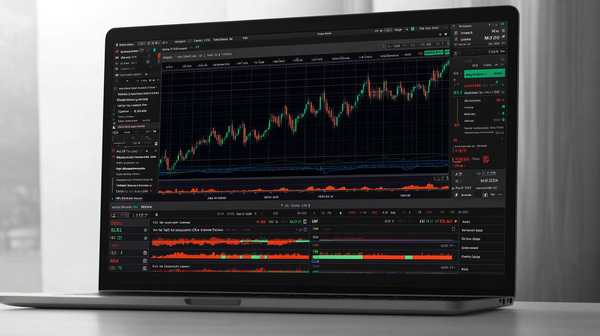
The WebTrader experience is generally basic-to-mid: clean watchlists, one-click trading, and standard chart templates that cover most retail needs. Charting usually includes common indicators (moving averages, RSI, MACD), drawing tools (trendlines, fibs), and multiple timeframes, but it rarely matches the depth of MT5, cTrader, or institutional terminals. Order types tend to be the essentials—market, limit, stop, and stop-loss/take-profit—while advanced conditional orders are less consistent. Mobile parity is often decent for monitoring and managing risk on the go, though traders who depend on tight execution will notice that web/mobile environments can be more sensitive to latency spikes and slippage than a well-tuned desktop stack.
Trading Fees, Spreads, and Account Types at Vaste Rendébrance
Cost structure in this segment commonly splits into a spread-only “standard” tier and a lower-spread account that adds commission. A realistic yardstick is EUR/USD around from ~2.0 pips on a standard-style account, with higher costs embedded in wider spreads during volatile sessions. Raw/ECN-style branding, where offered by similar offshore brokers, often means near-zero spreads plus a round-turn commission, but terms vary and should be read line by line. Expect overnight financing (swap) on CFD positions, and treat it as a real expense if you hold trades for days. Minimum deposits are often positioned around $250, and advertised max leverage can reach 1:500—a combination that amplifies both opportunity and liquidation risk.
When Do Traders Start Looking for Vaste Rendébrance Alternatives?
One sharp moment triggers most platform switches: the day you need help—withdrawal, dispute, margin incident—and discover how little recourse you have offshore. That’s when “cheap access” stops feeling cheap. For traders comparing Vaste Rendébrance alternatives, the decision usually isn’t emotional; it’s operational. Can you verify the regulator? Are client funds segregated? Do you get negative balance protection where required? And does the platform support your strategy without hidden friction like widened spreads around news or inconsistent fills?
- Withdrawal requests start taking longer than the stated timeline, or you’re pushed toward alternative payout methods that complicate AML checks.
- You need MT4/MT5 or cTrader for an automated system (EAs, custom indicators), but the current WebTrader limits tooling and backtesting.
- Your trading journal shows that a “from 2.0 pips” spread becomes materially wider during your active hours, raising round-turn costs.
- You want access to real stocks/ETFs or exchange-traded futures—not only stock CFDs—so portfolio exposure matches long-term objectives.
How to Choose a Reliable Alternative to the Vaste Rendébrance Trading Platform
Pick a broker the way you’d size a position: start with risk, then work toward convenience. “Best” depends on what you trade, how often you trade, and how much you value enforceable protections over maximum leverage. The cleanest workflow is to shortlist regulated options vs Vaste Rendébrance, confirm eligibility for your country, and then compare true all-in trading costs plus the platform stack you actually need.
Regulation, Safety, and Investor Protection
In the UK/EU/US, the regulator is not a logo—it’s a database entry you can check. FCA (UK), ASIC (Australia), CySEC (Cyprus/EU), and NFA/CFTC (US) each impose capital standards, conduct rules, and audit expectations. Investor compensation matters too: FSCS in the UK can cover up to £85,000 in certain cases, while CySEC-linked ICF coverage is typically up to €20,000 (eligibility and conditions apply). Look for segregated client funds disclosures and policies around negative balance protection, then verify the legal entity on the regulator’s public register.
Available Markets and Instruments
Ask a blunt question: do you want exposure or ownership? CFD brokers can give fast access to FX, indices, and commodities, but “stocks” are frequently CFDs—no shareholder rights, no exchange routing, and different tax treatment. Multi-asset brokers may provide real stocks/ETFs, options, bonds, and listed futures, which changes how you build a portfolio. If your plan includes long-horizon allocation (not just short-term trading), prioritize brokers similar to Vaste Rendébrance only for CFDs, and look elsewhere for the rest.
Trading Costs: Spreads, Commissions, and Other Fees
Ignore the marketing word “tight” and calculate round-turn cost-of-trade. For FX, that’s spread (in pips) plus commission (if any), adjusted by how often you trade and what you expect in slippage. Also price in swap/overnight financing—CFDs can quietly tax your returns when you hold positions. Check for inactivity fees and withdrawal fees too; they’re small individually, but they add up in real account life. If you’re coming from Vaste Rendébrance, use your own trade history to estimate monthly costs under each alternative’s fee schedule.
Platforms, Tools, and Execution Quality
Platform choice is strategy choice. MT4 remains common for FX workflows and legacy EAs; MT5 expands depth and markets; cTrader is popular for execution clarity and modern UI. Proprietary WebTrader stacks vary—some are excellent, many are thin. Execution model matters: market maker pricing can be fine for casual traders, while STP/ECN/DMA setups are often preferred by scalpers and news traders who care about fills. Watch for slippage notes, latency sensitivity, and how margin calls are handled during sharp moves.
Support, Education, and Overall User Experience
Support quality becomes visible when something breaks. Check whether service is 24/5 or 24/7, whether your language is covered, and how issues are escalated (ticket, live chat, phone). Education can be a signal of maturity—platform tutorials, margin explanations, and risk tools usually indicate fewer surprises. Finally, test mobile parity: if you manage risk from your phone, you want full order management and clear reporting, not a stripped-down companion app.
Vaste Rendébrance and Different Asset Classes: When Alternatives May Be Better
Vaste Rendébrance Forex and CFD Trading
Forex and CFDs are the core proposition here: roughly a few dozen FX pairs, a modest list of indices and commodities, and leverage marketed around 1:500. The trade-off is that the cost picture can be heavier than it looks. A typical EUR/USD spread “from ~2.0 pips” is already a meaningful hurdle for active traders, and the real pain often arrives in variable spreads during news plus slippage on stop orders. Regulated FX/CFD specialists tend to win on transparency and tool choice: Pepperstone and IC Markets both support MT4/MT5/cTrader and are built for high-frequency workflows with raw-spread + commission pricing models. If you’re evaluating top substitutes for Vaste Rendébrance for short-term FX, execution quality and consistent pricing during your trading hours matter more than maximum leverage.
Vaste Rendébrance Stock and ETF Trading
Stock and ETF access is where many offshore CFD venues feel thin. Even when “shares” are listed, they’re frequently stock CFDs—good for short-term directional trades, but not the same as owning the underlying equity or ETF. Dividends are handled as cash adjustments, corporate actions can be simplified, and you don’t get exchange routing or shareholder rights. Tier‑1 multi‑asset brokers close this gap. Interactive Brokers (IBKR) is the heavyweight for real stocks/ETFs, options, futures, and global market access—designed for serious portfolio builders. Saxo Bank offers a polished multi-asset suite that also leans into research and risk controls. For many traders, this is the clean dividing line between “platforms like Vaste Rendébrance” and brokers built for long-term allocation.
Vaste Rendébrance Crypto Trading
Crypto on offshore CFD platforms is usually CFD exposure—price speculation without on-chain ownership. That means no withdrawals to your own wallet, no self-custody, and no “not your keys” reality check. As a Bitcoin orthodox from Tokyo, I’ll be blunt: CFDs are trading instruments, not money. If you still want crypto-price exposure inside a regulated trading account, some regulated brokers provide crypto CFDs (availability depends on jurisdiction and product rules). IG, for example, is known for broad CFD coverage and strong oversight in multiple regions, while Plus500 also offers crypto CFDs in certain locales under its regulated entities. If your goal is actual Bitcoin ownership, that’s a different conversation—one that starts with self-custody, not a broker login.
Best Vaste Rendébrance Alternatives for 2026: Comparison of Top Trading Platforms
Interactive Brokers (IBKR): Key Facts and How It Compares to Vaste Rendébrance
Regulation: SEC/FINRA (US), FCA (UK), IIROC (Canada)
Markets: Real stocks, ETFs, options, futures, bonds, FX (availability varies by region)
Fees: FX pricing varies by venue/account; equities typically low per-share/commission schedules; compare all-in costs per product
Platform: Trader Workstation (TWS), web portal, mobile app, APIs
Best For: Real multi‑asset investing and listed markets access
Pepperstone: Key Facts and How It Compares to Vaste Rendébrance
Regulation: FCA (UK), ASIC (Australia), CySEC (Cyprus), DFSA (Dubai)
Markets: FX and CFDs (indices, commodities, some crypto CFDs where permitted)
Fees: Standard spreads often around ~1.0–1.2 pips on EUR/USD; Razor/Raw-style pricing can be ~0.0–0.3 pips + commission (varies by entity)
Platform: MT4, MT5, cTrader, TradingView integrations (where available)
Best For: Scalpers and algorithmic traders who need MT4/MT5/cTrader
Saxo Bank: Key Facts and How It Compares to Vaste Rendébrance
Regulation: FCA (UK), MAS (Singapore), DFSA (Dubai)
Markets: Stocks, ETFs, bonds, options, futures, FX, CFDs
Fees: Pricing depends on account tier; FX spreads can be competitive on majors; commissions apply on exchange-traded instruments
Platform: SaxoTraderGO, SaxoTraderPRO
Best For: Research-driven traders wanting a premium multi‑asset platform
OANDA: Key Facts and How It Compares to Vaste Rendébrance
Regulation: CFTC/NFA (US), FCA (UK), ASIC (Australia), IIROC (Canada)
Markets: FX (and CFDs where permitted by region)
Fees: Typically spread-based pricing; EUR/USD spreads commonly around ~0.8–1.6 pips depending on market conditions and entity
Platform: OANDA Trade (web/mobile), MT4 (availability depends on region)
Best For: US/UK traders prioritizing straightforward FX access under strong oversight
IG: Key Facts and How It Compares to Vaste Rendébrance
Regulation: FCA (UK), ASIC (Australia), MAS (Singapore)
Markets: CFDs across FX, indices, commodities, shares (often as CFDs), crypto CFDs where permitted
Fees: Costs vary by instrument; FX spreads can be competitive on majors; financing/swap applies on leveraged positions
Platform: IG web platform, mobile app, MT4 (region-dependent)
Best For: Broad CFD market coverage with robust risk tools
IC Markets: Key Facts and How It Compares to Vaste Rendébrance
Regulation: ASIC (Australia), CySEC (Cyprus), FSA (Seychelles) (group-level)
Markets: FX and CFDs (indices, commodities, some crypto CFDs where allowed)
Fees: Raw spread accounts often near ~0.0–0.3 pips on EUR/USD + commission; standard accounts typically wider (conditions vary by entity)
Platform: MT4, MT5, cTrader
Best For: High-volume FX traders focused on tight pricing
Comparison Summary
| Platform | Regulation | Main Markets | Typical Costs | Best For |
|---|---|---|---|---|
| Interactive Brokers (IBKR) | SEC/FINRA, FCA, IIROC | Real stocks/ETFs, options, futures, bonds, FX | Product-based commissions; FX varies by schedule/venue | Real multi‑asset investing and listed markets access |
| Pepperstone | FCA, ASIC, CySEC, DFSA | FX + CFDs | ~1.0–1.2 pip (Standard); ~0.0–0.3 pip + commission (Raw/Razor) | Scalpers and algorithmic traders who need MT4/MT5/cTrader |
| Saxo Bank | FCA, MAS, DFSA | Stocks/ETFs, options, futures, FX, CFDs | Tiered pricing; spreads/commissions depend on product | Research-driven traders wanting a premium multi‑asset platform |
| OANDA | CFTC/NFA, FCA, ASIC, IIROC | FX (plus CFDs where permitted) | Spread-based; EUR/USD often ~0.8–1.6 pips in typical conditions | US/UK traders prioritizing straightforward FX access under strong oversight |
| IG | FCA, ASIC, MAS | CFDs across FX/indices/commodities/shares; crypto CFDs where allowed | Instrument-dependent spreads; financing on leveraged trades | Broad CFD market coverage with robust risk tools |
| IC Markets | ASIC, CySEC, FSA (Seychelles) (group-level) | FX + CFDs | ~0.0–0.3 pip + commission (Raw); wider on Standard | High-volume FX traders focused on tight pricing |
How to Safely Move from Vaste Rendébrance to Another Broker
Switching brokers is not a cosmetic “new app” decision; it’s a controlled unwind and re‑deploy. The clean approach minimizes time with double exposure, avoids AML surprises, and preserves records for taxes and disputes. Before you move meaningful size, assume that leverage and CFDs can punish rushed execution—especially during volatile sessions—and plan the sequence like a risk manager, not a gambler.
- Confirm the new broker’s legal entity on the regulator’s own site (FCA Register, ASIC Connect, CySEC register, or NFA BASIC) and match the name to the account-opening paperwork.
- Open the new account and complete KYC first (ID + proof of address). Many traders lose days by waiting to verify until after they’ve already tried to withdraw.
- Export statements, trade history, and funding records from Vaste Rendébrance while you still have full dashboard access, then store copies offline.
- Flatten open positions before moving, then re-enter on the new platform if you still want exposure. Position transfers between unrelated CFD brokers are rarely practical.
- Request withdrawals using the same rails you deposited with wherever possible; AML rules often force “return to source,” and mismatches can delay processing.
Ready to Explore Vaste Rendébrance?
If you’re still evaluating the platform itself, review current onboarding steps, funding methods, and regional restrictions before committing capital. Compare the WebTrader/mobile feature set to the regulated options above, then decide whether your strategy actually benefits from the leverage and instrument mix on offer.
FAQ: Vaste Rendébrance Alternatives and Trading Platforms
What is the best alternative to Vaste Rendébrance in 2026?
The best alternative depends on whether you want real multi-asset ownership or primarily FX/CFD trading. For real stocks/ETFs and listed futures access, Interactive Brokers (IBKR) is often the strongest fit; for FX execution and platform choice, Pepperstone or IC Markets are common picks. If you want a broad CFD menu under tier‑1 oversight, IG is typically a more regulated route than offshore-style venues.
Is Vaste Rendébrance a safe broker/platform?
Vaste Rendébrance appears to fit an offshore/unregulated profile (commonly associated with Seychelles FSA-style frameworks in this category), which generally provides weaker recourse than FCA/NFA/CySEC-regulated brokers. That doesn’t automatically mean “unsafe,” but it does mean fewer enforceable protections and typically no FSCS/ICF-style compensation coverage. If safety is your priority, focus on regulated options vs Vaste Rendébrance and verify the specific legal entity on the regulator’s public register.
Can I trade stocks, futures, or crypto with Vaste Rendébrance?
Vaste Rendébrance is typically positioned around forex and CFDs, with crypto CFDs commonly offered and “stocks” often available, if at all, as CFDs rather than real shares. Exchange-traded futures and true multi-asset ownership are more reliably supported at brokers like IBKR or Saxo. For crypto, remember the difference: a crypto CFD tracks price, but you don’t receive on-chain ownership or wallet withdrawals.
What should I check before switching from Vaste Rendébrance to another platform?
Before switching, verify regulation on the official register (FCA/ASIC/CySEC/NFA) and confirm the exact legal entity you’ll contract with. Next, compare round‑turn costs (spread + commission + typical slippage) and make sure your required platform stack (MT4/MT5/cTrader/API) is supported. Finally, complete KYC at the new broker first, then export statements and plan withdrawals so AML “return to source” rules don’t surprise you.
About the Author: Kenji Tanaka is a Tokyo-based market commentator and active trader with a cryptography background (University of Tokyo—unfinished), focused on risk, execution, and market structure. I’m Bitcoin-orthodox—“21 million — and not a coin more”—and I view broker choice through the same lens: minimize trust, maximize verification, and don’t outsource sovereignty to opaque intermediaries.