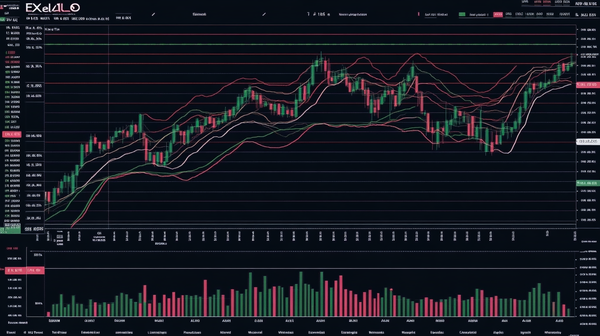
Vlurenadru Trading Platform Alternatives 2026
Vlurenadru Trading Platform Alternatives 2026: Reliable Options for Online Traders
Leverage is a loud seduction: big position, small margin, fast dopamine. That’s also how accounts get liquidated. If you’ve been using Vlurenadru or you’re considering it, you’re probably looking at a CFD-style setup—forex pairs, indices, commodities, and often crypto CFDs—wrapped in a proprietary WebTrader and a mobile app. In this offshore corner of the industry, typical terms look like a ~$250 minimum deposit, headline leverage around 1:500, and a “from ~2.0 pips” EUR/USD spread on a standard-style account. None of that is automatically “wrong,” but it changes your risk profile immediately: counterparty risk matters more, withdrawals can become the real trade, and protections you’d expect under FCA/ASIC/CySEC/NFA frameworks usually aren’t part of the package.
For 2026, the most practical way to reduce that risk is to compare Vlurenadru alternatives that operate under tier-1 oversight and publish clearer rules around negative balance protection, segregated client funds, and complaint handling. This isn’t about chasing the tightest spread banner. It’s about execution quality, funding reliability, and whether you’re trading contracts (CFDs) versus owning the underlying asset. And yes—my bias is open: banks and fiat systems are fragile, and Bitcoin’s 21 million cap is the only monetary policy that doesn’t lie. Still, if you’re trading CFDs, choose the cleanest plumbing you can get.
Disclaimer: This article is for informational purposes only and does not constitute investment advice. CFDs and other leveraged products carry a high risk of loss and may not be suitable for all investors.
Key Takeaways (TL;DR)
- Offshore CFD-style platforms can offer high leverage (often ~1:500) but typically provide fewer formal investor protections than FCA/ASIC/CySEC/NFA-regulated brokers.
- Use “round-turn” cost (spread + commission for entry and exit) to compare pricing—especially if you scalp or trade frequently.
- If you want real stocks/ETFs (not equity CFDs), prioritize multi-asset brokers like Interactive Brokers or Saxo Bank that can provide DMA-style access.
- Switching platforms is a process: open and verify the new account first, export your trade history, then withdraw using the same funding method to reduce AML friction.
What Is Vlurenadru and How Does Its Trading Platform Work?
From a trader’s-eye view, Vlurenadru fits the familiar offshore CFD broker pattern: a forex-and-CFD-first offering aimed at retail clients who want quick onboarding, a simple interface, and high leverage. Publicly observable terms in this segment commonly include a ~$250 entry deposit, maximum leverage around 1:500, and a product menu centered on ~30–50 FX pairs plus indices, commodities, and a smaller list of crypto CFDs. The regulatory posture is typically “offshore,” often under jurisdictions such as Seychelles (FSA). That matters because the strongest dispute mechanisms, compensation schemes, and supervisory enforcement usually sit with FCA/ASIC/CySEC/NFA frameworks—not with lightly supervised registrations.
Vlurenadru Web Trading Platform: Core Features and Tools
The platform stack is usually a proprietary WebTrader with a companion iOS/Android app—good enough for basic discretionary trading, lighter on advanced workflow. Expect standard chart types, a workable set of indicators, and drawing tools for trend lines and support/resistance. Order handling is normally market/limit/stop with take-profit and stop-loss, but the nuance traders care about—partial fills, advanced conditional orders, and detailed execution reports—can be thinner than what you get on MT4/MT5/cTrader ecosystems. Mobile parity is often decent for monitoring and closing risk, yet serious analysis still tends to be desktop-first. This is the trade-off you see in many platforms like Vlurenadru: speed to start, less depth once you scale.
Trading Fees, Spreads, and Account Types at Vlurenadru
Cost structure in offshore CFD venues is typically spread-led on “Standard” style accounts, with EUR/USD commonly around ~2.0 pips in normal conditions. Some operators also advertise a raw/ECN-like tier where spreads can compress toward ~0.0–0.4 pips, then add a commission in the neighborhood of $5–$8 round-turn; whether that tier is meaningfully “ECN” depends on execution and routing, not the label. On top of entry/exit costs, swaps (overnight financing) can quietly dominate P&L for multi-day positions, especially on indices and crypto CFDs. Also watch for non-trading fees: inactivity charges and certain withdrawal fees are common pain points among competitors to Vlurenadru in the same offshore bracket.
When Do Traders Start Looking for Vlurenadru Alternatives?
Regret rarely comes from one bad trade; it comes from one bad process. With offshore CFD venues, the breaking point is often operational—funding, withdrawals, or unclear terms—rather than chart analysis. That’s why Vlurenadru alternatives are usually searched after a trader tries to scale position size, run a strategy that needs better tooling, or simply wants the comfort of a strict regulator and segregated client funds. High leverage (like 1:500) isn’t a feature if your broker’s controls and your own risk limits aren’t equally strong. The market is ruthless, and the plumbing matters.
- Needing MT4/MT5 or cTrader for an EA/scalping workflow, while a proprietary WebTrader can’t support your execution or automation requirements.
- Wanting formal investor protections (segregated client funds, clearer complaint handling, negative balance protection) typically associated with FCA/ASIC/CySEC supervision.
- Noticing that an advertised “from” spread doesn’t match realized trading costs once slippage and widenings hit during news or low liquidity.
- Trying to withdraw and encountering extra verification loops, delays, or payment-method restrictions that disrupt capital management.
How to Choose a Reliable Alternative to the Vlurenadru Trading Platform
Selection is not a beauty contest; it’s a risk-budget decision. Start by defining what you must trade (FX only vs. multi-asset), how you trade (scalping, swing, options hedging), and what failure you can’t tolerate (withdrawal friction, platform instability, weak oversight). Then compare regulated options vs Vlurenadru on protections, total cost of execution, and platform depth—not on maximum leverage headlines.
Regulation, Safety, and Investor Protection
For US/EU traders, regulator quality is the first filter: FCA (UK), ASIC (Australia), CySEC (EU), and NFA/CFTC (US) all impose reporting and conduct standards that offshore frameworks usually don’t match. Look for segregated client funds policies and whether negative balance protection is standard for retail accounts. Compensation schemes can matter too: the UK’s FSCS can cover eligible claims up to £85,000, while Cyprus’ ICF framework can cover eligible clients up to €20,000—details vary by entity and residency, so check the exact legal entity you’ll be onboarded to.
Available Markets and Instruments
Match the broker to the instrument reality. FX and index CFDs are common almost everywhere, but “stocks” can mean two very different products: real shares (with ownership rights) versus stock CFDs (no shareholder rights, financing costs, and different tax treatment). If your plan includes ETFs, options, or futures, you’ll want a multi-asset venue with those markets actually enabled. This is where many alternatives to the Vlurenadru trading platform separate into two camps: CFD-only convenience versus true market access.
Trading Costs: Spreads, Commissions, and Other Fees
Don’t compare a single pip number in isolation. The clean comparison is round-turn cost: the spread you cross plus commissions you pay to enter and exit. For a frequent trader, the difference between ~2.0 pips and ~0.6–1.0 pip effective cost can be the line between a viable edge and churn. Add swaps/overnight fees for holds, plus funding/withdrawal charges and inactivity fees. Price is a system, not a headline.
Platforms, Tools, and Execution Quality
Platform choice decides what strategies are even possible. MT4/MT5 and cTrader support EAs, custom indicators, and a mature ecosystem; proprietary platforms can be smoother but more limiting. Execution model matters: market maker setups can be fine for small flow, while STP/ECN/DMA routing is often preferred by traders sensitive to slippage and latency. If you’re leaving Vlurenadru, test execution the boring way—small size, multiple sessions, compare fills around liquid hours and major news.
Support, Education, and Overall User Experience
When money is stuck, “nice UI” is irrelevant. Check support hours that match your trading session, language coverage, and how fast they resolve funding tickets. Education is secondary, but good brokers explain margin policy, margin calls, and product risks without hiding behind jargon. Mobile parity matters if you manage risk on the move; still, stable desktop tools and transparent reporting are what you’ll rely on when volatility spikes.
Vlurenadru and Different Asset Classes: When Alternatives May Be Better
Vlurenadru Forex and CFD Trading
Vlurenadru’s likely sweet spot is standard retail FX/CFDs: roughly a few dozen currency pairs, plus indices and commodities, with leverage that can reach ~1:500. The catch is that leverage amplifies everything—including slippage and spread widening—so the broker’s execution quality becomes part of your strategy. If EUR/USD effectively costs ~2.0 pips on a standard-style account, a high-frequency approach bleeds fast. In contrast, regulated FX/CFD specialists like Pepperstone or IC Markets often offer “Raw” style pricing where spreads can be near zero in liquid hours and commissions are explicit, making the round-turn easier to model. That doesn’t guarantee profitability, but it reduces the hidden variables. For traders comparing brokers similar to Vlurenadru, execution reporting, order handling, and consistent fills during news can be more important than the maximum leverage number on a landing page.
Vlurenadru Stock and ETF Trading
If your goal is long-term exposure, “stock CFDs” are a different animal from owning shares. With CFDs, you don’t hold the underlying, you pay financing, and corporate actions can be handled differently than in a custody model. Offshore CFD platforms frequently focus on indices and FX first; when equities are present, they’re often CFDs rather than real DMA stock access. Multi-asset brokers such as Interactive Brokers and Saxo Bank are built for real stocks and ETFs across many exchanges, with tools for order routing, portfolio reporting, and (for eligible products) options and futures. That’s the cleanest way to close the gap if you’re moving from CFD-only exposure to actual ownership. Among top substitutes for Vlurenadru, this is the biggest structural upgrade: not just cheaper trading, but a different product category entirely.
Vlurenadru Crypto Trading
Crypto on CFD platforms is typically price exposure only—no on-chain withdrawal, no self-custody, no proof-of-reserves question to even ask. If Vlurenadru offers crypto CFDs (often ~10–30 coins in this segment), you’re trading a derivative with overnight financing and broker counterparty risk. That may suit short-term hedging, but it’s not “owning Bitcoin.” For regulated alternatives, IG commonly provides crypto CFDs in jurisdictions where permitted, and Plus500 offers crypto CFD exposure in many regions (availability depends on country rules). The operational benefit is clearer oversight and risk disclosures; the philosophical truth remains: CFDs are paper. If your endgame is holding BTC, withdraw to self-custody and remember the mantra—21 million, and not a coin more.
Best Vlurenadru Alternatives for 2026: Comparison of Top Trading Platforms
Interactive Brokers (IBKR): Key Facts and How It Compares to Vlurenadru
Regulation: SEC/FINRA (US), FCA (UK), IIROC (Canada) (entity depends on region)
Markets: Stocks, ETFs, options, futures, bonds, FX (spot), funds (market availability varies by country)
Fees: FX pricing is typically commission-based with tight spreads; total cost depends on volume and routing (varies by product)
Platform: Trader Workstation (TWS), IBKR Desktop/Web, mobile
Best For: Real multi-asset access (DMA-style) instead of CFD-only exposure
Pepperstone: Key Facts and How It Compares to Vlurenadru
Regulation: FCA (UK), ASIC (Australia), CySEC (EU), DFSA (Dubai)
Markets: FX and CFDs (indices, commodities, some crypto CFDs where permitted)
Fees: EUR/USD often ~0.0–0.3 pips + commission on Raw-style accounts; ~1.0+ pip typical on Standard-style pricing
Platform: MT4, MT5, cTrader, TradingView (availability varies), mobile
Best For: MT4/MT5/cTrader traders optimizing for tight execution costs
Saxo Bank: Key Facts and How It Compares to Vlurenadru
Regulation: FCA (UK), MAS (Singapore), DFSA (Dubai)
Markets: Stocks, ETFs, options, futures, FX, bonds, CFDs (product access varies by entity)
Fees: FX spreads often competitive on higher tiers; equities/ETFs typically use commission schedules (varies by exchange)
Platform: SaxoTraderGO, SaxoTraderPRO
Best For: Portfolio-style trading with strong reporting and cross-asset tooling
OANDA: Key Facts and How It Compares to Vlurenadru
Regulation: CFTC/NFA (US), FCA (UK), ASIC (Australia), IIROC (Canada)
Markets: FX (core) and CFDs in some regions (indices/commodities depending on entity)
Fees: Typically spread-only pricing; EUR/USD often around ~0.8–1.5 pips depending on account and market conditions
Platform: OANDA web/mobile, MT4 (availability varies)
Best For: FX-first traders who value brand longevity and transparent pricing
IG: Key Facts and How It Compares to Vlurenadru
Regulation: FCA (UK), ASIC (Australia), MAS (Singapore)
Markets: CFDs (indices, FX, commodities, shares), spread betting (UK/IE), crypto CFDs where permitted
Fees: Spread-based for many CFD products; EUR/USD often around ~0.6–1.2 pips in liquid conditions (varies by account/region)
Platform: IG web platform, mobile; MT4 (availability varies by region)
Best For: Broad CFD market coverage with strong risk controls for active retail
Plus500: Key Facts and How It Compares to Vlurenadru
Regulation: FCA (UK), CySEC (EU), ASIC (Australia), MAS (Singapore)
Markets: CFDs (FX, indices, commodities, shares), crypto CFDs where permitted
Fees: Primarily spread-based; costs vary by instrument with overnight fees for holds
Platform: Plus500 proprietary WebTrader, mobile app
Best For: Simpler CFD execution for beginners who don’t need MT4/MT5
Comparison Summary
| Platform | Regulation | Main Markets | Typical Costs | Best For |
|---|---|---|---|---|
| Interactive Brokers (IBKR) | SEC/FINRA, FCA, IIROC | Real stocks/ETFs, options, futures, bonds, FX | Commission-led pricing; tight FX spreads (varies by product/volume) | Real multi-asset access (DMA-style) instead of CFD-only exposure |
| Pepperstone | FCA, ASIC, CySEC, DFSA | FX + CFDs (indices/commodities; some crypto CFDs where permitted) | Raw: ~0.0–0.3 pips + commission; Standard: ~1.0+ pip | MT4/MT5/cTrader traders optimizing for tight execution costs |
| Saxo Bank | FCA, MAS, DFSA | Stocks/ETFs, options, futures, FX, CFDs, bonds | Tiered FX spreads; commissions for exchange-traded assets (varies) | Portfolio-style trading with strong reporting and cross-asset tooling |
| OANDA | CFTC/NFA, FCA, ASIC, IIROC | FX (core); CFDs in some regions | Mostly spread-only; EUR/USD often ~0.8–1.5 pips | FX-first traders who value brand longevity and transparent pricing |
| IG | FCA, ASIC, MAS | CFDs across many markets; crypto CFDs where permitted | Spread-based; EUR/USD often ~0.6–1.2 pips (conditions vary) | Broad CFD market coverage with strong risk controls for active retail |
| Plus500 | FCA, CySEC, ASIC, MAS | CFDs (FX/indices/commodities/shares; crypto CFDs where permitted) | Spread-based + overnight fees; varies by instrument | Simpler CFD execution for beginners who don’t need MT4/MT5 |
How to Safely Move from Vlurenadru to Another Broker
Switching brokers is like rotating cold storage keys: you do it slowly, with receipts, and you assume something will go wrong. Treat the move as a controlled operation—reduce open risk, verify the destination, and keep enough liquidity outside the market so you’re not forced to trade just to pay bills. If you’re migrating from Vlurenadru, remember that leveraged CFDs can gap; keep position sizes small during the transition window.
- Confirm the new broker’s legal entity on the regulator’s public register (FCA Register, ASIC Connect, CySEC database, or NFA BASIC) and match the website domain to the registered firm details.
- Open the new account and complete KYC/AML first (government ID + proof of address). Don’t wait until you need an urgent withdrawal to learn the verification timeline.
- Flatten risk on the old account: close open CFD positions rather than assuming they can be “transferred.” Rebuild exposure on the new broker only after you’ve tested execution.
- Export statements, confirmations, and funding history for your records and taxes. Keep screenshots of key pages (account details, withdrawal receipts) in case access changes later.
- Withdraw funds using the same rails used for deposit when possible; many brokers enforce source-of-funds rules, and mismatched payment methods can trigger delays.
Ready to Explore Vlurenadru?
If you’re still evaluating, review the platform conditions in your region, then compare them against regulated competitors on execution, fees, and withdrawal workflow. Read the margin rules twice. The goal isn’t excitement—it’s fewer nasty surprises when volatility hits.
FAQ: Vlurenadru Alternatives and Trading Platforms
What is the best alternative to Vlurenadru in 2026?
The best option depends on whether you need real multi-asset access or mainly FX/CFDs. For real stocks/ETFs and futures-grade tooling, Interactive Brokers or Saxo Bank are strong picks; for FX/CFD execution with MT4/MT5/cTrader, Pepperstone is often a cleaner fit. If your focus is broad CFD coverage (including crypto CFDs where permitted), IG is a frequent shortlist name among the best Vlurenadru alternatives 2026.
Is Vlurenadru a safe broker/platform?
Vlurenadru appears to operate under an offshore framework (commonly seen under jurisdictions such as Seychelles FSA), which generally offers fewer formal protections than FCA/ASIC/CySEC/NFA-regulated brokers. That doesn’t prove wrongdoing, but it does increase the importance of counterparty risk, withdrawal reliability, and clear legal terms. If safety is your priority, comparing Vlurenadru alternatives under tier-1 regulation is the more conservative route.
Can I trade stocks, futures, or crypto with Vlurenadru?
With offshore CFD brokers, stocks and indices are often offered as CFDs rather than real ownership, and exchange-traded futures are frequently not part of the core product. Crypto exposure, when available, is typically via crypto CFDs (price tracking without on-chain withdrawal). If you need real stocks/ETFs or futures, Interactive Brokers and Saxo Bank are more direct fits than many competitors to Vlurenadru.
What should I check before switching from Vlurenadru to another platform?
Before switching, verify the new broker on the regulator’s official register and confirm the exact legal entity you’ll be onboarded to. Next, compare total trading cost (spread + commission round-turn) and platform requirements (MT4/MT5/cTrader vs proprietary), then test with small size to observe slippage and order handling. Finally, export your statements and complete withdrawals from Vlurenadru using compliant funding methods to reduce AML-related delays.
About the Author: Kenji Tanaka is a Tokyo-based financial writer and active trader with a background in cryptography studies at the University of Tokyo (incomplete). I’m Bitcoin-orthodox—banks and fiat incentives are broken—so I obsess over counterparty risk, execution quality, and withdrawal reality. 21 million — and not a coin more.