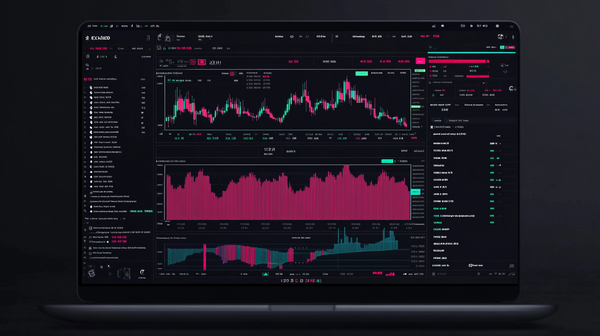

Wealthicato Trading Platform Alternatives 2026
Wealthicato Trading Platform Alternatives 2026: Reliable Options for Online Traders
Leverage is a loud amplifier: it boosts wins, and it punishes mistakes faster than your emotions can catch up. That’s the backdrop for why people search for Wealthicato alternatives in 2026—especially traders in the US/EU who care about clean execution, transparent oversight, and getting their money back when they ask for it. From what’s publicly typical for offshore CFD-first brokers, Wealthicato generally fits the familiar pattern: forex and CFDs at the center, a proprietary WebTrader with a companion iOS/Android app, and headline leverage that can run up to about 1:500. Minimum deposits in this segment commonly land around $250, and EUR/USD pricing is often closer to ~2.0 pips on a standard-style account than the “near-zero” numbers seen at sharper venues.
None of that automatically means “scam.” It does mean you’re playing on a field where rules can be softer: fewer investor-protection backstops, wider spreads, and more uncertainty around execution model and dispute resolution. If you’re used to Bitcoin’s brutal honesty—final settlement, no bailouts, no “sorry the bank reversed it”—then the idea of parking margin at an offshore CFD shop should make you extra picky. This guide lays out Wealthicato context, red flags to watch, and regulated options that can replace platforms like Wealthicato without turning your trading into a paperwork nightmare.
Disclaimer: This article is for informational purposes only and does not constitute investment advice. CFDs and other leveraged products carry a high risk of loss and may not be suitable for all investors.
Key Takeaways (TL;DR)
- Offshore-style CFD brokers often advertise high leverage (e.g., ~1:500), but the real edge usually comes from tighter spreads, better execution, and stronger regulator oversight.
- If you need real stocks/ETFs (not CFDs), multi-asset venues like Interactive Brokers or Saxo are structurally different from CFD-first platforms.
- Before you migrate, open and verify (KYC) the new account first; then close positions and withdraw using the same funding rails to reduce AML friction.
What Is Wealthicato and How Does Its Trading Platform Work?
From a trader’s-eye view, Wealthicato looks like an offshore-oriented, CFD-first brokerage setup aimed at retail accounts that want simple access to FX pairs, indices, commodities, and crypto CFDs. That product mix usually implies a “trade the price movement” model rather than owning underlying assets, and it tends to attract newer traders drawn by high leverage and a quick onboarding flow. US residents are typically restricted in this category, and other sanctioned jurisdictions are commonly blocked as part of AML controls. For people comparing brokers similar to Wealthicato, the key question isn’t the marketing—it's whether execution quality, client-fund handling, and dispute processes are built for resilience when markets spike and everyone hits the withdrawal button at once.
Wealthicato Web Trading Platform: Core Features and Tools
The platform stack is usually a proprietary WebTrader with a mobile app that mirrors the core functions: watchlists, basic charting, and a straightforward order ticket. Charting is often “good enough” for discretionary trading—common indicators, drawing tools, and multiple timeframes—without the depth power users expect from MT4/MT5 or cTrader ecosystems. Order types typically cover market/limit/stop, with fewer advanced choices (like sophisticated conditional orders) than you’d see at DMA-style brokers. Execution can feel fine in calm markets, but the real test is volatility: slippage, partial fills, and the way stop orders behave when spreads widen.
Trading Fees, Spreads, and Account Types at Wealthicato
Pricing at offshore CFD venues commonly splits into a standard account (spread-only) and a “raw/ECN-style” tier that pairs lower spreads with a commission. A reasonable expectation for EUR/USD on a standard-style account is around ~2.0 pips typical, while a raw tier may show 0.0–0.4 pips plus roughly $5–$8 round-turn commission. Overnight financing (swap) is a core cost for CFD positions held past rollover; it’s easy to ignore until it becomes the main drag on performance. Withdrawal and inactivity fees vary widely across competitors to Wealthicato, so you want the fee schedule in writing before funding.
When Do Traders Start Looking for Wealthicato Alternatives?
Regulation isn’t a sexy topic—until it’s the only thing standing between you and a dead-end support ticket. Many traders start exploring Wealthicato alternatives after one of two moments: a high-volatility session that reveals execution weaknesses, or a “simple” withdrawal that turns into unexpected friction. Add high leverage (often up to ~1:500) and you get a setup where small pricing differences and platform behavior matter more than slogans. If you’re operating from the US/EU compliance reality, regulated options vs Wealthicato can also mean clearer disclosures, negative balance protection in certain regions, and defined complaint pathways.
- You want MT4/MT5 or cTrader for EAs, custom indicators, or strategy testing that a proprietary WebTrader can’t replicate.
- Your trading style is spread-sensitive (scalping/news) and ~2.0 pips on EUR/USD is too expensive over a month of volume.
- You need a broker with strong public oversight (FCA/ASIC/CySEC/NFA) and segregated client funds rather than offshore-only supervision.
- You’re trying to trade real stocks/ETFs (with corporate action handling) instead of stock CFDs with financing costs.
How to Choose a Reliable Alternative to the Wealthicato Trading Platform
Think of the switch as a fit-to-strategy problem, not a beauty contest. A broker can look “modern” and still be the wrong tool if your edge depends on tight spreads, predictable margin rules, or API access. Shortlist alternatives to the Wealthicato trading platform by defining your non-negotiables first: jurisdiction, instruments, platform stack, and what happens if there’s a dispute.
Regulation, Safety, and Investor Protection
Start with the regulator’s public register: FCA (UK), ASIC (Australia), CySEC (Cyprus), or NFA/CFTC (US). These frameworks usually require segregated client funds and baseline risk disclosures, and they can offer formal complaint routes. In the UK, the FSCS can cover eligible claims up to £85,000; in Cyprus, the ICF can cover eligible claims up to €20,000. That’s not a profit guarantee—it’s a last-resort safety net that offshore setups typically don’t match.
Available Markets and Instruments
Asset access decides your whole workflow. If you only need FX and index CFDs, an FX/CFD specialist can be efficient. If you want real stocks/ETFs, options, or futures, you’re in a different world: custody, routing, and corporate actions matter. Many platforms like Wealthicato focus on CFDs, which means you’re trading a contract with the broker—not holding the underlying asset. Choose based on what you truly need to express your thesis.
Trading Costs: Spreads, Commissions, and Other Fees
Compare costs using a round-turn lens: spread + commissions + expected slippage, then add swap/overnight fees for holding periods. A “low spread” headline can be meaningless if commissions are high or if execution slips during volatility. Watch for non-trading fees too: inactivity charges, conversion markups, and withdrawal fees. In leveraged products, small cost differences compound quickly because position sizes are larger than your cash.
Platforms, Tools, and Execution Quality
Platform choice is really a choice of ecosystem. MT4/MT5 and cTrader support automation, robust chart packages, and a deep third-party tool market; proprietary platforms can be clean but closed. Ask how orders are executed—market maker vs STP/ECN/DMA—and what that implies for requotes, slippage, and stop behavior. I also look for clear negative balance protection terms where applicable, because leverage cuts both ways.
Support, Education, and Overall User Experience
When something breaks, support becomes part of your risk model. Check live-chat hours, ticket response times, and whether support can handle platform logs and trade investigations instead of sending copy-paste answers. Education matters if you’re leveling up (margin calls, swap math, position sizing), but a slick webinar schedule can’t compensate for weak trade reporting. Mobile parity is also practical: can you manage risk cleanly from the phone during a fast market?
Wealthicato and Different Asset Classes: When Alternatives May Be Better
Wealthicato Forex and CFD Trading
FX and CFDs are where Wealthicato-type brokers usually concentrate: roughly 30–50 FX pairs, plus a menu of indices and commodities. The catch is that cost and execution are the edge in FX, not leverage. If EUR/USD is hovering around ~2.0 pips on a standard-style account, that spread can dominate outcomes for high-turnover traders. Pepperstone and IC Markets, for example, are built for traders who care about tight pricing and platform choice (MT4/MT5/cTrader), and they publish clearer account structures with raw-spread options (typically near 0.0–0.4 pips plus commission). Execution model and slippage handling matter too—especially around news—so read the broker’s order execution policy like it’s a strategy document.
Wealthicato Stock and ETF Trading
Stock/ETF access is where many brokers similar to Wealthicato feel structurally thin. Offshore CFD-first platforms often provide equities mainly as CFDs (or a limited list), which means financing costs, no shareholder rights, and different tax/reporting characteristics than owning shares. If your plan involves long-term allocation, dividend handling, or broad ETF exposure, a multi-asset broker is the cleaner tool. Interactive Brokers is the obvious heavyweight for global stocks/ETFs plus options and futures, while Saxo offers a broad multi-asset catalog with a polished platform stack. The difference is not cosmetic: it’s the distinction between holding an asset versus holding a contract against a broker.
Wealthicato Crypto Trading
Crypto at Wealthicato-style venues is commonly crypto CFDs—price exposure without on-chain ownership, withdrawals, or self-custody. For a Bitcoin orthodox like me, that’s a philosophical problem: “not your keys, not your coins,” and 21 million means nothing if you’re only renting price exposure. Still, some traders want regulated derivative access. IG and Plus500, in jurisdictions where available, can offer crypto-related CFDs with stronger oversight than offshore providers. Just be honest about what you’re buying: it’s a derivative contract with leverage, swaps, and potential gaps—nothing like settling BTC on-chain to your own wallet.
Best Wealthicato Alternatives for 2026: Comparison of Top Trading Platforms
Interactive Brokers (IBKR): Key Facts and How It Compares to Wealthicato
Regulation: SEC/FINRA (US), FCA (UK), IIROC (Canada) via group entities
Markets: Stocks, ETFs, options, futures, bonds, FX (spot), funds (availability varies by region)
Fees: FX pricing is typically tight with commissions; equity/derivative fees vary by venue and plan—best evaluated per instrument and monthly volume
Platform: Trader Workstation (TWS), IBKR mobile, Client Portal; API access
Best For: Global multi-asset traders who want real market access
Pepperstone: Key Facts and How It Compares to Wealthicato
Regulation: FCA, ASIC, CySEC, DFSA (entity depends on region)
Markets: FX and CFDs (indices, commodities; crypto CFDs where permitted)
Fees: Typical EUR/USD from ~1.0 pip on Standard; on Razor/Raw-style accounts often ~0.0–0.3 pips plus commission
Platform: MT4, MT5, cTrader, TradingView integration (region-dependent)
Best For: Spread-sensitive FX traders using automation or cTrader
Saxo Bank: Key Facts and How It Compares to Wealthicato
Regulation: FCA, MAS, DFSA (depending on entity)
Markets: Stocks, ETFs, bonds, options, futures, FX, and CFDs (availability varies)
Fees: FX spreads typically competitive for larger accounts; multi-asset commissions depend on market and pricing tier
Platform: SaxoTraderGO, SaxoTraderPRO
Best For: Portfolio-style traders mixing FX with listed markets
OANDA: Key Facts and How It Compares to Wealthicato
Regulation: CFTC/NFA (US), FCA (UK), ASIC (Australia), IIROC (Canada)
Markets: FX and CFDs (availability depends on jurisdiction; US is FX-focused)
Fees: Typically spread-based pricing; EUR/USD often around ~0.6–1.2 pips in liquid hours (varies by region and conditions)
Platform: OANDA Trade (proprietary), MT4 (availability varies)
Best For: US-eligible traders who need a heavily supervised FX venue
CMC Markets: Key Facts and How It Compares to Wealthicato
Regulation: FCA, ASIC, BaFin (entity depends on region)
Markets: CFDs across FX, indices, commodities, treasuries, and shares (CFD)
Fees: Competitive spread-based pricing in major FX; non-trading fees depend on region and activity
Platform: Next Generation platform; MT4 (in some regions)
Best For: Chart-first discretionary CFD traders who want a mature platform
eToro: Key Facts and How It Compares to Wealthicato
Regulation: FCA, CySEC, ASIC
Markets: Stocks and ETFs (real asset access in some regions), CFDs (region-dependent), crypto (offering varies by jurisdiction)
Fees: Typically spread/markup driven; costs depend heavily on instrument type and region
Platform: Proprietary web/mobile platform with social features
Best For: Social-first beginners who want simple multi-asset exposure
Comparison Summary
| Platform | Regulation | Main Markets | Typical Costs | Best For |
|---|---|---|---|---|
| Interactive Brokers (IBKR) | SEC/FINRA, FCA, IIROC | Real stocks/ETFs, options, futures, bonds, FX | Commission-based; tight FX pricing, venue-based fees | Global multi-asset traders who want real market access |
| Pepperstone | FCA, ASIC, CySEC, DFSA | FX + CFDs | EUR/USD ~1.0 pip (Standard) or ~0.0–0.3 + commission (Raw) | Spread-sensitive FX traders using automation or cTrader |
| Saxo Bank | FCA, MAS, DFSA | Multi-asset (listed + FX/CFDs) | Tiered spreads/commissions by product and account level | Portfolio-style traders mixing FX with listed markets |
| OANDA | CFTC/NFA, FCA, ASIC, IIROC | FX (plus CFDs where allowed) | Often spread-only; EUR/USD commonly ~0.6–1.2 pips in liquid hours | US-eligible traders who need a heavily supervised FX venue |
| CMC Markets | FCA, ASIC, BaFin | CFDs across FX/indices/commodities/shares (CFD) | Competitive spreads; fee details vary by region/product | Chart-first discretionary CFD traders who want a mature platform |
| eToro | FCA, CySEC, ASIC | Stocks/ETFs (real in some regions), CFDs, crypto (varies) | Spread/markup model; instrument and region dependent | Social-first beginners who want simple multi-asset exposure |
How to Safely Move from Wealthicato to Another Broker
Switching brokers is operational risk, not just “opening a new app.” Treat it like migrating private keys: sequence matters, and sloppy steps get punished. Before you touch withdrawals, validate where your new broker is regulated, confirm your base currency and funding rails, and plan for the fact that positions usually can’t be transferred. If you’re moving from Wealthicato, assume extra time for verification checks and keep leverage modest during the transition so a margin call doesn’t force bad decisions.
- Confirm the new broker’s license on the regulator’s official register (FCA Register, ASIC Connect, CySEC register, or NFA BASIC) and match the entity name exactly.
- Open the new account and complete KYC (ID + proof of address) before you reduce activity at the old broker; many approvals clear within about one business day, but delays happen.
- Export statements, trade history, and funding records from your current account for tax reporting and dispute documentation.
- Flatten open exposure on the old platform rather than assuming position transfers; re-enter trades on the new venue only after you’ve checked margin rules and contract specs.
- Withdraw funds using the same payment method used for deposits when possible; AML rules often force “return-to-source,” and mismatches can slow processing.
Ready to Explore Wealthicato?
If you’re still evaluating the original platform, review the current onboarding flow, fees, and regional eligibility side-by-side with the regulated substitutes above. Screenshot fee pages, read execution policies, and check whether the product is CFDs-only before committing capital.
FAQ: Wealthicato Alternatives and Trading Platforms
What is the best alternative to Wealthicato in 2026?
The best alternative depends on what you actually trade: real stocks/ETFs versus pure CFDs, and whether you need automation. For real multi-asset access, Interactive Brokers is hard to beat; for FX execution with MT4/MT5/cTrader, Pepperstone is a strong candidate. If you want a chart-rich CFD workstation, CMC Markets is worth comparing in the best Wealthicato alternatives 2026 shortlist.
Is Wealthicato a safe broker/platform?
Wealthicato appears consistent with an offshore/unregulated framework rather than a top-tier regime like FCA, ASIC, CySEC, or NFA oversight, which changes the risk profile. That doesn’t prove wrongdoing, but it typically means weaker investor-protection mechanisms and fewer formal dispute paths than regulated options vs Wealthicato. If safety is your priority, focus on segregated client funds, transparent execution rules, and a regulator-backed complaints process.
Can I trade stocks, futures, or crypto with Wealthicato?
With platforms like this, stocks and ETFs are often offered as CFDs (if offered at all), and futures access is commonly limited compared with true exchange-listed futures brokers. Crypto exposure is typically via crypto CFDs—price movement without on-chain ownership or withdrawals. For listed futures and broad equities, brokers like Interactive Brokers or Saxo are built for that, while IG/Plus500-style offerings (region dependent) can cover crypto CFDs under stronger oversight.
What should I check before switching from Wealthicato to another platform?
Before switching, verify the new broker’s exact legal entity on the regulator register and confirm what investor-protection scheme applies (FSCS up to £85k in the UK; ICF up to €20k in Cyprus for eligible claims). Next, compare round-turn trading costs (spread + commission + expected slippage) and read the execution policy to understand market maker vs STP/ECN/DMA behavior. Finally, complete KYC at the new broker first and only then unwind positions and withdraw from Wealthicato using the original funding method to reduce AML delays.
About the Author: Kenji Tanaka is a Tokyo-based financial journalist and active trader with a background in cryptography studies (University of Tokyo, incomplete). I’m Bitcoin-orthodox—“21 million — and not a coin more”—and I approach brokers with the same skepticism I reserve for banks and fiat: verify claims, map risks, and assume leverage will expose every weakness.