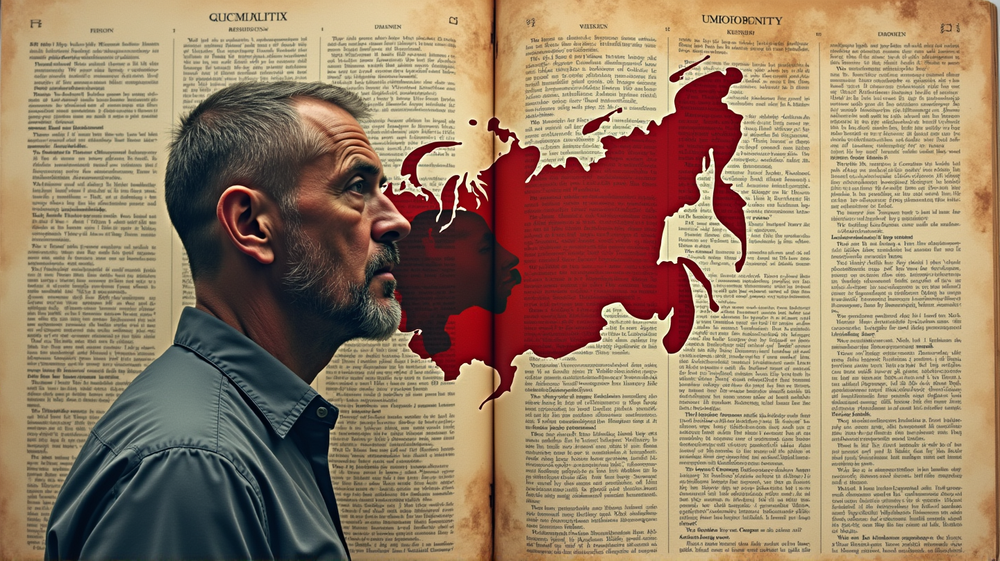
The Controversial Revival of Language: Dictating Authoritarianism's Virtue
In the realm of contemporary discourse, language remains a potent tool wielded by those in power. Recently, the introduction of the Explanatory Dictionary of the State Russian Language has stirred discussions across the nation. Revealed by Barents Observer journalists on November 21, the dictionary has noticably infused the concept of “authoritarianism” with praise, portraying it as a commendable governance model during trying times.
Unraveling the Ideological Dictionary
Crafted under the aegis of St. Petersburg State University academics including Rector Nikolai Kropachev and School of Law Dean Sergei Belov, the dictionary stands as a manifesto of state policies aiming to reinforce “traditional Russian and moral values.” This literary creation intertwines with legal and ecclesiastical elements, as evident in collaborations with the Russian Orthodox Church and the Ministry of Justice.
Linguistic Nuances and Ideological Messages
The dictionary is a demonstration of how language can be manipulated to uphold a political narrative. According to its pages, “authoritarianism” is celebrated as the most efficient regime during national adversity. It cites the suppression of opposing forces while allowing restricted coexistence of non-traditional value systems, illustrating a skewed perspective of power dynamics.
Divergence Between Language and History
Strikingly, entries such as “propagandist,” “hegemon,” and “colonialism” are reconceptualized to portray Western influences in a negative light, while omitting significant historical references like “Stalinism” and “GULAG,” which might otherwise challenge the predominant narrative.
A Dive into Religious Intersections
Blended with religious overtones, the dictionary delineates “life” as beginning at conception, while it deems spiritual values paramount over material concerns. Notably, marriage definitions inherently exclude the recognition of same-sex unions in line with Russian state and church doctrine.
Voices of Dissent and the Legal System
Particularly contentious is the term “foreign agent,” frequently applied to Russian dissidents opposing ongoing conflicts, defined in the dictionary as foreign-aligned, foreign-funded political actors. This legislative lexicon narrows the boundaries for lawful dissent.
As stated in Russian Life magazine, the launch of this ideologically charged dictionary unearths pivotal conversations about how language is exploited to validate specific worldviews. Could this lexicon signal a more insidious creep of authoritarianism cloaked behind traditional values?
In an age where words wield unparalleled power, the crafting and dissemination of this dictionary prompt reflection on the broader implications for society and freedom. Indeed, dissections of language, much like history, reflect the prevailing interpretations of our times.