
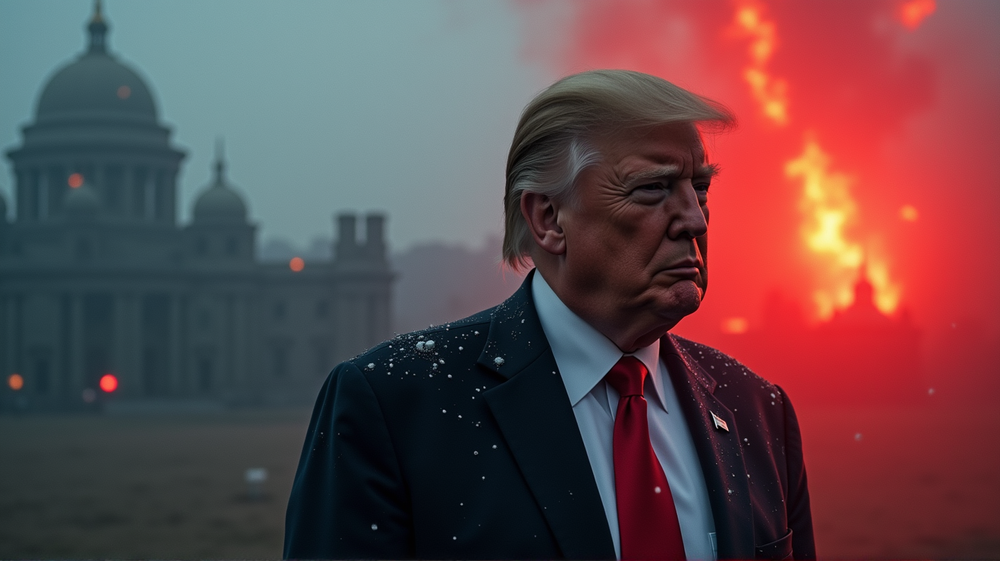
Trump's Pledge: Guarding Eastern Europe Against Emerging Threats
In a recent statement, Donald Trump has expressed a commitment to support and defend Poland and the Baltic states should tensions with Russia escalate. His declaration underscores a volatile regional geopolitical landscape where alliances and military strategies become crucial.
Trump’s Assurances Amid Growing Concerns
Asked if he would offer assistance to Poland and the Baltics in light of Russian advances, Trump concisely affirmed, “Yeah, I would.” However, the specific nature of this potential aid remains undeclared, leaving room for interpretation and speculation on military commitments.
This announcement follows a significant decision where the United States ceased funding for programs designed to bolster the military capabilities of Eastern European countries, including Estonia, Latvia, and Lithuania—countries poised as key players at the frontline in any potential conflict with Russia.
Air Intrusions Over Poland
A recent incident involved approximately 20 drones invading Polish airspace. Most of these were identified as “false targets”—decoys aimed at overwhelming air defense systems. Nonetheless, Poland and NATO swiftly attributed these drones to Russian origins, an assertion the Kremlin strongly denies. These events have escalated tension further and demand a robust response from NATO and allies.
Swift Responses and Strengthened Borders
Post the drone incident, NATO initiated a defense operation named Eastern Sentry to fortify the eastern borders of the alliance. This move aims to deter further provocations and stands as a testament to NATO’s commitment to its member states’ security, especially in volatile regions like Eastern Europe. According to Meduza, military coordination remains pivotal to alliance strength.
Regional Reactions to Rising Tensions
Initial reaction to the airborne intrusion by Poland was mixed, with Trump suggesting the incidence might have been an accidental mishap. However, Polish leadership, including Prime Minister Donald Tusk and Foreign Minister Radosław Sikorski, dismissed these assertions, emphasizing the incident’s deliberate nature and the need for decisive action.
Looking Ahead: Strengthening Ties and Capabilities
The reinforcement of NATO’s eastern defenses exemplifies the bloc’s readiness to counter threats proactively. As NATO’s alliance grows more critical, the role of leaders like Trump and their vows to support allies further emboldens collective deterrence strategies against potential adversities.
Trump’s promise prompts continued discourse on Eastern Europe’s security dynamics and the necessity of maintaining robust defense postures to safeguard regional stability. This evolving narrative remains central to understanding Eastern Europe’s defense mechanisms against encroaching threats.