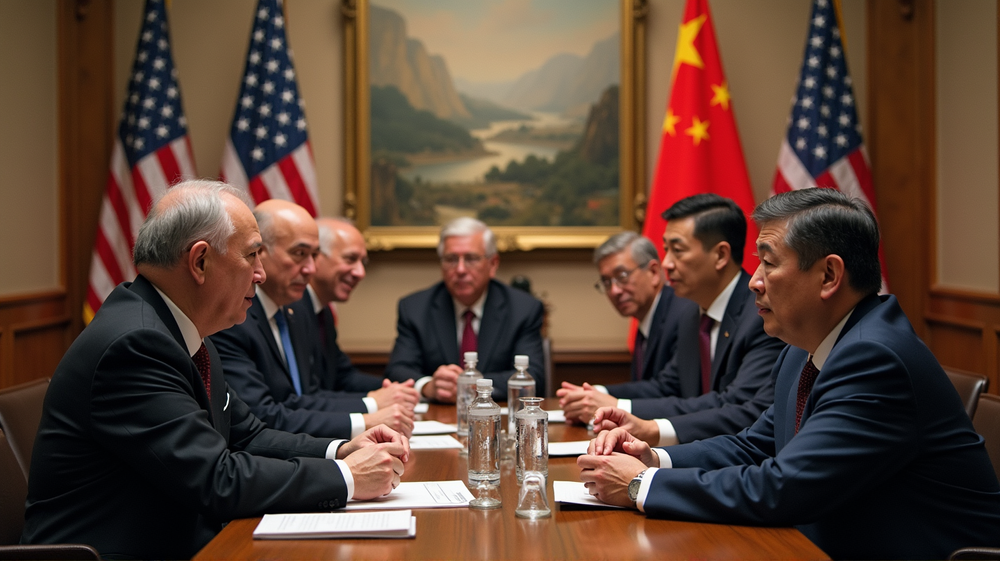
U.S. and China in High-Stakes Trade Talks in Spain
In the heart of Madrid, a city that brings together the vibrancy of the modern world with rich historical roots, U.S. and Chinese officials are locked in intense discussions that could shape the future of international trade. This gathering marks the fourth attempt in as many months to stabilize a trade relationship that is fraught with tensions and uncertainties.
Tensions Over TikTok
One of the focal points of these crucial negotiations is the looming deadline for the divestiture of TikTok, a Chinese short-video app that has found itself at the intersection of technological innovation and international politics. This digital platform, a staple of social media, represents broader concerns over data privacy and national security that are increasingly defining global economic interactions.
Trade Tariffs and Global Alignments
The U.S. is also pressing its allies to impose tariffs on imports from China, a move aimed at responding to Beijing’s purchases of Russian oil. As stated in The Japan Times, this step reflects a broader strategy to align Western economies against what is seen as China’s support for Russia amidst ongoing geopolitical tensions.
Diplomatic Dance at Spain’s Palacio de Santa Cruz
The choice of the Palacio de Santa Cruz, an emblematic example of Spanish baroque architecture, for these talks, is fitting. It symbolizes the gravity and complexity of the discussions underway. The officials, led by U.S. Treasury Secretary Scott Bessent and backed by the U.S. Trade Representative Jamieson Greer, alongside China’s Vice Premier He Lifeng and chief trade negotiator Li Chenggang, are seeking a path forward that preserves economic ties while addressing contentious issues.
A Glimmer of Hope Amid Uncertainty
As diplomatic dialogues often do, these talks in Madrid present a blend of hope and challenge. Officials wrapped up their first day, cautiously optimistic yet aware of the enormous task ahead. “We’ll start again in the morning,” U.S. Secretary Bessent commented, setting the stage for the continuation of high-level negotiations.
The Global Implications
The outcomes of these meetings are critically important not only for the two nations involved but also for the global community. With trade policies rippling across continents, the resolutions—or lack thereof—could redefine global trade practices and alliances in the years to come.
In a world that is both large and increasingly interconnected, what happens in the meeting rooms of the Palacio de Santa Cruz will echo far beyond its walls, influencing markets, policies, and possibly the very fabric of international diplomacy.