
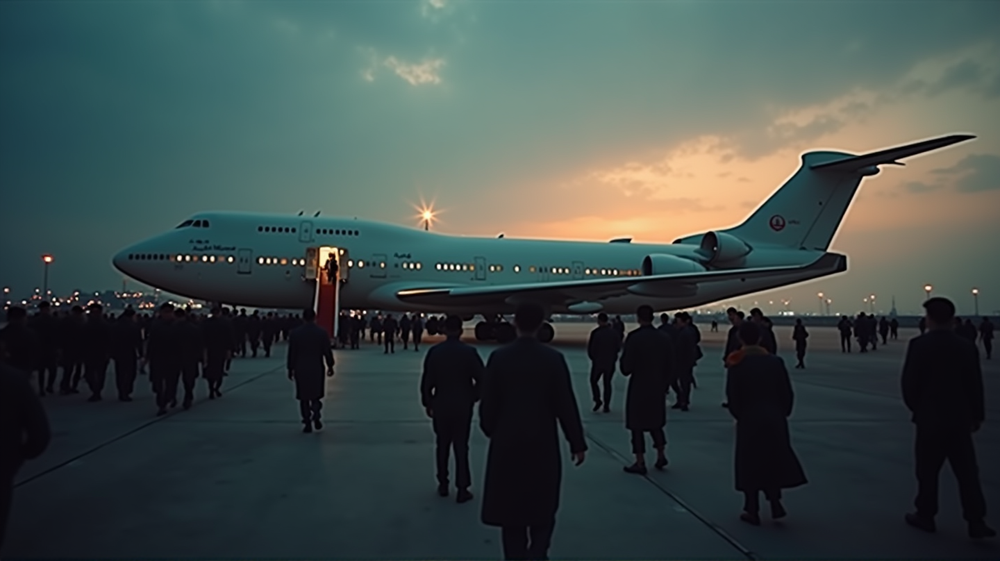
Unexpected Return: Second Flight of Iranian Deportees Leaves the US Amid Tension
In a surprising turn of events, the Iranian government has confirmed that a second group of its citizens, totaling 55 individuals, has been deported from the United States. This operation is seen as a significant move amidst the strained relations between the two countries, particularly after recent hostile engagements.
Departures Amidst Tense Relations
The deportation follows a tumultuous period marked by the US bombing of Iranian nuclear sites. This act of aggression during the 12-day conflict with Israel has left a deep scar on diplomatic ties. “These individuals expressed willingness to return,” remarked Mojtaba Shasti Karimi, reflecting the apprehension many feel about residing in a country with increasingly rigid policies against foreign nationals.
Facing an Uncertain Future
The returnees face an uncertain reception upon arrival in Iran. While Tehran maintains that only those facing criminal charges will be prosecuted, the fear of persecution lingers. The theocratic regime has previously exhibited a robust stance against intellectual dissent, creating a daunting environment for those considered to have betrayed the homeland.
A Legacy of Hospitality Meets Change
Historically, the US has been a beacon for Iranian dissidents seeking refuge since the 1979 Islamic Revolution. The recent deportations challenge this narrative, highlighting a shift towards stringent immigration policies under President Donald Trump’s administration. The incongruity of targeting illegal immigration while historically supporting Iranian exiles presents a complex diplomatic narrative.
Diplomatic Ripples Across Continents
This deportation story transcends the immediate context, reflecting broader geopolitical dynamics. Iran accuses the US of harboring dissidents, while American soil has witnessed attempts to target these individuals, purportedly orchestrated by Iranian intelligence. As stated in Breitbart, this cycle of action and reprisal illustrates a deeply entrenched confrontation that dates back decades.
The Broader Implications
These deportations could set a precedent for further returns, with Iranian officials acknowledging the potential repatriation of up to 400 citizens. Within this macro view, the individual stories of those returned paint a poignant picture of hope, fear, and resilience against the backdrop of international politics. Can diplomacy find a balanced narrative, or will the cycle of tension and distrust persist?
The narrative unfolding with each flight underscores the fragile state of US-Iran relations and the individual lives caught in the geopolitical crossfire.