Apexquant Trading Platform Alternatives 2026 Guide
Apexquant Trading Platform Alternatives 2026: Reliable Options for Online Traders
Leverage is a blade. In skilled hands it cuts costs; in the wrong hands it cuts accounts. That is why I treat offshore CFD venues with suspicion—especially when the product menu looks like “FX + CFDs + maybe crypto CFDs,” wrapped in a glossy WebTrader. Apexquant fits that familiar template: a proprietary browser platform, mobile apps, headline leverage that can run up to 1:500, and terms that read more like a marketing funnel than a risk manual. For a certain kind of trader, that’s enough. For anyone serious about execution, capital protection, or simply sleeping at night, it often isn’t.
Based on what is commonly observed in this offshore segment, Apexquant appears to operate under a Seychelles FSA-style framework rather than top-tier supervision. Typical entry points in this category land around a $250 minimum deposit, with EUR/USD spreads often starting near 2.0 pips on a standard-style account. None of those numbers automatically make a platform “bad”—but they do change the math of risk, especially with CFDs where margin calls can arrive faster than your support ticket gets answered.
This guide to Apexquant alternatives is written for a US/EU-leaning global audience. I’m not here to sell you anything. I’m here to show you what changes when you move from an offshore CFD shop to a broker that answers to regulators, publishes clearer protections, and offers a platform stack built for real workflows.
Disclaimer: This article is for informational purposes only and does not constitute investment advice. CFDs and other leveraged products carry a high risk of loss and may not be suitable for all investors.
Key Takeaways (TL;DR)
- High leverage (e.g., 1:500) magnifies slippage and margin-call risk; compare brokers using total round-turn trading cost, not leverage headlines.
- If you need real stocks/ETFs, look at multi-asset venues like Interactive Brokers or Saxo rather than CFD-only “stock CFDs.”
- Before moving funds, verify the new broker on the FCA/ASIC/CySEC/NFA public register and complete KYC first to avoid withdrawal delays.
What Is Apexquant and How Does Its Trading Platform Work?
From a trader’s-eye view, Apexquant sits in the offshore, CFD-first universe: forex pairs, index/commodity CFDs, and typically a small list of crypto CFDs. This is the same lane as many brokers similar to Apexquant—fast onboarding, simple account tiers, and leverage that looks generous until volatility hits. The model is usually market-maker or hybrid (your broker is often your counterparty), which can be fine for small tickets but becomes sensitive around news, thin liquidity hours, and stop orders where slippage becomes a real cost.
Apexquant Web Trading Platform: Core Features and Tools
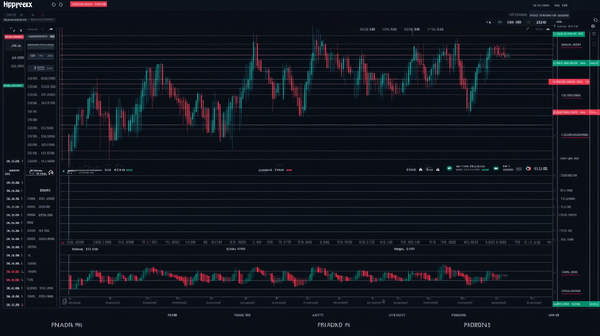
The platform stack is commonly a proprietary WebTrader with a companion iOS/Android app. Expect functional charting rather than institutional depth: the basics of timeframes, a standard indicator set, and drawing tools for levels and trendlines. Order tickets in this class of platform usually cover market and pending orders, with take-profit/stop-loss attached, but advanced order logic (OCO brackets, conditional routing, partial fills control) tends to be limited. Execution can feel “fine” in calm markets, yet the real test is fast moves—where requotes, widened spreads, and stop slippage can show up. The account dashboard is typically streamlined: deposits/withdrawals, open positions, and P/L, with fewer analytics than pro platforms.
Trading Fees, Spreads, and Account Types at Apexquant
Cost structure in this offshore category is usually spread-led. A common reference point is EUR/USD from around 2.0 pips on a Standard-style account, with higher effective costs during illiquid sessions. Some brokers in this segment advertise “raw” pricing—think 0.0–0.4 pips plus a commission in the neighborhood of $6–$8 round-turn—but the quality of fills matters as much as the quote. Add swap/overnight financing (especially punishing on leveraged CFD holds), and you have a fee mix that can quietly drain accounts. Minimum deposit is often near $250, while withdrawal fees and processing rules can vary depending on payment rail and AML checks.
When Do Traders Start Looking for Apexquant Alternatives?
Sometimes the first red flag isn’t a blow-up; it’s the slow grind—wider spreads than expected, swaps that surprise you, or execution that behaves differently around data releases. That’s when traders start searching for Apexquant alternatives that match a strategy, not a sales page. The core issue is usually fit: offshore CFD platforms can work for small, speculative positions, but many traders eventually want clearer protections, more transparent pricing, or tools that scale with them.
- You want regulator-backed safeguards (segregated client funds, formal complaints process, investor compensation schemes) rather than offshore promises.
- Your strategy needs MT4/MT5 or cTrader for EAs, custom indicators, or better order management than a basic WebTrader provides.
- News trading exposes repeated stop-loss slippage or spread spikes that make your backtests meaningless.
- You need to own real stocks/ETFs (not stock CFDs) for long-term allocation, voting rights, and cleaner tax reporting.
How to Choose a Reliable Alternative to the Apexquant Trading Platform
Think of switching brokers like sizing a position: define what you refuse to lose first. For alternatives to the Apexquant trading platform, I start with safety constraints (regulation, fund handling, negative balance protection) and only then compare costs and tools. That order matters. A tight spread is worthless if your withdrawals turn into a negotiation.
Regulation, Safety, and Investor Protection
For US/EU traders, names that matter include the FCA (UK), ASIC (Australia), CySEC (Cyprus/EU), and NFA/CFTC (US, for FX). With FCA-regulated firms, the FSCS can cover eligible clients up to £85,000 if a firm fails; under CySEC, the ICF can cover up to €20,000 (eligibility rules apply). Look for segregated client funds, negative balance protection where applicable, and a clear legal entity tied to a public register—not just a brand name.
Available Markets and Instruments
Match the broker to what you actually trade. If you live in FX and index CFDs, a specialist with strong execution may beat a giant multi-asset shop. If you need options, futures, bonds, or real equities, pick a venue built for that plumbing (routing, corporate actions, margining). Crypto is a special case: crypto CFDs are price exposure, not custody of coins—no on-chain withdrawals, no self-sovereignty. Platforms like Apexquant tend to focus on CFDs; many regulated options widen the menu significantly.
Trading Costs: Spreads, Commissions, and Other Fees
Headline spreads are only the first line. Compare round-turn cost: spread + commission + expected slippage, then add the slow taxes—swap/overnight fees and inactivity charges. A scalper doing 200 lots a month cares more about average spread during liquid hours than “from 0.0” marketing. A swing trader should model overnight financing across holding periods. If you’re moving away from Apexquant, write down your last 30 days of trading volume and estimate total transaction cost under each alternative before funding heavily.
Platforms, Tools, and Execution Quality
Platform choice is strategy choice. MT4/MT5 support a deep ecosystem of indicators and automation; cTrader is popular with execution-focused traders; proprietary platforms vary wildly. Then there’s the execution model: market maker vs STP/ECN vs DMA. DMA matters for real equities; ECN-style routing can matter for FX fills. Watch for metrics like fill speed, partial fills, and how stop orders behave in volatility—slippage is a fee even when it isn’t listed.
Support, Education, and Overall User Experience
When money is stuck, UX becomes existential. Check support hours across your timezone, whether live chat is staffed by humans, and whether escalations have a documented process. Education quality can signal maturity: webinars, platform guides, and risk content that doesn’t read like a casino pamphlet. Mobile parity matters too—if the app can’t manage risk properly (stops, margin, alerts), you’re trading half-blind.
Apexquant and Different Asset Classes: When Alternatives May Be Better
Apexquant Forex and CFD Trading
FX and CFDs are the heart of the Apexquant-style offering: roughly a few dozen forex pairs, a set of major indices, and a small commodities list. The tradeoff is usually cost transparency and execution resilience. With EUR/USD often around 2.0 pips on a standard-style setup and leverage up to 1:500, you’re paying via spread and taking amplified drawdown risk. Regulated competitors to Apexquant—such as Pepperstone or IG—tend to publish clearer pricing, offer stronger platform stacks (MT4/MT5/cTrader or robust proprietary suites), and operate under regulators with enforceable client-money rules. That doesn’t guarantee profits. It does change the rules of the game: fewer “mystery” costs, more predictable margin policy, and usually better recourse when disputes happen.
Apexquant Stock and ETF Trading
If your goal is long-term allocation, “stock CFDs” are a different animal than owning shares. CFD equity exposure typically means no voting rights, no direct corporate action handling, and financing costs if held. Many platforms like Apexquant either skip real stocks/ETFs entirely or present them mainly as CFDs. Regulated multi-asset brokers close that gap. Interactive Brokers is the heavyweight here—real equities, ETFs, options, futures, bonds, and FX under a framework built for professionals. Saxo Bank also targets serious multi-asset traders with broad market access and portfolio tooling. For US/EU readers who want investor-style exposure rather than leveraged bets, this difference is not cosmetic—it’s structural.
Apexquant Crypto Trading
Crypto on CFD platforms is usually price-only: you speculate on BTC/USD, ETH/USD, and a handful of majors without touching the chain. As a Bitcoin orthodox, I’ll say it bluntly: paper Bitcoin is not Bitcoin. No UTXOs, no self-custody, and no exit from the fiat rails. If you still want regulated crypto CFDs for tactical hedging, firms like IG (jurisdiction dependent) and Plus500 commonly offer crypto CFD exposure under clearer supervision than offshore venues. If your intent is long-term BTC ownership, the correct “alternative” isn’t another CFD broker—it’s buying spot and holding your own keys. “21 million — and not a coin more” doesn’t live inside a CFD contract.
Best Apexquant Alternatives for 2026: Comparison of Top Trading Platforms
Interactive Brokers (IBKR): Key Facts and How It Compares to Apexquant
Regulation: SEC/FINRA (US), FCA (UK), IIROC (Canada) (entity depends on region)
Markets: Stocks, ETFs, options, futures, bonds, FX; CFDs in some regions
Fees: FX is typically commission-based with tight spreads; stock/ETF pricing varies by venue and plan
Platform: Trader Workstation (TWS), IBKR Desktop, web and mobile apps, API access
Best For: Global multi-asset traders who want real market access
Pepperstone: Key Facts and How It Compares to Apexquant
Regulation: FCA, ASIC, CySEC, DFSA
Markets: FX and CFDs (indices, commodities, some crypto CFDs depending on region)
Fees: EUR/USD often ~0.0–0.3 pips on Razor/Raw-style pricing + commission; ~0.8–1.2 pips on Standard-style pricing
Platform: MT4, MT5, cTrader, TradingView integrations (region dependent)
Best For: Execution-focused FX traders and algorithmic setups
Saxo Bank: Key Facts and How It Compares to Apexquant
Regulation: FCA, MAS, DFSA
Markets: Stocks, ETFs, options, futures, bonds, FX, CFDs
Fees: FX spreads commonly around ~0.6–1.2 pips depending on tier; multi-asset commissions vary by exchange and account level
Platform: SaxoTraderGO, SaxoTraderPRO
Best For: Portfolio-oriented investors who still trade actively
OANDA: Key Facts and How It Compares to Apexquant
Regulation: CFTC/NFA (US), FCA, ASIC, IIROC
Markets: FX; CFDs in certain jurisdictions (indices/commodities depending on region)
Fees: Typically spread-only pricing; EUR/USD often around ~0.9–1.6 pips depending on market conditions and region
Platform: OANDA Trade (web/mobile), MT4 (region dependent)
Best For: FX-first traders who value transparent, long-running operations
IG: Key Facts and How It Compares to Apexquant
Regulation: FCA, ASIC, MAS
Markets: CFDs across FX, indices, commodities, shares (often as CFDs); some markets may include crypto CFDs depending on region
Fees: Major FX spreads often around ~0.6–1.2 pips; financing charges apply on leveraged positions held overnight
Platform: IG Trading Platform (web/mobile), MT4 support in many regions
Best For: Broad CFD traders who want strong research and risk tools
eToro: Key Facts and How It Compares to Apexquant
Regulation: FCA, CySEC, ASIC
Markets: Stocks and ETFs (often available as real assets in some regions), CFDs, crypto exposure (offering varies by jurisdiction)
Fees: Spread-based CFD pricing; costs vary by asset, with additional overnight fees on leveraged positions
Platform: eToro web and mobile platform
Best For: Social/copy traders who want a simplified interface
Comparison Summary
| Platform | Regulation | Main Markets | Typical Costs | Best For |
|---|---|---|---|---|
| Interactive Brokers (IBKR) | SEC/FINRA, FCA, IIROC | Real stocks/ETFs, options, futures, bonds, FX | FX commission-based with tight spreads; exchange/plan-based commissions | Global multi-asset traders who want real market access |
| Pepperstone | FCA, ASIC, CySEC, DFSA | FX + CFDs | Raw: ~0.0–0.3 pips + commission; Standard: ~0.8–1.2 pips | Execution-focused FX traders and algorithmic setups |
| Saxo Bank | FCA, MAS, DFSA | Multi-asset (stocks/ETFs/options/futures/FX/CFDs) | FX ~0.6–1.2 pips (tiered); commissions vary by venue | Portfolio-oriented investors who still trade actively |
| OANDA | CFTC/NFA, FCA, ASIC, IIROC | FX (plus some CFDs by region) | Often spread-only; EUR/USD roughly ~0.9–1.6 pips | FX-first traders who value transparent, long-running operations |
| IG | FCA, ASIC, MAS | CFDs across FX/indices/commodities/shares | Major FX often ~0.6–1.2 pips; overnight financing applies | Broad CFD traders who want strong research and risk tools |
| eToro | FCA, CySEC, ASIC | Stocks/ETFs (region dependent), CFDs, crypto exposure | Spread-based; overnight fees on leveraged CFDs | Social/copy traders who want a simplified interface |
How to Safely Move from Apexquant to Another Broker
Switching isn’t a single click; it’s a controlled unwind. Treat the process like risk management: verify the destination, reduce exposure before moving cash, and keep records tight. The goal is to avoid being forced into bad trades (or bad timing) because a withdrawal is delayed or a margin call hits mid-transfer. If you’re moving from offshore venues, patience is part of the edge.
- Confirm the new broker’s legal entity on the regulator’s public database (FCA Register, ASIC Connect, CySEC register, or NFA BASIC) and match the website domain to the listed firm.
- Open the new account and complete KYC/AML checks first—ID plus proof of address—so you’re not stuck waiting while funds are in transit.
- Flatten risk on your old account: close open CFD positions and cancel pending orders rather than assuming any position transfer is possible.
- Request a withdrawal from Apexquant using the same payment method you used to deposit; many brokers enforce this for AML compliance.
- Export trade history, statements, and fee records before closing anything; tax reporting and dispute resolution both depend on documentation.
Ready to Explore Apexquant?
If you’re still evaluating the platform, review the onboarding flow, eligible regions, and the cost schedule in writing before depositing meaningful size. Compare it side-by-side against regulated options on spreads, swap rates, and platform tools so your choice is based on math, not momentum.
FAQ: Apexquant Alternatives and Trading Platforms
What is the best alternative to Apexquant in 2026?
The best pick depends on whether you want real multi-asset access or mainly FX/CFDs. For real stocks/ETFs and professional-grade routing, Interactive Brokers is hard to beat; for FX execution with MT4/MT5/cTrader, Pepperstone is a strong candidate. In other words, the “best Apexquant alternatives 2026” list changes with your instruments and how sensitive your strategy is to spreads and slippage.
Is Apexquant a safe broker/platform?
Apexquant appears to fit an offshore/unregulated-style profile (commonly associated with Seychelles-type frameworks), which generally provides fewer investor protections than FCA/ASIC/CySEC/NFA-supervised firms. That doesn’t prove misconduct, but it does mean weaker recourse if withdrawals, pricing disputes, or insolvency issues occur. If safety is your priority, regulated options vs Apexquant tend to offer clearer rules on segregated client funds and formal complaint channels.
Can I trade stocks, futures, or crypto with Apexquant?
On platforms like Apexquant, stocks and ETFs are often missing as real assets or offered mainly as CFDs, and futures access is typically limited compared with true multi-asset brokers. Crypto, when available, is usually crypto CFDs—price exposure without on-chain ownership or withdrawals. If you need real equities or exchange-traded futures, Interactive Brokers or Saxo are closer fits than many Apexquant trading platform alternatives 2026 in the CFD-only category.
What should I check before switching from Apexquant to another platform?
Before switching, verify the new broker’s regulator listing (FCA/ASIC/CySEC/NFA) and confirm which legal entity will hold your account. Next, compare round-turn trading costs (spread + commission + expected slippage) and read the swap/overnight fee schedule for your usual instruments. Finally, test deposits/withdrawals with a small amount first; with Apexquant alternatives, process reliability matters as much as the quote.
About the Author: Kenji Tanaka is a Tokyo-based financial journalist and active trader with a cryptography background (University of Tokyo, incomplete). I’m Bitcoin-orthodox—“21 million — and not a coin more”—and I evaluate brokers through the lens of custody risk, execution quality, and the fine print that breaks traders.