Daskelvor Trading Platform Alternatives 2026 Guide
Daskelvor Trading Platform Alternatives 2026: Reliable Options for Online Traders
Leverage looks like power until it turns into a margin call. That’s the first thing I tell newer traders who message me from Tokyo, London, or New York after they’ve clicked “1:500” without thinking through slippage, swaps, and withdrawal friction. Daskelvor sits in a familiar corner of the internet: an offshore-style CFD venue built around Forex and index/commodity CFDs, usually paired with a proprietary WebTrader and a mobile app. For many users, that combo is “good enough” at the start—simple charts, quick order tickets, and a low-ish entry point—but it can feel thin once you trade seriously.
For this 2026 update, I’m treating Daskelvor as an offshore/unregulated-style broker operating under a Seychelles FSA framework (typical for this category), with a minimum deposit around $250, EUR/USD spreads often seen around 2.0 pips on a standard-style account, and headline leverage up to roughly 1:500. Those numbers matter because they translate directly into your break-even distance per trade, your overnight financing exposure, and your worst-case liquidation speed in a fast market.
The point of this guide is not to “bash” any venue. It’s to map credible Daskelvor alternatives—especially regulated options in the US/EU sphere—so you can align your broker choice with your strategy, your risk budget, and your need (or refusal) to touch fiat rails more than necessary.
Disclaimer: This article is for informational purposes only and does not constitute investment advice. CFDs and other leveraged products carry a high risk of loss, and you can lose more than you expect if risk controls fail.
Key Takeaways (TL;DR)
- If you want stronger oversight and clearer client-money rules, prioritize FCA/ASIC/CySEC/NFA-regulated brokers over offshore-style CFD venues.
- Compare “round-turn” trading cost (spread + commission + typical slippage) rather than getting hypnotized by maximum leverage numbers.
- Switching brokers is a process: KYC the new account first, then withdraw using the same funding method, and keep copies of statements for tax and dispute proof.
What Is Daskelvor and How Does Its Trading Platform Work?
On paper, Daskelvor fits the profile of a CFD-first trading venue: you’re typically trading price exposure (contracts for difference) across FX pairs, indices, commodities, and often crypto CFDs—rather than owning the underlying asset. That structure can be convenient for short-term speculation, yet it shifts the conversation to execution model, client fund handling, and whether negative balance protection exists in practice. In my experience reviewing brokers similar to Daskelvor, the target audience is usually retail traders who want a quick onboarding flow, a web interface, and access to high leverage without the heavier guardrails you’ll see under top-tier regulators.
Daskelvor Web Trading Platform: Core Features and Tools
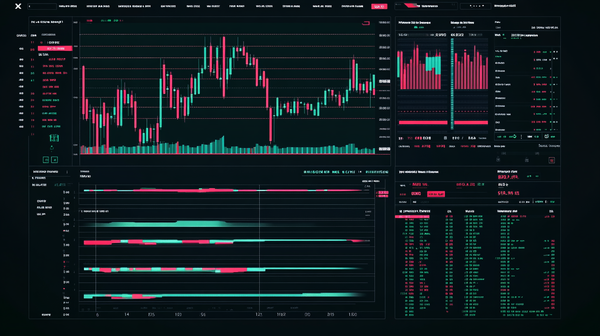
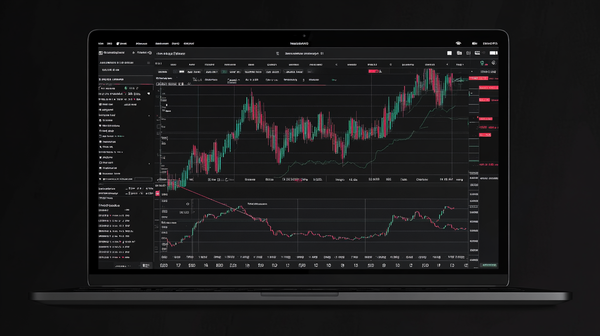
The proprietary WebTrader approach usually emphasizes speed-to-first-trade: basic-to-mid charting, a compact watchlist, and one-click trading from the order panel. Expect the common toolkit—market/limit/stop orders, standard timeframes, a workable indicator set, and drawing tools for trendlines and levels. Mobile apps on iOS/Android typically mirror the essentials (quotes, charts, position management), but advanced workflow features—multi-chart layouts, complex alerts, or deep order routing—often feel lighter than what you get on MT5/cTrader-class stacks. Execution quality can look “fine” in calm markets and then reveal wider slippage when volatility hits.
Trading Fees, Spreads, and Account Types at Daskelvor
Cost-wise, the offshore CFD segment commonly runs with a spread-led model on standard accounts; for EUR/USD, traders often see something in the neighborhood of ~2.0 pips as a typical live condition. Some providers in this category advertise tighter raw-style accounts (near-zero spreads plus commission), but unless terms are fully documented, you should assume the main pricing you’ll experience is spread-heavy—especially during news. Add the quiet costs: swap/overnight financing on held positions, possible withdrawal charges depending on method, and the “invisible” fee of execution frictions (requotes, partial fills, or widened spreads). This is where platforms like Daskelvor can become expensive for high-frequency or tight-stop strategies.
When Do Traders Start Looking for Daskelvor Alternatives?
Regulation is usually the first crack in the wall. Once you’ve had a winning month, you stop thinking like a gambler and start thinking like a risk manager: “If I need my capital tomorrow, what’s my path to getting it?” That question is why Daskelvor alternatives show up on the screen—especially for EU/UK traders who care about segregated client funds, complaint channels, and compensation schemes. High leverage can also become a trap: 1:500 doesn’t improve your edge; it just reduces the distance to liquidation if your sizing discipline slips.
- You need MT4/MT5 or cTrader features (EAs, advanced order controls, deeper indicators) that a basic WebTrader can’t replicate reliably.
- Your strategy is sensitive to spread spikes around CPI/NFP, and a typical ~2.0 pip EUR/USD environment ruins your expected value.
- You want a broker where you can verify licensing on an FCA/ASIC/CySEC/NFA public register instead of relying on marketing pages.
- You’re expanding beyond CFDs and want real stocks/ETFs (not synthetic exposure) or access to listed futures/options.
How to Choose a Reliable Alternative to the Daskelvor Trading Platform
Think of switching as an engineering problem: define failure modes first, then pick the system that reduces them. For traders comparing alternatives to the Daskelvor trading platform, that means you rank what can break you—counterparty risk, execution risk, and cost bleed—before you get distracted by interface design. Your “best” broker is the one that matches your instruments, your time horizon, and your need for oversight without strangling your strategy.
Regulation, Safety, and Investor Protection
Start with verifiable oversight. FCA (UK), ASIC (Australia), CySEC (EU), and NFA/CFTC (US) each impose different rules, but they all force more disclosure than offshore frameworks. Two concrete protections matter in practice: segregated client funds and access to investor compensation schemes (for example, the UK’s FSCS up to £85,000 for eligible cases, and CySEC’s ICF up to €20,000). These aren’t magic shields, yet they change your downside if a firm fails.
Available Markets and Instruments
Match the broker to what you actually trade. If you only scalp major FX pairs, a tight-spread FX specialist can be a better fit than a “does everything” platform. If you want long-term exposure, owning real stocks/ETFs (with shareholder rights and proper custody) is a different animal than stock CFDs. For US traders in particular, access rules differ sharply: FX may be available under NFA rules, while CFDs are often not. This is where regulated options vs Daskelvor can look like two different worlds.
Trading Costs: Spreads, Commissions, and Other Fees
Spreads are just the visible line item. The clean comparison is round-turn cost: spread + commission + the slippage you typically experience at your trade size. Swaps/overnight fees matter if you hold positions beyond a session, and inactivity or withdrawal fees can quietly punish low-frequency traders. If you’re doing 200 trades a month, shaving 0.7 pips off EUR/USD is not “nice”—it can be the difference between profitable and dead.
Platforms, Tools, and Execution Quality
Platform choice is really execution choice. MT4/MT5 and cTrader support automation, strategy testing, and a mature ecosystem; proprietary platforms vary from excellent to barebones. Look for the stated execution model—market maker vs STP/ECN/DMA—and then test it: measure fill speed, slippage during volatile minutes, and whether stops behave cleanly. If you’re leaving Daskelvor, treat the first week at a new broker like a lab experiment, not a honeymoon.
Support, Education, and Overall User Experience
Support isn’t about friendliness; it’s about response quality when money is stuck. Check support hours in your time zone, language coverage, and whether the broker provides clear margin-call and liquidation rules. Education can be useful, but documentation is more important: product disclosures, fee schedules, and platform guides that explain edge cases (negative balance protection, corporate actions on CFDs, and how swaps are calculated). Mobile parity matters if you manage risk on the move.
Daskelvor and Different Asset Classes: When Alternatives May Be Better
Daskelvor Forex and CFD Trading
Forex and index/commodity CFDs are the natural habitat for offshore-style brokers, and Daskelvor likely offers something like 30–50 FX pairs plus a small menu of indices and metals. The headline leverage (around 1:500) can look attractive, but leverage is not a feature—it’s a multiplier on mistakes. The bigger issue for active traders is cost and consistency: with a typical EUR/USD spread near ~2.0 pips, short-horizon systems bleed. If FX/CFD trading is your core, two competitors to Daskelvor that often deliver tighter conditions are Pepperstone and IC Markets, where raw/commission pricing is designed for frequent trading and where MT4/MT5/cTrader setups are common. Execution model transparency and predictable margin rules matter more than flashy leverage banners.
Daskelvor Stock and ETF Trading
If your goal is to build wealth rather than just trade noise, “stocks” is a loaded word. Many CFD-first venues offer stock exposure only as CFDs—no shareholder rights, no voting, no direct custody, and different tax/documentation dynamics. That’s often the gap that pushes people toward top substitutes for Daskelvor. Interactive Brokers (IBKR) is the blunt instrument here: it’s built for real multi-asset access (stocks, ETFs, options, futures, bonds, FX) with deep routing and professional-grade reporting. Saxo also covers broad listed markets with a polished platform stack and research tooling. Yes, these firms live closer to the banking world I dislike—but if you need real equities, you need real market access, not a synthetic wrapper.
Daskelvor Crypto Trading
Let me be clear in my Tokyo accent: a crypto CFD is not Bitcoin. It’s a leveraged bet settled in fiat terms, with counterparty risk layered on top. That said, some traders want short exposure, hedging, or intraday volatility without touching on-chain custody. Daskelvor likely offers a limited list of crypto CFDs (think 10–30 coins), and conditions can vary widely when volatility spikes—spreads widen, stops slip, and weekend pricing can get strange. For crypto CFDs under stronger oversight, IG and Plus500 are often cited in Europe/UK contexts (availability depends on jurisdiction and product rules). If your actual aim is self-custody Bitcoin, no CFD broker is the answer—your alternative is cold storage, not another login screen.
Best Daskelvor Alternatives for 2026: Comparison of Top Trading Platforms
Interactive Brokers (IBKR): Key Facts and How It Compares to Daskelvor
Regulation: SEC/FINRA (US), FCA (UK), IIROC (Canada) (entity depends on residency)
Markets: Stocks, ETFs, options, futures, bonds, FX, funds (broad multi-asset access)
Fees: FX spreads are typically competitive (often under ~1.0 pip equivalent depending on pair/liquidity); commissions vary by product and venue
Platform: Trader Workstation (TWS), IBKR Desktop/mobile, APIs
Best For: Real stocks/ETFs and listed derivatives, not just CFDs
Pepperstone: Key Facts and How It Compares to Daskelvor
Regulation: FCA (UK), ASIC (Australia), CySEC (EU), DFSA (UAE) (entity varies)
Markets: FX and CFDs (indices, commodities; product availability depends on region)
Fees: Standard accounts commonly from ~1.0 pip; Raw-style pricing often ~0.0–0.3 pips plus commission (round-turn pricing varies)
Platform: MT4, MT5, cTrader, TradingView integration in supported regions
Best For: Low-latency FX/CFD trading with algorithm-friendly platforms
IG: Key Facts and How It Compares to Daskelvor
Regulation: FCA (UK), ASIC (Australia), MAS (Singapore)
Markets: CFDs (broad index/FX range); additional products vary by jurisdiction
Fees: FX spreads often from ~0.6–1.0 pips on majors in normal conditions; financing applies on leveraged positions
Platform: IG proprietary web platform, mobile app; MT4 supported in many regions
Best For: Wide CFD market coverage with strong compliance culture
Saxo: Key Facts and How It Compares to Daskelvor
Regulation: FCA (UK), MAS (Singapore), DFSA (UAE)
Markets: Stocks, ETFs, options, futures, bonds, FX, CFDs (multi-asset)
Fees: Pricing depends on tier; FX spreads are often competitive (commonly around ~0.6–1.2 pips on majors depending on account level); trading fees vary across exchanges
Platform: SaxoTraderGO, SaxoTraderPRO
Best For: Research-led multi-asset trading with robust reporting tools
OANDA: Key Facts and How It Compares to Daskelvor
Regulation: CFTC/NFA (US), FCA (UK), ASIC (Australia), IIROC (Canada)
Markets: FX (core), CFDs in some regions (availability depends on local rules)
Fees: Typically spread-based pricing; major-pair spreads often around ~0.8–1.6 pips depending on market conditions and region
Platform: OANDA web/mobile, MT4 (in supported regions), APIs
Best For: FX-first traders who want jurisdiction-specific regulatory clarity
Plus500: Key Facts and How It Compares to Daskelvor
Regulation: FCA (UK), CySEC (EU), ASIC (Australia), MAS (Singapore)
Markets: CFDs (indices, FX, commodities, shares CFDs; crypto CFDs where permitted)
Fees: Spread-based; typical costs vary by instrument with overnight financing on leveraged holds
Platform: Plus500 proprietary WebTrader and mobile apps
Best For: Simple CFD execution for beginners who value clean UX
Comparison Summary
| Platform | Regulation | Main Markets | Typical Costs | Best For |
|---|---|---|---|---|
| Interactive Brokers (IBKR) | SEC/FINRA, FCA, IIROC (by entity) | Real stocks/ETFs, options, futures, bonds, FX | Product-based commissions; FX often under ~1.0 pip equivalent depending on pair | Real stocks/ETFs and listed derivatives, not just CFDs |
| Pepperstone | FCA, ASIC, CySEC, DFSA (by entity) | FX + CFDs | Raw ~0.0–0.3 pips + commission; Standard often from ~1.0 pip | Low-latency FX/CFD trading with algorithm-friendly platforms |
| IG | FCA, ASIC, MAS | CFDs across FX/indices/commodities (region-dependent) | FX often from ~0.6–1.0 pips in normal markets; financing on holds | Wide CFD market coverage with strong compliance culture |
| Saxo | FCA, MAS, DFSA | Multi-asset: stocks/ETFs/options/futures/bonds/FX/CFDs | Tiered pricing; FX often ~0.6–1.2 pips on majors depending on level | Research-led multi-asset trading with robust reporting tools |
| OANDA | CFTC/NFA, FCA, ASIC, IIROC | FX (core); CFDs in some regions | Spread-based; majors often ~0.8–1.6 pips depending on conditions | FX-first traders who want jurisdiction-specific regulatory clarity |
| Plus500 | FCA, CySEC, ASIC, MAS | CFDs (including shares CFDs; crypto CFDs where allowed) | Spread-based; variable by instrument + overnight financing | Simple CFD execution for beginners who value clean UX |
How to Safely Move from Daskelvor to Another Broker
Switching brokers is not a “click and forget” task; it’s operational risk management. The clean way is to avoid being trapped between two systems—open positions on one side, unverified account on the other, and a withdrawal stuck in the middle. If you’re moving from Daskelvor toward regulated Daskelvor alternatives, assume timelines will involve compliance checks, and remember that leveraged products can amplify losses during the transition if you keep positions open.
- Confirm the new broker’s license on the regulator’s own register (FCA Register, ASIC Connect, CySEC database, or NFA BASIC), matching the legal entity name—not just the brand.
- Open the new account and finish KYC/AML (government ID + proof of address) before you start winding down the old account; this reduces “cash-out delay” risk.
- Flatten exposure on the old platform: close open CFDs and cancel pending orders, then recreate any needed positions on the new venue as fresh trades.
- Withdraw using the same payment route you used to deposit whenever possible; many brokers enforce this to satisfy AML rules and reduce chargeback disputes.
- Export and store your trade history, confirmations, and funding logs; if a dispute happens later, screenshots and statements are evidence, not decoration.
Ready to Explore Daskelvor?
If you’re still evaluating competitors to Daskelvor, checking the live onboarding flow and the current fee schedule is practical—terms change, and eligibility depends on where you live. Compare platform tools, execution behavior, and withdrawal rules side-by-side before you commit capital.
FAQ: Daskelvor Alternatives and Trading Platforms
What is the best alternative to Daskelvor in 2026?
The best option depends on whether you need real multi-asset access or mainly FX/CFDs. For real stocks/ETFs and listed futures/options, Interactive Brokers (IBKR) is the most direct upgrade; for FX/CFDs with MT4/MT5/cTrader, Pepperstone is a common pick among active traders. For broad CFD coverage under strong oversight, IG is a frequent shortlist name in “best Daskelvor alternatives 2026” comparisons.
Is Daskelvor a safe broker/platform?
Daskelvor appears to operate under an offshore-style framework (commonly associated with Seychelles FSA entities), which usually provides fewer investor protections than FCA/ASIC/CySEC/NFA-regulated brokers. Safety is not only about “will it work today,” but also about client-money segregation, complaint pathways, and what happens if the firm fails. If those guardrails are a priority, regulated options vs Daskelvor generally offer a more verifiable structure.
Can I trade stocks, futures, or crypto with Daskelvor?
Daskelvor is typically positioned around FX and CFDs, so “stocks” are often offered, if at all, as stock CFDs rather than real share ownership, and listed futures are commonly not offered. Crypto exposure is usually via crypto CFDs (a leveraged derivative), not on-chain ownership. If you want real stocks/ETFs or listed futures, platforms like Daskelvor are often replaced by multi-asset brokers such as IBKR or Saxo.
What should I check before switching from Daskelvor to another platform?
Before switching, verify the new broker’s legal entity on the regulator register, confirm client-funds handling (segregation and protections like FSCS/ICF where applicable), and read the product disclosure for leverage and margin-call rules. Then test execution with small size to observe slippage, spreads, and platform stability in real conditions. Finally, plan withdrawals and documentation so your broker change doesn’t turn into an accounting mess.
About the Author: Kenji Tanaka is a Tokyo-based financial journalist and veteran trader focused on market structure, execution quality, and risk. I studied cryptography at the University of Tokyo (incomplete) and I’m unapologetically Bitcoin-orthodox: 21 million—and not a coin more. I don’t trust banks, but I respect rulebooks, because rulebooks are what you have left when trades go wrong.