Muntveen Trading Platform Alternatives 2026 Guide
Muntveen Trading Platform Alternatives 2026: Reliable Options for Online Traders
Leverage is a sharp blade. It cuts fast—sometimes through your account. That’s why, when I review offshore-style CFD venues, I look past the glossy WebTrader and focus on what actually protects a trader when markets gap, slippage spikes, or a withdrawal suddenly turns into a “compliance review.” Muntveen appears to fit the familiar pattern of a CFD-first provider: forex and index/commodity CFDs, a proprietary browser platform and mobile app, and terms that often include high headline leverage. In this category, traders commonly see minimum deposits around $250, EUR/USD spreads around 2.0 pips on a standard-style setup, and leverage advertised as high as 1:500.
None of that is automatically “bad.” But it does change the risk math. A tight strategy can be destroyed by wide spreads and negative execution, and a long-term investor may discover they never owned anything—only a contract. Add the reality that US residents are typically blocked at offshore CFD brokers, and you quickly get a global audience hunting for Muntveen alternatives that sit under stricter rulebooks like the FCA, ASIC, CySEC, or NFA.
This guide to Muntveen trading platform alternatives 2026 is built for US/EU readers first: it prioritizes regulation, clear product scope (CFD vs. real shares), and execution tools (MT4/MT5/cTrader vs. basic WebTrader). I’m Bitcoin-orthodox—“21 million — not a coin more”—so I’m naturally allergic to fiat games. Still, if you’re trading CFDs, you’re trusting a counterparty. Choose that counterparty like your capital depends on it. Because it does.
Disclaimer: This article is for informational purposes only and does not constitute investment advice. CFDs and other leveraged products carry a high risk of loss and may not be suitable for all investors.
Key Takeaways (TL;DR)
- Offshore-style CFD venues often emphasize high leverage (e.g., 1:500), but regulated alternatives may offer stronger client-money rules and compensation schemes (FSCS/ICF where applicable).
- Cost comparisons should use round-turn trade cost (spread + commission + swap), not marketing leverage or “from 0.0” headlines.
- If you want real stocks/ETFs (not CFDs), multi-asset brokers like Interactive Brokers or Saxo are usually a cleaner fit than CFD-only platforms.
- Before moving funds, open and verify the new account first; then withdraw using the same rails you deposited with to reduce AML friction.
What Is Muntveen and How Does Its Trading Platform Work?
Think of Muntveen as a trading interface built around leveraged CFDs rather than a full, exchange-connected brokerage stack. The typical user profile here is an active retail trader focused on forex pairs, indices, commodities, and a smaller menu of crypto CFDs—more “short-term tactical” than “long-term owner.” From what is commonly observed in this offshore segment, the broker framework is often registered through Seychelles FSA, with onboarding aimed at non-US clients and regions where CFD distribution is permitted.
That business model matters. With CFDs, your fill quality, margin rules, and dispute process live inside the broker’s execution model. If you’re comparing brokers similar to Muntveen, don’t just ask “what can I trade?” Ask “who is on the other side, and what happens when I’m right during a fast market?”
Muntveen Web Trading Platform: Core Features and Tools
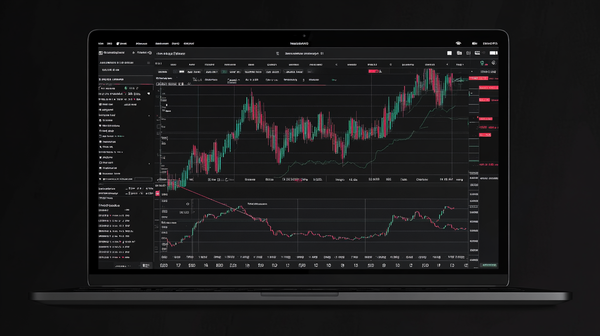
The platform stack is typically a proprietary WebTrader with a companion iOS/Android app. Expect functional charting (enough indicators for basic discretionary setups), common drawing tools, and one-click order tickets for market and pending orders. The UX usually favors simplicity—watchlists, basic risk controls, and an account dashboard that shows margin level and open P/L—over deep customization.
Where traders hit limits is tooling depth: fewer order-routing controls, less transparency around execution statistics, and limited support for automation compared with MT4/MT5 or cTrader ecosystems. Mobile parity is usually decent for monitoring and closing positions, but heavy multi-chart workflows still feel better on desktop-class platforms.
Trading Fees, Spreads, and Account Types at Muntveen
For costs, a reasonable expectation for this category is a standard account with EUR/USD around ~2.0 pips typical spread. Some brokers in this segment also advertise a “raw/ECN-style” tier, where the spread can compress toward 0.0–0.4 pips but adds a commission in the neighborhood of $6–$8 per round turn. On top of entry/exit friction, overnight financing (swap) is the silent killer for holds that drift from days into weeks.
Minimum deposits are commonly around $250, and maximum leverage often promoted up to 1:500. High leverage makes small spreads look “less important” on paper, yet in practice it amplifies every pip of cost and every slip in execution—especially during news.
When Do Traders Start Looking for Muntveen Alternatives?
After a few months of live trading, the pain points become very specific: not the color of the charts, but the mechanics—withdrawals, execution, and what you actually own. Many traders end up seeking Muntveen alternatives once they realize that headline leverage and a slick WebTrader don’t compensate for thin protection layers when something goes wrong. And with CFDs, something eventually goes wrong—usually at the worst possible time.
- You need MT4/MT5 or cTrader for automation (EAs, custom indicators, or copy execution), and the current WebTrader can’t support it cleanly.
- Round-turn costs feel heavy for short-horizon trading (e.g., EUR/USD hovering near ~2.0 pips on standard pricing makes scalping math ugly).
- Your strategy requires transparent execution controls (STP/ECN/DMA routing expectations), but fills during volatility show frequent slippage beyond what you planned.
- You want real shares/ETFs for long-term exposure, and you discover the platform mainly offers CFDs instead of ownership.
- Account access is affected by region restrictions (US residents in particular), and you need a broker that’s actually licensed for your jurisdiction.
How to Choose a Reliable Alternative to the Muntveen Trading Platform
I treat broker selection like setting counterparty limits: first survive, then optimize. Start by filtering for regulation you can verify, then match the platform stack to your strategy, and only then compare costs. The “best Muntveen alternatives 2026” for a swing trader and a high-frequency scalper won’t be the same pick, because their failure modes differ.
Regulation, Safety, and Investor Protection
Regulation is not a magic shield, but it’s a rulebook you can point to. For EU/UK clients, the FCA can involve FSCS protection (up to £85,000 in eligible cases), while CySEC oversight may connect to the ICF (up to €20,000). ASIC and NFA/CFTC regimes have different frameworks, but all are meaningfully stronger than offshore-only supervision. Also look for segregated client funds, clear negative balance protection policies (where required), and published complaints procedures.
Available Markets and Instruments
Write down what you truly need: FX and indices for short-term macro trades, commodities for hedges, or real equities/ETFs for building positions. A CFD-only lineup can be fine for tactical trading, yet it’s a poor substitute for actual stock ownership (voting rights, transfers, and long-term custody). If you’re comparing platforms like Muntveen, be explicit about whether “stocks” means CFDs or real shares, and whether “crypto” means CFDs or actual coins.
Trading Costs: Spreads, Commissions, and Other Fees
Cost-of-trade should be measured per round turn. Spread-only pricing is simple, but it can be expensive; raw spreads plus commission can be cheaper if you trade often. Don’t ignore swap/overnight fees if you hold positions, and check for inactivity or withdrawal fees. A scalper doing 200 round turns per month will feel a 1-pip difference in spread like a tax; a position trader will feel swaps like gravity.
Platforms, Tools, and Execution Quality
Tooling is strategy. MT4/MT5 and cTrader are popular because they support automation, richer analytics, and broader third-party ecosystems. Execution model matters too: market maker vs. STP/ECN/DMA changes how fills and slippage behave during spikes. If you’re coming from Muntveen, test order types, partial fills, stop behavior during gaps, and latency on a demo and small live size before scaling.
Support, Education, and Overall User Experience
Support quality shows up on withdrawal day, not onboarding day. Look for clear contact channels, realistic response times, and coverage that matches your time zone (US/EU trading hours). Education matters mainly for new traders, but even experienced traders benefit from transparent margin rules and product disclosures. Finally, make sure mobile is more than a “close trades” app—good brokers offer full account controls and risk views on phones.
Muntveen and Different Asset Classes: When Alternatives May Be Better
Muntveen Forex and CFD Trading
Forex and index/commodity CFDs are the likely core at Muntveen: roughly a few dozen FX pairs, a handful of commodities, and a manageable list of indices, with leverage marketed up to 1:500. The trade-off is that standard pricing around ~2.0 pips on EUR/USD can make short-term systems bleed, especially once you add slippage and overnight carry. Regulated FX/CFD specialists like Pepperstone or IC Markets are often chosen when execution tooling (MT4/MT5/cTrader), tighter raw pricing, and clearer disclosure matter more than leverage headlines. In practice, a lower-leverage environment with cleaner execution can outperform a high-leverage setup that taxes every entry and exit.
Muntveen Stock and ETF Trading
If your goal is to invest—not just trade—this is where many competitors to Muntveen diverge sharply. Offshore CFD platforms commonly list “stocks” as CFDs, which means no shareholder rights and no ability to transfer positions like a real brokerage account. For US/EU traders who want actual equities and ETFs, Interactive Brokers (IBKR) is hard to ignore because it provides broad exchange access across regions, plus options and futures for hedging. Saxo Bank is another route for multi-asset traders who want a unified view across stocks, ETFs, bonds, FX, and CFDs under a more traditional brokerage framework. The key question: do you want price exposure for a trade, or do you want ownership for years?
Muntveen Crypto Trading
Crypto on many CFD-first venues is usually CFD exposure: you track BTC/ETH price moves but you can’t withdraw coins to self-custody. That may be acceptable for short-term hedging, but it’s not Bitcoin. Not your keys, not your coins—full stop. If you still want regulated derivatives-style exposure, brokers such as IG and Plus500 offer crypto CFDs in certain jurisdictions (availability varies by region and rules). That said, crypto CFDs add another layer of counterparty and funding risk on top of market volatility; for many traders, the cleaner split is: self-custody Bitcoin for the long haul, and use regulated brokers only for hedging or fiat-based trading when necessary.
Best Muntveen Alternatives for 2026: Comparison of Top Trading Platforms
Interactive Brokers (IBKR): Key Facts and How It Compares to Muntveen
Regulation: SEC/FINRA (US), FCA (UK), IIROC (Canada) (entity depends on residency)
Markets: Stocks, ETFs, options, futures, bonds, FX
Fees: FX pricing varies by account and volume; commissions/spreads are generally competitive for active traders (review the schedule by region)
Platform: Trader Workstation (TWS), web platform, mobile app, API access
Best For: Real-market access across equities/options/futures
Pepperstone: Key Facts and How It Compares to Muntveen
Regulation: FCA (UK), ASIC (Australia), CySEC (EU), DFSA (Dubai) (entity varies)
Markets: FX, indices CFDs, commodities CFDs, some crypto CFDs (jurisdiction-dependent)
Fees: Standard spreads often around ~1.0–1.3 pips on EUR/USD; Raw-style pricing can be ~0.0–0.3 pips plus commission (check account type)
Platform: MT4, MT5, cTrader, TradingView integration (availability varies)
Best For: Low-cost FX trading with automation tools
IG: Key Facts and How It Compares to Muntveen
Regulation: FCA (UK), ASIC (Australia), MAS (Singapore)
Markets: CFDs (FX, indices, commodities, shares), crypto CFDs (where permitted)
Fees: CFD spreads vary by instrument; major FX spreads are often competitive versus offshore standard accounts (confirm on the product page)
Platform: IG proprietary platform, web and mobile; MT4 supported in many regions
Best For: Broad CFD market coverage with strong oversight
IC Markets: Key Facts and How It Compares to Muntveen
Regulation: ASIC (Australia), CySEC (EU), FSA Seychelles (group-level entity varies)
Markets: FX, indices CFDs, commodities CFDs, some crypto CFDs (region-dependent)
Fees: Raw spreads can be ~0.0–0.3 pips on EUR/USD plus commission (often in the ~$6–$8 round-turn range); Standard accounts are wider
Platform: MT4, MT5, cTrader
Best For: High-frequency strategies focused on tight raw pricing
Saxo Bank: Key Facts and How It Compares to Muntveen
Regulation: FCA (UK), MAS (Singapore), DFSA (Dubai) (entity depends on residency)
Markets: Stocks, ETFs, bonds, FX, options, futures, CFDs
Fees: Pricing is tiered by service level and volume; FX spreads are often competitive, with commissions on many exchange-traded products
Platform: SaxoTraderGO, SaxoTraderPRO
Best For: Multi-asset portfolio traders who want one account
Plus500: Key Facts and How It Compares to Muntveen
Regulation: FCA (UK), CySEC (EU), ASIC (Australia), MAS (Singapore)
Markets: CFDs on FX, indices, commodities, shares; crypto CFDs where allowed
Fees: Spread-only pricing (no separate commission on most CFDs); spreads vary by market and volatility
Platform: Plus500 proprietary web platform and mobile app
Best For: Simple CFD interface for discretionary traders
Comparison Summary
| Platform | Regulation | Main Markets | Typical Costs | Best For |
|---|---|---|---|---|
| Interactive Brokers (IBKR) | SEC/FINRA, FCA, IIROC | Stocks/ETFs, options, futures, bonds, FX | Competitive schedules by region; FX pricing varies by volume | Real-market access across equities/options/futures |
| Pepperstone | FCA, ASIC, CySEC, DFSA | FX + CFD suite (indices/commodities; some crypto CFDs) | Std ~1.0–1.3 pips; Raw ~0.0–0.3 pips + commission | Low-cost FX trading with automation tools |
| IG | FCA, ASIC, MAS | CFDs across FX/indices/commodities/shares; crypto CFDs where permitted | Instrument-dependent spreads; generally competitive on majors | Broad CFD market coverage with strong oversight |
| IC Markets | ASIC, CySEC, FSA Seychelles (entity varies) | FX + CFDs (indices/commodities; some crypto CFDs) | Raw ~0.0–0.3 pips + ~$6–$8 round turn; Standard wider | High-frequency strategies focused on tight raw pricing |
| Saxo Bank | FCA, MAS, DFSA | Stocks/ETFs/bonds + FX, options, futures, CFDs | Tiered pricing; commissions on many exchange-traded products | Multi-asset portfolio traders who want one account |
| Plus500 | FCA, CySEC, ASIC, MAS | CFDs on FX/indices/commodities/shares; crypto CFDs where allowed | Spread-only; costs widen with volatility | Simple CFD interface for discretionary traders |
How to Safely Move from Muntveen to Another Broker
Switching brokers is not a “click and migrate” event; it’s operational risk management. Your goal is to avoid getting trapped mid-transfer with open leverage and no access to margin. Treat the move as two parallel tracks: open the new account cleanly, then unwind the old exposure methodically. If you’re leaving Muntveen, assume positions cannot be transferred, and plan for a period where you are flat and in cash. That’s boring. Boring is good.
- Verify the new broker on the regulator’s public register (FCA Register, ASIC Connect, CySEC listing, or NFA BASIC) and make sure the legal entity matches your account agreement.
- Create the new account and complete KYC/AML early (ID + proof of address). Do this before you start pulling money from the old broker so you don’t sit in limbo.
- Download and save statements, trade history, and funding records from the old platform for tax and dispute purposes; don’t assume you’ll have access forever.
- Reduce exposure intentionally: close open CFD positions, cancel pending orders, and re-open only if you accept fresh execution risk at the new broker.
- Withdraw funds using the same method you deposited with whenever possible; many firms enforce this to satisfy AML rules and it can reduce delays.
- Start small on the new venue: place a few low-size trades to observe spreads, swaps, margin-call behavior, and slippage before scaling back to normal risk.
Ready to Explore Muntveen?
If you’re still evaluating Muntveen alongside regulated options vs Muntveen, review the current onboarding flow, fees, and regional eligibility directly on the platform—then compare that against the cost, regulation, and product scope of the alternatives above. The details that matter are always in the legal entity and the execution rules.
FAQ: Muntveen Alternatives and Trading Platforms
What is the best alternative to Muntveen in 2026?
The best alternative depends on whether you need real assets or just CFDs. For real stocks/ETFs and broad global market access, Interactive Brokers is a top substitute for Muntveen; for FX/CFD execution and automation tools, Pepperstone or IC Markets are often stronger fits. If you want a simple CFD app with top-tier oversight, Plus500 can be easier to operate than many offshore-style venues.
Is Muntveen a safe broker/platform?
Based on how this category of broker is typically structured, Muntveen appears to sit in an offshore/unregulated-or-offshore framework (commonly associated with Seychelles FSA in this segment), which usually provides fewer investor protections than FCA/ASIC/CySEC/NFA-regulated firms. That doesn’t mean every user has a bad experience, but it does mean higher counterparty risk and fewer formal backstops like FSCS/ICF coverage. If your strategy uses high leverage (up to 1:500 is commonly advertised here), the risk of rapid losses and liquidation increases regardless of broker.
Can I trade stocks, futures, or crypto with Muntveen?
Muntveen is likely centered on forex and CFDs, with “stocks” and “crypto” (if offered) typically delivered as CFDs rather than ownership. Futures access is usually a feature of multi-asset brokers like Interactive Brokers or Saxo, not the standard menu at platforms like Muntveen. If you want crypto exposure with stricter oversight, some regulated brokers (e.g., IG or Plus500) offer crypto CFDs in permitted regions, but that still isn’t on-chain custody.
What should I check before switching from Muntveen to another platform?
Before switching, confirm the new broker’s legal entity on the regulator register (FCA/ASIC/CySEC/NFA) and read the client money and negative-balance rules. Next, compare round-turn costs (spread + commission + swap), not just “from 0.0” marketing. Finally, test platforms and execution with small size first—especially if you’re moving from a WebTrader environment to MT4/MT5/cTrader and your risk controls depend on precise stop behavior.
About the Author: Kenji Tanaka is a Tokyo-based financial journalist and active trader with a background in cryptography studies (University of Tokyo, incomplete). I’m Bitcoin-orthodox—“21 million — and not a coin more”—and I distrust banks and fiat by default, which is exactly why I’m strict about counterparty risk, execution quality, and verifiable regulation when reviewing CFD brokers.