Mognelsik Trading Platform Alternatives 2026 Guide
Mognelsik Trading Platform Alternatives 2026: Reliable Options for Online Traders
Leverage is a loud megaphone: it amplifies skill, mistakes, and stress in equal measure. If you’re reading about Mognelsik, you’ve probably seen the familiar offshore recipe—Forex and CFDs first, a proprietary WebTrader, mobile apps, and headline leverage that looks “powerful” until you price the risk properly. That setup can work for short-term speculators, but it also creates friction for serious traders: verification rules that feel opaque, execution that’s hard to audit, and protections that depend more on goodwill than on statute.
This is where Mognelsik alternatives enter the conversation. For US/EU readers, the gap isn’t just features—it’s enforceability. Under top regulators, you can check a license on a public register, understand how client money is held, and see what happens if a firm fails (FSCS/ICF-style frameworks). Offshore venues may offer convenience and high leverage (often advertised up to 1:500), but the trade-off is that dispute resolution and investor protections can be thinner than many traders assume.
Below, I’ll map Mognelsik trading platform alternatives 2026 to real needs: FX/CFD cost structure (spread, commission, swap), platform stack (MT4/MT5/cTrader vs WebTrader), execution model, and whether you’re getting CFDs or real assets. I’m Bitcoin-orthodox—“21 million — and not a coin more”—so I’m allergic to glossy promises. Show me the rulebook, the custody terms, and the audit trail.
Disclaimer: This article is for informational purposes only and does not constitute investment advice. CFDs and other leveraged products carry a high risk of loss and may not be suitable for all investors.
Key Takeaways (TL;DR)
- Offshore CFD platforms can look similar on the surface; the practical difference is investor protection, enforceable supervision, and how client funds are segregated.
- Compare FX costs using round-turn trading cost (spread + commission), not just maximum leverage headlines.
- If you need real stocks/ETFs or futures (not CFDs), a multi-asset broker like IBKR or Saxo is often a cleaner fit than CFD-only venues.
- Migrating safely usually means: open/verify the new account first, close positions manually (no position transfer assumption), then withdraw using the original funding method for AML compliance.
What Is Mognelsik and How Does Its Trading Platform Work?
From what’s typically disclosed for offshore CFD providers, Mognelsik appears to operate as a CFD-first brokerage offering Forex and CFDs (often including crypto CFDs), with access delivered via a proprietary WebTrader plus iOS/Android apps. Its regulatory posture is best characterized as offshore—commonly presented under jurisdictions such as the Seychelles FSA—which matters because legal remedies and supervision intensity differ sharply from FCA/ASIC/CySEC frameworks. The product design tends to suit short-horizon trading: modest instrument lists (think dozens of FX pairs and a menu of indices/commodities) and leverage marketed up to 1:500. For traders comparing brokers similar to Mognelsik, the key question is simple: “What happens when something goes wrong?”
Mognelsik Web Trading Platform: Core Features and Tools
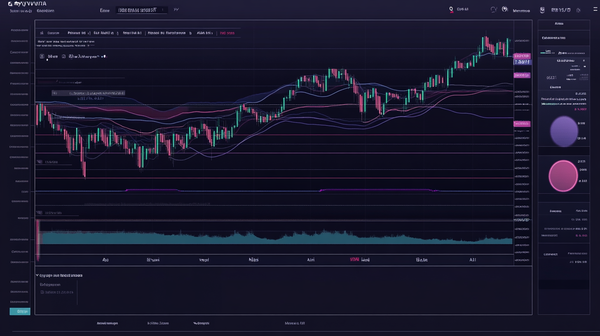
The proprietary WebTrader experience in this segment is usually functional rather than deep: clean order tickets, basic watchlists, and charting that covers the essentials. Expect standard indicators (moving averages, RSI, MACD), drawing tools for trendlines and support/resistance, and one-click trade sizing with margin impact shown. Order types are commonly limited to market/limit/stop, with fewer advanced conditionals than pro platforms. Mobile parity is typically decent—quotes, charts, and position management on the go—but heavy analysis work still feels better on desktop. One practical limitation: without MT4/MT5 or cTrader, you may lose access to established EA workflows and third-party analytics.
Trading Fees, Spreads, and Account Types at Mognelsik
Cost structure is usually spread-led on Standard-style accounts, with EUR/USD often from around 2.0 pips in normal conditions. Some brokers in this category also advertise Raw/ECN-like tiers where spreads can compress toward 0.0–0.4 pips, but the bill reappears as commission—often roughly $6 round-turn per standard lot. Overnight financing (swap) is the quiet tax many novices ignore; hold CFD positions for days and you’ll feel it. Inactivity and withdrawal fees vary by provider and payment rail, so platforms like Mognelsik should be judged on the full fee schedule, not just the headline spread.
When Do Traders Start Looking for Mognelsik Alternatives?
A trader doesn’t wake up one morning and “want change.” The push is usually repeated friction: execution you can’t independently verify, fees that show up when you hold positions, or support that goes slow precisely when volatility spikes. For many readers, the turning point is realizing that Mognelsik alternatives aren’t only about tighter spreads—they’re about enforceable rules, clearer recourse, and platform tooling that matches your strategy instead of boxing it in. And yes, if you’re using high leverage, a single slippage event can erase weeks of careful risk control.
- You need MT4/MT5 or cTrader to run an EA, backtest properly, or mirror a rules-based system—your current WebTrader can’t support it.
- Withdrawals start taking longer than expected, or documentation requests arrive late in the process rather than upfront.
- Your strategy depends on consistent execution during news releases, but spreads widen sharply and stops fill with heavy slippage.
- You want real stocks/ETFs (ownership) rather than stock CFDs—no shareholder rights, no transferability, just price exposure.
How to Choose a Reliable Alternative to the Mognelsik Trading Platform
Treat broker selection like cryptography: assume adversarial conditions and verify the primitives. The practical way to filter alternatives to the Mognelsik trading platform is to start with safety rails (regulation, client-money rules), then check whether the platform and pricing match your trading frequency. Finally, test the workflow—KYC, deposits, withdrawals, and order execution—before scaling size. Convenience is not the same thing as robustness.
Regulation, Safety, and Investor Protection
FCA, ASIC, CySEC, and NFA/CFTC oversight isn’t a “badge”—it’s an enforcement regime. Look for segregated client funds, clear complaint handling, and region-specific protections such as the UK’s FSCS (up to £85,000 in eligible cases) or Cyprus ICF coverage (up to €20,000, eligibility dependent). Offshore entities can still behave well, but the legal backstop is thinner. Verification means checking the regulator’s public register, not trusting a footer logo.
Available Markets and Instruments
Start with the instrument you truly need. FX and index CFDs are widely available across competitors to Mognelsik, but “stocks” can mean two very different things: real shares/ETFs versus CFDs on shares. Options and futures access is even more distinct—usually reserved for multi-asset brokers with exchange connectivity. If your plan includes long-term investing, dividends, or portfolio margining, prioritize a broker built for real assets rather than a CFD-only stack.
Trading Costs: Spreads, Commissions, and Other Fees
The honest comparison is round-turn cost-of-trade: spread paid plus commissions, then add swaps if you hold overnight. A 0.2-pip spread with commission can be cheaper than a 1.2-pip “commission-free” account, depending on volume and holding time. Also read the fine print: inactivity fees, conversion charges, and withdrawal costs can dominate if you trade sporadically. For scalpers, a few tenths of a pip repeated 200 times a month is not “small”—it’s the strategy’s oxygen.
Platforms, Tools, and Execution Quality
Platform choice is strategy choice. MT4/MT5 and cTrader support automation, richer order management, and a deep ecosystem; proprietary WebTraders can be smooth but closed. Execution model matters too: market maker versus STP/ECN/DMA affects how orders are routed and how slippage shows up in fast markets. If you’re evaluating Mognelsik against regulated options vs Mognelsik, ask for transparent execution policies, negative balance protection terms (where applicable), and clear margin call/liquidation rules.
Support, Education, and Overall User Experience
UX isn’t just “pretty charts.” Check support hours relative to your trading session, language coverage, and response time when documents are requested. Education quality is a tell: serious brokers publish margin, swap, and risk documentation that reads like engineering, not marketing. Finally, confirm mobile parity—placing, modifying, and closing orders on mobile should not feel like a downgrade during travel or market shocks.
Mognelsik and Different Asset Classes: When Alternatives May Be Better
Mognelsik Forex and CFD Trading
In the offshore CFD bracket, Forex lineups often sit around 30–50 pairs, with indices and commodities layered in—enough for basic macro trades, not enough for deep cross-hedging. Leverage up to 1:500 sounds like “freedom,” but it’s really tighter margins for error; a modest move plus slippage can trigger a margin call faster than most new traders expect. If your edge is cost-sensitive (scalping, high-frequency discretionary), a specialist like Pepperstone or IC Markets is typically built around tighter pricing on Raw-style accounts and broader platform support (MT4/MT5/cTrader). For those who need auditability and a long runway, top-tier regulated brokers also tend to document execution and client-money handling more transparently than many platforms like Mognelsik.
Mognelsik Stock and ETF Trading
Stock “access” is where the CFD world exposes its limits. Many CFD-first venues provide equities only as CFDs—price exposure without ownership, voting rights, or the ability to transfer holdings. That’s fine for short-term directional bets, but it’s not the same instrument as a real share. Traders wanting actual US/EU equities and ETFs (and possibly bonds, options, or futures) should look at Interactive Brokers (IBKR) or Saxo Bank, where exchange connectivity and custody frameworks are designed for investing as well as trading. If your goal is building a portfolio rather than just trading volatility, that difference is not academic—it determines whether you hold an asset or a contract with a counterparty.
Mognelsik Crypto Trading
Crypto exposure at CFD brokers is usually exactly that: a CFD. You get price tracking, not on-chain coins, no self-custody, and no ability to withdraw BTC to your own wallet. For my money, that’s already a philosophical compromise—Bitcoin is bearer money, not a line item in someone else’s database. Still, some traders use crypto CFDs for hedging or short-term tactical trades. If that’s you, consider regulated venues that clearly label the product as CFD and publish risk disclosures—IG (where available) and Plus500 are common examples in regulated markets. The cleanest separation is: invest in Bitcoin on-chain with self-custody; trade CFDs only if you accept counterparty and leverage risk explicitly.
Best Mognelsik Alternatives for 2026: Comparison of Top Trading Platforms
Interactive Brokers (IBKR): Key Facts and How It Compares to Mognelsik
Regulation: SEC/FINRA (US), FCA (UK), IIROC (Canada) (entity depends on region)
Markets: Stocks, ETFs, options, futures, FX, bonds (broad multi-asset access)
Fees: Pricing varies by market; FX spreads are typically competitive; commissions apply for many exchange-traded products
Platform: Trader Workstation (TWS), web and mobile apps, API access
Best For: Real-asset, multi-market traders who want exchange access
Pepperstone: Key Facts and How It Compares to Mognelsik
Regulation: FCA, ASIC, CySEC, DFSA (entity depends on region)
Markets: FX and CFDs (indices, commodities; crypto CFDs where permitted)
Fees: Raw-style pricing often pairs ~0.0–0.3 pip EUR/USD with commission; Standard accounts commonly ~1.0+ pip equivalent
Platform: MT4, MT5, cTrader (plus broker tools depending on region)
Best For: MT4/MT5/cTrader users focused on low-latency FX execution
Saxo Bank: Key Facts and How It Compares to Mognelsik
Regulation: FCA, MAS, DFSA (entity depends on region)
Markets: Stocks, ETFs, bonds, options, futures, FX, CFDs (broad multi-asset offering)
Fees: Costs vary by product; FX spreads can be competitive on higher tiers; commissions apply on many exchange-traded instruments
Platform: SaxoTraderGO, SaxoTraderPRO
Best For: Portfolio-style traders who want a premium multi-asset platform
IC Markets: Key Facts and How It Compares to Mognelsik
Regulation: ASIC, CySEC (group also operates offshore entities such as FSA Seychelles for some regions)
Markets: FX and CFDs (indices, commodities; crypto CFDs where allowed)
Fees: Raw/ECN-style accounts often show ~0.0–0.4 pip EUR/USD plus commission (commonly around $6–$7 round-turn); Standard accounts wider
Platform: MT4, MT5, cTrader
Best For: High-frequency traders optimizing spread + commission
IG: Key Facts and How It Compares to Mognelsik
Regulation: FCA, ASIC, MAS (entity depends on region)
Markets: CFDs across FX, indices, commodities, shares; crypto CFDs where permitted (availability varies)
Fees: CFD pricing is typically spread-based; costs vary by market and volatility regime
Platform: IG web platform and mobile app (MT4 supported in some regions)
Best For: Risk-aware retail traders who value strong regulatory oversight
Plus500: Key Facts and How It Compares to Mognelsik
Regulation: FCA, CySEC, ASIC, MAS (entity depends on region)
Markets: CFDs (FX, indices, commodities, shares; crypto CFDs where permitted)
Fees: Spread-based CFD pricing; overnight funding/swap applies on held positions
Platform: Plus500 proprietary platform (web + mobile)
Best For: Beginners who want a simple CFD interface without add-ons
Comparison Summary
| Platform | Regulation | Main Markets | Typical Costs | Best For |
|---|---|---|---|---|
| Interactive Brokers (IBKR) | SEC/FINRA, FCA, IIROC | Real stocks/ETFs, options, futures, FX, bonds | Market-dependent commissions; FX pricing generally competitive | Real-asset, multi-market traders who want exchange access |
| Pepperstone | FCA, ASIC, CySEC, DFSA | FX + CFDs | Raw ~0.0–0.3 pip + commission; Standard ~1.0+ pip equivalent | MT4/MT5/cTrader users focused on low-latency FX execution |
| Saxo Bank | FCA, MAS, DFSA | Multi-asset (stocks/ETFs/options/futures/FX/CFDs) | Tiered, product-based pricing; commissions on exchanges | Portfolio-style traders who want a premium multi-asset platform |
| IC Markets | ASIC, CySEC (plus offshore entities for some regions) | FX + CFDs | Raw ~0.0–0.4 pip + ~$6–$7 round-turn; Standard wider | High-frequency traders optimizing spread + commission |
| IG | FCA, ASIC, MAS | CFDs across FX/indices/commodities/shares | Mostly spread-based; varies by instrument and volatility | Risk-aware retail traders who value strong regulatory oversight |
| Plus500 | FCA, CySEC, ASIC, MAS | CFDs across major asset classes | Spreads + overnight funding on held CFD positions | Beginners who want a simple CFD interface without add-ons |
How to Safely Move from Mognelsik to Another Broker
Switching brokers is a capital-protection exercise, not a UI preference test. Sequence matters: verify the new venue first, then reduce exposure, then move funds with documentation intact. If you’re migrating from Mognelsik, assume withdrawals and AML checks will be strict about matching payment rails. Also remember the obvious-but-ignored rule: leverage plus rushed transfers is how small operational mistakes become big losses.
- Confirm the new broker’s authorization by searching the official register (FCA Register, ASIC Connect, CySEC directory, or NFA BASIC), and match the legal entity name—not just the brand.
- Open the new account and complete KYC/AML before touching your old account; keep ID and proof-of-address ready so you don’t stall mid-move.
- Flatten exposure: close open CFD positions on the old platform and re-enter on the new broker if you still want the trade. Don’t assume positions can be “transferred.”
- Export statements and trade history for taxes and audit: deposits, withdrawals, closed trades, and financing charges (swap/overnight fees).
- Request a withdrawal using the original deposit method where possible; many firms will reject third-party routes to satisfy AML controls.
- Start small on the new broker: test order placement, stops, partial closes, and withdrawal turnaround before scaling position size.
Ready to Explore Mognelsik?
If you’re still considering it, review the current onboarding steps, supported regions, and the exact platform stack before committing funds. Then compare costs and protections side-by-side with the best Mognelsik alternatives 2026 listed above—especially if your plan involves frequent trading or overnight holds.
FAQ: Mognelsik Alternatives and Trading Platforms
What is the best alternative to Mognelsik in 2026?
The best choice depends on whether you need real assets or CFD exposure. For real stocks/ETFs and broad market access, Interactive Brokers (IBKR) is hard to beat; for FX/CFD execution with MT4/MT5/cTrader, Pepperstone or IC Markets are common picks. If you want a regulated CFD-first experience with strong oversight, IG is a frequent contender among Mognelsik alternatives.
Is Mognelsik a safe broker/platform?
Mognelsik appears to fit the offshore/unregulated category (often associated with jurisdictions like the Seychelles FSA), which generally provides fewer investor protections than FCA/ASIC/CySEC/NFA-regulated firms. That doesn’t automatically mean misconduct, but it does mean you should treat counterparty risk, withdrawal processes, and dispute resolution more cautiously. If safety is priority #1, regulated options vs Mognelsik deserve extra weight.
Can I trade stocks, futures, or crypto with Mognelsik?
On platforms like this, Forex and CFDs are typically the core offering, while stocks (if available) are often stock CFDs rather than real shares, and futures access is commonly not offered as exchange-traded products. Crypto exposure is usually via crypto CFDs—price exposure without on-chain ownership or wallet withdrawals. If you need real stocks/ETFs or exchange-traded futures, IBKR or Saxo Bank are closer fits than most brokers similar to Mognelsik.
What should I check before switching from Mognelsik to another platform?
Verify the new broker’s regulator listing on the official register, then confirm client-fund segregation, negative balance protection terms (where applicable), and the full fee schedule (spread, commission, swap, withdrawal, inactivity). Next, test execution and slippage on a small account before moving serious size. Finally, download your statements and complete KYC at the new broker before you initiate a full withdrawal from the old platform.
About the Author: Kenji Tanaka is a Tokyo-based financial journalist and active trader focused on market structure, execution quality, and risk. He studied cryptography at the University of Tokyo (incomplete) and approaches broker due diligence with the same mindset: verify, don’t trust. Bitcoin is my benchmark for monetary honesty—21 million, and not a coin more.